
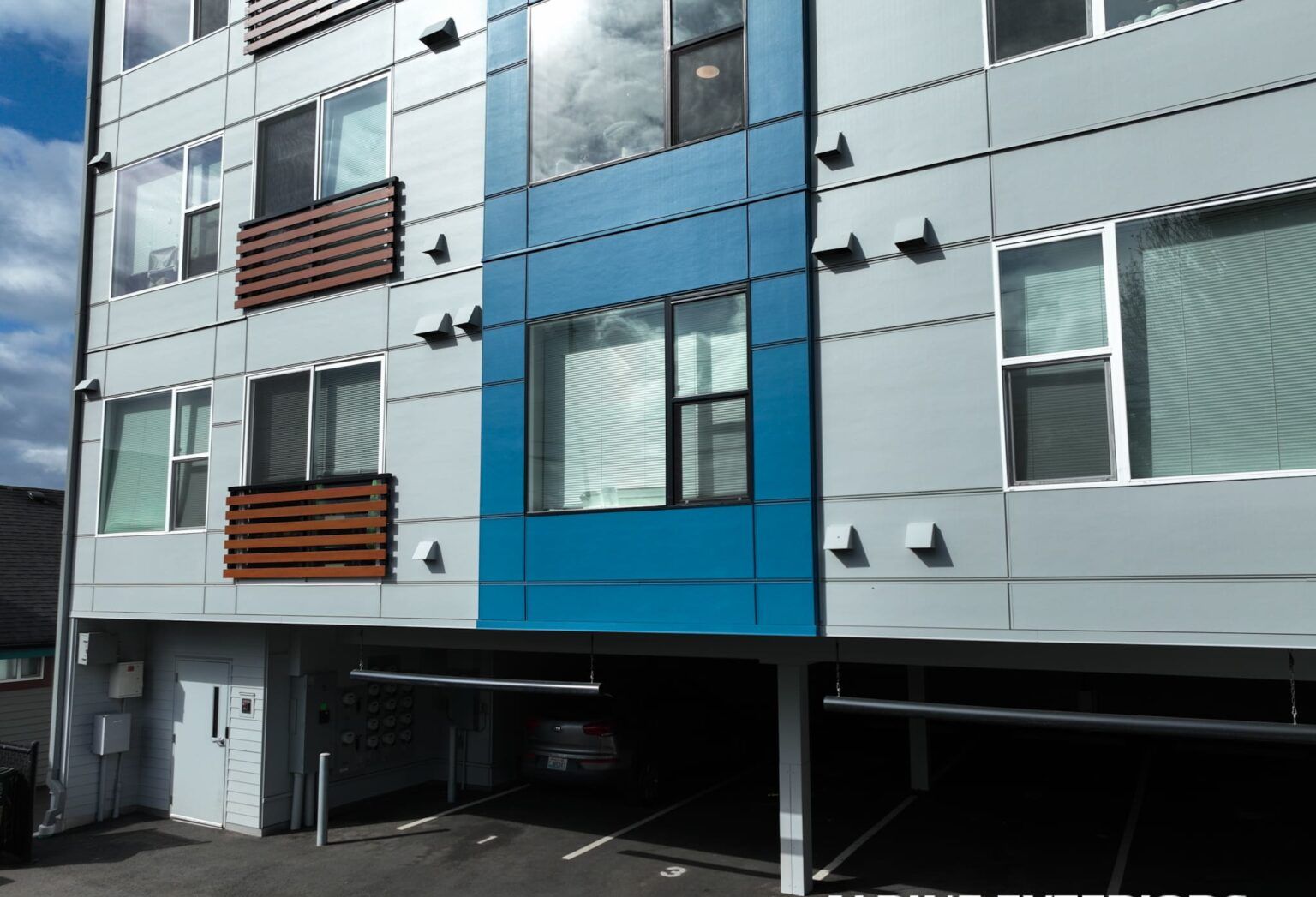
In most cases you cannot get a perfect match, and the honest goal is a repair that reads as intentional rather than invisible. Manufacturers discontinue colors and profiles every few years, sun and moss exposure fade panels unevenly, and a brand-new piece of siding will almost always look slightly different next to material that has weathered through several Whatcom County winters.
Siding fails to match for three separate reasons, and it helps to know which one you're dealing with before you buy anything. First, the color itself may simply be gone from production — vinyl and fiber cement manufacturers rotate their palettes, and a color that shipped ten or fifteen years ago on a Bellingham or Ferndale build often isn't in the current catalog at all. Second, even the same color name from the same manufacturer can shift slightly between production runs because pigment batches vary, so a box bought today may not match a box bought five years ago even with an identical label. Third, and this is the one people miss most often, the existing siding has weathered. UV exposure chalks and lightens painted and vinyl surfaces over time, and here that fading is compounded by moss and algae growth that darkens north-facing walls and shaded areas under eaves and trees — extremely common on homes around Sudden Valley, Lynden, and the wooded lots throughout the county. A brand-new panel next to a fifteen-year-old, moss-streaked one will look wrong even if the underlying color code is identical.
The practical result is that most siding repairs fall into one of three outcomes: an exact or close-enough match on a recent, still-in-production product; a same-manufacturer color that's close but visibly newer; or a mismatch significant enough that blending the repair into a natural break — a corner, a window trim line, an entire wall — is the better call than trying to hide a patch in the middle of a visible elevation.
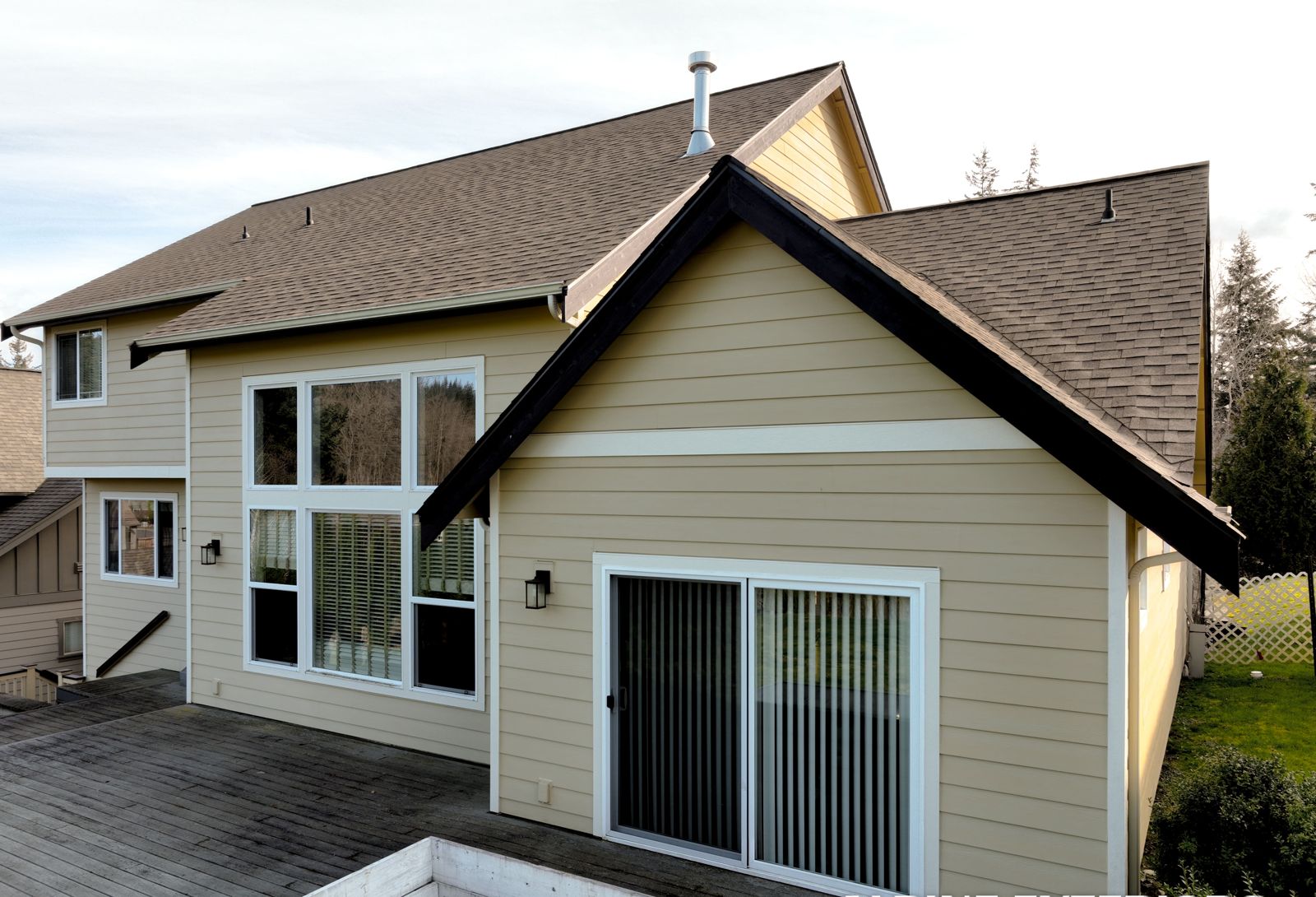
Matching siding here isn't just a color exercise — the material itself has usually been under more stress than the catalog swatch suggests. Whatcom County gets a long, wet season, and wind-driven rain off Bellingham Bay and the Strait of Georgia pushes moisture sideways into siding laps and seams on exposed elevations, particularly in Blaine, Birch Bay, and the west-facing walls of homes near the water. That kind of driving rain finds gaps that a calmer climate never would, so damaged siding out here is more often hiding wet sheathing or early wood rot underneath than it looks from the street. Persistent cloud cover and shade also feed moss and algae growth on siding, roofs, and trim across the whole county, and that growth is exactly what accelerates the color mismatch problem described above — the older siding isn't just faded, it's biologically stained in a way no new panel will replicate until it's had a few wet seasons of its own.
Up in the foothills and higher elevations — toward the Mount Baker corridor and some of the outlying rural properties — freeze-thaw cycling adds another layer. Water that gets behind siding and freezes expands and works joints and fasteners loose over repeated cycles, which is a different failure mode than straight rot and one more reason a “small” repair sometimes uncovers more damage once the old piece comes off. And any full or partial re-side in this region has to meet the Washington State Energy Code, which sets requirements for the wall assembly's insulation and air-sealing — worth flagging up front because a repair that disturbs the weather-resistive barrier or insulation behind the siding needs to be put back correctly, not just patched over, to stay compliant and to actually keep water out going forward.
Start by pulling a piece of the actual existing siding, not just a photo of it. Photos shift color under different light and camera settings, and a Bellingham porch in overcast June light will read differently than the same wall photographed on a rare sunny afternoon. A physical sample — even a broken or damaged piece — lets a supplier or contractor check it against current stock and any archived discontinued-color references. If there's an accessible spot where extra siding was left over from the original install (garages and crawlspaces are common places to check), that's worth a look before assuming a match is impossible.
Next, figure out how visible the repair area actually is. A patch on a rear wall or below a deck line can tolerate a slightly-off color far better than one centered on a street-facing gable. If a close match is available but not perfect, shifting the repair to the least visible full course, or re-siding a single corner-to-corner section instead of a small patch, usually looks better than a precise patch in a highly visible spot — the eye catches an obvious rectangle much faster than a slight color shift across an entire wall.
Have the repair area opened up and actually inspected before ordering material. Given how often wind-driven rain and moss-related moisture cause hidden damage in this region, a “just replace three boards” repair sometimes turns into “the sheathing here is soft and needs to come out too.” It's far better to learn that before new siding goes up than after. This is also the point where checking the house against the Washington State Energy Code matters if insulation or the weather barrier gets opened up during the work — it should go back in a way that actually meets the assembly requirements, not just get closed up.
Finally, weigh a full re-side of the affected wall or elevation against a small patch when the mismatch is going to be obvious no matter what. This isn't the answer for every repair — many jobs really are a clean, close-enough patch — but when the existing product is long discontinued or heavily weathered, a homeowner is often better served by treating one wall as a planned upgrade rather than chasing a match that doesn't exist. Alpine Exteriors walks that tradeoff with homeowners honestly: sometimes the right answer is a $400–$1,200 patch, and sometimes it's telling a customer plainly that a full-wall or full-elevation re-side, likely a few thousand dollars depending on size and material, is the better long-term move rather than paying for a repair that will always look like a repair.
Sometimes, but it gets harder the older the siding is. Vinyl colors are discontinued regularly, and even in-production colors fade and chalk under UV exposure, so a decade-old panel rarely matches a brand-new one exactly. The best approach is pulling a physical sample and checking it against a supplier's current and archived lines before assuming either a perfect match or a total loss is the outcome.
Painted fiber cement can actually be easier to blend because the finish coat can be custom color-matched by a painter using the existing siding as a reference, rather than relying on a manufacturer's exact factory color still being in production. The tradeoff is that it adds a paint step and cost to the repair, and the match still depends on the painter getting the sheen and tone right against weathered material.
That's almost always moss and algae growth rather than a different siding color underneath. Shaded, damp walls — common on north-facing elevations and anywhere trees block sun and airflow — grow organic staining much faster than sunny walls in this climate. It can be cleaned in many cases, but new siding installed next to it will look mismatched until the new material has weathered for a while too.
Pulling a sample piece and doing some initial research is genuinely useful and can save time, but water damage behind siding in this region is common enough that it's worth having someone knowledgeable look at the opened area before committing to a repair plan. Alpine Exteriors can evaluate both the color-match question and what's actually happening behind the siding in the same visit, which avoids paying for a cosmetic fix on top of an unresolved moisture problem.
If you're dealing with damaged or mismatched siding anywhere from Bellingham and Ferndale to Lynden, Blaine, Birch Bay, Sudden Valley, or the islands, Alpine Exteriors (WA contractor license ALPINI751OW) can take a physical look at the existing material, check it against current product lines, and give you a straight answer on whether a patch will actually blend or whether a wall-level re-side is the smarter move. Reach out for an on-site evaluation before you buy siding based on a color name alone.