
HZ10 is the James Hardie fiber cement formulation engineered for wetter, more humid climates, and Whatcom County falls squarely in that zone. If a Hardie product is labeled HZ10, it was mixed and treated with moisture exposure in mind rather than heat and UV exposure, which is what the HZ5 formulation is built around.
James Hardie splits North America into two manufacturing zones and formulates its siding differently for each one. HZ5 products are engineered primarily for hot, dry, and freeze-prone inland climates. HZ10 products are engineered for regions that see sustained moisture, humidity, and rain, and the formulation, primer, and in some cases the product line offered reflect that. Whatcom County, sitting between Bellingham Bay and the Cascade foothills, is classified in Hardie's wetter zone, so HZ10 is the product line that's actually appropriate here, not just a marketing designation.
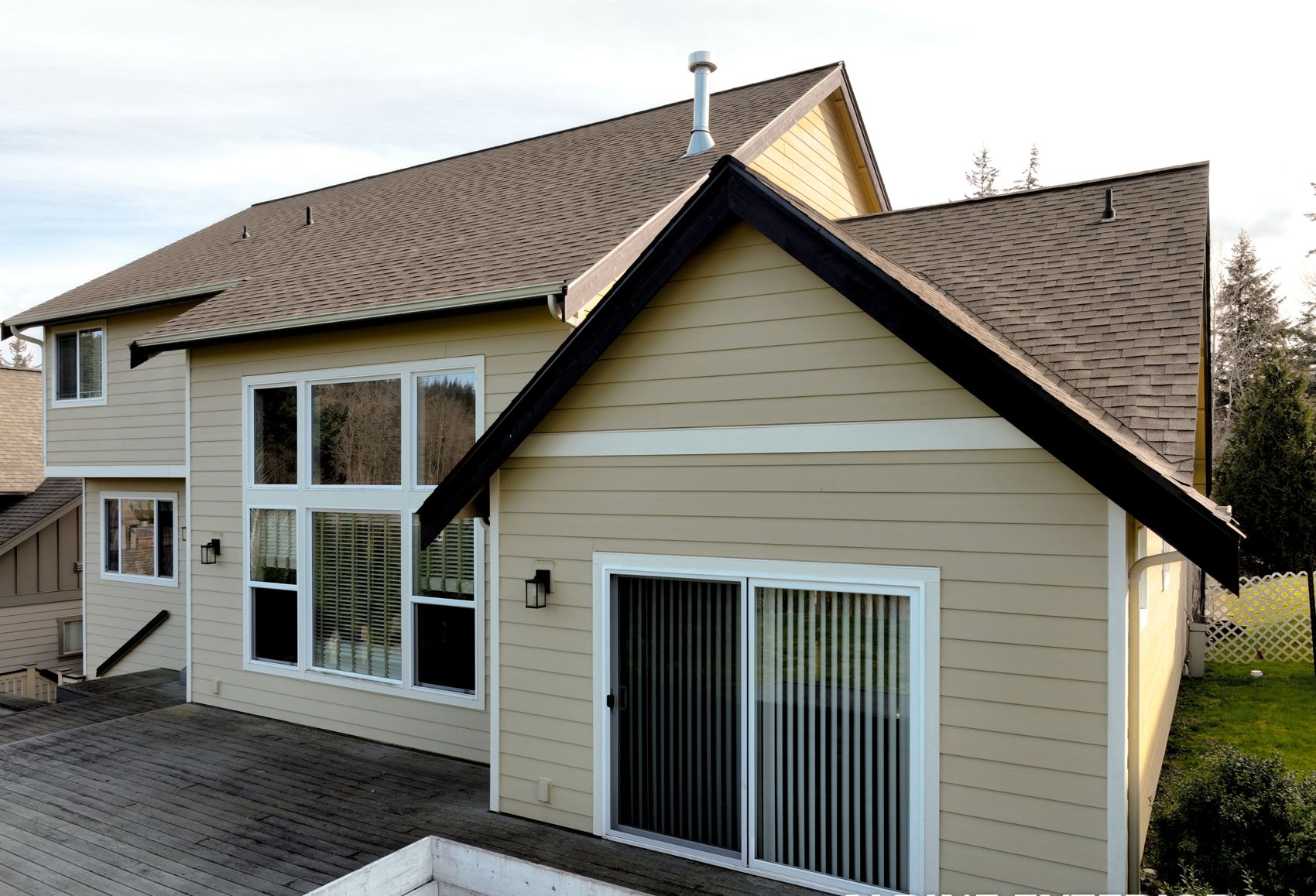
The practical differences show up in a few places. HZ10 boards carry a factory-applied primer formulated to resist moisture intrusion during the gap between installation and final paint. Hardie also tunes the fiber cement mix itself for zones like ours, since fiber cement that spends months of the year damp behaves differently than the same material in a dry climate. None of this changes the core selling points of fiber cement — it still won't rot, won't feed termites, and holds paint far longer than wood lap siding — but it does mean the version of the product installed on a Bellingham or Ferndale home should be the HZ10-formulated boards and trim, not a HZ5 pallet that got shipped to the wrong region.
Whatcom County's weather is the reason the HZ10/HZ5 split exists in the first place. Rain here isn't occasional, it's persistent — long stretches of low-intensity rain through fall, winter, and spring that keep exterior surfaces damp for days at a time. That kind of sustained moisture is exactly what drives moss and algae growth on north-facing walls, under eaves, and anywhere sun doesn't reach for long, and it's also what accelerates wood rot on older cedar and hardboard siding that was never designed to shed water this consistently.
Wind is the other piece. Homes closer to Bellingham Bay, Birch Bay, Blaine, and the islands take wind-driven rain directly off the water, which pushes moisture sideways into seams, corners, and butt joints rather than letting it run straight down. That's a harder condition than straight-down rain because it tests flashing details and caulk joints, not just the siding material itself. Up toward Sudden Valley and the foothills, homes see more freeze-thaw cycling in winter — moisture gets into a crack, freezes, expands, and widens the crack, which is a slow but real failure mode for any siding material that isn't dimensionally stable. Fiber cement handles all of this better than wood or vinyl, but the installation details — flashing, house wrap, joint treatment — matter as much as the board itself in a climate like this.
The first thing worth checking, whether you're planning new siding or replacing storm-damaged sections of existing Hardie board, is that any material quoted or delivered is actually the HZ10 formulation. Reputable suppliers in this region stock HZ10 by default, but it's worth asking directly, especially if a contractor is sourcing overstock or out-of-area material to cut costs.
Second, don't treat the siding material as the whole solution. In a climate that produces this much sustained and wind-driven moisture, the house wrap, flashing at windows and doors, and the way joints and corners are sealed do most of the actual work of keeping water out. A correctly installed HZ5 board with excellent flashing will outperform a poorly flashed HZ10 board, so installation quality is not a place to cut corners.
Third, factor in the Washington State Energy Code. Fiber cement siding itself isn't the primary driver of a home's energy code compliance, but a full siding replacement is the natural point to address wall assembly issues — missing or compressed insulation, gaps in the weather-resistive barrier, or continuous insulation requirements that apply to certain wall assemblies under the state code. Rolling that conversation into the siding project avoids opening the wall twice.
Fourth, plan for maintenance realistically. HZ10 fiber cement resists rot and won't absorb water the way wood does, but it doesn't stop moss and algae from forming on the surface in a climate this wet — nothing does. A periodic gentle wash, especially on shaded north walls and under overhangs, keeps growth from taking hold and keeps paint looking right. That's a maintenance item, not a product defect, and it's true of any siding material installed in this county.
On cost: fiber cement siding, HZ10 or otherwise, typically runs higher upfront than vinyl and lower than full cedar replacement with premium finishing, though exact numbers depend heavily on the home's size, trim complexity, and how much of the existing wall assembly needs repair before new siding goes on. Alpine Exteriors walks homeowners through a real quote based on the actual house rather than a generic per-square-foot number, since a home with extensive wind-driven rain exposure near the water often needs more flashing and joint work than one set back from the coast.
It's the same core product lines — HardiePlank, HardiePanel, and the trim boards — but formulated and primed differently for moisture-heavy climates. You're not choosing a separate product; you're making sure the version installed on your home matches the climate zone it's actually in.
No, and any contractor who claims otherwise is overselling it. HZ10 fiber cement resists moisture intrusion and won't rot the way wood does, but organic growth on the surface is a function of shade, moisture, and time, not the substrate. Periodic washing is still part of normal upkeep in Whatcom County regardless of siding material.
You can physically install either, but it defeats the purpose of buying the region-appropriate formulation. If moisture resistance and factory priming were the reason to choose Hardie in the first place, using HZ5 stock in a climate built around sustained rain is a shortcut that shows up later as premature primer or paint failure.
Not automatically. The siding material itself isn't what the energy code regulates; it's the wall assembly behind it — insulation, air sealing, and the weather-resistive barrier. A siding replacement is a good opportunity to address those items while the wall is open, but it takes a deliberate look at the assembly, not just a new exterior surface.
If you're planning a siding project anywhere from Bellingham to Blaine, Lynden to the islands, it's worth having someone confirm you're getting the right formulation and the flashing details to back it up. Alpine Exteriors is licensed in Washington under contractor license ALPINI751OW and works throughout Whatcom County, including Ferndale, Birch Bay, and Sudden Valley. Reach out for a walkthrough of your home's exposure and a straight answer on what HZ10 fiber cement would actually cost and involve for your specific house.