
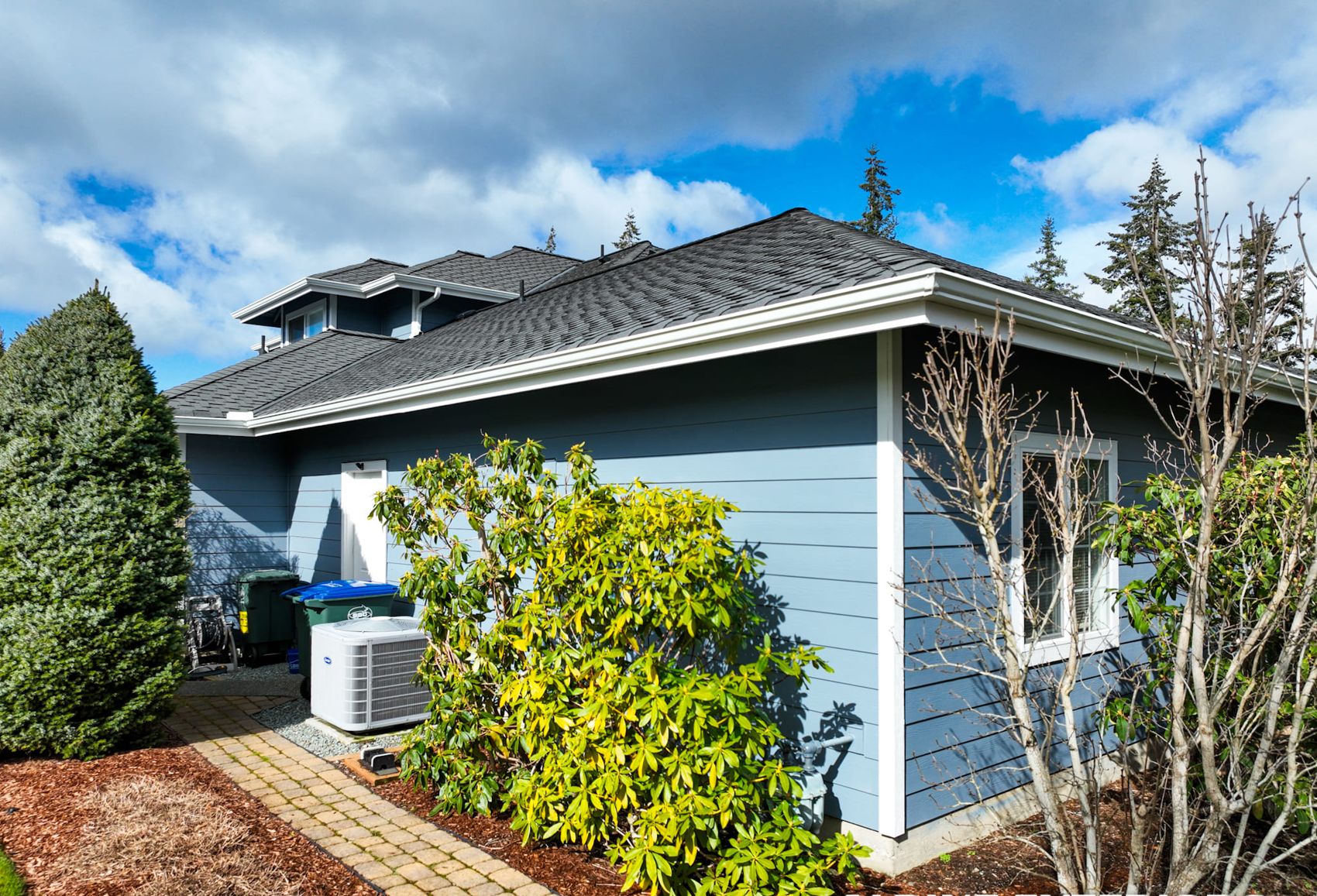
For a home reached by the Whatcom Chief ferry, fiber cement or a well-detailed steel panel siding generally holds up better than cedar or standard vinyl, mainly because salt-laden wind and the hassle of a return trip for repairs raise the real cost of anything that needs frequent upkeep. The material itself matters less here than the installation details around it — flashing, fastener choice, and drainage — because those are what actually fail first in a marine, ferry-access setting.
That doesn’t mean cedar or vinyl are wrong choices. It means the tradeoffs on Lummi Island are weighted differently than they are for a comparable house in Bellingham or Ferndale, and it’s worth understanding why before you commit to a product.
Most Whatcom County siding jobs choose among the same handful of materials, but each one behaves a little differently once salt air and ferry logistics enter the picture:
None of these is a bad material in the abstract. The mismatches happen when a product suited to a dry inland lot gets installed on a shoreline home without adjusting the fasteners, flashing, or maintenance plan to match.
Two things separate a Lummi Island project from a similar job in downtown Bellingham: the ferry, and the water itself.
The Whatcom Chief runs a fixed schedule from Gooseberry Point with limited vehicle capacity per crossing, and it does get cancelled or reduced during windstorms — which, inconveniently, is also when siding damage tends to happen. A full material order for a mid-size home usually needs more than one crossing, and a contractor who hasn’t planned for that will either eat the delay or try to rush the job. Either way, it changes how a project should be scheduled compared with a mainland site where a supplier truck can just show up again the next morning.
The water matters just as much. Homes near the shoreline sit in a steady drift of salt-laden air off Hale Passage and Rosario Strait, and that air corrodes standard fasteners, staples, and unprotected flashing faster than it would a few miles inland. Combine that with Whatcom County’s persistent rain and the shade from mature Douglas fir stands common across the island, and you get ideal conditions for moss and algae to colonize north-facing walls and anything that stays damp for long stretches. Wind-driven rain during fall and winter storms also pushes water sideways under laps and around window trim, so the flashing and weather-resistive barrier behind the siding often matter more than the siding material itself.
One thing that’s notably less of a concern here than in the Sudden Valley foothills or higher elevations around the county: freeze-thaw cycling. Lummi Island sits low and close to a large body of water that moderates temperature swings, so the repeated freeze-thaw stress that cracks caulk and stresses joints up in the hills isn’t the primary threat on the island. Salt exposure and sustained moisture are.
A few practical steps make a real difference on a ferry-access project:
Alpine Exteriors, WA contractor license ALPINI751OW, works projects across Whatcom County including ferry-access homes on Lummi Island, and builds the crossing schedule into the project plan rather than treating it as an afterthought. That planning matters more to the outcome than which specific product ends up on the wall.
The core building science is the same, but the details shift toward corrosion resistance and moisture management. Fasteners, flashing, and finish choices that are optional upgrades on a mainland job are closer to standard practice for a home exposed to salt air and persistent damp shade near the water.
Mainly through timeline and logistics. The Whatcom Chief has limited daily capacity and can be cancelled or reduced during windstorms, so material deliveries and crew trips need to be planned with buffer time rather than assuming a truck can simply show up the next day the way it would on the mainland.
It can be, if you go in with realistic expectations about upkeep. Cedar needs a disciplined refinishing schedule and active moss and algae management in the island’s damp, shaded conditions. Homeowners who want the cedar look but less maintenance sometimes choose a fiber cement or engineered wood product with a wood-grain finish instead.
Yes, generally. Standard electro-galvanized fasteners corrode noticeably faster in salt-laden air than they do further inland. Stainless steel fasteners and properly detailed, sealed flashing cost more up front but hold up substantially better on shoreline-exposed walls.
A siding project on Lummi Island only goes smoothly when the schedule, materials, and installation details all account for the crossing and the salt air, not just the wall itself. Alpine Exteriors has handled ferry-access projects across Whatcom County and can walk through material options, realistic cost ranges, and a timeline that won’t fall apart the first time a windstorm cancels a sailing. Reach out to talk through what your home actually needs before committing to a product.