
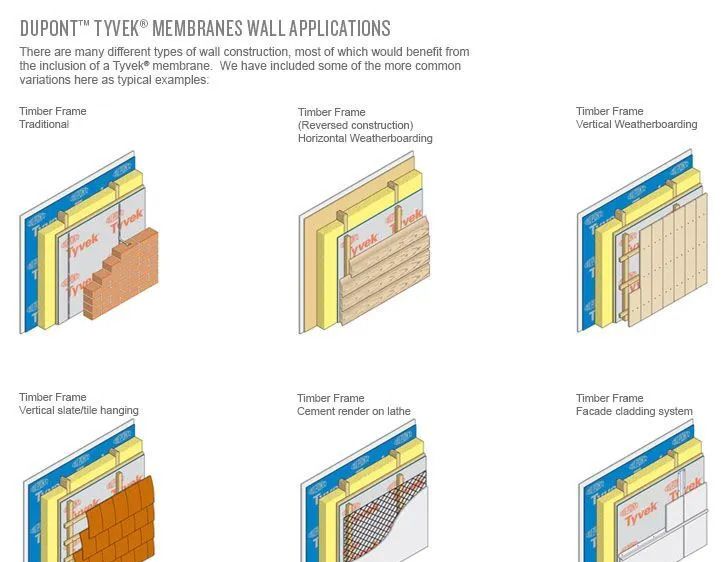
If your home takes direct, wind-driven rain — south and west-facing walls in Bellingham, Blaine, and Birch Bay especially — a rain screen assembly is the more forgiving choice over the long run. If you're re-siding a sheltered wall, working with a tight budget, or the existing sheathing and framing are already in excellent shape, a properly installed housewrap-only assembly can still perform well for years. Both approaches can pass Washington's energy and moisture code when detailed correctly; the real difference shows up ten and twenty years down the road, not on installation day.
A rain screen adds a drainage gap — usually 3/8" to 3/4" — between the housewrap (or a drainable wrap) and the back of the siding. That gap is created with vertical furring strips, a manufactured drainage mat, or a crinkled/dimpled housewrap product. The idea is simple: siding is never a perfect water barrier, especially lap siding and fiber cement in a region that gets rain sideways off the bay. Water that gets behind the siding hits the gap, drains down and out through weep holes at the bottom, and the airspace lets both sides dry between storms.
In a climate where it can rain for days in a row through fall and winter, that drying capacity matters more than the manufacturer's warranty language ever does. The gap also breaks capillary contact between wet siding and the wall sheathing, which is one of the more common ways wood rot starts behind siding here — not from one big leak, but from siding that stays damp against the sheathing for weeks at a time.
Drawbacks: rain screens add material cost and labor time, the furring strips need to be planned around window and door trim so reveals stay consistent, and vents/weep gaps have to be detailed properly or the assembly doesn't do its job. It's also not something you can easily add later without pulling the siding off — it's a decision made at install time.
In a housewrap-only assembly, siding is fastened directly against the weather-resistive barrier with no dedicated drainage gap. This is still a code-compliant, functional wall system, and it's what a large share of homes in Whatcom County were built with, including many still performing fine decades later. The housewrap sheds bulk water, seams are taped, and flashing at windows and penetrations does most of the real work keeping water out.
The tradeoff is drying capacity. Without an air gap, any moisture that does get behind the siding — through a nail hole, a hairline gap at a butt joint, or wind-driven rain forced past a lap — has nowhere to go but into direct contact with the wrap and sheathing. In a drier climate that's rarely an issue because it dries out quickly between rain events. Here, with our long wet stretches and moss and algae holding moisture against north-facing and shaded walls, that contact time adds up, and it's a common contributor to sheathing rot we find on tear-offs of 20-plus-year-old siding.
Drawbacks: less forgiveness for small installation imperfections, more dependence on flashing details being perfect the first time, and a shorter practical service life on exposed elevations before moisture issues show up.
Cost: Housewrap-only is less expensive up front — no furring strips or drainage mat, less labor for layout and fastening. A rain screen adds a real but modest line item to a siding project. On a full re-side, the added cost is usually a small percentage of the total job, not a doubling of price.
Lifespan: This is where the two diverge most. Housewrap-only walls can last a long time on sheltered elevations with good flashing and regular maintenance. On exposed, weather-facing walls in this region, a rain screen assembly tends to protect the sheathing and framing significantly longer because it removes the slow, chronic moisture exposure that eventually causes rot, even when the siding itself still looks fine from the curb.
Maintenance: Both systems still need the basics — caulking checked, flashing inspected, gutters kept clear so water isn't dumped down a wall face, and moss/algae growth kept off siding rather than left to sit. A rain screen doesn't eliminate maintenance, but if something does get behind the siding, it's far less likely to turn into a hidden problem before anyone notices.
Appearance: No visible difference from the street. A rain screen adds a small amount of thickness at window and door returns, which a good installer accounts for in the trim details so reveals still look correct. Either system can carry lap siding, fiber cement, or vertical siding without a different finished look.
For most full re-siding projects in Bellingham, Ferndale, Lynden, Blaine, and Birch Bay, we lean toward recommending a rain screen on any wall that takes direct weather — which, given how wind-driven rain moves off the bay, is more walls than homeowners often expect. The extra cost buys real protection against the specific way homes fail here: not a single catastrophic leak, but years of low-grade moisture sitting against sheathing, quietly rotting framing behind siding that still looks presentable.
That said, we don't push a rain screen on every job as a blanket rule. If a wall is well-sheltered by roof overhangs, faces away from prevailing weather, and the existing assembly is sound, a properly detailed housewrap-only re-side is a reasonable and honest option, particularly when budget is the deciding factor. Alpine Exteriors walks each elevation with the homeowner before recommending one over the other, because the right answer genuinely depends on exposure, existing wall condition, and what the project needs to accomplish.
Does Washington energy code require a rain screen?
No. Washington's code addresses the weather-resistive barrier, flashing, and continuous insulation requirements, but a ventilated rain screen gap isn't a statewide mandate for most residential siding types. It's a performance upgrade, not a code minimum, though some manufacturers require it to keep certain product warranties valid.
Can a rain screen be added without replacing the siding?
Not really. Because the gap sits between the wrap and the siding, adding one means removing the existing siding down to the sheathing. It's a decision that's most practical to make at the time of a full re-side rather than as a standalone retrofit.
Does moss on siding actually cause damage, or is it just cosmetic?
It's more than cosmetic here. Moss and algae hold moisture against the siding surface longer than bare siding would otherwise stay wet, which extends the time water has to find its way behind laps and joints. On a housewrap-only wall especially, that extra dwell time matters over the years.
Which siding materials pair best with a rain screen?
Fiber cement and wood siding benefit the most, since both are more sensitive to sustained moisture contact than some other claddings. Vinyl and metal siding have their own natural drainage behind the panels in many installations, so the case for an added rain screen gap is less pressing, though it's still not without value on heavily exposed walls.
Every home's exposure is different, and the right wall assembly depends on which direction your siding actually faces the weather. Alpine Exteriors will walk your home, point out which elevations are taking the brunt of it, and lay out straightforward options for your siding, roofing, or window project — no pressure, just a clear look at what will actually hold up in a Whatcom County winter. Reach out to schedule a walkthrough.