
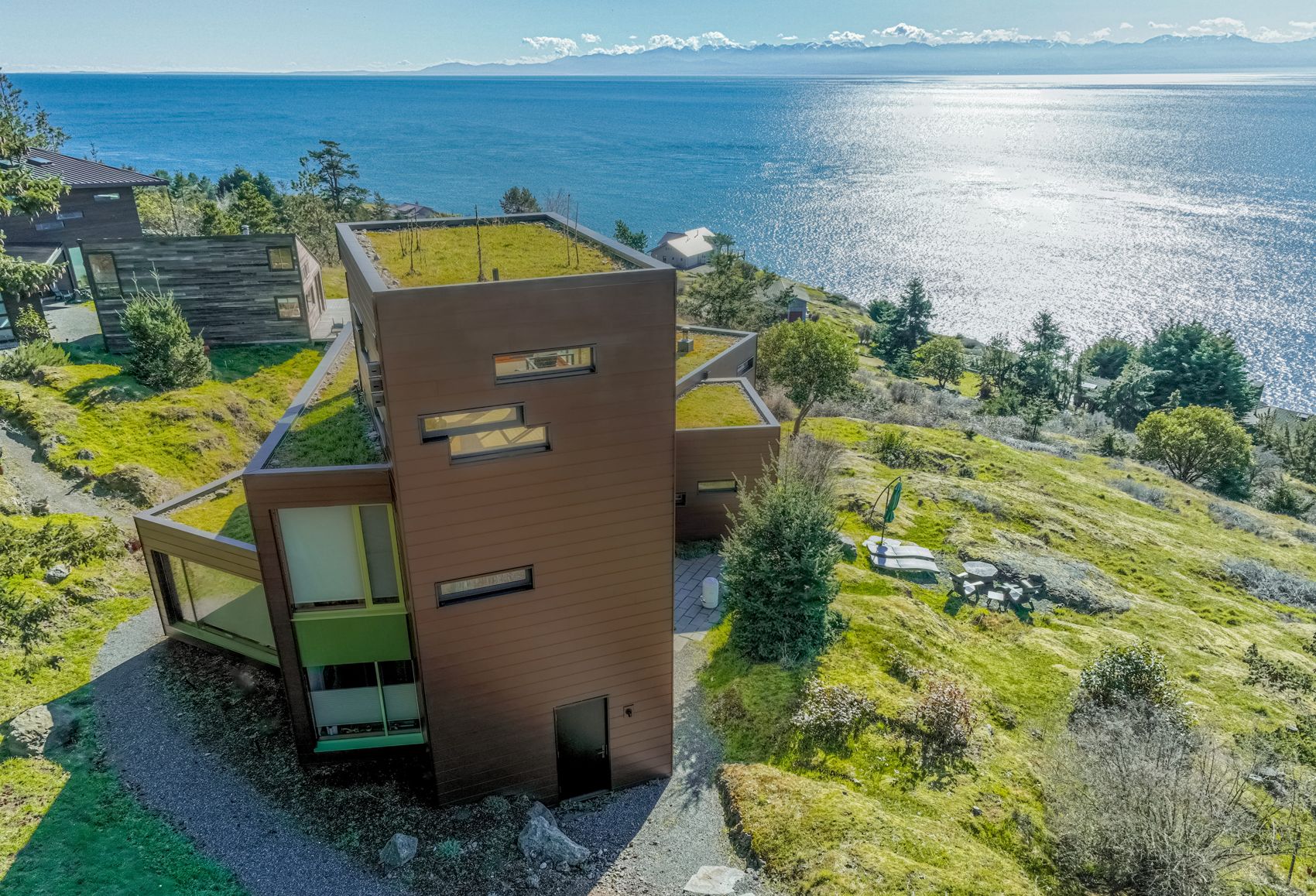
If you want the lowest realistic maintenance over the life of the roof and you're planning to stay in the house long-term, metal usually wins in a climate this wet. If you want the lowest upfront cost, an easier repair when a tree branch comes down in a windstorm, and a roof that blends in with the rest of the neighborhood from Ferndale to Lynden, composition (asphalt) shingles are still the practical choice for most homeowners. Neither one is wrong — it depends on your budget, how long you plan to own the home, and how much moss-and-gutter maintenance you're willing to do yourself.
Standing-seam and metal shingle roofs shed water fast, which matters here because Whatcom County doesn't just get rain occasionally — it gets weeks of steady drizzle punctuated by heavier systems pushing in off the Strait. A smooth metal panel gives moss and algae almost nothing to grab onto compared to the textured surface of a shingle, so the black-green streaking you see on older asphalt roofs around Bellingham's shadier lots is far less of a problem on metal. Metal also handles wind-driven rain along the water — Blaine, Birch Bay, and parts of Ferndale closest to the bay get gusts that push rain sideways under loose or aging shingle tabs. A properly installed metal roof with sealed seams resists that intrusion better than shingles nearing the end of their life. On the energy side, reflective or light-colored metal roofing can help meet Washington State Energy Code targets more easily when paired with adequate attic ventilation and insulation, though the code compliance really comes down to the whole assembly, not the roofing material alone. The tradeoffs are real: metal costs more to install, it can be noisier in a hard downpour unless you add solid decking and underlayment, and finding a crew experienced with metal panel detailing (valleys, flashing, penetrations) matters more than it does with shingles, where mistakes are more forgiving.
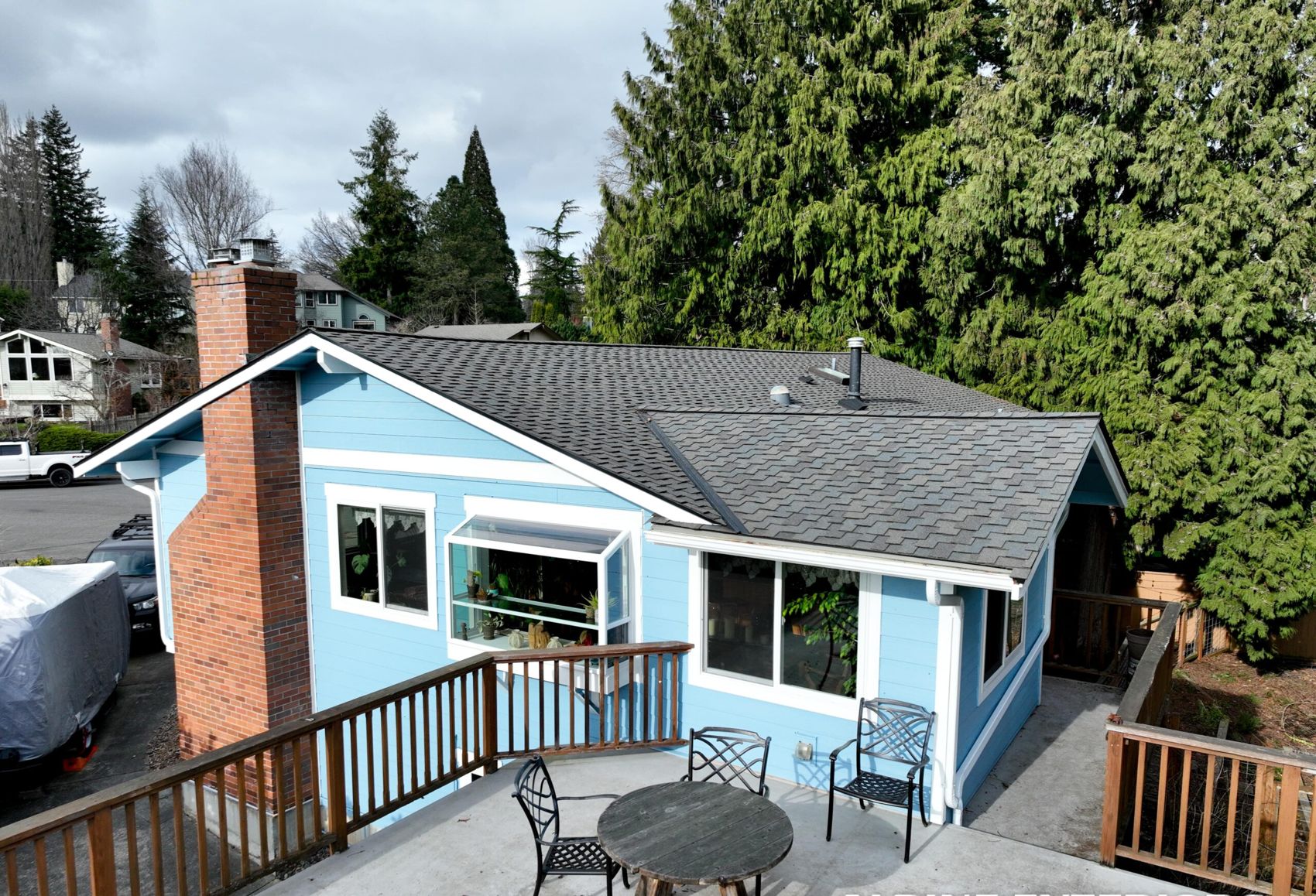
Composition shingles remain the most common roof on houses throughout Whatcom County for good reason — they're less expensive to install, easier to repair in sections, and available in styles that match the traditional look of most neighborhoods here. Modern architectural shingles rated for algae resistance have narrowed the gap on moss and staining, though they don't eliminate it; a north-facing roof plane shaded by cedars or firs, which describes a lot of lots in Bellingham and Lynden, will still grow moss faster than a sun-exposed slope regardless of shingle brand. Composition roofs are more vulnerable over time to the specific failure mode that shows up in this climate: moss mats holding moisture against the shingle surface, which speeds up granule loss and, on older roofs with any underlying deck issues, can contribute to wood rot in the sheathing if it isn't cleared and the roof isn't properly ventilated. Wind-driven rain near Birch Bay and Blaine can also work under shingle edges that have curled or lost their seal, especially past the 15-20 year mark. None of this makes composition a bad choice — it just means the maintenance schedule (moss treatment, gutter clearing, periodic inspection) has to actually happen, not just get planned.
Cost: Composition shingles cost meaningfully less to install than metal roofing, and repairs to a small damaged section are typically cheaper and faster. Metal carries a higher upfront investment, which is the main reason more homes in the area still have shingle roofs.
Lifespan: A well-installed metal roof generally outlasts composition shingles by a wide margin, often stretching decades longer before it needs replacement. Composition shingles have a shorter practical lifespan here than manufacturer ratings suggest, mainly because constant moisture and moss growth accelerate wear compared to drier climates.
Maintenance: Metal needs periodic gutter and valley checks but resists moss colonization well. Composition needs more active moss and debris management — if moss is left to mat on the surface through a wet Whatcom County winter, it holds water against the shingles and shortens their life.
Appearance: Composition shingles offer more color and texture options that match traditional Pacific Northwest home styles seen from Bellingham to Lynden. Metal has a more modern or farmhouse-style look that some homeowners love and others feel doesn't suit an older character home — it's genuinely a matter of taste.
For a home with heavy tree cover, a shaded north slope, or a roof near the water in Blaine or Birch Bay where wind-driven rain is a bigger factor, metal's resistance to moss and its tighter seal against blowing rain make a stronger case, especially if you plan to stay in the home long enough to let the higher upfront cost pay off. For a more typical inland lot in Ferndale or Lynden with decent sun exposure and a homeowner willing to keep up with moss treatment and gutter cleaning, composition shingles remain a sound, budget-friendly option that matches the neighborhood. Alpine Exteriors walks homeowners through both options based on the specific roof — slope exposure, tree cover, existing ventilation, and how the current roof has actually aged — rather than pushing one material as the default answer.
It significantly reduces it because there's less texture for spores to root in, but moss can still build up in debris that collects in valleys or against fasteners if the roof isn't kept clear. No roofing material makes moss maintenance disappear entirely in this climate.
Properly installed and flashed metal roofing generally performs well against wind-driven rain, which is one reason it gets consideration for homes closer to Birch Bay and Blaine. The leak risk in either material comes down to installation quality at seams, valleys, and penetrations, not the material alone.
Sometimes, depending on the current roof's condition and local code requirements, but it's not automatically the right move — trapped moisture or hidden wood rot under old shingles needs to be checked first, since covering it up doesn't solve the underlying problem.
Roofing material can contribute through reflectivity and how it interacts with attic insulation and ventilation, but energy code compliance is based on the whole roof assembly, not the surface material by itself. It's worth discussing as part of a full roof plan rather than assuming one material automatically checks that box.
Every roof in Whatcom County ages differently depending on tree cover, slope, and exposure to wind off the bay. Alpine Exteriors can take a look at your specific situation in Bellingham, Ferndale, Lynden, Blaine, or Birch Bay and lay out what metal or composition would actually mean for your home — no pressure toward the more expensive option, just an honest comparison. Reach out to schedule a roof evaluation.