
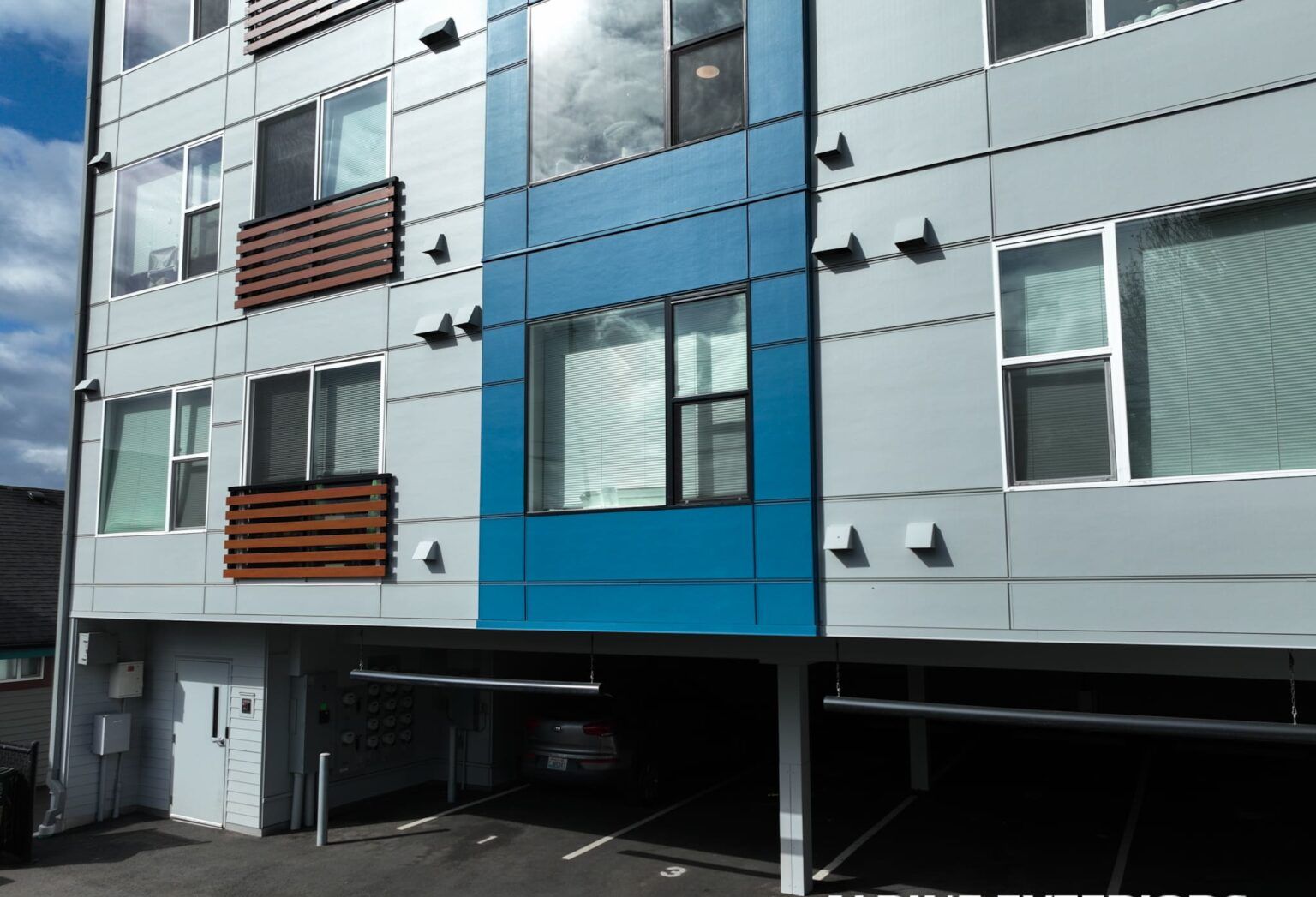
Siding should stop at least 6 inches above bare soil and at least 2 inches above paved surfaces like driveways or patios, and it needs proper flashing anywhere it meets a roofline, deck, or porch. In Whatcom County's wet climate, those clearances aren't a formality — they're often the difference between siding that lasts decades and wall sheathing that's quietly rotting behind it.
Clearance to grade exists to keep the bottom edge of the siding, and the water-resistive barrier behind it, away from splash-back, standing water, and soil moisture that wicks upward. Most fiber cement, vinyl, and engineered wood siding manufacturers specify a minimum 6-inch gap between the siding's lowest edge and finished grade, with a reduced 2-inch minimum where the adjacent surface is a concrete walkway, patio, or driveway that sheds water away from the house. Go below those numbers and the siding sits in the zone where lawn sprinklers, rain splash, mulch, and snowmelt keep the material wet far more of the time than it was designed for.
Roofline clearance is a related but separate problem. Anywhere a roof plane meets a wall — at a dormer, a porch roof, a lower roof against a two-story wall, or a chimney — water runs down the wall and needs somewhere to go besides behind the siding. That's the job of step flashing woven into each course of roofing along the slope, counterflashing tucked into the wall above it, and, critically, a kickout flashing at the bottom of the step-flashing run that diverts water outward into the gutter instead of letting it pour down behind the siding at the wall-roof corner. A missing kickout flashing is one of the most common causes of hidden rot we find on homes in this area, because the damage happens silently, low on the wall, right behind the trim board.
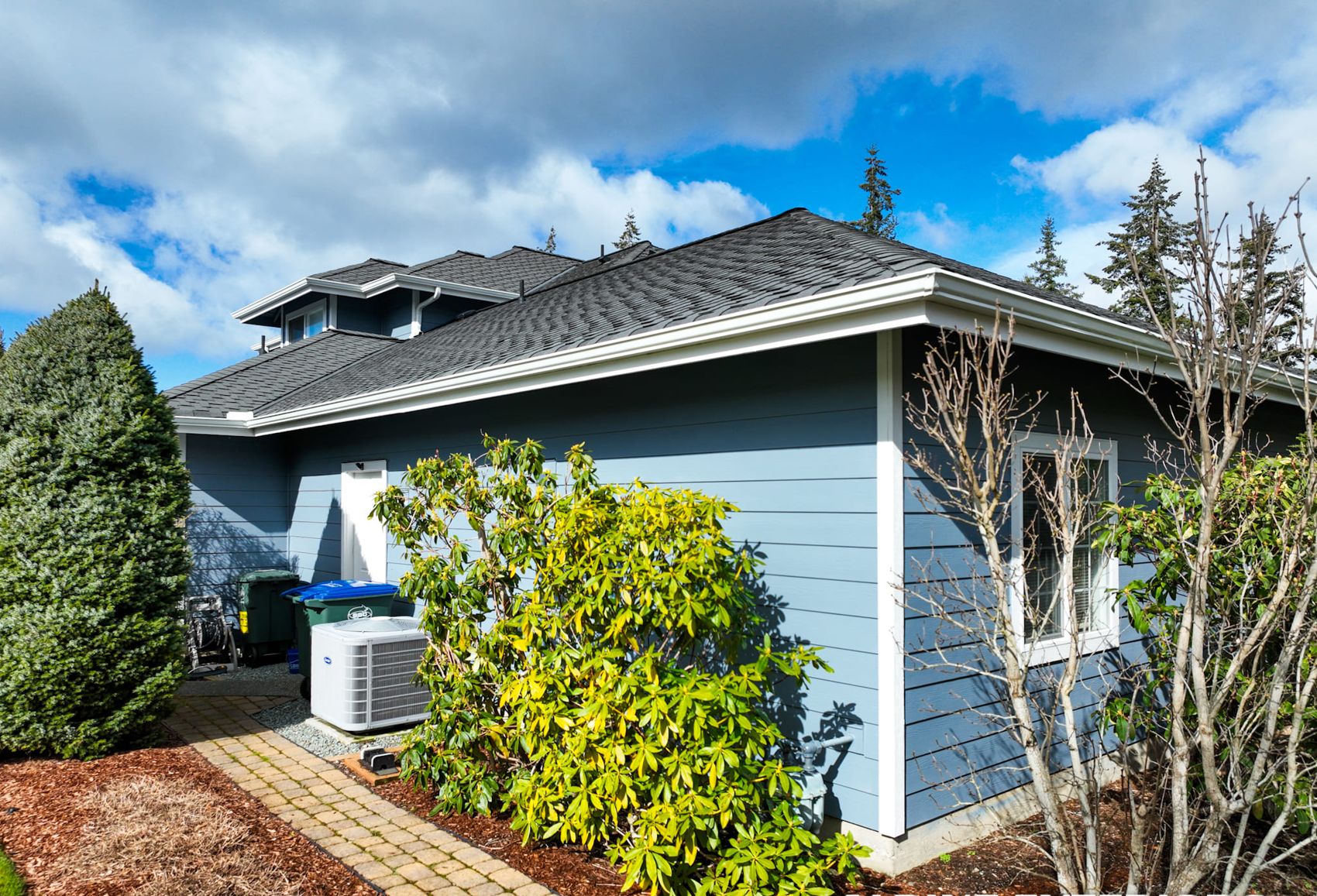
Whatcom County gets a lot of slow, sustained rain rather than short heavy downpours, and that changes how these clearance rules actually play out. A code-minimum gap that might dry out in a day in a drier climate can stay damp for a week here, especially on north-facing walls in Bellingham or shaded lots around Sudden Valley that don't get much direct sun to dry the siding between storms. Add in moss and algae growth, which thrives in our humidity and takes hold fastest in the lowest, dampest few inches of a wall, and you have a strong argument for treating the 6-inch minimum as a floor, not a target.
Wind-driven rain off Bellingham Bay and the Strait of Georgia adds another layer. On exposed lots in Blaine, Birch Bay, and the islands, storms don't just fall straight down — they drive rain sideways into wall-roof intersections and under siding laps that would stay dry in a calmer setting. That's exactly where flashing details matter most, and it's why we pay close attention to kickout flashing, head flashing over windows near rooflines, and properly lapped house wrap on west- and southwest-facing walls that catch the weather first.
Up toward the foothills — areas like Deming, Kendall, and the higher elevations feeding into Sudden Valley — freeze-thaw cycling becomes a factor that Bellingham proper rarely deals with. Water that gets trapped behind siding or in a gap that's too tight can freeze, expand, and work joints and fasteners loose over a few winters, accelerating damage that started as a simple clearance or flashing problem. And running through all of it is the Washington State Energy Code, which since its recent editions has pushed most new and re-sided walls toward continuous exterior insulation and a fully detailed water-resistive barrier. That added layer of rigid insulation changes the wall's total thickness, which means window and door trim, flashing laps, and grade clearance all have to be re-measured against the new wall plane — it's not a detail you can eyeball off the old siding line.
If you're planning new siding, a re-side, or you're just worried about an older home, a few practical steps go a long way:
Alpine Exteriors deals with this kind of assessment regularly across Bellingham, Ferndale, Lynden, and the surrounding county, and honestly, the fix isn't always a full re-side. Sometimes it's regrading a flower bed away from the foundation, adding a kickout flashing that was missed during original construction, or trimming the bottom course of siding to restore proper clearance. Other times, especially on older homes where the sheathing has already taken on moisture damage, a full re-side with correctly detailed flashing and a modern water-resistive barrier is the more honest recommendation, even though it's the bigger job.
Siding sitting closer than the recommended clearance to soil or mulch stays wet longer after rain, splashes with soil and organic matter that hold moisture against the material, and gives moss and algae an easy foothold. Over time that constant dampness can work past the siding's finish and into the wall sheathing behind it, particularly on the shaded or north-facing sides of a home that don't get enough sun to dry out between our frequent rain events.
Six inches is the common manufacturer minimum, but it's a minimum, not an ideal. On exposed or persistently damp sites — low spots, heavily shaded walls, or lots near Bellingham Bay that catch a lot of wind-driven rain — more clearance, better site drainage, and a gravel or hardscape buffer instead of mulch right against the foundation all reduce the risk beyond what the bare minimum provides.
Kickout flashing is a small diverter piece installed at the bottom of a roof-to-wall step-flashing run, where it directs water running down the roof and wall out into the gutter instead of letting it flow behind the siding at that corner. It matters especially in Whatcom County because our rain is frequent and often wind-driven, so a missing kickout flashing doesn't just leak occasionally — it can funnel water behind the wall assembly steadily for years without any visible sign until the trim or sheathing has already started to rot.
Yes, though for different reasons than an older home. Newer construction under the current Washington State Energy Code often includes continuous exterior insulation, which changes the wall's thickness and requires flashing, trim depths, and grade clearance to be recalculated rather than copied from older standard details. A newer home built or re-sided without that recalibration can end up with technically modern materials installed with outdated clearance assumptions.
If you're not sure whether your home's siding clearance or roofline flashing is doing its job, it's worth having someone look before a small gap turns into hidden rot. Alpine Exteriors (WA contractor license ALPINI751OW) works on homes throughout Bellingham, Ferndale, Lynden, Blaine, Birch Bay, Sudden Valley, and the islands, and we're happy to walk your property, point out what we see, and give you a straight answer about whether you need a repair, a partial fix, or nothing at all right now. Reach out to schedule a look at your siding and flashing details.