
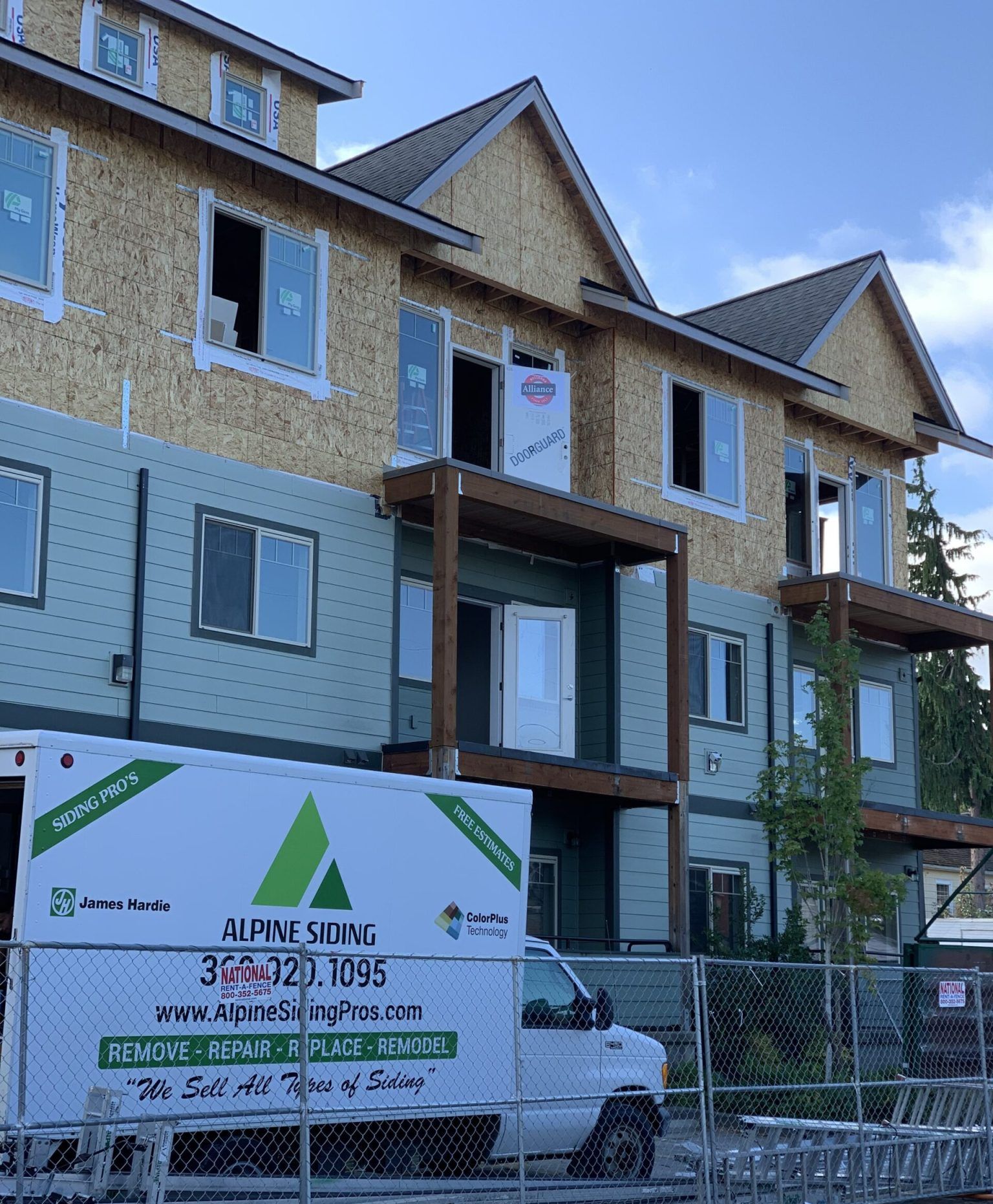
Toad Lake sits tucked into the trees off James Street in north Bellingham, and that setting is part of what makes the neighborhood so pleasant — and part of what's hard on siding. Mature fir and cedar shade most lots, which keeps summers cool but also keeps walls damp long after a storm has passed. Add the wind-driven rain that rolls off Bellingham Bay and the Strait of Georgia through the fall and winter, plus the freeze-thaw swings that reach into the foothills east of town, and you have a climate that will eventually find every weak point in a home's exterior. The question for most homeowners isn't whether siding will show wear here — it's whether what you're looking at is cosmetic or structural, and how soon it needs attention.
Wood and older composite siding move when they take on moisture, and around Toad Lake that moisture exposure is almost constant during the wet months. A panel that's absorbed water swells, then shrinks unevenly as it dries in the shade of surrounding trees, and over a few seasons that cycle leaves boards bowed, cupped, or separated at the nail line. Vinyl siding has a different failure mode: it can buckle or ripple if the wall behind it has settled, if it was installed too tightly with no room to expand, or simply from age and UV exposure breaking down the material's flexibility. Either way, once a panel is visibly out of plane, water is getting behind it faster than it's getting out, which accelerates whatever is happening underneath.
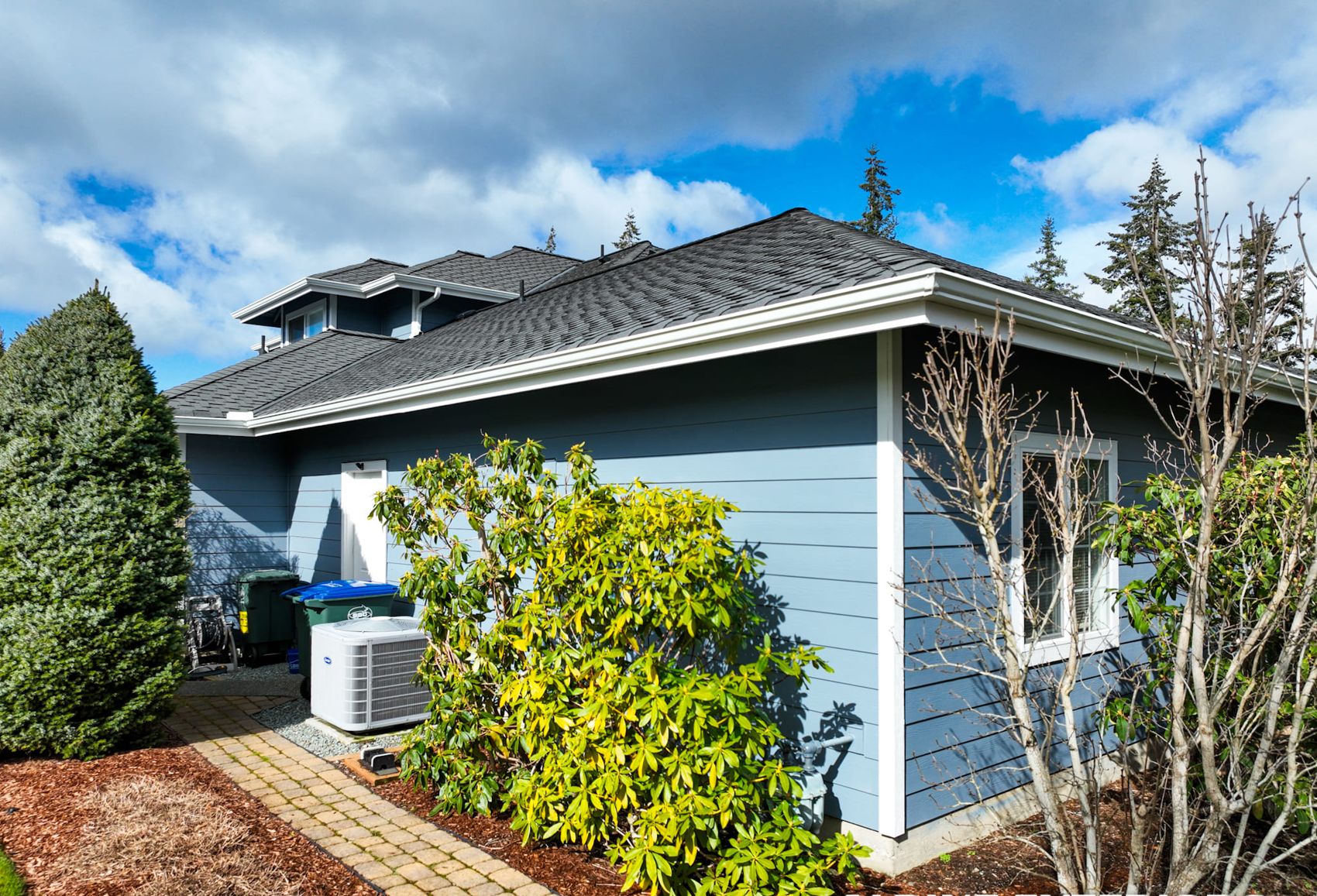
This is the sign that worries us most when we walk a Toad Lake property, because it usually means rot has already started in the wall assembly, not just the surface. Press gently on suspect siding, trim boards, and the bottom few feet of walls near grade — areas that stay wettest longest. If it gives like wet cardboard or a screwdriver sinks in with light pressure, water has been sitting in that wood for a while. This shows up most often on the shaded, north- and east-facing walls of Toad Lake homes, where tree cover blocks the sun and wind that would otherwise dry things out after a storm. It's also common around window sills, deck ledgers, and anywhere two materials meet and a small gap lets water in without an easy way back out.
Paint failure is often the first visible symptom of a moisture problem, even when the siding underneath is still sound. Bubbling and peeling usually mean moisture is trying to escape through the paint film from behind — a sign that water has already gotten into the wood fibers or the wall cavity. Chalking, where a powdery residue comes off on your fingers, is more often just UV and age doing their normal work and isn't urgent by itself. The distinction matters: if paint is failing evenly across a sun-exposed wall, that's routine weathering. If it's failing in patches concentrated low on the wall, around a downspout, or under an eave that doesn't quite clear the wall, that's a drainage or flashing issue worth investigating before you repaint over it.
Green and black growth on siding is close to universal in Whatcom County, and on its own it isn't proof of failure — it's proof of shade and moisture, which Toad Lake has in abundance. The concern is what moss does over time: it holds water against the siding surface far longer than bare material would, and its root structures can work into seams, laps, and any place the paint film has a hairline crack. On wood siding especially, a mossy wall that never fully dries between rains is a wall that's rotting faster than a clean one, even if you can't see it yet. If washing the surface removes the growth and reveals sound material underneath, you're in maintenance territory. If scrubbing reveals soft wood, missing paint, or growth that's returned within a few weeks despite cleaning, the underlying material is likely compromised.
Caulk and sealant are wear items, not permanent fixes, and our freeze-thaw swings in the shoulder seasons are hard on them. Cold snaps that reach Toad Lake from the foothills contract materials at different rates — wood, vinyl, trim, and caulk all move slightly differently — and repeated cycles open hairline gaps at corners, window trim, and panel seams. Once that gap exists, wind-driven rain off the Bay finds it. A small crack in caulking is a five-minute fix. The same crack ignored for two or three winters becomes a channel that's been feeding water into the wall assembly the whole time, and by the time it shows up as an interior stain, the damage is well past a tube of sealant.
Not every warning sign is on the outside of the house. A musty smell in a closet on an exterior wall, a soft spot in interior drywall, or a slow-growing stain near a window are all signs that moisture has made it through the siding and sheathing. A less obvious clue is your heating bill: siding that's separated, gapped, or backed by waterlogged sheathing no longer does its job as part of the wall's thermal envelope, and homes built or re-sided before current standards can lose noticeable efficiency once the exterior layer starts failing. If you're planning a re-side and the wall is being opened up, it's worth having your contractor confirm the assembly meets current Washington State Energy Code requirements for insulation and air sealing rather than just matching what was there before.
Not everything on this list needs a call this week. Chalking paint on a sun-exposed wall, light surface moss that washes off cleanly, or a single small caulk crack you can reach with a ladder are reasonable to schedule for routine maintenance. Treat the following as urgent instead, and get them looked at before the next heavy rain:
The general rule: cosmetic issues on a wall that stays dry and sunny can wait for a normal maintenance window. Anything involving soft wood, active water intrusion, or a shaded or exposed wall that never fully dries deserves a prompt inspection, because in this climate a small problem in September is often a bigger one by the following spring.
Start with a walk around the house on a dry day, looking specifically at the shaded sides, the areas below downspouts, and anywhere trim meets siding. Press on any spot that looks discolored or swollen. If you find one or two isolated soft spots and the rest of the siding is sound, targeted repair may be all that's needed. If soft spots, buckling, and paint failure are showing up in multiple areas, or if you've already found interior signs of water intrusion, it's worth having a contractor open up a small test area to see what's happening behind the surface before deciding between repair and full replacement.
Alpine Exteriors inspects Toad Lake and Bellingham-area homes for exactly this kind of question — whether a wall needs a repair, a partial re-side, or a full replacement — and we'll tell you honestly if what you're seeing is manageable maintenance rather than pushing a bigger job you don't need. As a licensed Washington contractor (ALPINI751OW), we can also walk through how a re-side interacts with current energy code requirements if you're weighing that alongside the repair.
It depends heavily on material and exposure rather than age alone. A shaded, north-facing wall that stays damp for days after a storm will wear out faster than a sun-exposed wall on the same house, sometimes by a decade or more. Wood siding that's been well-painted and maintained can last a long time, but once moss, rot, or repeated paint failure set in, the clock speeds up considerably. Rather than going by a fixed number of years, it's more reliable to judge by condition — soft spots, buckling, and recurring paint failure are the signal, not the calendar.
Often, yes, if the material underneath is still sound. Washing removes surface growth and can extend the life of siding that hasn't started rotting yet, though it should be done at low pressure and with care around seams so you don't force water into the wall rather than off it. The catch is that washing only treats the symptom of shade and moisture, not the cause, so growth tends to return faster on heavily shaded Toad Lake lots than it would on a sunnier property. If you press on the wall after washing and it's firm and the paint is intact, you're fine to keep cleaning it on a regular schedule instead of replacing it.
Generally not on its own. Most policies treat gradual water intrusion and rot as a maintenance issue rather than a covered peril, since it results from wear over time rather than a sudden event. Coverage is more likely if the damage stems from a specific covered incident, like a windstorm tearing off panels and allowing water in afterward. It's worth reading your specific policy language or asking your agent directly, but budgeting for repair or replacement as a maintenance cost, rather than counting on a claim, is the safer assumption.
Doing one wall or section at a time is often reasonable, particularly if damage is concentrated on the shaded or storm-exposed side of the house and the rest of the siding is still in good shape. The tradeoffs are a possible color or texture mismatch with older material, especially if the existing siding is faded, and the practical reality that if one wall failed from years of moisture exposure, others may not be far behind. A contractor who looks at the whole house rather than just the obviously bad wall can tell you honestly whether a partial job makes sense or whether you're better off planning replacement in phases.
If you're seeing any of these signs on a Toad Lake home, the sooner someone looks at it, the more options you have — a caught-early repair is a fraction of the cost and disruption of a full wall replacement after a winter of unnoticed water intrusion. Alpine Exteriors serves Toad Lake, Bellingham, and the rest of Whatcom County, and we're happy to come take a straightforward look, tell you what we find, and lay out what actually needs to happen versus what can wait. Reach out to schedule an inspection before the fall rains set in.