
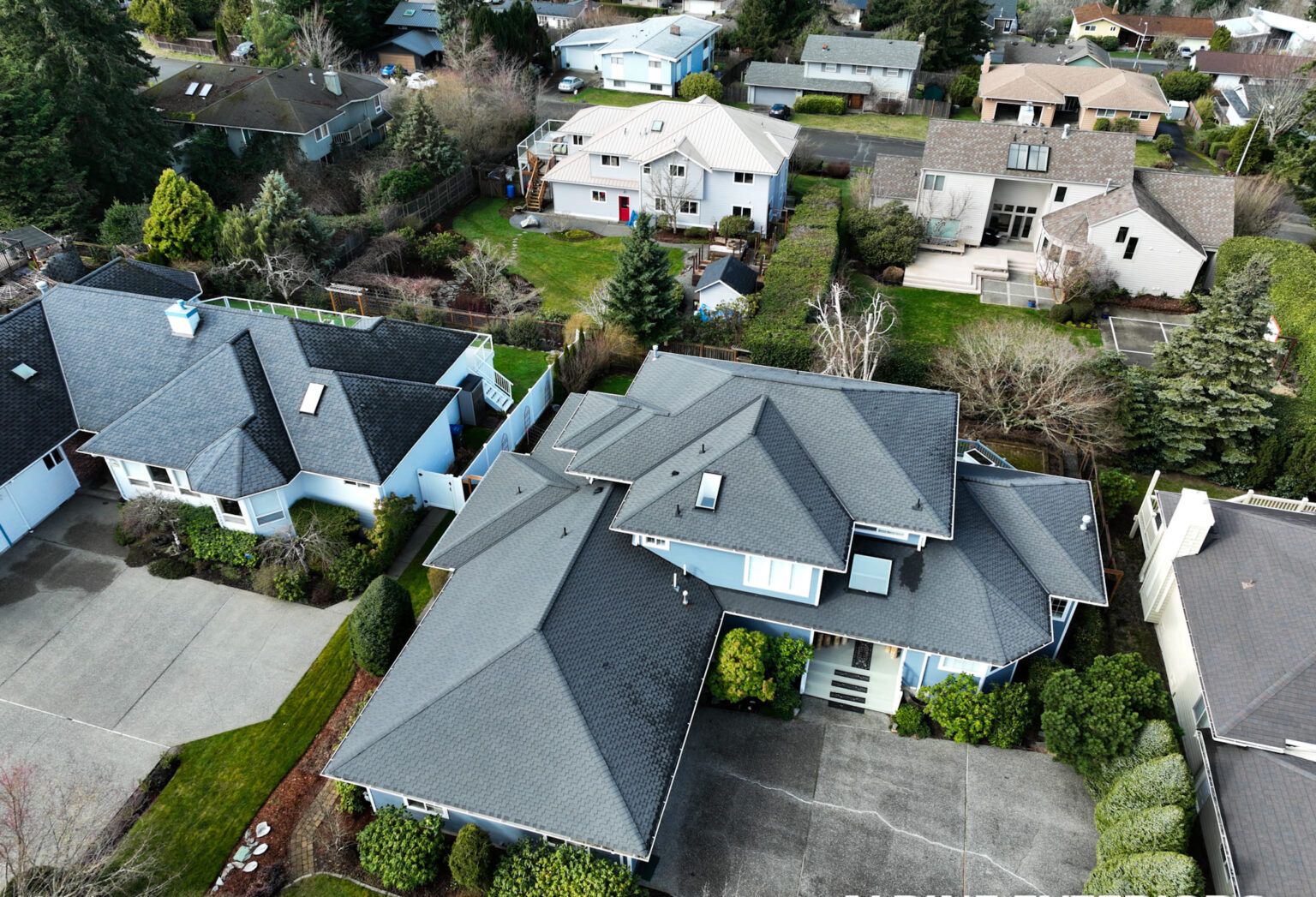
ColorPlus Technology is James Hardie’s factory-applied color finish for fiber cement siding — the color is baked onto the board under controlled conditions before it ever reaches your house, instead of being rolled or sprayed on-site after installation. It’s not a different siding material; it’s a different way of getting color onto the same fiber cement panels, trim, and soffit that Alpine Exteriors installs across Whatcom County. The practical upshot for a homeowner is a finish that’s more consistent, more baked-in, and — under the right maintenance — slower to show wear than a job-site paint coat.
Primed fiber cement siding leaves the factory ready for a painter to apply color once it’s on the wall. ColorPlus siding skips that step at the job site because the color has already been through a multi-coat process at the manufacturing plant: a base coat, color coats, and a clear topcoat with UV inhibitors, each cured before the next is applied. The panels are handled and cut with that finish already on them, and the color is bonded to the fiber cement substrate rather than sitting as a separate film on top of it the way field-applied paint does.
Because the finish is manufactured, not weather-dependent, it goes on in a controlled environment where humidity, temperature, and dry time are all fixed variables — none of which is true when a painter is working on a ladder in Whatcom County between rain showers. Hardie also backs the ColorPlus finish with a separate limited warranty specifically covering fading and peeling of the color, distinct from the product warranty on the fiber cement board itself. That’s worth understanding rather than glossing over: it means the finish and the substrate are, in the company’s own paperwork, two different things with two different guarantees.
The honest tradeoff is choice. ColorPlus comes in a fixed palette of factory colors. If you want a custom color that isn’t in that lineup, you’re back to primed siding and a paint job — which is a legitimate option, just a different set of tradeoffs around upkeep.
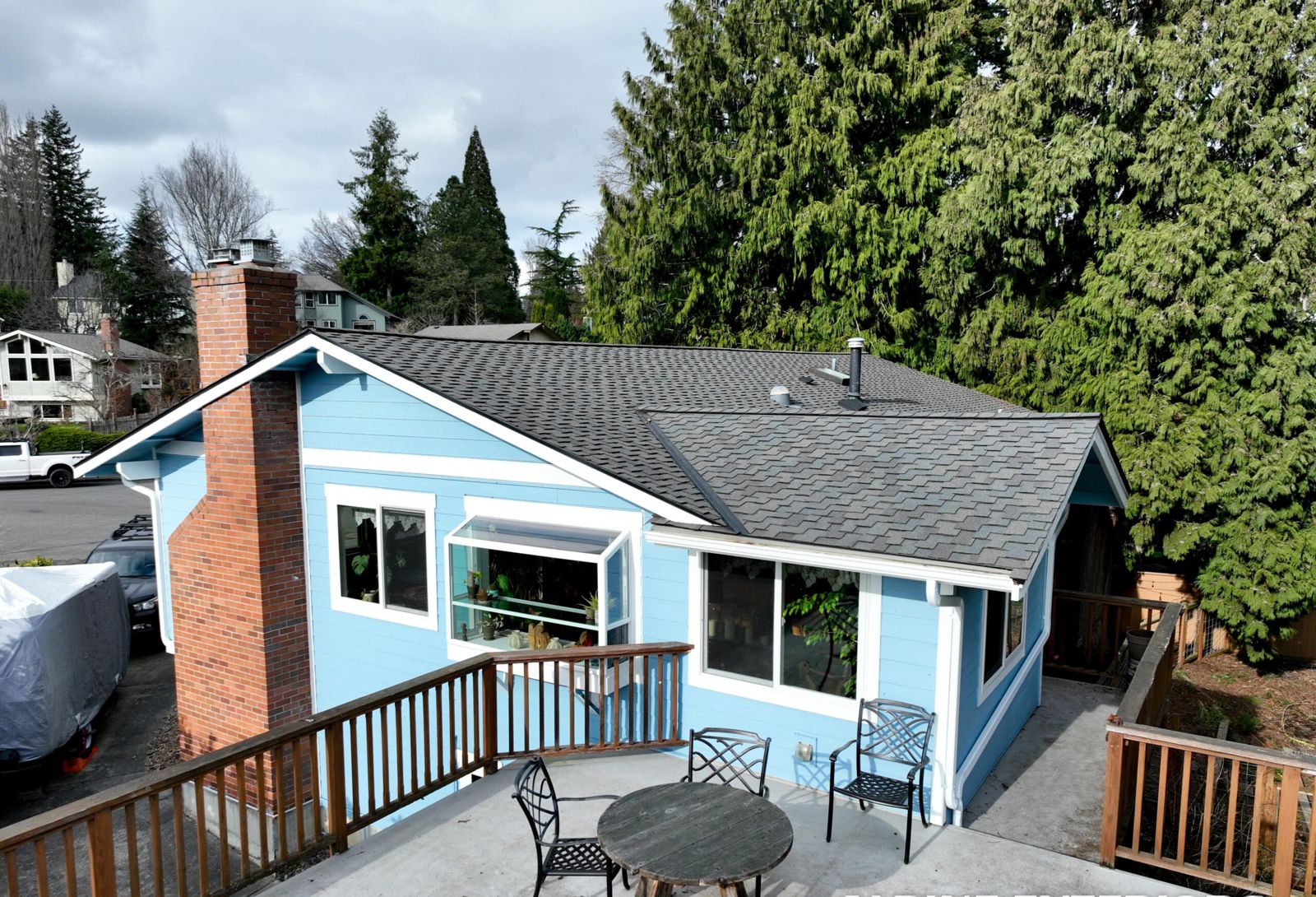
Whatcom County is a genuinely tough proving ground for any exterior finish, and it’s worth being specific about why rather than waving at “Pacific Northwest weather” in general terms.
Rain here isn’t occasional — it’s persistent, low-intensity, and long-duration for much of the year, which means siding on homes in Bellingham, Ferndale, Lynden, and out toward Sudden Valley spends a lot more cumulative hours wet than siding in drier climates. That matters for paint adhesion specifically: field-applied coatings need a dry, stable substrate to bond well, and a long stretch of drizzle can compress or interrupt a painting window in ways that show up later as peeling or uneven sheen. A factory-cured finish sidesteps that particular failure mode because it was never dependent on local weather to cure in the first place.
Moss and algae growth is another local reality, especially on north- and east-facing walls, under mature conifer canopy, and in shaded lots common around Sudden Valley and the more wooded parcels toward Lynden and the islands. No siding finish — ColorPlus included — is moss-proof; anything with a textured or matte surface will pick up organic growth over time if it stays damp and shaded. What ColorPlus does help with is keeping the underlying color stable once that growth is washed off, rather than the wash-down also stripping or dulling a thinner field coat.
Homes closer to Bellingham Bay, Birch Bay, and Blaine take wind-driven rain off the water — a meaningfully different stress than rain falling straight down, because it drives moisture sideways into laps, joints, and fastener points rather than just onto the face of the board. That’s less about the finish itself and more about installation detail: proper lap dimensions, flashing at penetrations, and correct fastener placement matter as much as which siding product is on the wall, and a well-applied ColorPlus board installed with sloppy flashing will still leak. Wood rot around windows, trim, and ground-contact areas is the downstream result of exactly that kind of water intrusion, which is part of why fiber cement — moisture-resistant by nature, regardless of finish — gets specified so often in this county to begin with.
Up toward the foothills and higher elevations in the county, freeze-thaw cycling adds another variable: water that gets into a crack or seam and then freezes can expand it, which is a slower, more mechanical kind of damage than UV fading. A cured, bonded finish with fewer hairline cracks than a brush-applied coat holds up somewhat better here, though it’s a secondary benefit compared to what good flashing and caulking practice does for freeze-thaw resistance.
Finally, any exterior work on a Whatcom County home has to account for the Washington State Energy Code, which governs the wall assembly — continuous insulation, weather-resistive barrier, and air sealing requirements — that sits behind the siding. ColorPlus is a finish choice on the cladding; it doesn’t change what the energy code requires underneath it, but a full siding replacement is the practical moment to get that wall assembly right, since the wall is already open.
Start by deciding whether color choice or long-term color retention matters more to you. If you want a specific custom color not in Hardie’s ColorPlus palette, primed siding with a quality paint job is a reasonable path — it just means budgeting for repainting on a shorter cycle than ColorPlus typically needs. If a set-it-and-largely-forget-it color is fine and one of the factory options works for your house, ColorPlus is the lower-maintenance route.
Either way, get the installation details right, because that’s what actually determines whether you get water intrusion problems in this climate:
Alpine Exteriors works with both ColorPlus and primed fiber cement across Whatcom County and can walk through which makes more sense for a specific house, elevation, and budget rather than defaulting to one answer.
Not under normal conditions — that’s the point of the factory finish. Down the road, if a section is damaged or if you eventually want a different color than the original factory choice, it can be painted, but doing so means giving up the ColorPlus finish warranty on that section going forward.
The UV-related fading risk that ColorPlus is largely designed against is more of a concern in high-sun climates than it is here, so this region isn’t where that particular failure mode shows up first. The more relevant local stresses are moisture cycling and organic growth, and the finish’s cured, bonded nature holds up reasonably well against both compared to a thinner field-applied coat — though nothing is immune to eventual wear over decades.
No, and it’s worth being direct about that. Moss and algae grow on organic debris and moisture sitting on any siding surface, factory-finished or not, especially in shaded and north-facing spots common in wooded parts of the county. What ColorPlus does is keep the color underneath more stable once you wash that growth off, rather than the cleaning process also degrading a thin paint layer.
It depends on your time horizon and how much you value a fixed palette versus custom color. If you plan to be in the house long enough to avoid one or more repainting cycles, ColorPlus often works out favorably on total cost. If you want a specific custom color or plan to sell relatively soon, primed siding with standard paint may be the more practical, lower-upfront-cost choice.
Whether ColorPlus makes sense for your home depends on your elevation, sun and shade exposure, and how your walls take on wind-driven rain off Bellingham Bay or the Strait — details that are easier to assess in person than to guess at from a general guide. Alpine Exteriors, WA contractor license ALPINI751OW, serves Bellingham, Ferndale, Lynden, Blaine, Birch Bay, Sudden Valley, and the surrounding islands, and can walk your specific house through the ColorPlus-versus-primed decision, look at your existing siding for wood rot or moisture damage, and put together a straightforward quote. Reach out to Alpine Exteriors to get eyes on the actual project before deciding.