
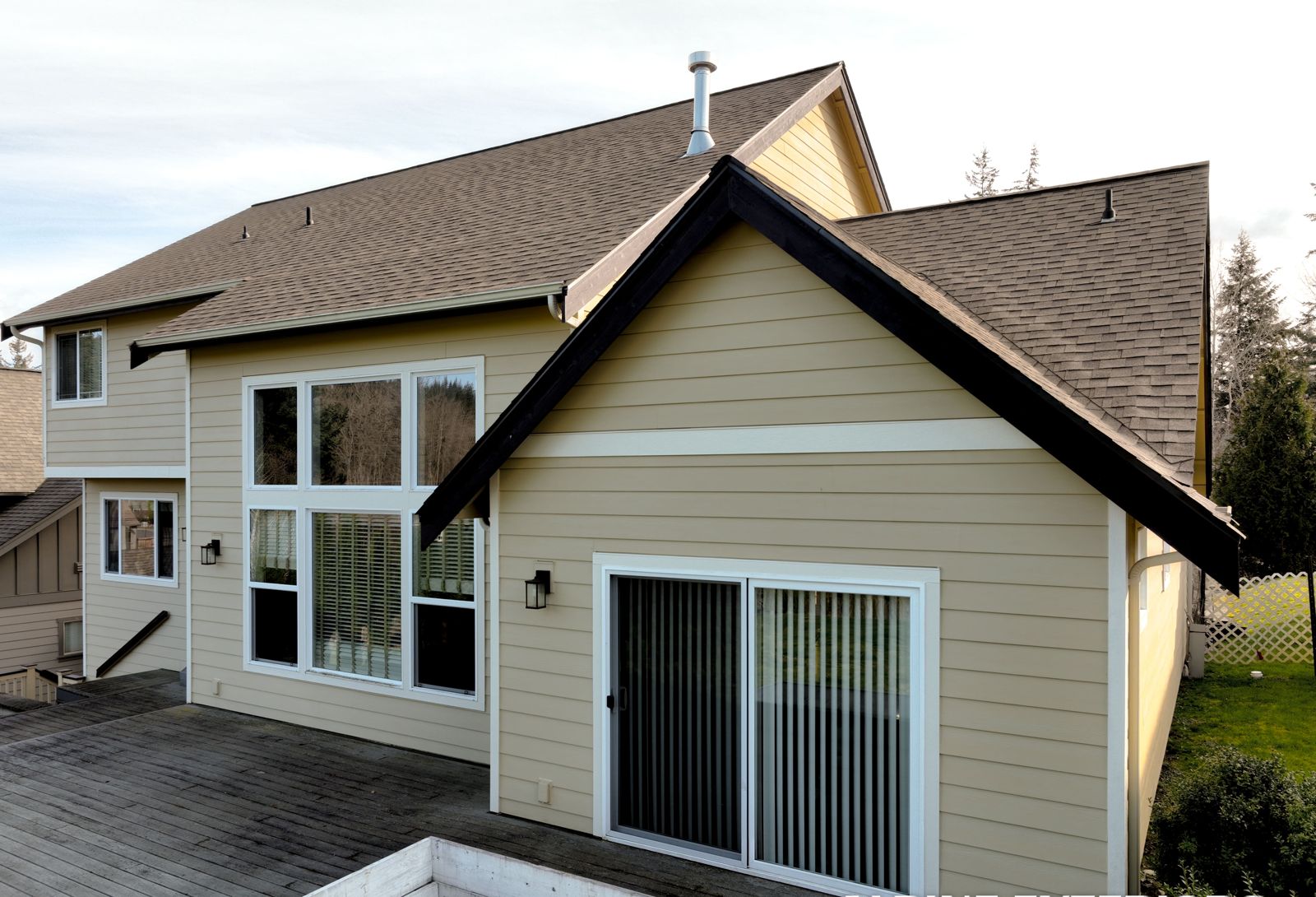
Mold growing inside a wall cavity is one of the least visible and most misunderstood problems a Whatcom County homeowner can face. By the time it shows itself on drywall or baseboards, the siding and sheathing behind it have often been wet for months, sometimes years. This page walks through how to spot it, why our corner of Washington is particularly prone to it, and how to think through the repair-versus-replace decision without guesswork or scare tactics.
Mold hidden behind siding rarely announces itself with a dramatic stain. Instead, it tends to show up as a collection of smaller clues that homeowners notice one at a time before connecting them.
None of these signs alone confirms mold inside the wall. But two or three together, especially on a wall that faces prevailing weather off Bellingham Bay or the Strait of Georgia, is a reasonable trigger to have someone open up a section of siding and take a look. A moisture meter reading on exposed sheathing, paired with a visual check for staining or fungal growth, usually settles the question without needing lab testing for a straightforward siding call.
Whatcom County's building envelope problems are almost always water problems, not heat or humidity problems in the way other parts of the country deal with them. A few local conditions show up again and again in the walls we open:
Notably, this isn't a hurricane or flood-zone climate, and we don't design around those risks here. The threat in Whatcom County is chronic, low-grade water intrusion sustained over a long wet season, not a single catastrophic weather event.
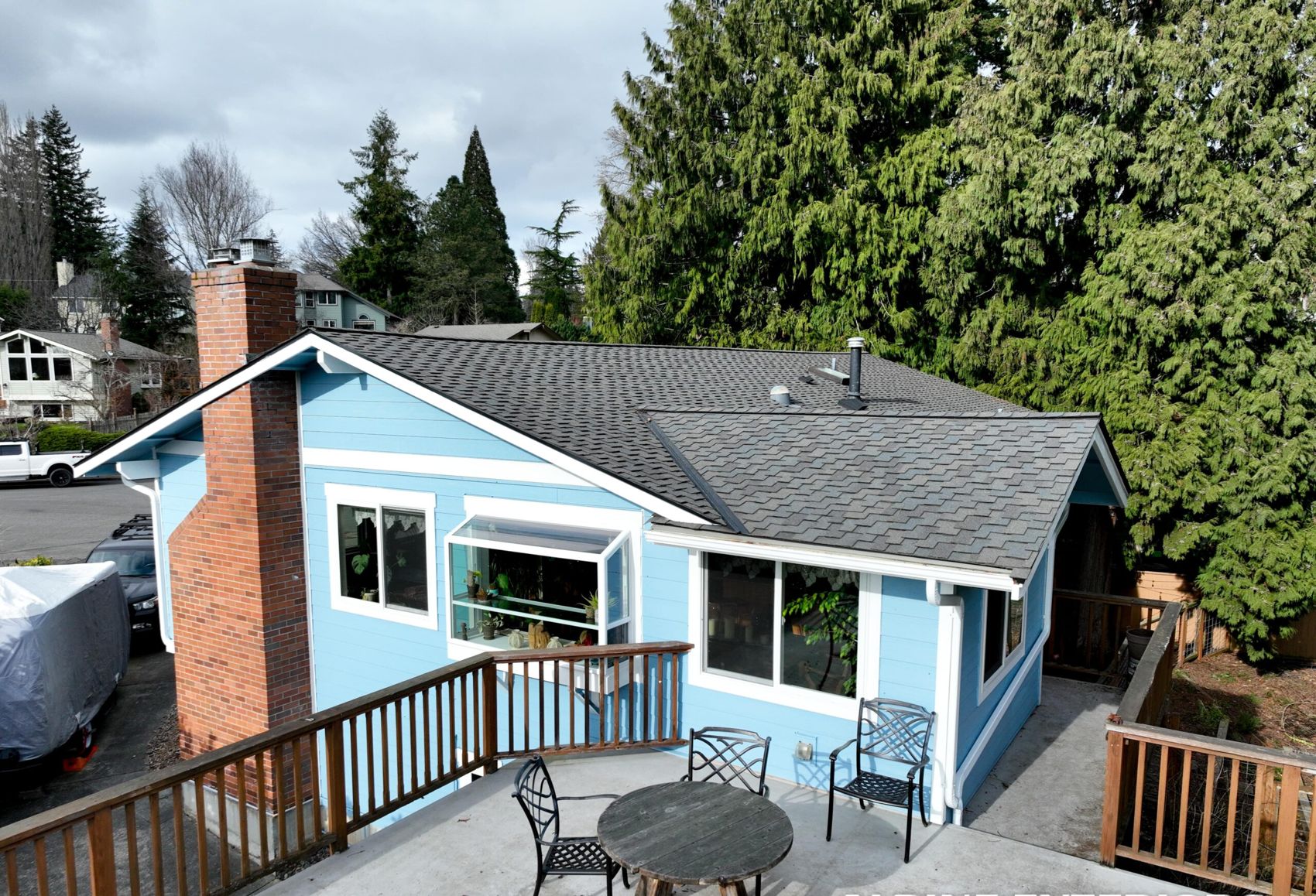
Urgency depends on scope and what's being affected, and it's worth being honest that not every case is an emergency.
A small patch of surface mold on the back of a siding panel, caught early with no soft sheathing or framing underneath, can often wait for a scheduled repair rather than a rush job. On the other hand, soft or delaminating sheathing, visible fungal growth on framing members, or mold reaching insulation and interior drywall points to an active, ongoing leak that's actively degrading structural material — and that warrants a prompt inspection rather than waiting for a slow season.
A few situations we treat as genuinely urgent: a musty smell that's intensifying, siding that's visibly pulling away from the wall, interior staining that's spreading week to week, or any household member with respiratory sensitivity reporting symptoms tied to being home. In those cases, opening the wall sooner limits how much sheathing and framing ends up needing replacement, which usually keeps the repair smaller and less expensive than waiting.
This is the decision homeowners actually want help with, and it depends on how far the moisture has traveled, not just how bad the siding looks from the driveway.
| Factor | Leans toward repair | Leans toward replacement |
|---|---|---|
| Extent of affected wall area | Isolated to one section or wall plane | Multiple walls or the majority of one elevation |
| Sheathing condition | Firm, no delamination | Soft, crumbling, or visibly rotted |
| Age and condition of remaining siding | Siding is younger, sound, and correctly installed elsewhere | Siding is original, brittle, or was installed without a drainage gap |
| Source of the leak | A single, identifiable flashing or caulking failure | Systemic issues — no house wrap, no kick-out flashing, tight-to-sheathing installation |
| Insulation condition | Dry or only lightly affected | Saturated, compressed, or moldy over a large area |
In practice, a repair means removing the affected siding panels, cutting out and replacing any compromised sheathing, treating or replacing affected framing, correcting the flashing detail that let water in, and reinstalling matching siding. This can be a clean, contained job when the damage is localized and the rest of the wall assembly is sound.
Full replacement becomes the more honest recommendation when the underlying installation itself is the problem — for example, siding installed decades ago with no drainage plane, where opening one section reveals the same risk exists behind every other panel on that elevation. Patching a wall that has no way to dry will usually just relocate the next failure a few feet over. We'll tell a homeowner when that's what we're looking at, even though a full re-side is a bigger project and a bigger cost than a patch repair.
Cost for this kind of work varies enormously depending on how much sheathing and framing turns out to be compromised once the wall is opened, so any number given before demolition is a rough estimate. Small, contained repairs might run in the low thousands of dollars; a wall section requiring sheathing and framing replacement climbs from there, and a full re-side of an elevation or the whole house is a different order of magnitude. We give homeowners a written scope after opening the wall, not before, because guessing at the extent of hidden rot rarely serves anyone well.
Most of the mold problems we find behind siding trace back to a handful of preventable gaps, and most of them are cheaper to address proactively than after the fact.
None of these steps are exotic. They're the kind of maintenance that's easy to defer on a house that looks fine from the curb, which is exactly why hidden wall moisture becomes a recurring theme in older Whatcom County homes.
Ordinary paint failure or weathering tends to be even across a wall and doesn't come with a musty odor or soft spots. If you're noticing a smell, spongy material when you press on the siding, or interior staining on the same wall, those are signs worth having checked rather than assuming it's cosmetic.
For most residential siding repairs, no. The remediation approach — remove wet material, dry out the cavity, replace compromised sheathing and insulation, fix the water entry point — is largely the same regardless of species. Lab testing is more relevant for large-scale indoor air quality concerns or health-driven disputes, not for a routine siding and sheathing repair.
It depends on the policy and the cause. Sudden, accidental water intrusion is sometimes covered; gradual leaks from long-term maintenance neglect typically are not, since most policies treat that as a maintenance issue rather than a covered loss. It's worth a call to your carrier before starting work, since coverage decisions are specific to the policy language and the documented cause.
We wouldn't recommend it. Installing new siding over wet or moldy sheathing traps the existing problem under a fresh surface and lets it keep progressing unseen. Any legitimate re-siding job on a wall with suspected moisture issues should include opening it up first to confirm what's underneath.
If you're seeing any combination of the signs above on a home in Bellingham, Ferndale, Lynden, Blaine, Birch Bay, Sudden Valley, or the islands, it's worth having a licensed contractor open up the affected section rather than waiting to see if it gets worse. Alpine Exteriors is a Washington-licensed contractor (license ALPINI751OW) serving Whatcom County, and we can walk through what we find, what it would take to repair versus replace, and give you a straightforward written scope before any work begins. Reach out to Alpine Exteriors to schedule a look at the affected wall.