
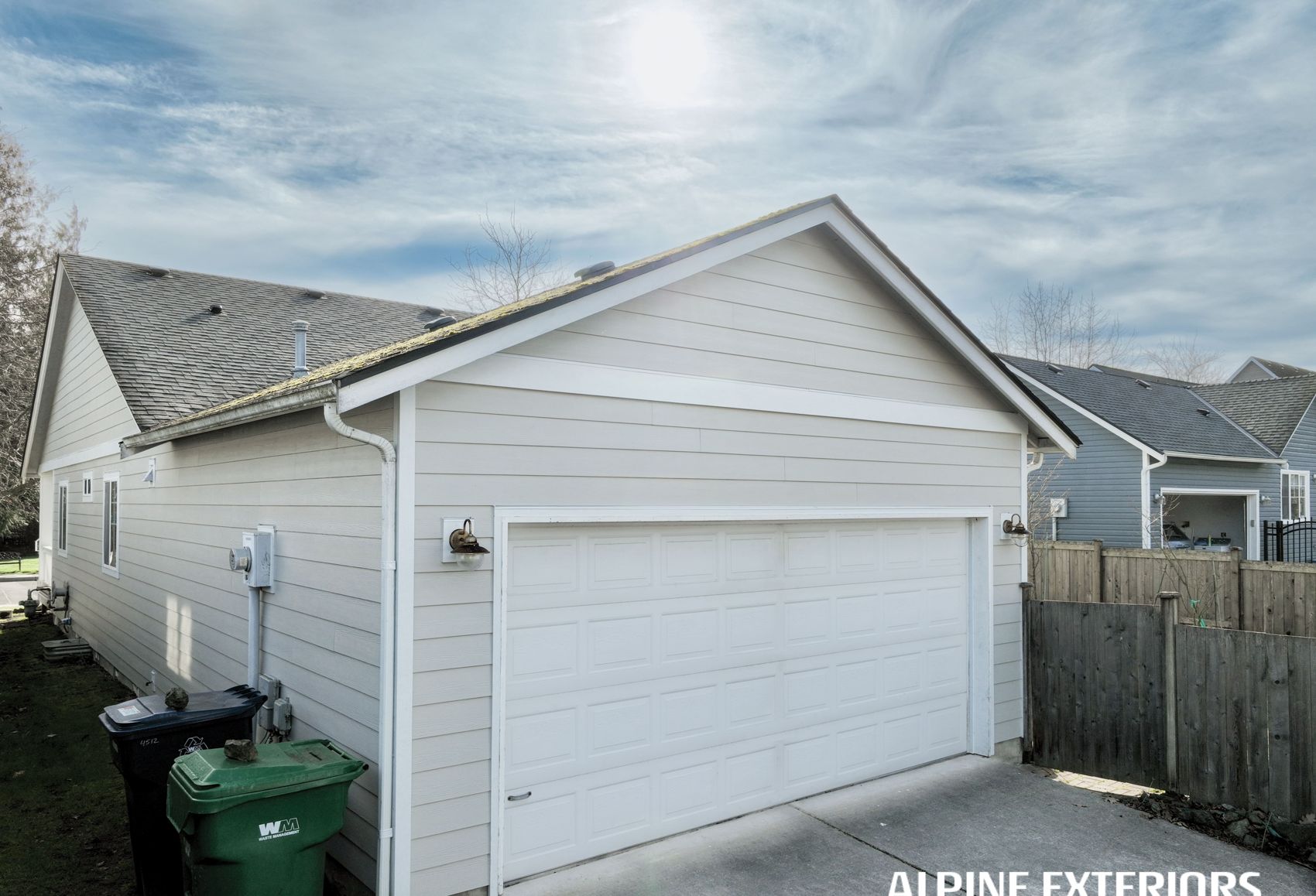
Homeowners from Bellingham to Lynden to the islands usually land on this question for one of two reasons: siding failure has shown up on just one exposure of the house, or the budget for a whole-house project doesn't line up with the calendar. Both full residing and wall-by-wall phasing are legitimate approaches here, but they behave very differently once you factor in Whatcom County's rain load, wind-driven moisture off Bellingham Bay and the Strait of Georgia, and the moss and algae growth that shaded, damp walls tend to collect. This page walks through both options honestly, including where each one falls short.
If the damage or wear is genuinely confined to one elevation — commonly the south or southwest wall that takes the brunt of wind-driven rain — and the rest of the siding is sound, tackling one wall at a time can be a reasonable, budget-friendly path. If you're seeing moisture problems, wood rot, or algae staining on more than one wall, if the house predates current energy code assemblies, or if you want a single finished look and a single warranty, full residing is usually the better long-term move. The deciding factor isn't really preference — it's what's actually happening behind the siding on every wall, not just the one that looks bad.
Full residing means stripping the exterior down to the sheathing on every wall, correcting any water intrusion or rot found along the way, installing a weather-resistive barrier and rainscreen gap, bringing the wall assembly up to current Washington State Energy Code insulation requirements, and finishing with new siding across the whole house in one continuous project.
The honest drawback is cost and disruption — it's a bigger check written at once, and the house is under construction on all sides for the duration of the job, which is a bigger short-term inconvenience for anyone still living in it.
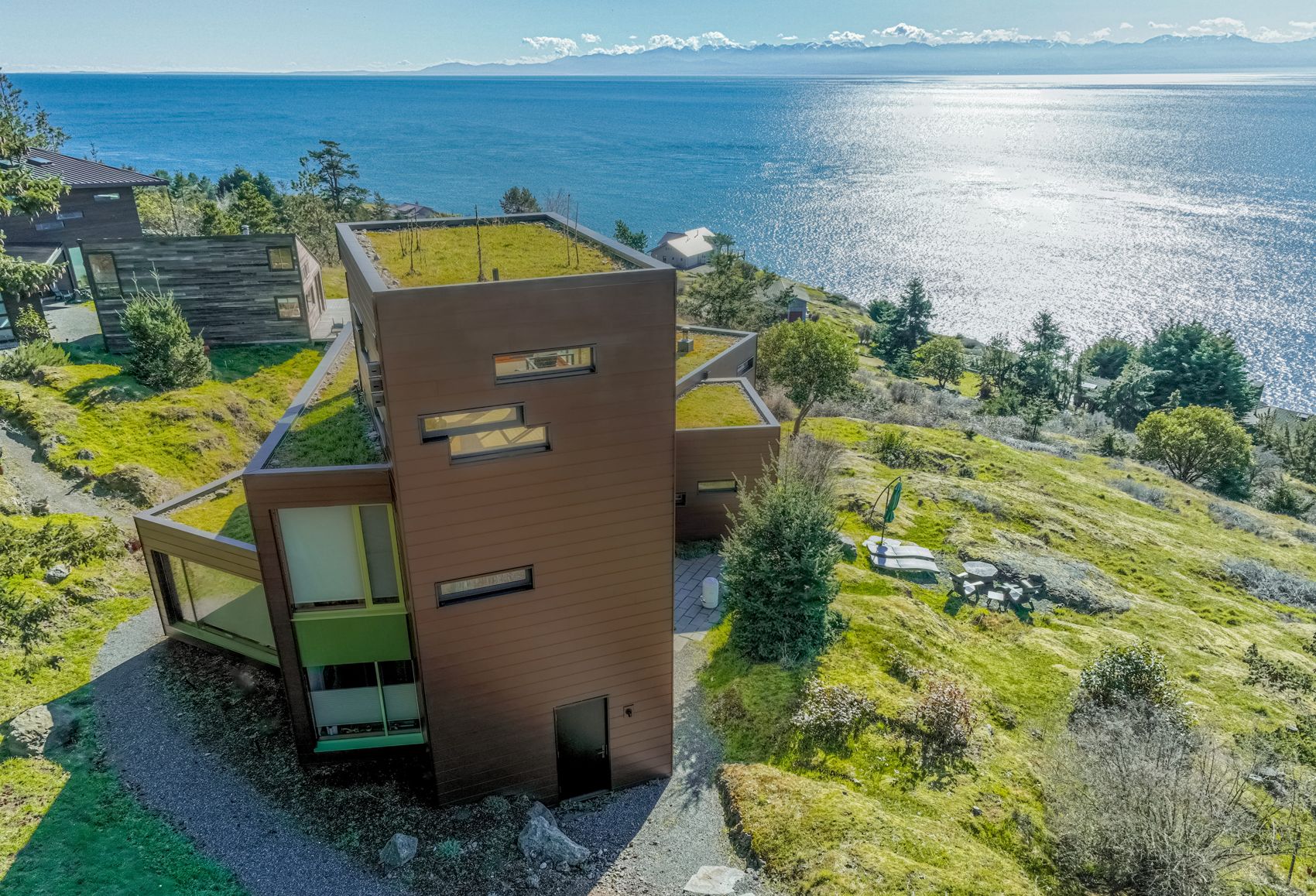
This approach treats the house as a series of independent projects, usually starting with the wall showing the most visible wear — often the side exposed to wind-driven rain coming off the Bay or the Strait, or a north-facing wall that stays damp long enough to grow moss and algae. You replace that wall's siding, correct whatever moisture or rot is found there, and leave the rest of the house alone until budget allows the next phase.
The real drawbacks show up over time. Siding products change color runs and get discontinued, so a wall finished this year may not match one finished in three years — and existing siding weathers and picks up algae staining at a different rate than the section you just replaced, so the mismatch can grow even with the same product. Doing the work in separate mobilizations also tends to cost more in total labor than one combined job. The trickiest part is the transition at inside and outside corners: if the tie-in between old and new siding, flashing, and weather-resistive barrier isn't detailed carefully, that seam becomes a new place for wind-driven rain to find its way behind the wall. And because rot doesn't respect wall lines, moisture that started on the wall you're not fixing yet can keep spreading into framing you haven't inspected.
| Full Residing | One Wall at a Time | |
|---|---|---|
| Cost | Higher total up front, typically a lower total cost per square foot once mobilization and crew setup are spread over the whole job | Lower cost per phase, but total cost across all phases often ends up higher due to repeated mobilization and setup |
| Lifespan | Consistent lifespan across the whole envelope since every wall is installed at the same time with the same materials and detailing | Staggered lifespan — the first wall done will need attention again before the last wall reaches the same age |
| Maintenance | One consistent maintenance schedule for the whole house | Different walls age and need cleaning, caulking, or repair on different timelines, which is easy to lose track of |
| Appearance | Uniform color and material across all elevations | Visible mismatch likely over time as product runs change and existing siding weathers, fades, or develops moss and algae staining at a different rate |
Whatcom County's climate makes this a slightly different calculation than it would be in a drier region. Persistent rain, wind-driven moisture off Bellingham Bay and the Strait of Georgia, and shaded walls that stay damp long enough to grow moss and algae mean that moisture problems rarely stay confined to the wall where they first show up. Before deciding, it's worth having every wall inspected — not just the one that looks bad — because wood rot found behind siding often extends further than the visible staining suggests, especially around window flashing and at wall-to-roof transitions.
If the inspection turns up isolated damage on one exposure and the rest of the assembly is sound and reasonably current with energy code expectations, phasing wall by wall is a defensible way to manage cash flow, and Alpine Exteriors will say so plainly rather than push a bigger job than the house needs. But if there's evidence of moisture intrusion on more than one wall, if the house is older and the existing wall assembly predates current Washington State Energy Code insulation and vapor-barrier requirements, or if freeze-thaw cycling in the foothills around Sudden Valley or the Lynden area has stressed multiple sections of siding, full residing tends to be the more cost-effective choice once you account for repeated mobilizations and the risk of chasing hidden rot one wall at a time. For homes on the islands or in harder-to-reach spots like Birch Bay, minimizing the number of separate trips a crew has to make is also a practical reason to lean toward doing the whole house at once. Alpine Exteriors, WA contractor license ALPINI751OW, walks through both options with homeowners based on what's actually found during inspection rather than a one-size-fits-all recommendation.
You can, but it's worth going in with realistic expectations. Manufacturers update color runs and discontinue profiles over a few years, so a wall finished today may not be an exact match to one finished later even with the same product line ordered. If a uniform look across the whole house matters to you, that's a point in favor of doing it all at once rather than phasing it.
It lowers the cost of any single phase, which helps if cash flow is the constraint, but it usually doesn't lower the total cost of the project. Each phase involves its own mobilization, scaffolding or ladder setup, and crew time, and those setup costs don't shrink just because the wall is smaller. If total cost is the main concern rather than timing, a full residing project is typically more efficient.
The transition point is the part that requires the most care. It comes down to properly lapping and sealing the weather-resistive barrier where the new and existing wall assemblies meet, flashing the corner correctly so wind-driven rain can't work its way behind the seam, and tying the new rainscreen gap into the existing wall in a way that still lets moisture drain and dry. Done carelessly, this seam becomes the single most likely spot for a leak to develop.
The wall you're actively permitting and rebuilding needs to meet current Washington State Energy Code requirements for insulation and the building envelope at the time that work is done. The walls you haven't touched yet remain as they were built, under whatever code applied when the house was constructed, until you get to them. That's normal for phased work, but it does mean the house will have mixed-vintage wall assemblies until every side has been brought up to the current standard.
Whichever approach fits your home and your budget, the first step is the same: a full inspection of every wall, not just the one that looks worst. Alpine Exteriors serves Bellingham, Ferndale, Lynden, Blaine, Birch Bay, Sudden Valley, and the islands, and can walk your house with you to identify where moisture has actually gotten in before recommending full residing or a phased, wall-by-wall plan. Contact Alpine Exteriors to schedule an assessment and get a straightforward recommendation for your specific home.