
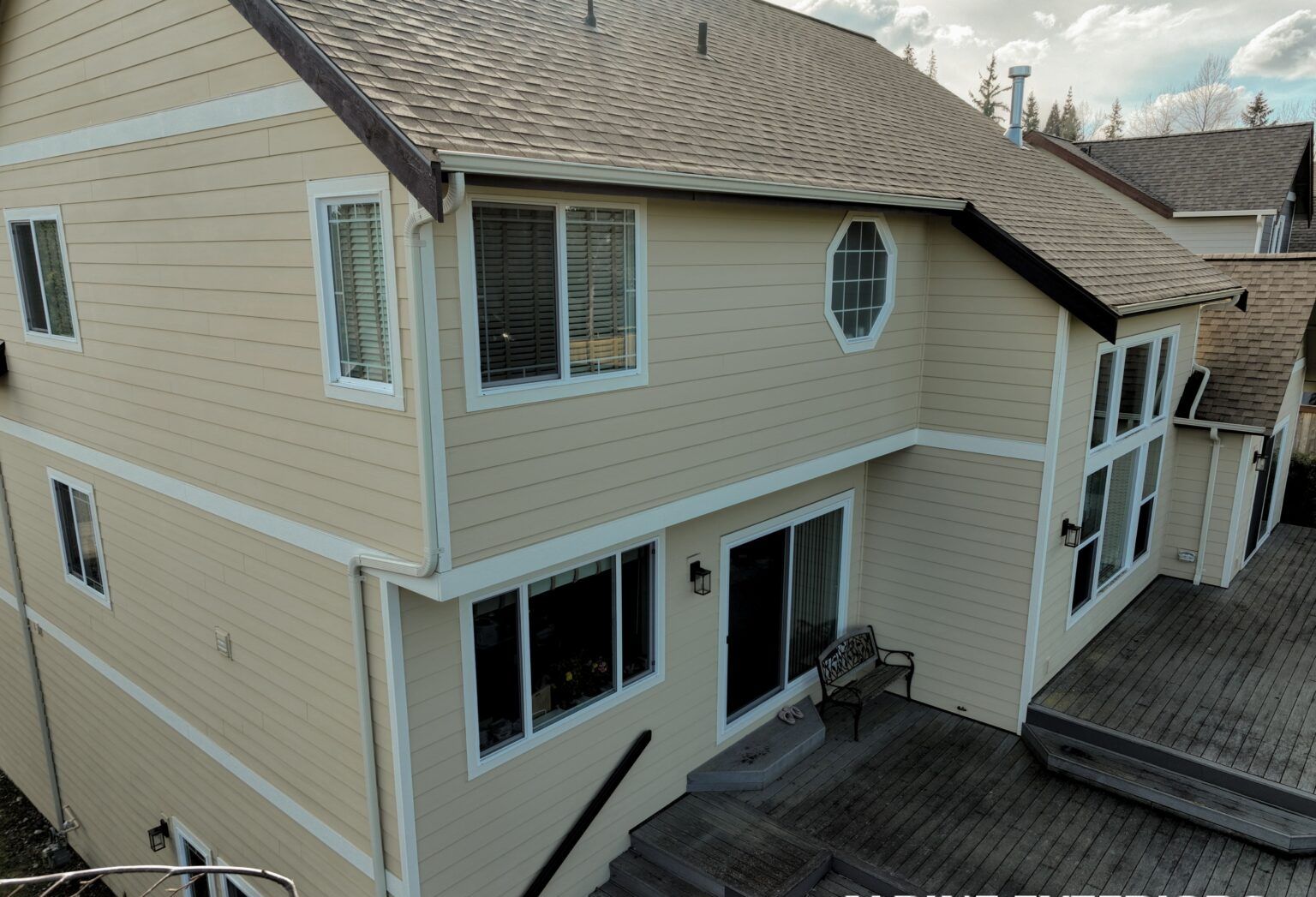
If you like the staggered, woodsy look of shake siding but don't want to sign up for a repeating maintenance schedule, HardieShingle fiber cement is usually the better fit for most Whatcom County homes, especially on walls that catch wind-driven rain off Bellingham Bay or sit under fir and cedar canopy where moss takes hold fast. If you want the real thing, actual cedar, with the depth, grain, and weathering that only solid wood produces, and you're willing to budget for staining, cleaning, and the occasional shake replacement, cedar shake earns its keep, particularly on a craftsman or historic-style home in neighborhoods like Fairhaven where the material is part of the architectural language. Neither is a bad choice; they solve different problems, and the right one depends on which walls of your house actually take the weather.
HardieShingle siding is a fiber cement product from James Hardie, made from portland cement, sand, and cellulose fiber pressed into individual shingle-profile panels that install in a staggered or straight-edge pattern to mimic the look of cedar shake or shingle siding from a few feet away. It comes factory-primed for field painting or with a factory-applied ColorPlus finish that carries its own limited warranty against fading and chipping. Because it's cement-based rather than wood, it doesn't rot, it isn't a food source for the moss and algae that thrive through this county's long wet season, and it holds up to the wind-driven rain that comes off Bellingham Bay and the Strait of Georgia into exposed sites around Blaine, Birch Bay, and Point Roberts without the swelling and cupping that wood can show over time.
It isn't maintenance-free, though. The panels still need caulking at trim joints, a factory finish will eventually need repainting on older installations, and fiber cement is heavy and dust-generating to cut, so installation quality matters. Improper nailing patterns, tight butt joints, or missing clearance at grade are the most common causes of early failure, and correcting them later means pulling siding back off the wall. It also reads as slightly more uniform than real wood up close; from the sidewalk it's a convincing shake look, but it won't fool someone standing at the wall.
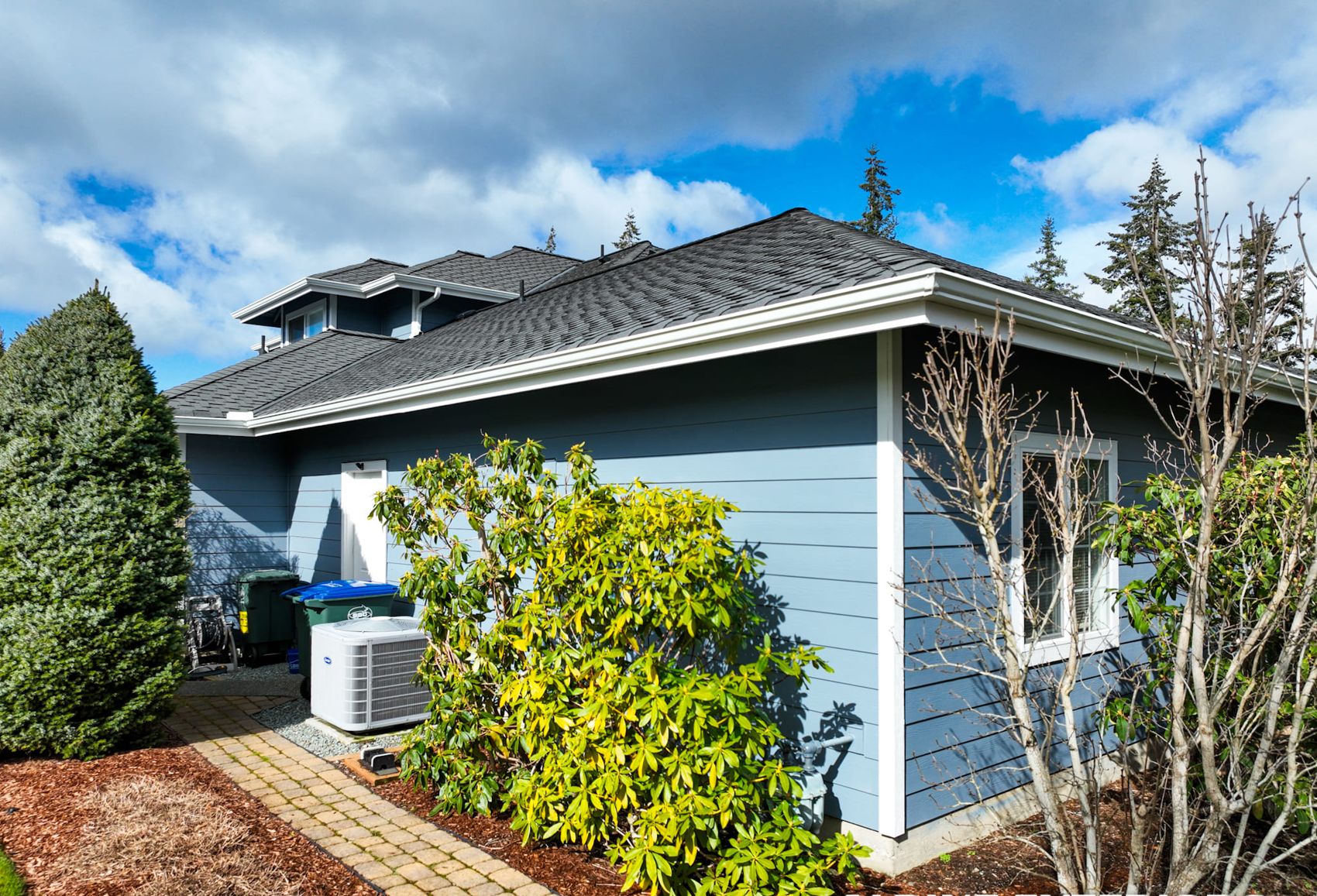
Cedar shake is solid western red cedar, split or sawn into individual pieces and applied in overlapping courses, the same way it's been used on homes throughout the Pacific Northwest for well over a century. Hand-split shakes have a rough, deeply textured face; sawn shingles are smoother and more uniform. Left untreated, cedar weathers to a soft silver-gray; stained or treated with a water-repellent preservative on a regular cycle, it can hold color and stay serviceable for decades. It's a genuinely regional material. A lot of the older housing stock in Fairhaven, around downtown Bellingham, and in Lynden and Ferndale's older cores is finished in cedar shingle or shake, and it's often the material a historic-district design review board or an older-neighborhood HOA will expect or require.
The tradeoff is exposure to this region's climate. Whatcom County's persistent rain, combined with shaded, tree-covered lots common around Sudden Valley and the islands, keeps cedar damp for long stretches, which is exactly the condition moss, algae, and eventually wood rot need to take hold, especially on north-facing walls and under overhangs that block sun and airflow. A rainscreen gap behind the shakes and back-priming before installation both help the wood dry out between storms, but they don't eliminate the need for periodic cleaning and re-treatment, and shakes that do rot or split have to be replaced one at a time, which can be hard to color-match against weathered neighbors.
| HardieShingle Fiber Cement | Cedar Shake | |
|---|---|---|
| Cost | Moderate to higher installed cost, driven mostly by labor; material pricing is fairly consistent across suppliers | Comparable to higher installed cost; hand-split shakes and clear-grade cedar run more than machine-sawn shingles |
| Lifespan | Multiple decades with a sound rainscreen install and occasional repaint or caulk touch-up | Multiple decades when maintained on schedule; individual shakes fail sooner where moisture management is poor |
| Maintenance | Periodic caulk and paint touch-up; resists rot and insects; shaded walls still need moss and algae washdowns | Regular cleaning and re-staining or re-oiling; spot replacement of split or rotted shakes; more moss-prone in shade |
| Appearance | Convincing shake profile at a distance, with factory-consistent color and texture | Authentic depth, grain, and natural weathering that fiber cement can approximate but not fully replicate |
Whatcom County's siding decisions get made by weather more than by taste. The county sees a long, wet fall-through-spring stretch, wind-driven rain that hits exposed shoreline sites around Blaine, Birch Bay, and the bay-facing parts of Bellingham hard enough to drive moisture sideways into wall assemblies, and enough tree cover, especially inland toward Sudden Valley, Lynden, and the islands, to keep shaded walls damp and mossy well after a storm has passed. Foothill properties toward the Mt. Baker corridor also see more freeze-thaw cycling than the immediate coastline, which stresses any material that absorbs and holds water. None of that is severe-storm-level exposure; it's slow, cumulative dampness, and it rewards whichever siding sheds and dries fastest.
That's the case for HardieShingle on most exposed elevations: it doesn't absorb water into its structure, so it isn't feeding the moss and algae the way bare or under-maintained cedar can, and it isn't going to develop the soft spots behind the cladding that turn into a costly repair. It also pairs cleanly with the wall assemblies required under the Washington State Energy Code. Continuous exterior insulation and a properly detailed water-resistive barrier work the same way behind fiber cement or cedar, but a fiber cement rainscreen holds its shape and fastening over the life of that assembly with less risk of the siding itself becoming the failure point.
Cedar still makes sense in the right spot: a covered porch gable, a street-facing accent wall with real overhang protection, or a home in a historic district where the material is expected. Plenty of homeowners split the difference, using cedar shake on protected, character-defining elevations, and HardieShingle on the walls that take the brunt of the weather. Alpine Exteriors has installed both across Whatcom County long enough to know which walls on a given lot are going to fight moss every year regardless of material, and that's usually the conversation worth having before choosing. We'll walk your specific site, note the shaded and wind-exposed faces, and size the recommendation to the house rather than apply a blanket rule. Alpine Exteriors carries Washington contractor license ALPINI751OW and works this exact climate every week, from Bellingham out to Blaine and the islands.
Cedar shake itself isn't an insulation layer, it's a cladding, so code compliance comes down to what's behind it. The Washington State Energy Code sets requirements for continuous insulation, air sealing, and the water-resistive barrier in the wall assembly, and those requirements are met the same way whether the visible siding is cedar shake or fiber cement. What changes with cedar is the need for an effective drainage gap behind the shakes so the assembly can dry, which matters as much for code-compliant moisture control as it does for the siding's own lifespan.
There's no fixed number that holds for every wall, because sun exposure and shade make a bigger difference than the calendar. A south-facing wall that dries out between storms can go longer between treatments than a shaded, tree-covered wall in Sudden Valley or on one of the islands, which may need attention more often just to stay ahead of moss and graying. The honest approach is to inspect annually and re-treat when the water-repellency starts to fail, rather than assume every wall of the house ages at the same rate.
Fiber cement is manufactured and tested to handle freeze-thaw cycling, which is relevant here given the colder winters that foothill properties toward the Mt. Baker corridor see compared to the immediate coastline. Cracking is far more often tied to installation issues, such as panels fastened too tight with no room to move, unsealed cut edges, or trim details that trap water, than to the cold on its own, which is another reason installation quality matters as much as the product choice.
Yes, and it's a common approach in this county. Using cedar shake on a covered gable, dormer, or entry feature that has real overhang protection, while running fiber cement across the more weather-exposed walls, lets you keep the natural-wood look where it's easiest to maintain and put the lower-maintenance material where the weather actually hits hardest.
If you're weighing Hardie shingle against cedar shake for a home in Bellingham, Ferndale, Lynden, Blaine, Birch Bay, Sudden Valley, or the islands, the right answer usually depends on which walls of your specific house take the weather and how much upkeep you actually want to take on. Alpine Exteriors will walk the property, point out the elevations most likely to need attention either way, and put together a straightforward estimate for whichever material, or combination, fits the house. Reach out to schedule a look at your siding.