
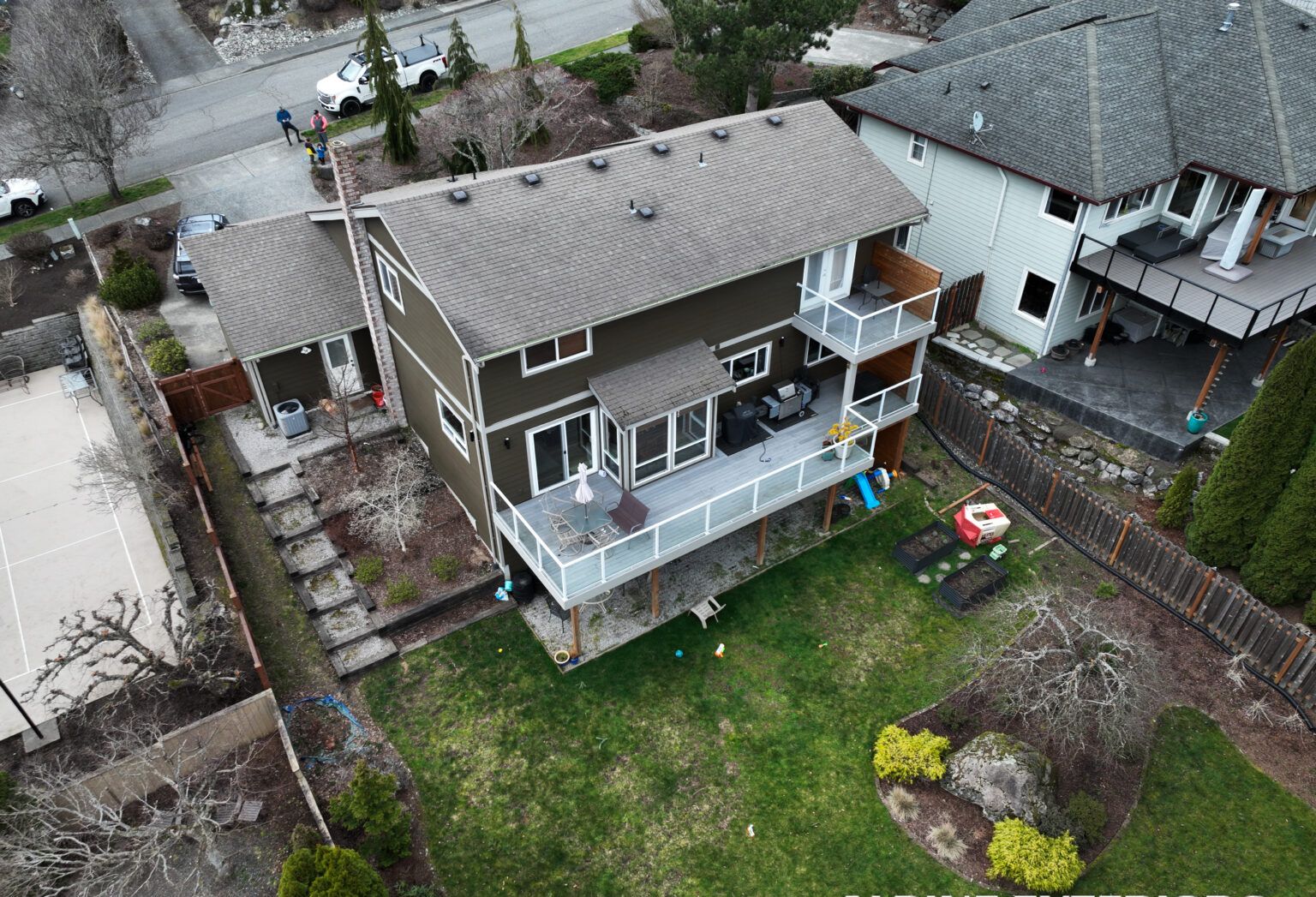
If you've pulled back a piece of trim in Bellingham or Ferndale and found soft, dark, crumbling wood underneath, you're not alone. Whatcom County's climate — long stretches of persistent rain, damp air rolling in off Bellingham Bay and the Strait of Georgia, and moss and algae that colonize anything shaded and slow to dry — is hard on siding. The question homeowners from Lynden to Blaine ask us is almost always the same: do we patch the rot, or is it time to replace the whole wall? The honest answer is that it depends on how far the water has traveled, not just on how bad the visible damage looks.
Repair makes sense when rot is contained to a small, identifiable area — a section under a leaking gutter, a corner where two pieces of trim meet poorly, or a spot where a downspout has been dumping water against the wall for a season or two. If the sheathing behind the siding is still solid and the damage hasn't spread laterally, cutting out the bad section and replacing it is a reasonable, less invasive fix.
Replacement becomes the smarter move when rot shows up in multiple places on the same elevation, when it's been present long enough to reach the sheathing or framing, or when the siding itself is an older wood product that's simply reached the end of its service life. In our experience working on homes around Sudden Valley and out toward the islands, wood rot rarely stays put — moisture wicks along seams and behind house wrap, so what looks like one bad board is often a sign of a wider moisture problem that a spot repair won't solve.
A siding repair involves removing the damaged boards or panels, inspecting the water-resistive barrier and sheathing underneath, replacing anything soft or discolored, and installing new siding material that matches the existing profile and finish as closely as possible. For fiber cement and vinyl, matching an exact color and profile can be difficult if the original product has been discontinued or faded from years of UV exposure, so a repaired section sometimes reads as a slightly different shade until the rest of the wall weathers to match.
Repair is faster, less disruptive to the household, and costs less up front — often a fraction of a full re-side, depending on how much area is affected and how easy the damaged section is to access. The tradeoff is that a repair only addresses what's visible. It doesn't extend the life of the rest of the siding, and if the underlying cause — a clogged gutter, poor flashing at a window, or grade that slopes water toward the foundation — isn't corrected, the same rot can reappear nearby within a few years.
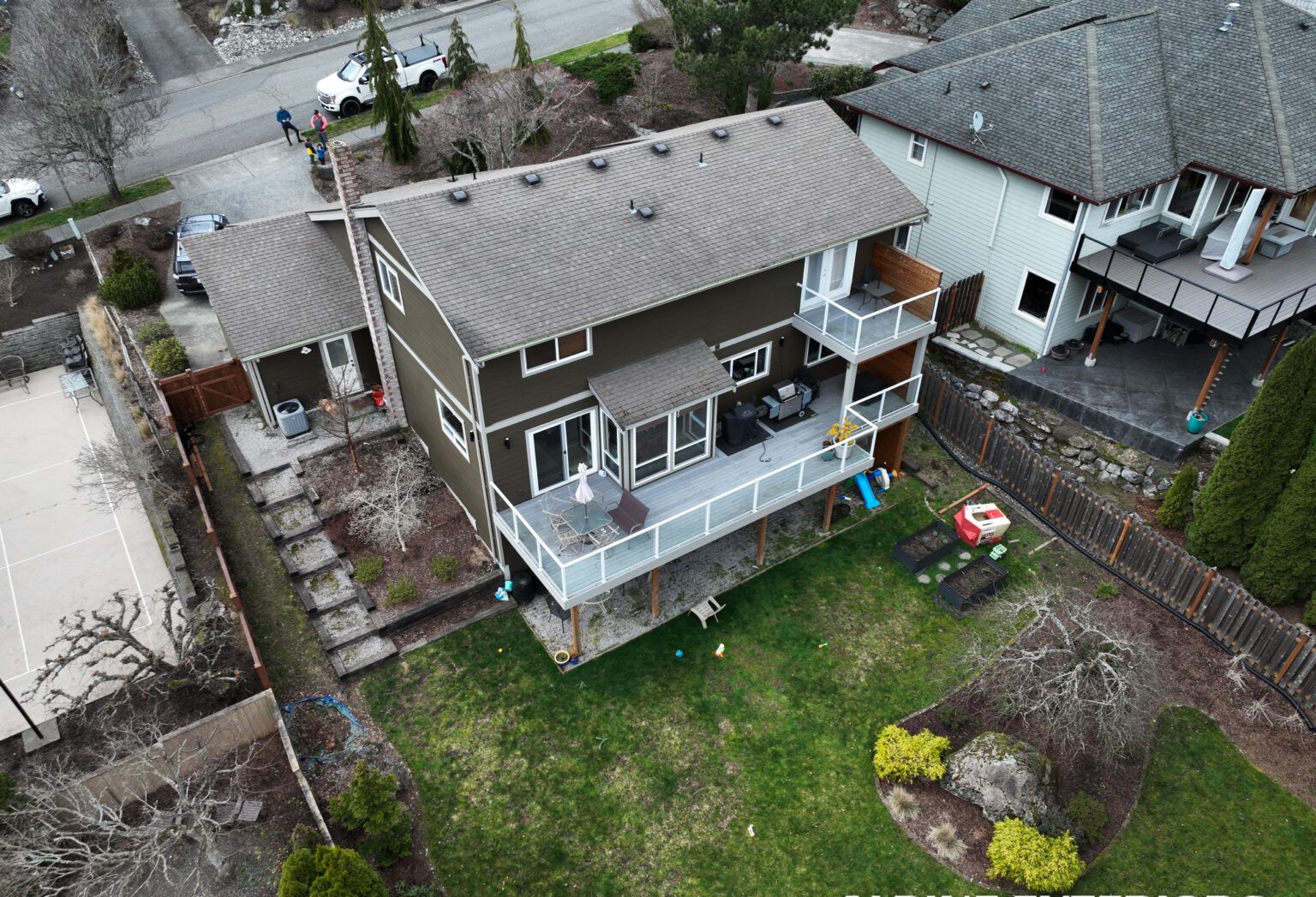
Full replacement means stripping the siding down to the sheathing across an entire wall or the whole house, correcting the house wrap and flashing details as you go, and installing new siding from scratch. This is the point where it's worth thinking about product choice rather than just matching what was there before. Fiber cement holds up well against the wind-driven rain that hits west- and south-facing walls during winter storms off the Strait, and it resists the moss and algae growth that's a constant maintenance issue here far better than untreated wood. Vinyl is a lower-cost option that sheds water well but can become brittle over time in the freeze-thaw swings we sometimes see in the foothills toward Lynden and the Mount Baker foreground. Engineered wood and traditional cedar both need more diligent upkeep in this climate but remain popular for the look homeowners want, especially on older Bellingham homes where matching the existing character matters.
Whatever product goes on, new siding and the assemblies behind it need to meet the ventilation, moisture control, and insulation provisions in the Washington State Energy Code, which is a good opportunity to add a drainage gap or rigid insulation if the wall doesn't already have one. That upgrade is essentially free to add during a full tear-off, since the wall is already open, but it isn't something you can retrofit cheaply during a small repair.
| Repair | Full Replacement | |
|---|---|---|
| Cost | Generally a few hundred to a few thousand dollars depending on area and access | Typically several thousand to well over ten thousand dollars depending on square footage and material |
| Lifespan added | Extends life of the repaired section only; doesn't reset the rest of the siding's clock | Full new service life across the whole wall or house, often 20-40+ years depending on material |
| Maintenance | Same ongoing upkeep as before on unrepaired areas; watch for recurrence near the repair | Lower near-term maintenance, especially with fiber cement or vinyl; still needs periodic moss and algae cleaning |
| Appearance | Possible color/profile mismatch at the repaired section | Uniform, consistent look across the entire exterior |
In Whatcom County specifically, the deciding factor is usually how much of the house has been exposed to the conditions that cause rot in the first place. A single spot on a covered porch wall in Ferndale that's stayed dry otherwise is a reasonable repair candidate. A west-facing wall in Birch Bay or Blaine that takes direct wind-driven rain off the water, or a shaded north wall in Sudden Valley that never fully dries between storms, is a different story — if rot has shown up there once, the conditions that caused it are still present, and we'd rather open the wall, fix the drainage detail, and install siding built for that exposure than come back in two years to patch the next spot.
Age matters too. If the existing siding is original to a home built more than 20-25 years ago, a repair is often a short-term patch on a product that's already near the end of its usable life. In that case, spending repair money on a wall that needs full replacement in a few years anyway rarely makes sense. Alpine Exteriors typically recommends a full inspection of the wall assembly before quoting either option, because the visible rot is often smaller than the moisture damage behind it — and that's the detail that actually determines the right scope of work.
The best indicator is how far the damage extends once the siding is opened up. If the sheathing and framing behind the visible rot are dry and solid, a repair is usually sufficient. If moisture has reached the sheathing, spread along a seam, or shows up in more than one spot on the same wall, that's a sign the whole assembly needs attention, not just the board you can see.
It can, particularly here where persistent rain and humidity keep wood surfaces damp for long stretches. Water tends to travel along the path of least resistance behind siding, so a repair that doesn't also correct the underlying moisture source — a flashing gap, a clogged gutter, poor grading — can simply relocate the problem rather than solve it.
Yes. New siding installations and the wall assemblies behind them fall under the Washington State Energy Code's provisions for moisture management and insulation, which is worth addressing during a full replacement since the wall is already open. A small spot repair generally doesn't trigger the same scope of code review.
Some regrowth is likely either way, since Whatcom County's damp, shaded conditions favor moss and algae almost everywhere. Materials like fiber cement resist growth better than untreated wood, and keeping gutters clear and trees trimmed back from walls reduces how quickly it returns, but periodic cleaning is a normal part of exterior upkeep here regardless of which option you choose.
Rot behind siding is rarely as simple as it looks from the outside, and guessing wrong costs more than getting an inspection up front. Alpine Exteriors, WA contractor license ALPINI751OW, inspects the wall assembly — not just the visible damage — before recommending repair or replacement, so homeowners across Bellingham, Ferndale, Lynden, Blaine, Birch Bay, Sudden Valley, and the islands get a scope of work that matches what's actually happening behind the siding. Reach out for a walk-through and a straightforward recommendation.