
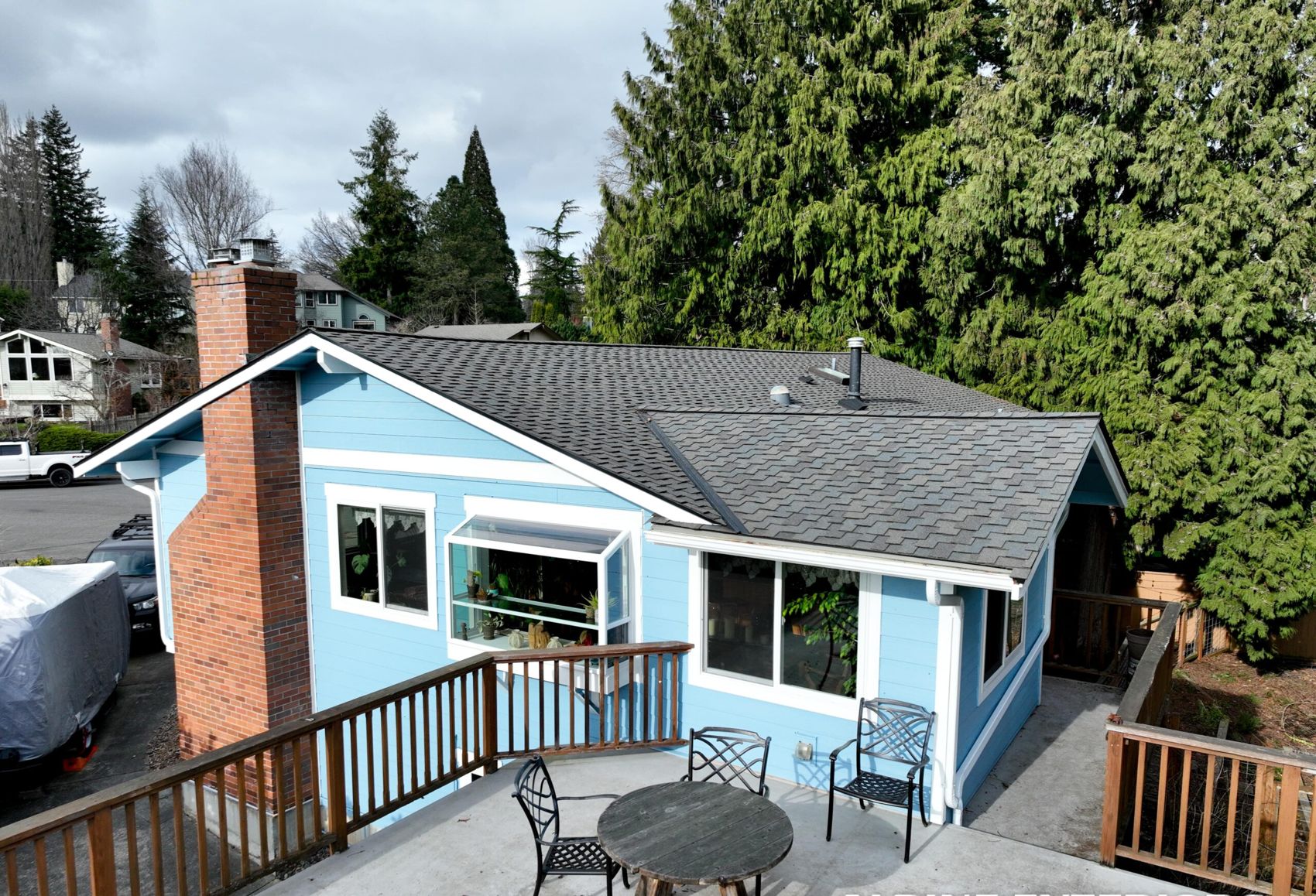
If you're pricing HardiePanel fiber cement siding for a home in Bellingham, Ferndale, Lynden, Blaine, Birch Bay, Sudden Valley, or out on the islands, the honest answer is that the number depends heavily on your house — not just the material. Whatcom County's climate is hard on siding: months of persistent rain, moss and algae that colonize north-facing walls and shaded eaves, and wind-driven rain that comes straight off Bellingham Bay and the Strait of Georgia during winter storms. Homes closer to the foothills around Sudden Valley and Lynden also see more freeze-thaw cycling than the immediate waterfront. All of that affects not just what siding you should choose, but how much prep and detailing a proper installation actually needs — which is where most of the price variation comes from.
Below is a realistic framework for what HardiePanel siding costs in this region, what actually moves that number up or down, what a legitimate quote should include, and how to compare bids from different contractors without just chasing the lowest number. Alpine Exteriors has priced and installed this material across Whatcom County long enough to know that the range is wide for good reasons — this page is meant to help you understand why, not to hand you a single figure that won't hold up once someone actually looks at your walls.
HardiePanel is a vertical fiber cement panel system, often installed with battens to create a board-and-batten look, or run smooth for a more modern facade. Installed cost in Whatcom County typically lands in a broad per-square-foot range once you account for material, labor, moisture barrier, trim, and disposal of old siding. The table below breaks out the main factors that push a project toward the low end or the high end of that range. These are planning figures, not a quote — every home is different, and the only way to get an accurate number is a walk-around inspection.
| Cost Factor | Tends Toward Low End | Tends Toward High End |
|---|---|---|
| Panel finish | Field-primed, unpainted panel | Factory ColorPlus prefinished panel |
| Substrate condition | Sound sheathing, no rot found | Rotted sheathing or framing needing replacement |
| Tear-off scope | Single layer of old siding, easy removal | Multiple layers, or siding over old stucco/brick |
| Trim and detail work | Simple rectangular walls, minimal trim | Extensive corner boards, window trim, gable detailing |
| Battens (board-and-batten look) | Panel run smooth, no battens | Full batten pattern on all elevations |
| House access and shape | One-story, flat/easy lot | Multi-story, steep lot, or hillside access common in Sudden Valley and parts of Bellingham |
| Moisture barrier and flashing detail | Standard weather-resistive barrier | Upgraded drainage plane and flashing package for wind-driven rain exposure |
| Energy code compliance work | Wall assembly already meets code | Added continuous insulation or air-sealing required under the Washington State Energy Code |
For a typical single-family home in this county, most owners should expect a total project cost that spans a wide range — commonly somewhere between the low five figures and the high five figures depending on square footage and how many of the high-end factors above apply. A small, simple, single-story home in good condition with no rot will sit well below a large, multi-story home on a steep lot that needs sheathing repair and full batten detailing. There is no honest single number that applies to every house in Bellingham versus every house in Lynden — the drivers above matter more than the zip code.
A few region-specific realities tend to have an outsized effect on the final price here, more than they would in a drier climate:
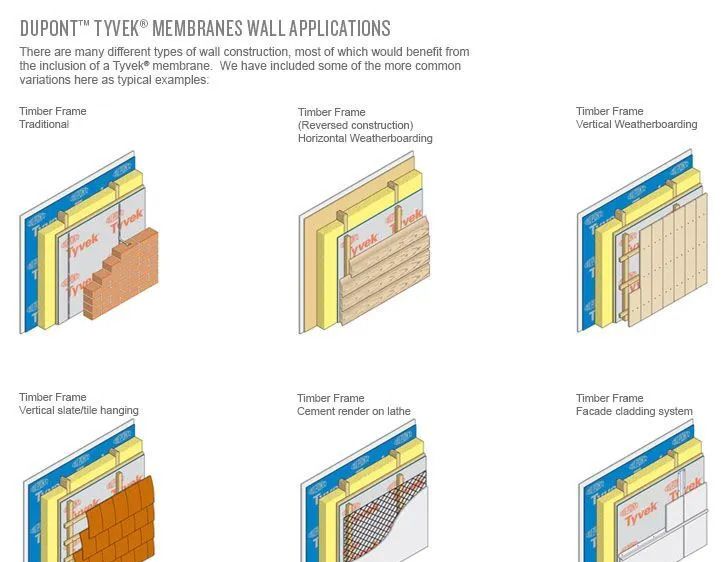
A complete, comparable quote for HardiePanel siding should spell out more than a bottom-line number. Look for these line items specifically:
If a quote is just a single number on a page with no breakdown of these items, it's very hard to know what you're actually comparing against another bid. Alpine Exteriors writes quotes with this level of detail specifically so a homeowner can see where the money is going, not just what the total is.
The lowest bid isn't automatically the best one, and the highest bid isn't automatically the most thorough. A few practical ways to compare fairly:
Many siding contractors, including Alpine Exteriors, can point homeowners toward third-party financing options for larger re-side projects, which can help spread the cost over time rather than paying the full amount upfront. Terms, rates, and approval vary by lender and by the homeowner's credit profile, so it's worth asking what options are available when you request a quote rather than assuming a specific plan applies to your project.
On the insurance side, siding replacement in this region is far more often driven by age, moisture damage, or wood rot than by a single storm event, so it's less common for a full re-side to be covered outright by a homeowner's policy the way storm-damage claims sometimes work in other parts of the country. That said, if a specific incident — a fallen tree limb, a burst pipe that damaged wall framing, or similar — caused documented damage to a section of siding, it's worth checking with your insurer about whether that portion of the work is a covered repair. Keep photos and a written scope of the damaged area if you plan to file a claim, since insurers typically want documentation of the specific event rather than general wear from years of wet weather.
It depends on the design. A smooth panel run without battens can be comparable to lap siding in material cost, but a full board-and-batten pattern with battens on every seam adds labor and material, which usually pushes the total toward the higher end of the range compared to a straightforward lap installation on the same wall area.
In a climate this wet, it's common for tear-off to reveal moisture damage that wasn't visible from the outside — soft sheathing around old window flashing, rot near a roof-to-wall intersection, or degraded framing under long-term moss growth. A contractor who flags this possibility in the original quote, with a clear repair rate, is handling it honestly; one who says nothing about it and then surprises you with a large change order is not.
Sometimes. Whether re-siding triggers a requirement to improve the wall assembly under the Washington State Energy Code depends on the scope of work and the age of your existing walls. It's a good question to ask directly during the quote process, since it can be a meaningful cost driver on older homes and a non-issue on newer ones.
Timeline depends on house size and complexity, but the region's rainy stretches — particularly fall through early spring — can extend a project beyond what the same job might take in a drier climate, since fiber cement installation generally needs to pause during heavy or sustained rain. A contractor bidding your job should be able to give you a realistic timeline that accounts for the season you're starting in.
The only way to turn these ranges into a real number for your house is a walk-around inspection that looks at your current siding condition, wall assembly, exposure to wind-driven rain, and any visible signs of moisture damage. Alpine Exteriors serves homeowners throughout Whatcom County — Bellingham, Ferndale, Lynden, Blaine, Birch Bay, Sudden Valley, and the islands — and can walk you through what a HardiePanel project would actually involve on your specific home, with a written quote that breaks down each of the factors above. Washington contractor license ALPINI751OW. Reach out to schedule an inspection and get a scope-based estimate rather than a guess.