
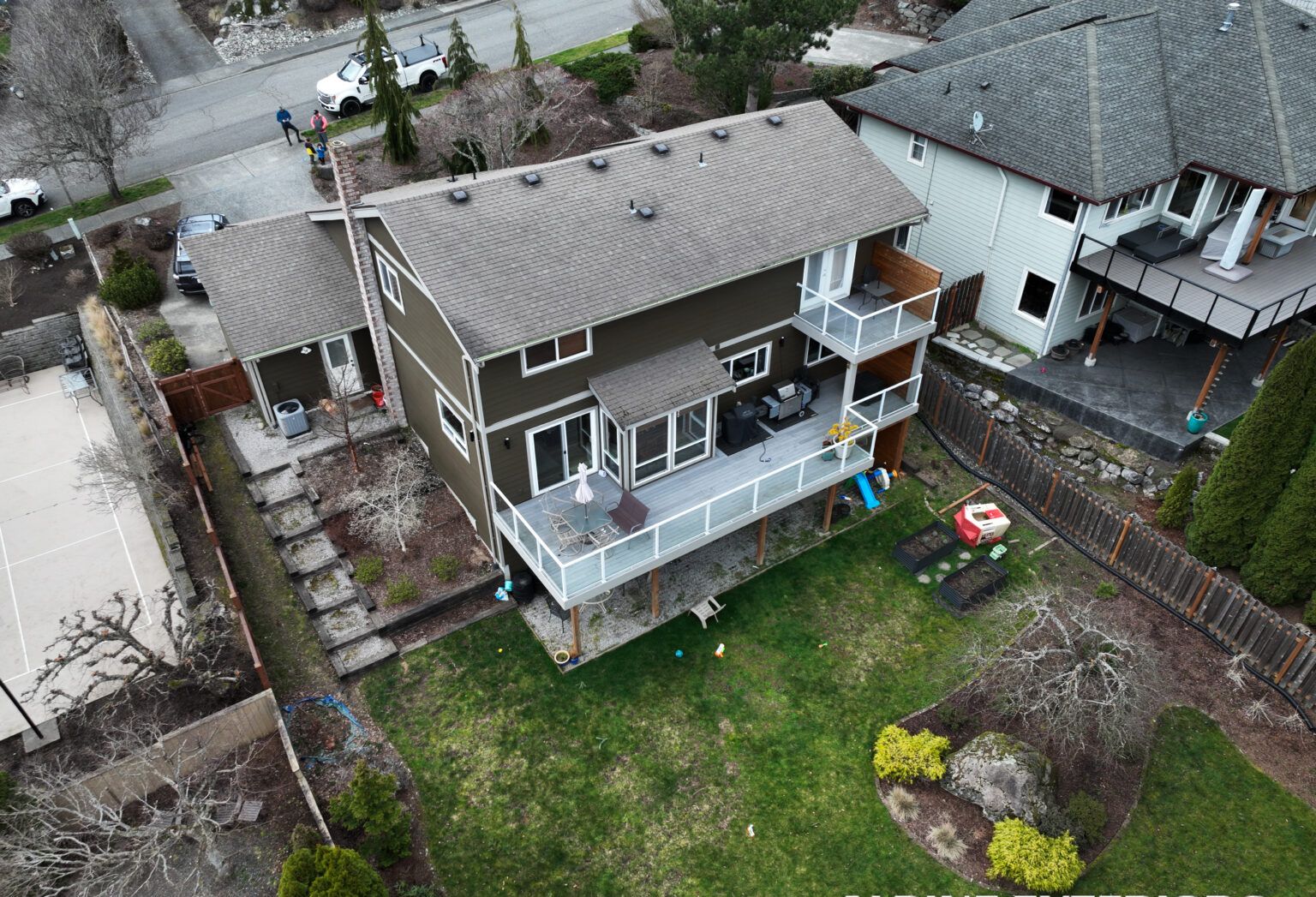
Most siding problems in Geneva can be repaired if they're caught while the damage is still localized — a few feet of rotted cedar lap under a downspout, a cracked panel from a fallen branch, or a section of hardboard that's swelled near grade. Once moisture has traveled behind the siding into the sheathing, or the damage is spread across a whole wall or elevation, replacement of that section (and sometimes the wall) is usually the more honest recommendation.
The deciding factor almost never comes down to how the siding looks from the driveway. It comes down to what's happening underneath it, which is why any competent repair estimate for a Geneva home should include pulling a board or two to check the sheathing and house wrap before anyone quotes a price.
Geneva sits on the north and northeast shore of Lake Whatcom, tucked against the timbered slopes that rise toward Lookout Mountain and Stewart Mountain. That setting is beautiful and it's also exactly the kind of environment that's hard on exterior siding. A few patterns show up over and over on repair calls in this neighborhood:
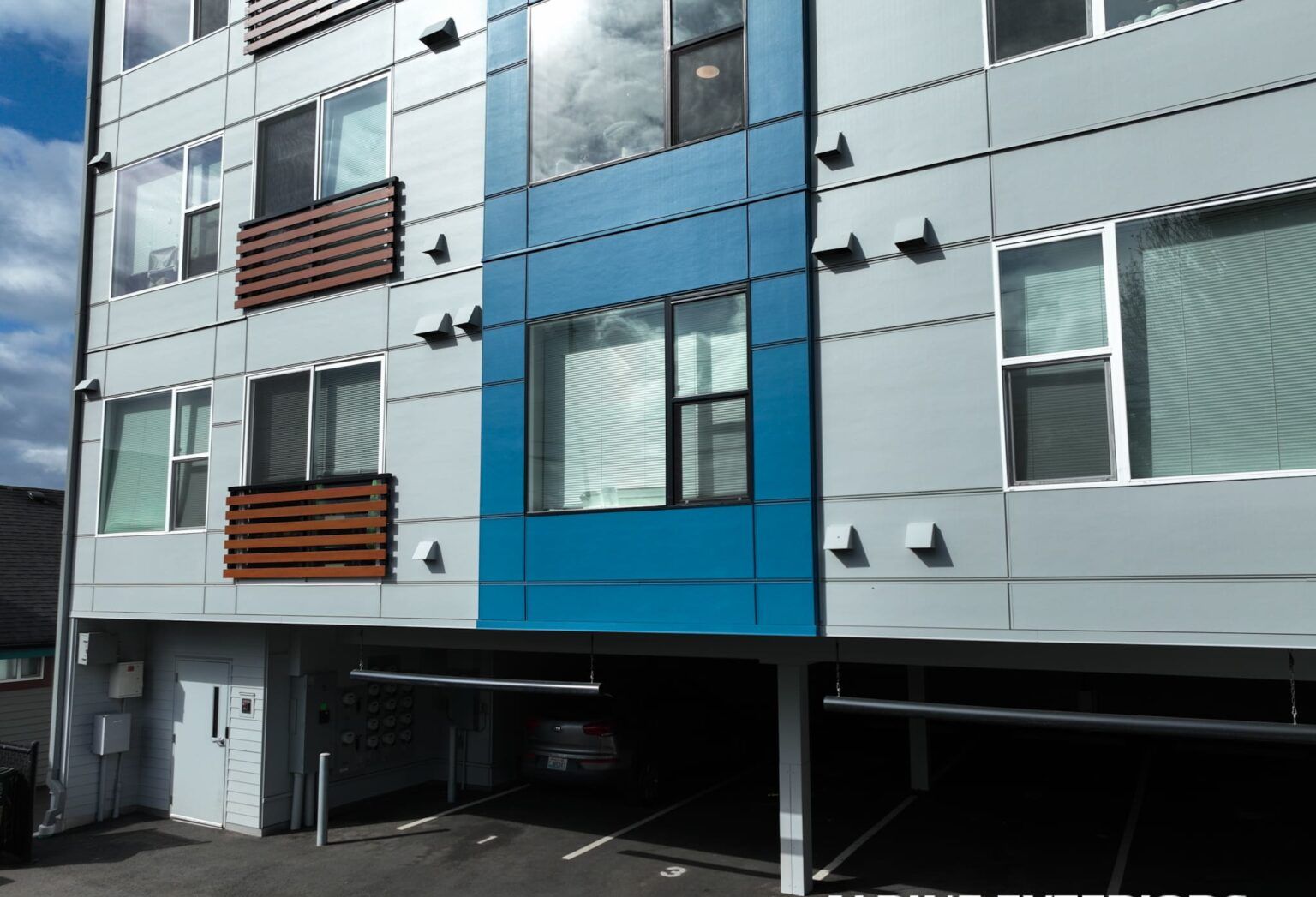
A siding repair approach that works in a drier climate doesn't translate directly to this part of Whatcom County. A few local conditions change how we diagnose and fix damage here:
Persistent rain and long dry-out delays. Whatcom County's wet season stretches over several months, and Geneva's tree cover slows evaporation even further after a storm passes. Wood-based siding products that would dry out within a day or two in an open, sunny lot can stay damp for a week here, which accelerates rot at seams, corners, and butt joints.
Moss and algae growth rather than heat or UV breakdown. In a lot of the country the main enemy of siding is sun exposure. Around Lake Whatcom, the bigger long-term threat is biological growth — moss, algae, and lichen that hold water against the surface and, on wood and some fiber-cement products, create a foothold for rot underneath the growth itself.
Wind-driven rain off Bellingham Bay and the Strait. Homes closer to open water — including many properties toward Bellingham's west side and along the Strait of Georgia shoreline — take wind-driven rain that gets pushed sideways into laps, seams, and trim intersections rather than just falling straight down. Geneva itself is more sheltered by terrain than a bay-front lot, but wind still funnels down the lake basin during fall and winter storms, and homes on more exposed shoreline or elevated sites feel it.
Freeze-thaw cycling in the foothills. Geneva's elevation and proximity to the foothill terrain mean it sees more freeze-thaw days each winter than low-lying Bellingham neighborhoods closer to sea level. Water that's worked its way into a crack or an open seam and then freezes will expand that crack further, which is why small siding damage left unaddressed through one winter often comes back noticeably worse by spring.
The Washington State Energy Code. When a repair grows into replacing a full wall section — not just patching a board — and the work exposes the wall assembly, that scope of work needs to account for the Washington State Energy Code's current insulation and air-sealing requirements for the wall assembly being opened up. That doesn't apply to a simple board swap, but it's a real consideration once a project crosses into re-siding a full elevation, and it's worth asking any contractor how they plan to handle it.
Start by identifying whether the damage is a surface problem or a moisture problem. Soft, spongy siding; dark staining that doesn't wash off; a musty smell near an exterior wall from inside the house; or paint that's bubbling and peeling in one spot are all signs that water has gotten past the surface. Cosmetic fading, chalky paint, or a single cracked panel from debris impact are usually surface-level and don't necessarily point to rot underneath.
From there, a few practical steps hold up well for a Geneva property:
Alpine Exteriors works siding repair and replacement calls throughout Whatcom County, including Geneva, Sudden Valley, and the rest of the Lake Whatcom shoreline, and the starting point on every one of these jobs is the same: find out what's happening behind the siding before recommending a fix in front of it. A patch that ignores rotted sheathing is a repair that fails again within a couple of winters, and a full re-side that wasn't necessary is money the homeowner didn't need to spend.
Press on the affected area — if it's firm and the damage is cosmetic (fading, a single crack, surface staining), it's usually a straightforward repair. If the siding feels soft, spongy, or crumbles under light pressure, or if there's staining or a musty smell on the interior wall behind it, moisture has likely reached the sheathing and the repair needs to include opening up that section to assess the framing underneath, not just swapping the visible board.
It's not purely cosmetic. Moss and algae hold moisture directly against the siding surface for extended periods, which on wood and some engineered wood products accelerates rot underneath the growth, and around caulked seams it can work its way into small gaps and keep them wet. On vinyl or fiber-cement siding the risk is lower, but the moisture retention still isn't doing paint or caulk any favors. Periodic gentle cleaning (not pressure-washing directly into seams) and trimming back vegetation that's shading the wall go a long way toward slowing regrowth.
A few reasons stack up: manufacturers change siding profiles, exposure widths, and factory finishes over time, so an exact discontinued match may not exist; sun exposure fades and chalks existing siding unevenly by elevation, so even an identical product will look slightly brighter than 15-year-old weathered siding next to it; and paint colors mixed years apart rarely come back identical even with the same paint code. Matching within a single elevation, or repainting the whole wall after a repair, usually gets a better result than trying to blend a patch into faded siding mid-wall.
A like-for-like board or panel repair typically doesn't trigger a permit. Once a project grows into replacing an entire wall or the whole exterior and the wall assembly gets opened up, that scope of work needs to account for the Washington State Energy Code's insulation and air-sealing requirements for that wall assembly, and depending on the scope, local permitting may apply. It's worth confirming this with your contractor and, for larger projects, with Whatcom County or the relevant local jurisdiction before work starts.
If you're looking at soft boards, moss buildup, or storm damage on a Geneva or Lake Whatcom home, it's worth getting a straight answer on whether it's a repair or a bigger project before spending money either way. Alpine Exteriors is a licensed Washington contractor (license ALPINI751OW) serving Bellingham, Geneva, Sudden Valley, and the rest of Whatcom County, and can walk the property, check behind the damaged siding, and lay out the repair and replacement options plainly — including what a patch will and won't fix long-term. Reach out to schedule a look at your siding before the next round of fall rain finds its way in.