
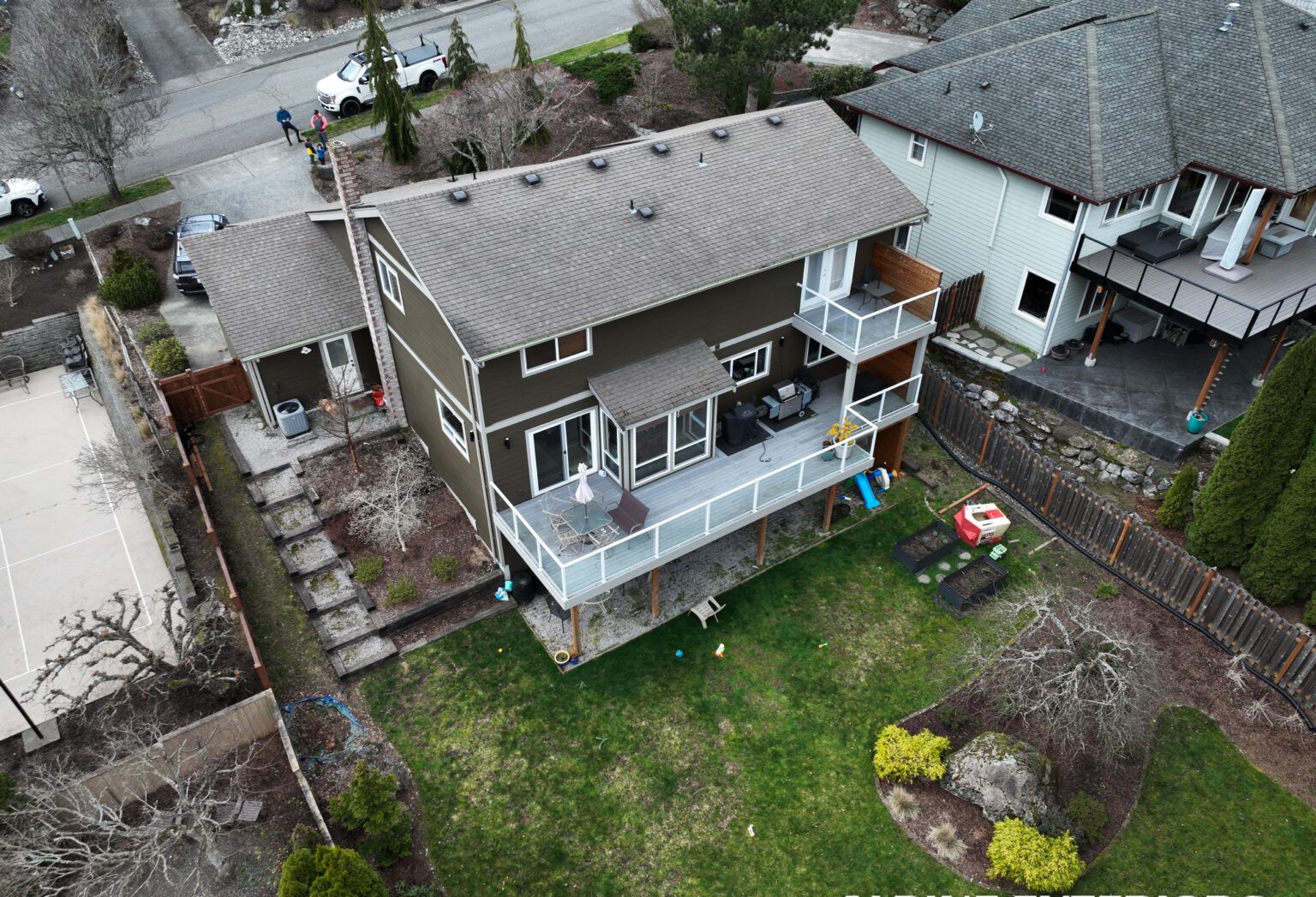
If a section of your siding has cracked, warped, or gone soft to the touch, you're probably trying to figure out whether you're looking at a quick patch or a bigger repair bill. Costs for siding repair in and around Bellingham vary more than homeowners expect, mostly because the damage itself varies — a few loose lap boards on a garage wall is a different job than rot that has worked its way into the sheathing behind a bay window. This guide walks through realistic price ranges, the conditions specific to Whatcom County that push costs up or down, and what should be in a written quote before you sign anything.
Most siding repairs in the Bellingham, Ferndale, Lynden, and Blaine area fall into a fairly wide range, because "repair" covers everything from replacing a handful of damaged boards to tearing out and rebuilding a whole wall section down to the studs. Small, isolated repairs on easily accessible walls tend to sit at the low end. Repairs that involve hidden rot, multiple stories, or matching discontinued siding profiles push toward the high end. Whole-house re-siding is a different project entirely and isn't covered by the ranges below.
| Cost Factor | Typical Low | Typical High |
|---|---|---|
| Spot repair, few boards, ground level, easy access | Several hundred dollars | Around $1,500 |
| Moderate repair with hidden rot at trim, corners, or window flashing | Around $1,500 | $4,000+ |
| Structural repair: rotted sheathing, framing, or multiple wall sections | $4,000 | $10,000+ |
| Siding material used for the patch (vinyl, fiber cement, wood, engineered wood) | Lower for vinyl | Higher for fiber cement or wood |
| Second-story or steep-access work requiring staging or a lift | Adds cost | Can add significantly |
| Color or profile matching on older homes | Minor add | Can require repainting a full elevation |
These are ranges, not quotes — the only way to know your actual number is to have someone open up the damaged area and look at what's underneath. Alpine Exteriors typically won't give a final number over the phone for anything beyond the smallest cosmetic repair, because so much of the real cost is hidden until the old siding comes off.
A handful of conditions specific to this part of Washington show up again and again when we're scoping repair work:
A written quote for siding repair should tell you more than a bottom-line number. Look for:
Alpine Exteriors writes quotes that separate the visible repair from any framing or sheathing work discovered once the old siding is removed, so homeowners aren't surprised by a number that doubles halfway through the job.
Two quotes that look similar on the surface can represent very different scopes of work. Before comparing numbers side by side, check that each quote covers the same square footage, the same material, and the same treatment of hidden damage. A quote that's noticeably lower than the others is worth asking about directly — find out whether it includes flashing repair, whether it accounts for likely rot, and whether the crew plans to match your existing siding profile or use a close substitute.
It's reasonable to ask any contractor for their Washington state contractor license number and to verify it's active. Alpine Exteriors holds WA contractor license ALPINI751OW, and any legitimate contractor should be able to provide theirs without hesitation. Also ask how they handle debris and rotted wood disposal, whether they carry liability insurance, and whether the crew doing the physical work is employees or subcontractors — that can affect who you'd call if something goes wrong after the job is done.
Most siding repair jobs are paid out of pocket or through contractor-offered financing, since homeowners insurance typically only covers siding damage tied to a specific, sudden event — a fallen tree limb or storm impact, for example — rather than gradual wood rot or moisture damage that built up over time. If you suspect a specific storm event caused visible damage, it's worth checking with your insurance carrier before repairs begin, since some policies require documentation or an adjuster visit first. Routine repair from age, moisture, or moss growth is generally treated as maintenance, not an insurable loss.
Many siding contractors, including Alpine Exteriors, offer financing options for larger repair or partial re-siding projects. If you're financing the work, get the total project cost in writing first, then compare financing terms separately — bundling the two can make it harder to see whether you're getting a fair price on the actual labor and materials.
If the damage is limited to one or two walls, a specific corner, or an area around a single window or door, a repair is usually the right call. If rot or moisture damage shows up in multiple areas, or if your siding is old enough that matching materials is difficult, it's worth getting an inspection to compare the cost of repeated repairs against re-siding the whole house. A contractor should be able to walk you through that trade-off honestly rather than pushing straight to a full re-side.
This is one of the most common surprises in siding repair, and it's usually legitimate rather than an upsell. Moisture damage spreads sideways under siding long before it's visible from outside, so a wall that looks like it has one bad board can turn out to have several feet of rotted sheathing behind it once the old material comes off. A good contractor will show you the damage before proceeding and explain the added cost rather than just presenting a bigger invoice at the end.
Technically, you can often repair just the damaged section. In practice, siding fades and weathers over time, so a patch using new material can look noticeably different from the surrounding wall, especially on painted wood or older vinyl. Whether that's acceptable depends on how visible the wall is and how much the color has shifted — some homeowners are fine with a slight mismatch on a side wall, while others prefer to repaint or re-side the full elevation for a consistent look.
A small, isolated repair can often be completed in a day or two once material is on hand. Repairs involving rotted sheathing, framing, or multiple wall sections take longer, both because there's more work involved and because the crew needs dry conditions to do it safely. Given how much rain Whatcom County gets, especially in fall and winter, scheduling around weather is a normal part of planning a repair timeline here.
The only way to turn these ranges into a real number is to have someone look at the actual damage on your house. Alpine Exteriors serves Bellingham, Ferndale, Lynden, Blaine, Birch Bay, Sudden Valley, and the surrounding islands, and can walk your property, identify how far the damage extends, and put together a written quote that separates visible repair from anything found once the siding is opened up. If you're dealing with soft spots, cracked boards, or moss-covered siding that's starting to look tired, reach out for an honest assessment before the damage spreads further.