
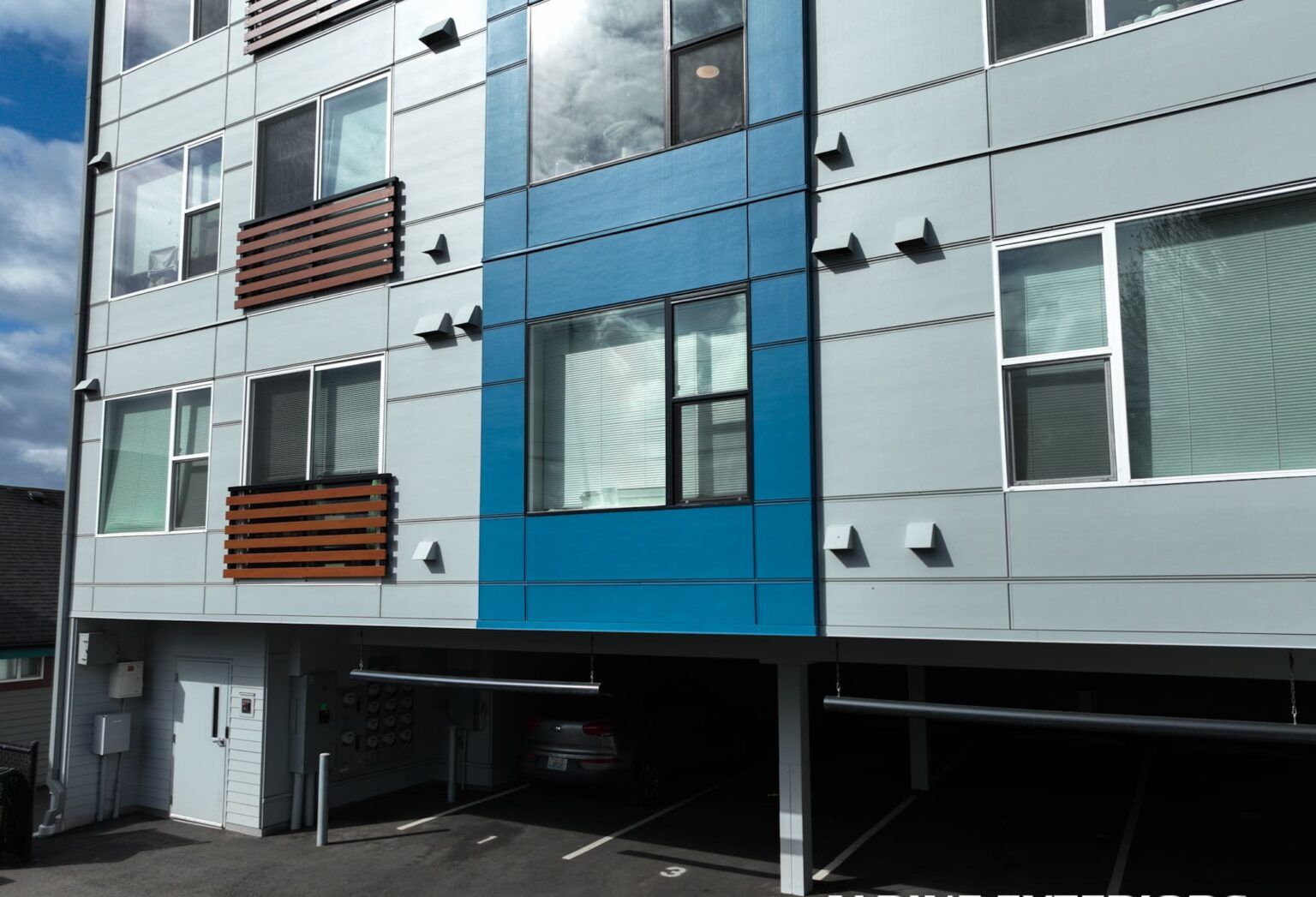
If you're pricing out siding replacement in Ferndale, you've probably already noticed that quotes can swing wildly from one contractor to the next. Part of that is normal — every house is different — but a lot of it comes down to what's actually happening behind the old siding, and how much of that a contractor caught during the estimate versus discovered mid-project. This guide walks through what siding replacement realistically costs in the Ferndale, Lynden, Blaine, and Birch Bay area, what pushes the number up or down, and how to read a quote so you're not surprised later.
For a typical single-family home in Whatcom County, full siding replacement — tear-off, minor repairs, new material, and trim — tends to fall somewhere between roughly $12,000 on the low end (a smaller home, vinyl siding, minimal hidden damage) and $35,000 or more on the high end (a larger home, fiber cement or cedar, and rot repair that wasn't visible until the old siding came off). That's a wide spread, and it's wide on purpose. Whatcom County's persistent rain means two houses of similar size and age can price very differently once a crew actually gets a wall open.
The table below breaks out the major line items that make up a typical Ferndale siding quote, with a rough sense of where each one lands.
| Cost Factor | Low End | High End |
|---|---|---|
| Vinyl siding, mid-grade | Lower cost per square foot installed | Moderate, depending on thickness and profile |
| Fiber cement siding | Moderate cost per square foot installed | Higher, especially with factory-primed color options |
| Cedar or engineered wood siding | Higher upfront cost per square foot | Highest, particularly for clear-grade cedar |
| Tear-off and disposal of old siding | Modest add if single layer | Higher if multiple layers or old wood/hardboard beneath |
| Rotted sheathing or framing repair | Minimal for a few spot repairs | Significant if rot has spread along a wall or corner |
| House wrap / weather-resistive barrier | Small add-on if already partly in place | Larger add-on on older homes with no barrier at all |
| Trim, fascia, and soffit work | Small line item if trim is sound | Substantial if wood trim is soft or delaminating |
| Permits and code-required upgrades | Minor fee for a straightforward re-side | Higher if energy code upgrades are triggered |
A handful of local, climate-driven factors matter more here than a generic national cost guide will tell you. Persistent rain through fall, winter, and spring means siding on the north and west sides of a house — and especially walls exposed to wind-driven rain off Bellingham Bay or the Strait of Georgia — takes on more water over time than siding in drier climates. That moisture load is what leads to wood rot at butt joints, window sills, and bottom courses, and it's the single biggest wildcard in any siding estimate. A contractor can estimate square footage accurately from the outside; nobody knows exactly how much sheathing or framing is soft until the old siding is off.
Moss and algae growth is another regional factor. It doesn't directly add cost the way rot does, but heavy moss and algae buildup on north-facing walls and under eaves is often a sign that a wall has stayed damp for a long time, which raises the odds of rot underneath. It also affects material choice — some homeowners move away from cedar specifically because of ongoing algae staining and maintenance in a climate this wet.
Homes up toward the foothills and Sudden Valley see more freeze-thaw cycling than homes right on the water, which can accelerate caulking failure and small cracks at trim joints over the years — something worth flagging to your contractor if your house is in that zone. And the Washington State Energy Code plays a real role in cost: if a re-side triggers code review (common on larger renovations or when siding is removed down to the studs), you may need to add continuous insulation or an upgraded weather-resistive barrier to meet current requirements, which adds material and labor cost that a simple "swap the siding" estimate wouldn't include.
Beyond climate, the usual drivers apply too: total square footage, number of stories, roofline complexity (dormers, gables, and lots of corners cost more per square foot than a simple rectangular footprint), how many layers of old siding need to come off, and how busy local crews are during the dry-season construction window from roughly June through September, when scheduling and pricing both tend to firm up.
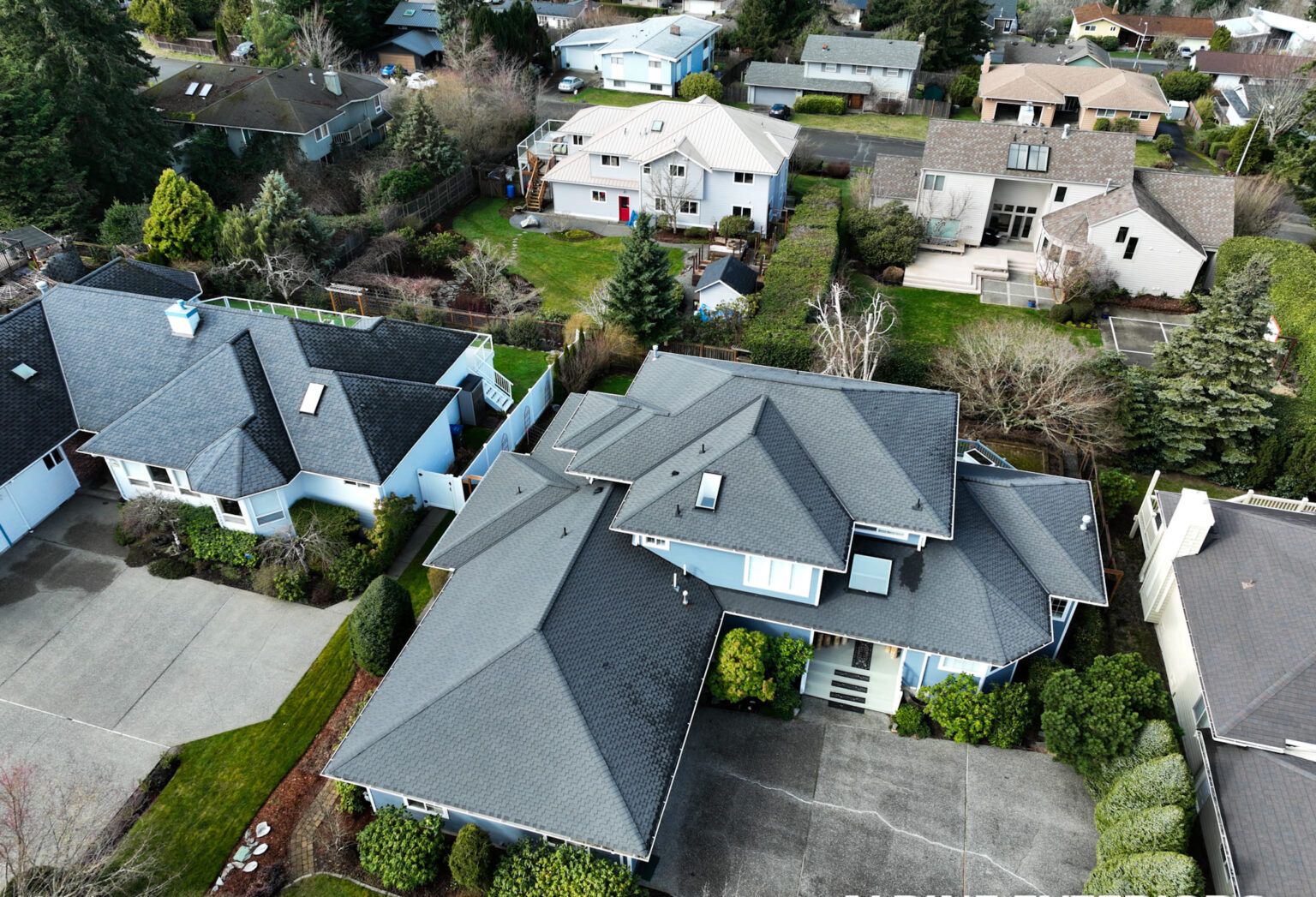
A complete siding quote should spell out more than just "install new siding." At minimum, look for tear-off and disposal of the old material, house wrap or weather-resistive barrier installation (or a note that existing wrap will be reused, and why), flashing details around windows and doors, corner boards and trim, fasteners and accessories, the siding material and brand itself, labor, cleanup and haul-away, and warranty terms — both the manufacturer's material warranty and the contractor's labor warranty. Given how much wind-driven rain matters here, ask specifically how window and door flashing will be handled; that detail affects long-term water intrusion far more than the siding material itself does.
Alpine Exteriors builds Ferndale quotes to spell out each of these line items separately rather than bundling everything into one number, specifically so a homeowner can see where the cost is actually going before work starts.
The hardest part of shopping siding quotes is that two bids for "the same job" often aren't actually the same job. Before comparing dollar figures, check that each quote lists the same material grade and manufacturer line, the same square footage (measured the same way — some contractors measure wall area, others estimate by home square footage, which can differ), and the same scope for house wrap and trim work. Ask each contractor how they handle rot discovered after tear-off: is there a per-square-foot or per-hour rate built in, or will you get a change order with no pre-agreed pricing? That single question tends to separate a straightforward bid from one that will balloon mid-project.
It's also worth confirming that whoever you hire carries active Washington contractor licensing and bonding — you can look up any contractor's license status directly through the Washington State Department of Labor & Industries. Alpine Exteriors holds Washington contractor license ALPINI751OW, and it's a reasonable ask of any contractor bidding your Ferndale project. Get the final scope, materials, and payment schedule in writing, and be cautious of a bid that comes in well below the others without a clear explanation of what's excluded.
Siding replacement is generally treated as a homeowner-funded improvement rather than an insurance claim, since normal wear from years of rain exposure isn't a covered peril under most homeowner's policies. The exception is siding damage tied to a specific, sudden event — a windstorm that tears off panels, or a falling limb — which may be worth a call to your insurer before you pay out of pocket. If you do file a claim, keep in mind that pre-existing rot or long-term moisture damage is typically excluded even when a covered event triggers the claim, so it helps to have photos or a contractor's assessment that separates storm damage from older deterioration.
On the financing side, many siding contractors, including Alpine Exteriors, can point homeowners toward third-party financing plans or help sequence the project around a home equity line if that's the preferred route. Whatever financing you use, tie disbursement to project milestones rather than paying the full amount upfront, and confirm the contractor's license and bond status before signing any financing agreement tied to the work.
Most single-family homes take roughly one to two weeks from tear-off to final trim, though that timeline stretches if rot repair turns up along the way or if a stretch of heavy rain interrupts the work — which is common enough in this area that a realistic schedule usually builds in a few contingency days.
Yes. Vinyl and fiber cement generally hold up to persistent rain and require less upkeep than cedar, which needs periodic refinishing and is more prone to moss and algae staining in shaded, damp areas. That doesn't rule cedar out — plenty of homeowners like the look and are willing to maintain it — but it's a real tradeoff worth weighing against your maintenance appetite.
Not by itself. New siding paired with a properly installed weather-resistive barrier and correct window and door flashing will stop new water intrusion, but it won't dry out framing that's already wet or reverse existing rot — that requires actually removing and replacing the damaged material, which is why a thorough tear-off inspection matters more than the siding brand you choose.
Requirements vary by scope and by whether the property is inside Ferndale city limits or unincorporated Whatcom County; straightforward like-for-like re-siding sometimes doesn't require a permit, while projects that involve structural repair or trigger Washington State Energy Code review typically do. A licensed local contractor should be able to tell you which category your project falls into before work starts.
Cost guides can only get you so far — the only way to know what your specific home will cost is a walk-around that accounts for its exposure, existing siding condition, and any rot hiding behind it. Alpine Exteriors offers on-site estimates for homeowners throughout Ferndale, Bellingham, Lynden, Blaine, Birch Bay, Sudden Valley, and the surrounding islands, with the scope and cost factors above spelled out in writing rather than buried in a lump sum.