
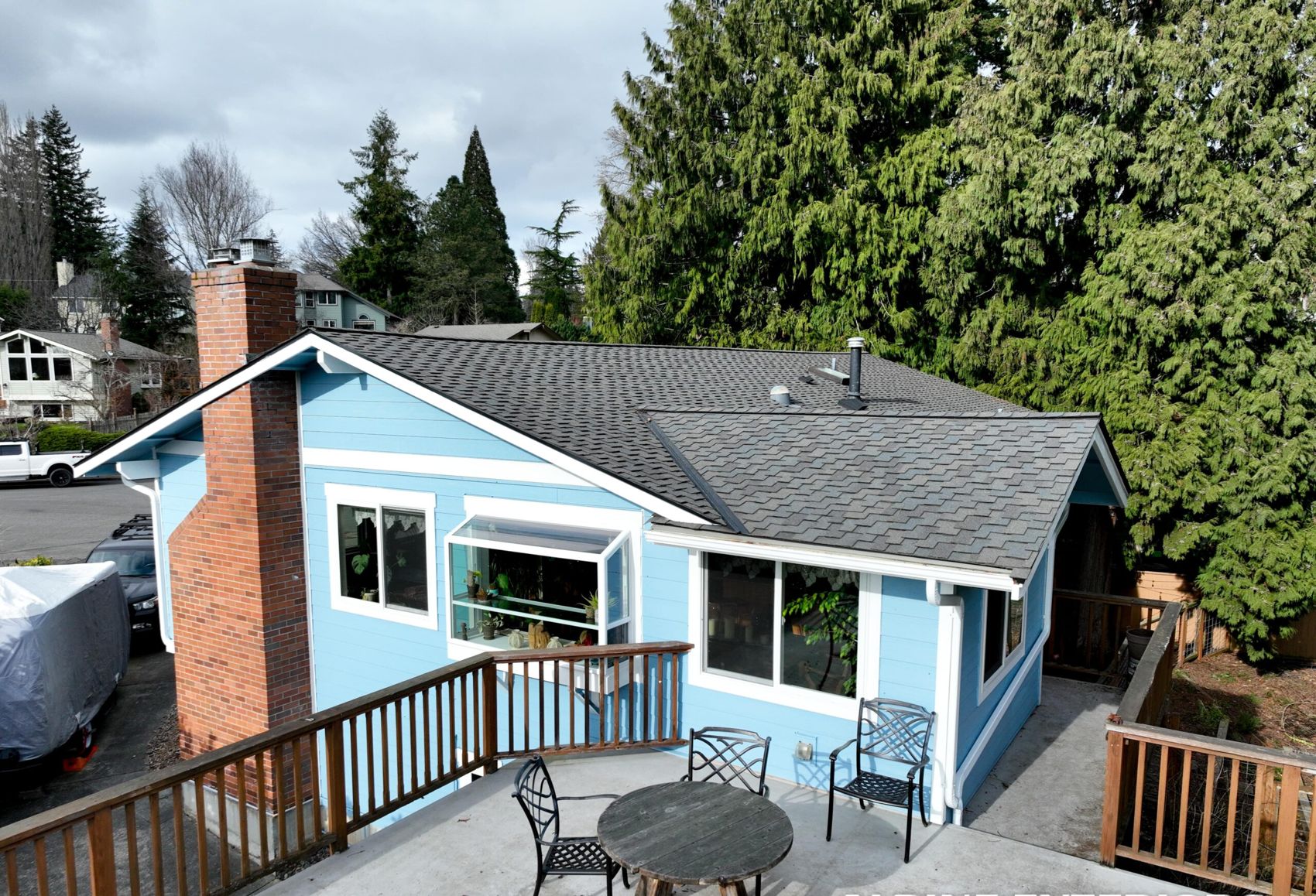
The bottom course of siding fails first because it's the one course that sits closest to the ground, catches splash-back off grade, and stays wet the longest after every rain. In Bellingham, Ferndale, Lynden, Blaine, Birch Bay, Sudden Valley, and out to the islands, that means the lowest few feet of a wall are almost always the first place a homeowner finds soft trim, dark staining, or a starter strip that's swelling away from the sheathing.
Every course of lap siding above the bottom one sheds water onto the course below it. By the time rain reaches the last course, it's carrying runoff from the whole wall, plus whatever bounces back up off the ground, a walkway, or a patio slab during a hard rain. That bottom course is also the closest siding to sprinklers, planting beds, and mulch, all of which keep the material damp between storms instead of letting it dry.
Underneath the visible siding, the bottom course is where the water-resistive barrier laps over the foundation flashing, and where the starter strip is supposed to hold the first course out and away from the wall enough to drain freely. When that gap gets closed off — filled with caulk, buried under landscaping, or installed too tight against the foundation — water that would normally drain back out gets trapped instead. Wood-based products swell and eventually rot. Fiber cement can hold moisture in the paint film and start to delaminate at the cut edge. Vinyl doesn't rot, but a bottom course that's been pushed out of its track by trapped moisture behind it will bow, crack, or pop loose from the wall.
Kick-out flashing at the bottom of roof-to-wall intersections plays into this too. When it's missing or undersized — common on additions and older remodels in this area — roof runoff dumps straight down the wall face and concentrates right where the bottom course already has the least room to dry.
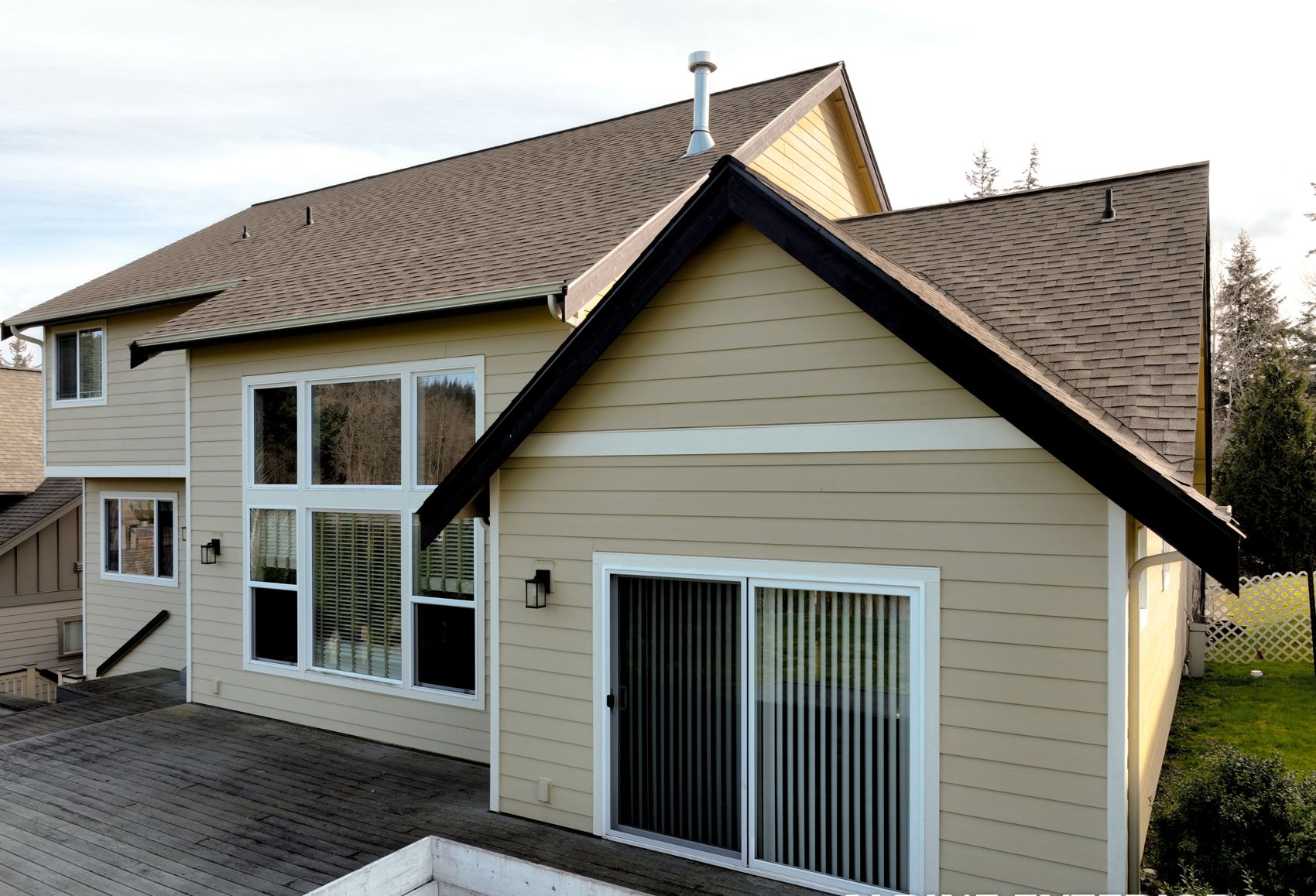
Whatcom County doesn't get hurricanes or hail the way other parts of the country do, so a lot of generic siding advice simply doesn't apply here. What does apply is water that never really stops, and a handful of local conditions that make the bottom course a harder job than it looks:
Most bottom-course failures are caught late because they start below eye level, often behind shrubs or mulch, where nobody looks. A few habits catch it early enough to matter:
When rot is found, the honest answer is that spot repair only works if the damage is caught early and hasn't spread past the bottom course into the sheathing or framing. Once water's been sitting behind the wall for a season or two, cutting out just the visible siding and patching it back in often just covers up a problem that keeps going. Alpine Exteriors pulls trim and siding back far enough during an inspection to actually see the sheathing before recommending a repair scope, rather than guessing from the outside.
Look for paint that's bubbling or peeling only on the lowest course, a slightly wavy or bowed look right at the bottom edge, dark streaking that doesn't wash off, or trim boards that feel soft when you press on them with a thumb. These usually show up well before any hole or visible gap, and they're the best warning you'll get.
In a lot of cases a bottom-course repair really can stay limited to that course, plus the flashing and starter strip detail behind it, as long as the rot hasn't tracked upward into the field of the wall or into the sheathing. That's something that has to be confirmed by pulling material back and looking, not by guessing from the driveway.
Light moss on a shaded wall is common in this region and isn't automatically a sign of failure, but a heavy, established moss mat holds water against siding and trim continuously, which speeds up rot in wood-based products and can hold moisture against paint film on fiber cement. It's worth cleaning and monitoring rather than ignoring.
It depends heavily on how far the damage goes. A limited repair confined to trim and the bottom course of siding on one wall section is a different job than one where rot has reached the sheathing or framing, and pricing swings accordingly — often somewhere in the low thousands for a contained repair, more if structural material has to be replaced. Getting an actual inspection is the only way to know which situation you're in.
If you're seeing soft trim, dark staining, or moss build-up at the base of your walls anywhere from Bellingham and Ferndale out to Blaine, Birch Bay, Lynden, Sudden Valley, or the islands, it's worth having it looked at before another wet season passes. Alpine Exteriors is a licensed Washington contractor (license ALPINI751OW) working throughout Whatcom County, and can walk your property, pull back siding where needed, and give you a straight read on whether you're looking at a contained repair or something bigger. Reach out to schedule an inspection.