
In most cases, yes. If your siding project involves removing the old siding down to the sheathing, replacing the housewrap (also called the water-resistive barrier, or WRB) is worth doing almost every time. The wrap is a relatively small line item next to the full cost of new siding, and it's the layer actually responsible for keeping bulk water out of your wall assembly once the siding itself inevitably lets some moisture through.
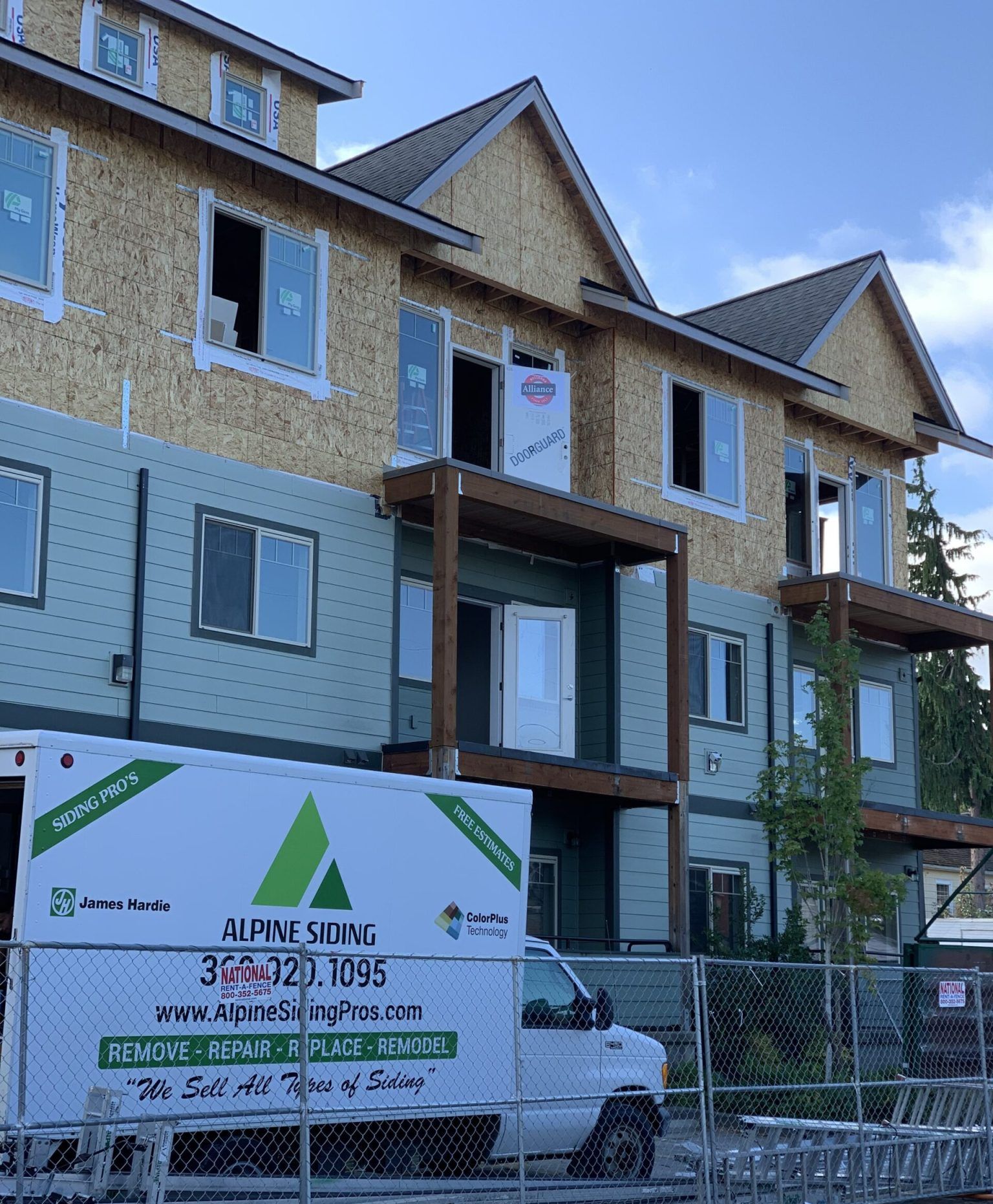
Housewrap isn't decorative. It's installed over the plywood or OSB sheathing, lapped shingle-style so water drains downward and outward, and integrated with flashing at windows, doors, and roof-to-wall transitions. Siding — vinyl, fiber cement, wood, whatever it is — is not actually watertight on its own. It sheds most water, but wind-driven rain, condensation, and small gaps around fasteners and trim let some moisture get behind it. The housewrap is the backstop that carries that moisture back out before it reaches the framing.
The problem with reusing old housewrap is that it rarely survives a tear-off in usable condition. Staples pull through it, seams that were taped years ago lose adhesion, UV exposure during the demo process makes older wrap brittle, and any tears or punctures from the original siding installation are often still there, undetected, until the new siding goes back on over them. Housewrap manufacturers generally rate their products for a working lifespan in the 15-to-30-year range, but that's under ideal conditions — not after being pried at with a flat bar during tear-off. Once the wrap is exposed and disturbed, you're usually better off treating it as consumed.
Cost-wise, new housewrap on an average home typically runs somewhere in the low hundreds to a couple thousand dollars in material and labor, depending on square footage and how much flashing and detail work is involved — a modest add-on relative to a full residing job that likely runs into five figures. Skipping it to save that relatively small amount, and then finding rot behind the siding five or ten years later, is the more expensive outcome.
This isn't a region where you can assume a wall assembly will dry out quickly between storms. Whatcom County gets a long, wet fall-through-spring stretch, and homes near the water — Bellingham's waterfront neighborhoods, Blaine, Birch Bay — take wind-driven rain directly off Bellingham Bay and the Strait of Georgia. That wind pushes rain sideways into siding laps and around trim in a way that calmer inland weather doesn't, which is exactly the scenario a properly lapped, well-flashed WRB is built to handle. A degraded or poorly detailed housewrap in this kind of exposure doesn't just underperform — it fails faster than it would in a drier climate.
Moss and algae streaking on siding, especially on north-facing walls or under overhangs, is common here and is mostly a surface issue tied to shade and humidity. But when we pull siding on an older Whatcom County home — particularly ones built in the 1970s-90s with original T1-11 or board siding — persistent surface moss is sometimes a sign that moisture has been sitting against the wall long enough to also be working on the sheathing and framing behind it. Wood rot at the bottom of wall sections, around old window flashing, and near deck ledgers is one of the more common things we find once the siding comes off in this area, and it's directly tied to how long a compromised or missing WRB has been letting water sit.
Up in the foothills — Sudden Valley and other higher-elevation pockets toward Mt. Baker — freeze-thaw cycling adds another wrinkle. Water that gets behind siding and into small gaps can freeze, expand, and work sealant joints and fastener holes loose over a winter or two, which is one more reason not to reuse wrap that already has hairline damage. And on the islands, salt air and constant damp add to general material fatigue on top of everything else.
The Washington State Energy Code also plays a role here, since it's written for the state's marine climate zone. Depending on your wall assembly and insulation approach, the code's continuous insulation and air-barrier provisions can effectively require a compliant, properly sealed water-resistive/air barrier as part of the assembly — not just any wrap stapled up loosely. That's a code and performance question worth reviewing with your contractor rather than assuming any housewrap satisfies it.
Before you sign off on a residing quote, ask what happens to the existing wrap. A contractor who plans to reuse it should be able to show you specifically why it's still sound — intact seams, no tears, good adhesion, minimal UV damage — rather than just leaving it because tearing it off adds labor.
Alpine Exteriors walks Whatcom County homeowners through this decision wall by wall during the tear-off, rather than deciding it up front from a driveway estimate. Sometimes a section of wrap really is fine and gets left in place; more often, once it's exposed to this climate's rain and wind, it makes sense to replace it while the siding is already off.
Sometimes, but it's the exception rather than the rule. If the wrap is only a few years old, still has intact seams, no tears, and hasn't been exposed to UV for long during the project, reusing it can be reasonable. On most homes with siding old enough to be due for replacement, the wrap underneath has also aged past a useful condition, and tear-off itself tends to damage it further, so replacement is usually the more realistic outcome.
It varies with square footage and how much flashing and detail work the walls need, but housewrap is generally a small fraction of an overall residing budget — often in the low hundreds to a couple thousand dollars on a typical home. It's a modest addition next to the cost of the siding, labor, and trim, and far cheaper than repairing rotted sheathing later.
A rainscreen is a small drainage gap, usually created with vertical furring strips, installed between the housewrap and the siding so any water that gets past the siding can drain and the wall can dry out on both sides. It's not mandatory on every home, but given how much wind-driven rain this area sees off Bellingham Bay and the Strait, it's a detail worth discussing for exposed walls, especially on the coast and islands.
The energy code doesn't name a brand or product, but its continuous insulation and air-barrier requirements for our marine climate zone can affect what qualifies as a compliant water-resistive and air barrier in your wall assembly, depending on how the walls are insulated. It's worth confirming with your contractor that whatever wrap and detailing goes on your home actually meets the assembly's code requirements, not just general moisture protection.
If you're planning a residing project anywhere from Bellingham to Ferndale, Lynden, Blaine, Birch Bay, Sudden Valley, or the islands, Alpine Exteriors can walk your walls with you during tear-off, show you what's actually behind the old siding, and give you a straight answer on whether the housewrap should stay or go. Alpine Exteriors holds Washington contractor license ALPINI751OW — reach out for an on-site look at your home before you commit to a scope of work.