
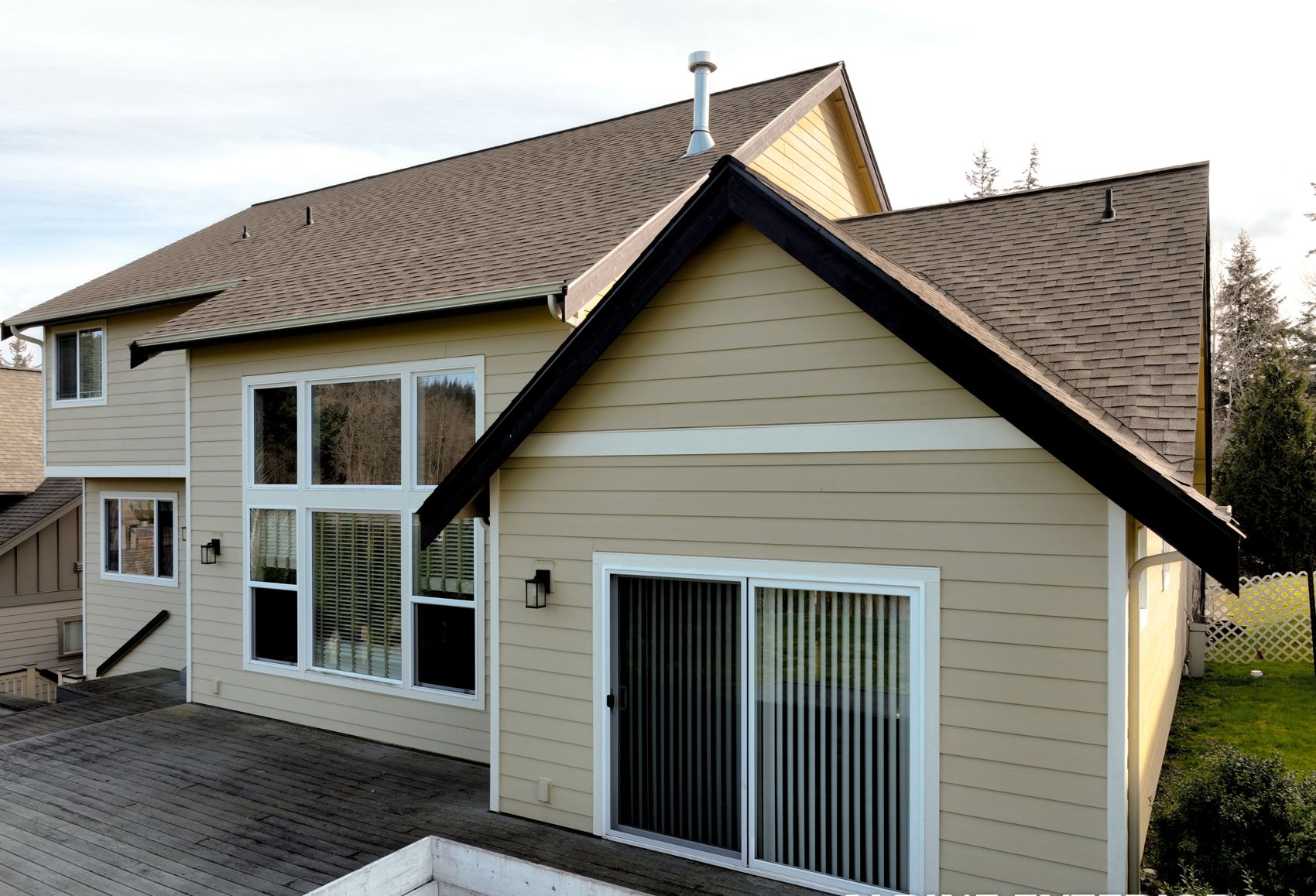
Homeowners on Lummi Island, and out through the San Juans, ask the same question the moment a bid comes back higher than a mainland Whatcom County neighbor's: why does the ferry matter that much? It does, and it's usually the single biggest swing factor after material choice. Below are realistic ranges for the region, what actually pushes a project toward the low or high end, and what to expect when you sit down with a contractor's written quote.
There is no single number that fits every island home, and any contractor who quotes a firm price over the phone without seeing the house is guessing. What follows are broad, regional ranges meant to help you set expectations before a site visit — not a substitute for a walk-around estimate. Alpine Exteriors prices island jobs individually because ferry scheduling, wall condition, and material access vary so much from one property to the next, even within a few miles of each other.
| Cost Factor | Low End | High End |
|---|---|---|
| Material tier (vinyl vs. engineered wood vs. fiber cement) | Budget vinyl, minimal trim | Fiber cement or cedar with detailed trim |
| Tear-off and disposal | Single layer, easy access, dumpster fits at the landing | Multiple layers, rot removal, hand-carried debris to a barge or ferry-bound trailer |
| Wall and sheathing repair | Little to no rot found once old siding comes off | Widespread rot repair, sheathing replacement, structural framing repair |
| Ferry and island logistics | Mainland-adjacent, frequent runs, standard vehicle loads | Reservation-dependent crossings, freight limits, weather-delayed trips |
| Code-required upgrades | Existing assembly already meets current energy code | Continuous insulation, new weather-resistive barrier, and rainscreen gap added to bring the wall up to code |
| Home size, height, and complexity | Single story, simple rectangular footprint | Multi-story, waterfront bluff access, steep roof lines and dormers |
On the mainland side of Whatcom County, a siding bid is mostly about square footage, material, and labor. Out on Lummi Island and in the San Juans, logistics carry real weight of their own.
A usable, comparable siding quote for an island property should spell out more than a total price. Look for these line items specifically:
The biggest mistake in comparing island siding bids is lining up total dollar figures without checking whether the underlying scope matches. A bid that looks a few thousand dollars lower may simply be excluding rot repair, skipping a rainscreen gap, or assuming a ferry crossing schedule that isn't realistic for the crew size involved. Ask each contractor to itemize material grade, tear-off scope, and logistics separately rather than bundling everything into one number. Confirm the contractor is currently licensed with Washington State — Alpine Exteriors carries WA contractor license ALPINI751OW, and license status for any contractor can be checked directly through the state's Department of Labor & Industries lookup. Be cautious of any bid that's dramatically below the others with no explanation; on the islands, that's often a sign the ferry and freight costs weren't accounted for, which tends to surface later as a change order.
Most siding replacement is treated as a home improvement project rather than an insurance claim, since normal wear, moss growth, and age-related rot are considered maintenance issues rather than sudden damage. Homeowners insurance is more likely to come into play when a specific storm event causes acute damage — a windstorm off the Strait tearing loose a section of siding, for example — in which case documenting the damage and date matters for a claim. It's worth a call to your carrier before assuming a project will or won't be covered. On the financing side, many contractors offer payment plans or can point homeowners toward third-party home-improvement financing; island properties sometimes take a bit longer in the approval or appraisal process simply because of location, so it's worth starting that conversation early rather than after a crew is already scheduled.
The material and labor cost is similar, but getting crews, dumpsters, and full truckloads of siding across the ferry adds scheduling constraints and freight costs that a mainland job simply doesn't have. Contractors typically build that into the bid as a logistics line rather than hiding it inside the labor rate.
It varies widely depending on how much of the wall sheathing and framing is affected, which is exactly why a written quote should separate the base siding price from a rot-repair allowance. Homes with a lot of shaded, north-facing, or waterfront-exposed wall area tend to see more rot than homes in open, sunny locations.
Both can perform well when installed correctly with a drainage gap and proper flashing, since the assembly behind the siding matters as much as the material itself. Fiber cement generally resists moss growth and impact better and costs more upfront, while vinyl costs less but can show algae staining sooner in shaded, damp spots.
It depends on the scope of work and how much of the wall assembly is being opened up — a straight re-side may not trigger it, while a project that removes sheathing or adds new wall components often does under the Washington State Energy Code. A contractor pulling permits locally can tell you exactly what applies to your specific project.
If you're planning a siding project on Lummi Island or anywhere in the San Juans, Alpine Exteriors can walk the property, account for ferry logistics up front, and put together a written estimate that separates material, labor, and any rot repair so you know exactly what you're comparing. Reach out to schedule a site visit and get a scope-specific quote for your home.