
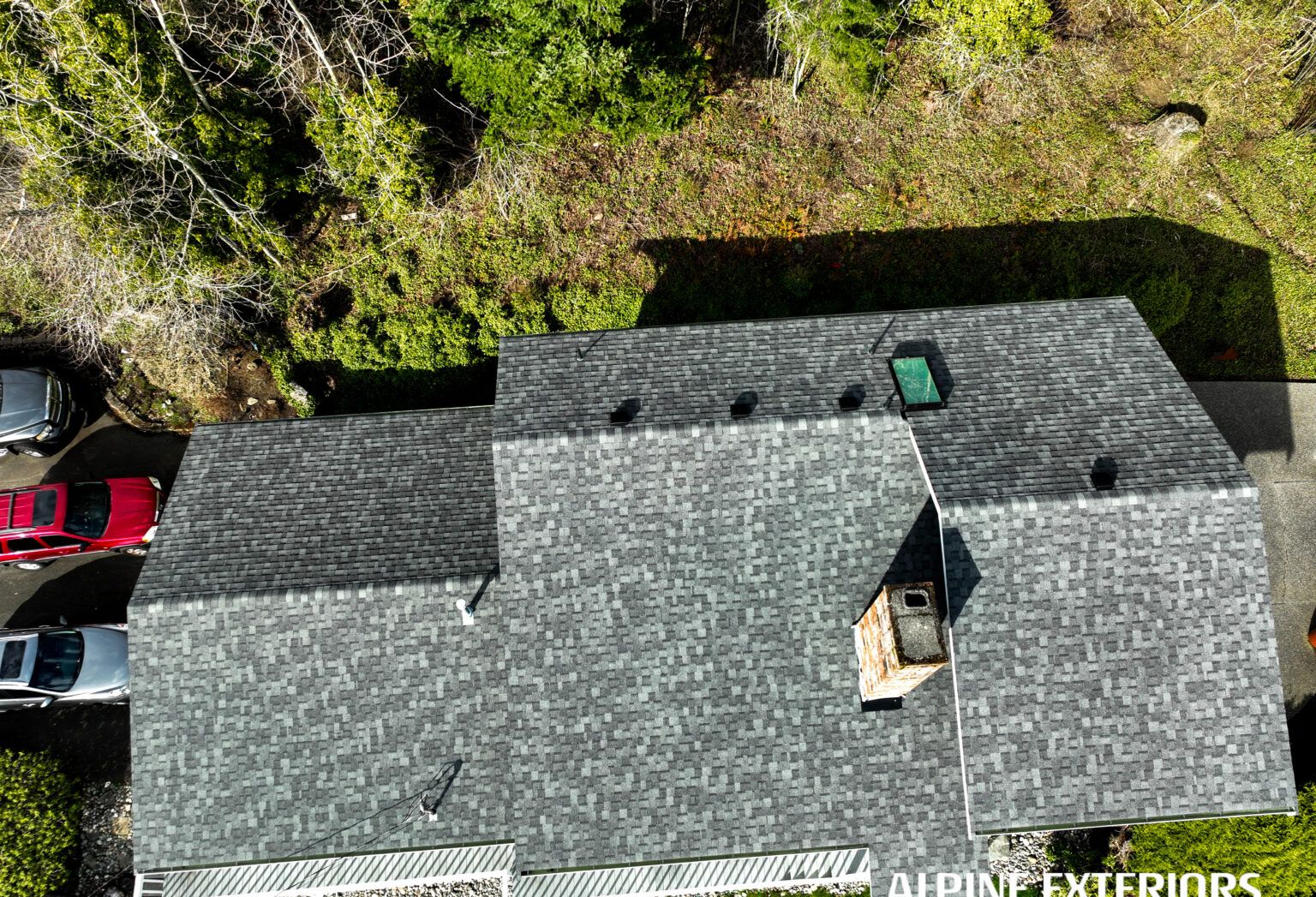
Sudden Valley sits on the south shore of Lake Whatcom, tucked under a heavy fir and cedar canopy that keeps the community shaded, cool, and damp for most of the year. That combination is beautiful to live in and hard on siding. Constant shade slows drying time after every rain, tree debris feeds moss and algae growth on north-facing walls, and homes tucked into the foothill draws around the lake see more freeze-thaw cycling in winter than homes closer to sea level in Bellingham. If you're planning a siding replacement here, this page walks through what actually happens, in order, so there are no surprises once a crew is on your property.
For a typical single-family home in Sudden Valley, a full siding tear-off and replacement runs somewhere between two and four weeks of active work, though the calendar time from signed contract to finished project is usually longer once permitting, material ordering, and weather delays are factored in. A straightforward lap siding job on a one-story home with minimal rot might close out in ten working days. A larger two-story home with wood rot discovered under the old siding, trim replacement, and a switch to fiber cement can stretch past a month. Rain is the biggest scheduling variable here — Whatcom County gets extended stretches of steady, low-intensity rain rather than short violent storms, and siding crews generally won't install over wet sheathing or house wrap, so a string of soggy weeks in November or February can push a job that would take ten days in July out to three weeks.
Alpine Exteriors builds float days into every Sudden Valley schedule for exactly this reason, and we'd rather tell a homeowner the honest range up front than promise a date we can't hold once the wrap needs to dry.
Three things need to happen before a crew ever shows up with a dumpster.
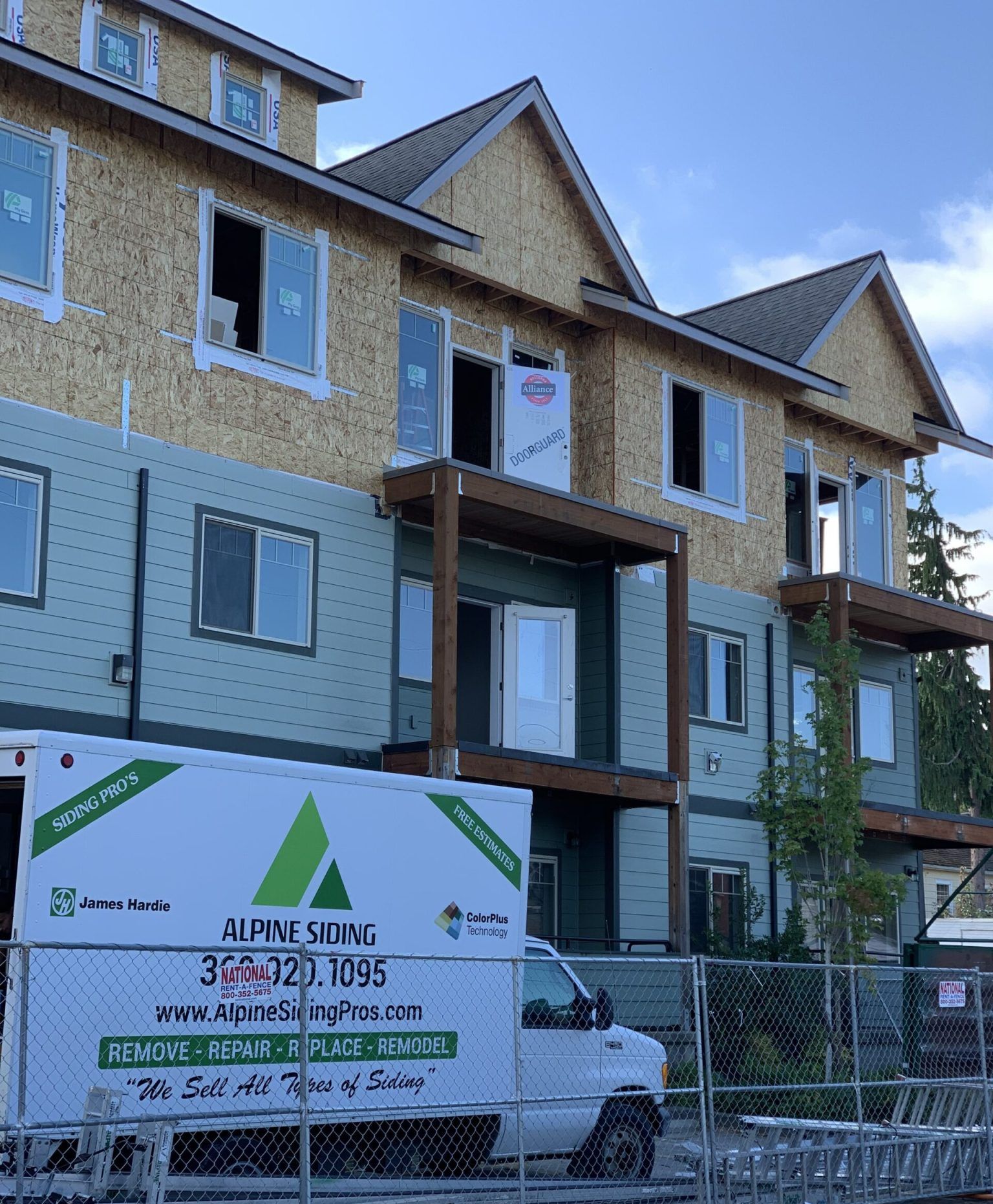
Once permits and ARC approval are in hand and material has arrived, the physical work generally follows this sequence:
A few things on your end make the project go smoother. Move vehicles out of the driveway and garage access area for the duration of the tear-off and install, since crews need room to stage material and set up ladders and scaffolding around the full perimeter. Trim back shrubs, hanging branches, and anything touching exterior walls — given how close tree cover often grows to homes in Sudden Valley, this is frequently the single biggest prep item. Take down anything mounted to the exterior walls you don't want damaged, such as string lights, hose reels, or decorative hardware. Expect noise and foot traffic around the house for the duration, and expect some interior wall vibration during tear-off and fastening, particularly near upper floors. If you have pets that react to unfamiliar noise or open gates, plan for that during active work days.
Once installation is complete, the county building inspector reviews the work for permit sign-off where a permit was pulled — this is a required step, not an optional one, and it protects the homeowner as much as anyone. After inspection, the crew does a full site cleanup: removing the dumpster, magnet-sweeping the yard and driveway for stray fasteners, and restoring any landscaping that was moved or protected during the project. We then walk the exterior with the homeowner, checking every elevation, trim line, and corner against the contract and pointing out anything that still needs touch-up. Any punch-list items get scheduled before the job is called finished, not left open-ended.
New siding in this climate still needs occasional attention. Moss and algae will eventually return to shaded, low-airflow areas of the house even with a durable material, and a periodic gentle wash — never a high-pressure blast directly at seams or flashing — keeps growth in check and lets you spot any caulking that's started to fail. Walk the exterior once or twice a year, particularly after a hard winter, and look at trim joints, the base of the siding near grade, and anywhere two materials meet. Manufacturer product warranties vary by brand and material, and workmanship warranty terms are spelled out in your contract with Alpine Exteriors — we'll walk through exactly what's covered, for how long, and what voids it before you sign anything, rather than leaving it as fine print.
In nearly all cases, yes — exterior siding changes, including material and color, generally fall under the Sudden Valley Community Association's architectural review process. Requirements can be updated by the association, so we recommend confirming current submission requirements directly with the ARC and starting that process as early as possible, since it runs independently of the county permit and can add real time to your schedule if submitted late.
We stop and show you the damage before doing anything else. Given how much moisture this region sees, some rot at window sills, corners, or near grade is common enough that we build a contingency conversation into every proposal. You'll get a clear explanation of what's affected, what it takes to repair it, and a cost adjustment before we move forward — no surprise change orders after the fact.
Sometimes, but not always on the schedule originally hoped for. Crews can work through periods of light or intermittent rain once the wrap and flashing are dry-in ready, but installation generally pauses during sustained heavy rain or when sheathing and wrap need time to dry. Whatcom County's rainy months tend to bring long stretches of steady drizzle rather than short storms, which is exactly the pattern that causes the most schedule slippage.
It varies widely by home size, the material chosen, and how much sheathing or trim repair is needed once tear-off starts. As a rough range, fiber cement re-siding on an average single-family home often falls somewhere in the neighborhood of eight to sixteen dollars per square foot installed, with vinyl typically landing lower and extensive rot repair pushing costs higher. Alpine Exteriors provides a written estimate after an in-person inspection rather than a phone quote, since hidden damage is common enough here that a number without eyes on the wall isn't a reliable one.
If you're weighing a siding replacement for a home in Sudden Valley or elsewhere around Lake Whatcom, Alpine Exteriors (WA contractor license ALPINI751OW) can walk your property, explain what we find, and lay out a realistic timeline and scope before any contract is signed. Reach out to schedule an inspection and get a straight answer on what your home actually needs.