
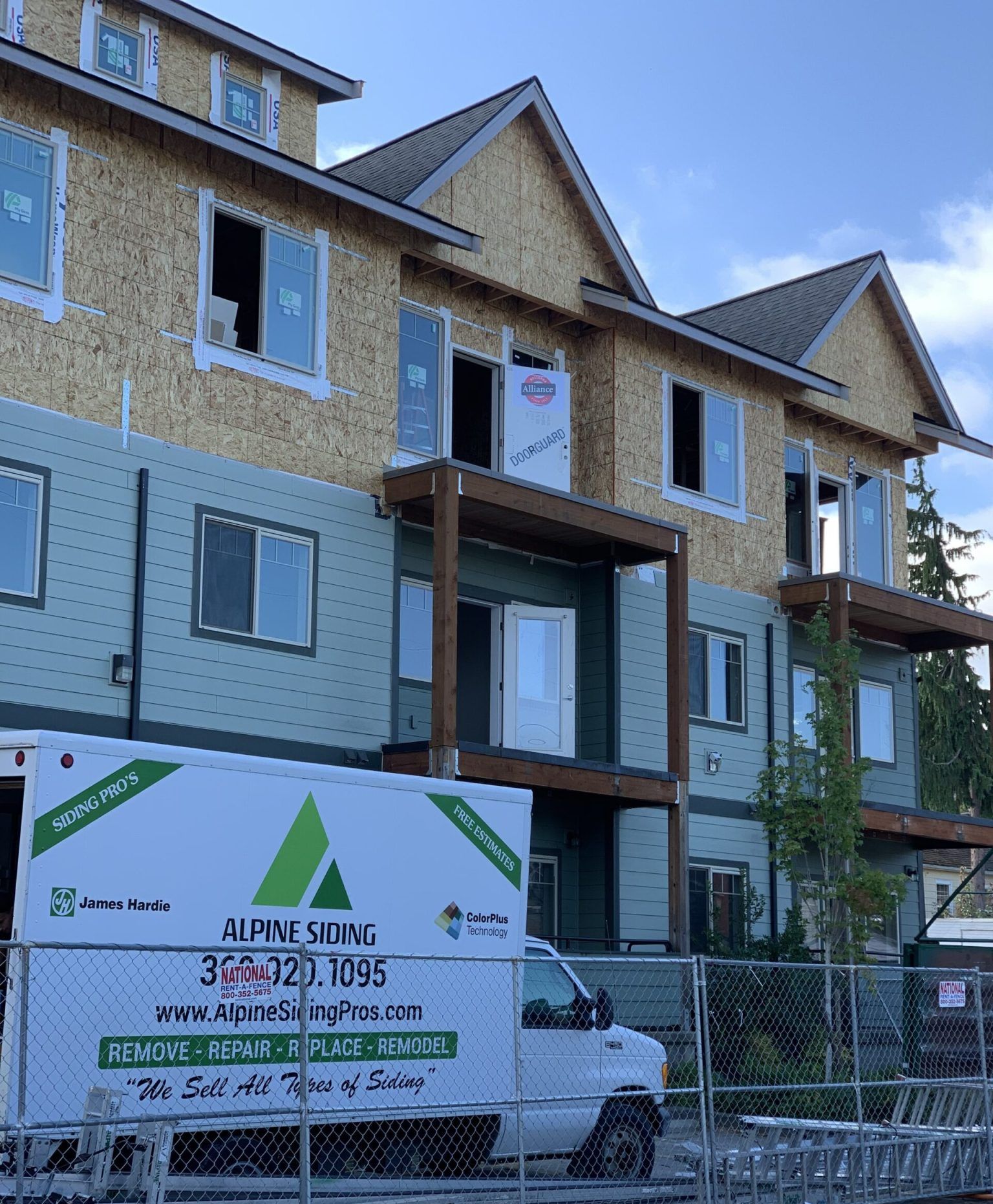
Fairhaven's older homes and cottages sit close to Bellingham Bay, which means they take a steadier beating from wind-driven rain and salt air than a house a few miles inland in Ferndale or Lynden. By the time most Fairhaven homeowners call about siding, they're not shopping for a cosmetic upgrade — they're dealing with soft trim, bubbling paint, or a contractor who found rot during a roof job. A full siding replacement on a typical Fairhaven single-family home, from tear-off to final trim paint, generally runs somewhere between one and three weeks of active work once crews are on site, depending on square footage, how much sheathing repair turns up once the old siding comes off, and how many days get lost to rain. That's a wider range than you'd see in a drier climate, and it's worth planning for the long end of it rather than the short end.
The active build is only part of the timeline, though. Between signing a contract and the first day of demolition, most Whatcom County projects have a gap of several weeks to a couple of months for permitting, material ordering, and scheduling. Alpine Exteriors walks clients through both halves of that timeline up front — the waiting period and the build itself — so there are no surprises about how long a Fairhaven job actually takes from start to finish.
Most exterior residing work in the City of Bellingham (which includes the Fairhaven neighborhood) requires a building permit, and that permit review typically also checks the project against the Washington State Energy Code. If your project adds or upgrades continuous exterior insulation — common when siding is being replaced anyway, since it's the efficient time to do it — the code sets minimum R-value and installation requirements that your contractor needs to document and the city needs to sign off on. Skipping this step is one of the more common ways a siding project gets flagged and delayed mid-build, so it's handled before any material shows up.
If your property is inside a homeowners' association — this comes up regularly around Sudden Valley and some of the newer developments outside Bellingham proper — HOA design review can add its own timeline on top of the city's, especially if you're changing siding color, material, or texture rather than doing a like-for-like replacement. It's worth submitting HOA paperwork the same week the permit application goes in rather than waiting for permit approval first, since the two processes can run in parallel.
Material lead times are the other variable that's easy to underestimate. Fiber cement siding, certain trim profiles, and specific paint or stain colors can take several weeks to arrive, and that lead time stretches further during the busier spring and summer construction season when every siding and roofing contractor in Whatcom County is ordering from the same regional suppliers. Alpine Exteriors places material orders as soon as a contract and color selection are finalized, specifically to avoid a scheduled crew showing up to a job with no material to install.
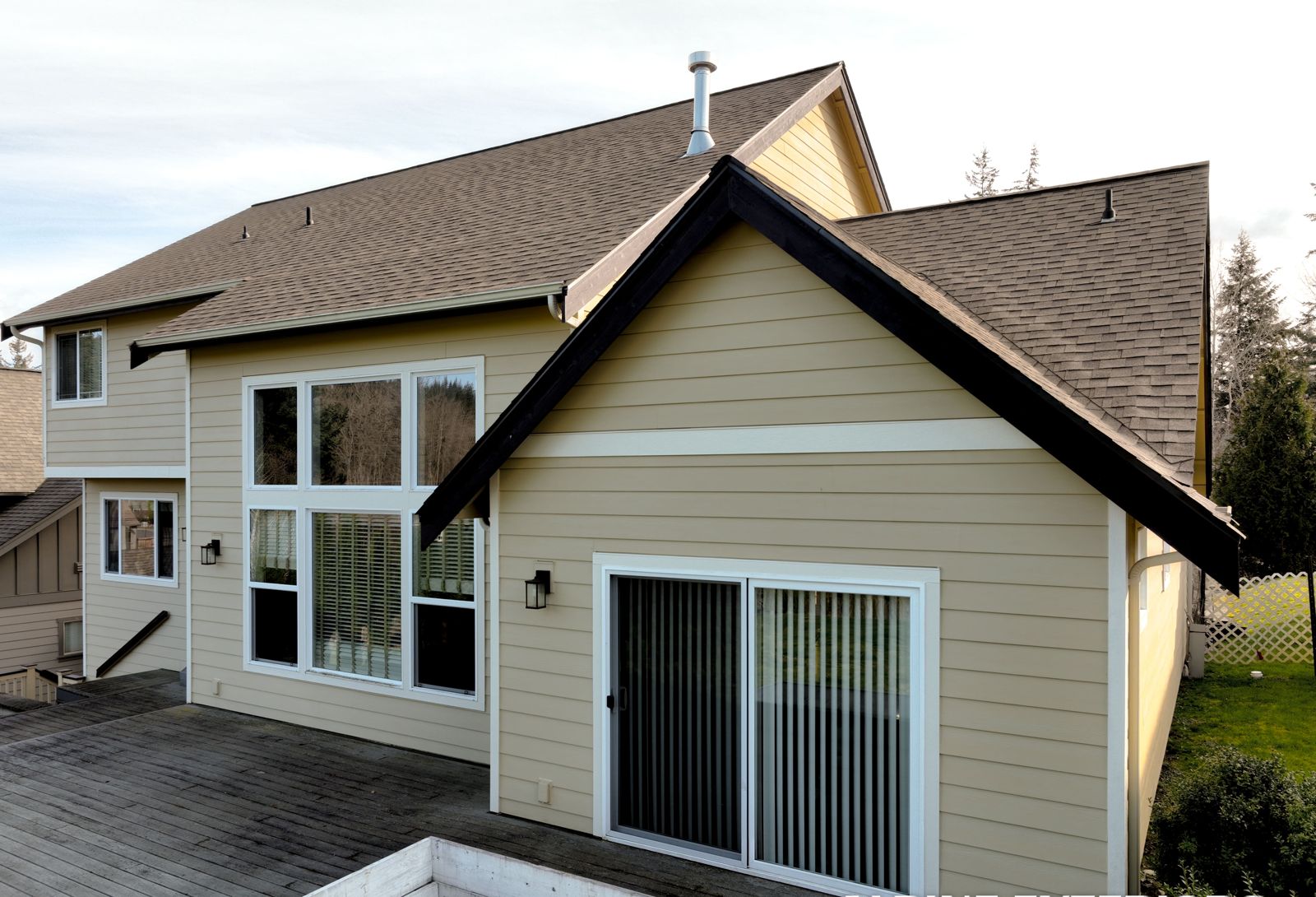
1. Site protection and tear-off. Crews first protect landscaping, walkways, and anything under the eaves with tarps and plywood, then remove the existing siding down to the sheathing. This is the point where hidden problems become visible — and on homes near the water in Fairhaven, it's common to find some degree of wood rot around window sills, corner boards, or the bottom few feet of wall framing where wind-driven rain off the Bay has been finding its way behind old siding for years.
2. Sheathing and moisture damage repair. Any soft or rotted sheathing, framing, or trim gets cut out and replaced before anything new goes on. This step can add time and cost that wasn't in the original estimate, and a straightforward contractor will show you the damage in person rather than just describing it over the phone.
3. Weather-resistive barrier and flashing. A new water-resistive barrier goes over the sheathing, with flashing detailed carefully around every window, door, and penetration. In a climate with as much sustained rain as Whatcom County gets, this layer matters more than the visible siding itself — it's the actual line of defense, and it's also the part a homeowner can't inspect once the new siding is up.
4. Insulation and energy code compliance. If the project scope includes continuous insulation to meet current Washington State Energy Code requirements, it's installed at this stage, over the barrier and under the new siding furring or strapping.
5. Siding installation. New siding goes up according to the manufacturer's specifications for fastening pattern, gapping, and clearance — details that matter more here than in drier regions because tight installation without proper drainage gaps can trap moisture instead of shedding it.
6. Trim, flashing details, and caulking. Corner boards, window and door trim, and transition flashing get installed and sealed. This is also when any exposed wood trim gets primed and painted.
7. Cleanup and debris haul-off. Old siding, cut-offs, and packaging are cleared from the site daily where practical, with a full site cleanup at the end of the job.
A few days before crews arrive, it helps to clear a perimeter around the house — patio furniture, potted plants, garden ornaments, and anything hanging on exterior walls should come down, since ladders, scaffolding, and material staging will need that space. If you have gutters with attached downspout extensions or drainage tied into the ground near the foundation, flag them so crews know not to disturb the drainage path, which matters given how much rain Whatcom County gets in fall and winter.
Before the crew leaves for good, the city building inspector typically needs to sign off on the completed work, particularly where the permit covered structural sheathing repair or energy code insulation upgrades — this is a required step, not an optional formality, and it protects you if the work is ever questioned during a future home sale. Once that inspection passes, the site gets a final cleanup pass: magnetic sweeps for stray nails and screws, removal of all scrap and packaging, and a check that landscaping and outdoor fixtures are back in place.
The final walkthrough is where you and the project lead go around the house together, checking trim lines, paint finish, caulking, and any punch-list items. This is the right time to point out anything that looks off — a slightly uneven trim reveal, a missed caulk line, a gutter that wasn't reattached quite right — before the crew is off the job for good.
New siding in this climate still needs some homeowner attention. Moss and algae growth on north-facing walls and anything shaded by trees is close to unavoidable in Whatcom County's damp climate, and a periodic gentle wash — not a high-pressure blast that can force water behind the siding or strip finish — keeps it from building up. Caulking at trim joints and penetrations should be checked every year or two, since it's the part of the assembly most likely to need touch-up before anything else does.
Manufacturer warranties on siding materials typically run for a long term but usually cover the product itself rather than labor, and the terms vary by product line, so it's worth reading what actually applies to your material before assuming full replacement coverage. Alpine Exteriors backs its own installation labor with a workmanship warranty and stands behind the work as a licensed Washington contractor (license ALPINI751OW) — if something related to the installation itself comes up after the crew leaves, that's a phone call, not a new estimate.
Active construction on a typical single-family home usually runs one to three weeks, but the total timeline including permitting and material ordering is often six to ten weeks from signed contract to finished job. Rain delays are common enough in this region that most schedules build in some buffer rather than assuming ideal weather every day.
On older homes near Bellingham Bay, some degree of moisture damage around windows, corners, or the base of walls is common enough that it shouldn't come as a shock. It isn't guaranteed on every home, but a contractor who tells you there's zero chance of hidden rot before tear-off is guessing, not inspecting.
In most cases, yes — a building permit is required for exterior residing work within the City of Bellingham, and the review typically includes a Washington State Energy Code check, especially if insulation is being added or upgraded as part of the project. Requirements can differ slightly for unincorporated Whatcom County addresses, so it's worth confirming for your specific property.
It can, and plenty of Whatcom County projects run through fall and winter, but expect more weather-related delays than a summer schedule and make sure your contractor is sequencing tear-off in sections so exposed sheathing isn't left open to the weather overnight.
If you're seeing soft trim, peeling paint, or moss buildup that won't quit on a Fairhaven or greater Bellingham home, it's worth getting an honest look at what's underneath before deciding on scope. Alpine Exteriors serves Fairhaven, Bellingham, Ferndale, Lynden, Blaine, Birch Bay, Sudden Valley, and the islands, and can walk you through a realistic timeline, permit requirements, and material options for your specific house. Reach out to schedule an on-site inspection and get a straight answer about what your project actually involves.