
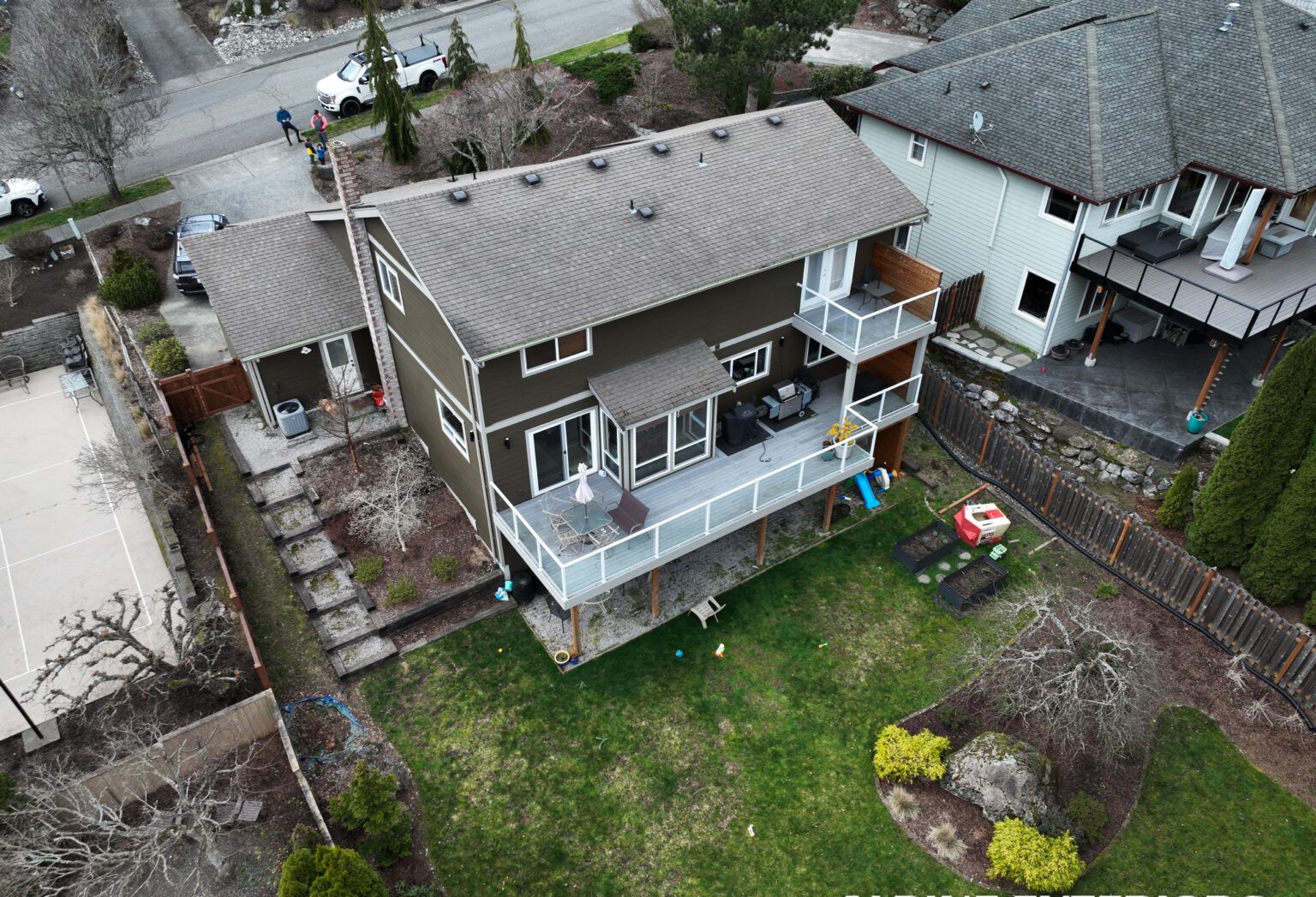
Fiber cement and well-detailed vinyl are the two siding types that consistently hold up on homes near Glacier and Maple Falls, mainly because both shed water and resist the wood rot that shows up under heavy tree cover. Cedar siding can still work here, but only with a maintenance schedule the homeowner actually keeps.
The short version doesn't tell you why it's true, and up here the why matters more than in town. Homes along the Mount Baker Highway corridor sit under dense fir and cedar canopy for most of the day, which means siding stays damp longer than it would on an open lot in Bellingham or Ferndale. Add several hundred more feet of elevation and a wider daily temperature swing, and you get a set of conditions that punishes any siding material with poor drainage detailing, no matter what the product brochure claims.
Wood rot is the failure Alpine Exteriors sees most often on older homes between Glacier and the Maple Falls area, and it's rarely the siding material itself that fails first. It's usually the trim, the butt joints, and the areas around window flashing where water gets trapped against wood and can't dry out because the canopy overhead blocks sun and airflow. A cedar-sided home in an open field in Lynden can dry out between storms. The same siding on a shaded lot off the highway often can't, and that's where soft spots and rot pockets start.
Moss and algae growth follow the same logic. North-facing walls and anything under a tree line stay damp enough, long enough, that organic growth takes hold within a couple of years if the siding isn't engineered to resist it or the surface isn't treated. This isn't just cosmetic — moss holds moisture against the wall assembly, and over time that moisture finds its way into seams, nail penetrations, and any spot where caulking has started to fail. On a foothills lot, we treat moss and algae resistance as a functional requirement, not a finish preference.
Freeze-thaw cycling is the other factor that separates Glacier and Maple Falls from lower-elevation Whatcom County. Down in Bellingham or Blaine, winter usually means rain and wind, not repeated freezing. Up in the foothills, it's common to get snow, a freeze, a thaw, and rain within the same week. Any water that's already worked its way behind a siding panel or into a compromised joint will expand when it freezes, which widens the gap and lets in more water next time. It's a slow cycle, but over several seasons it can turn a small installation flaw into a real repair.
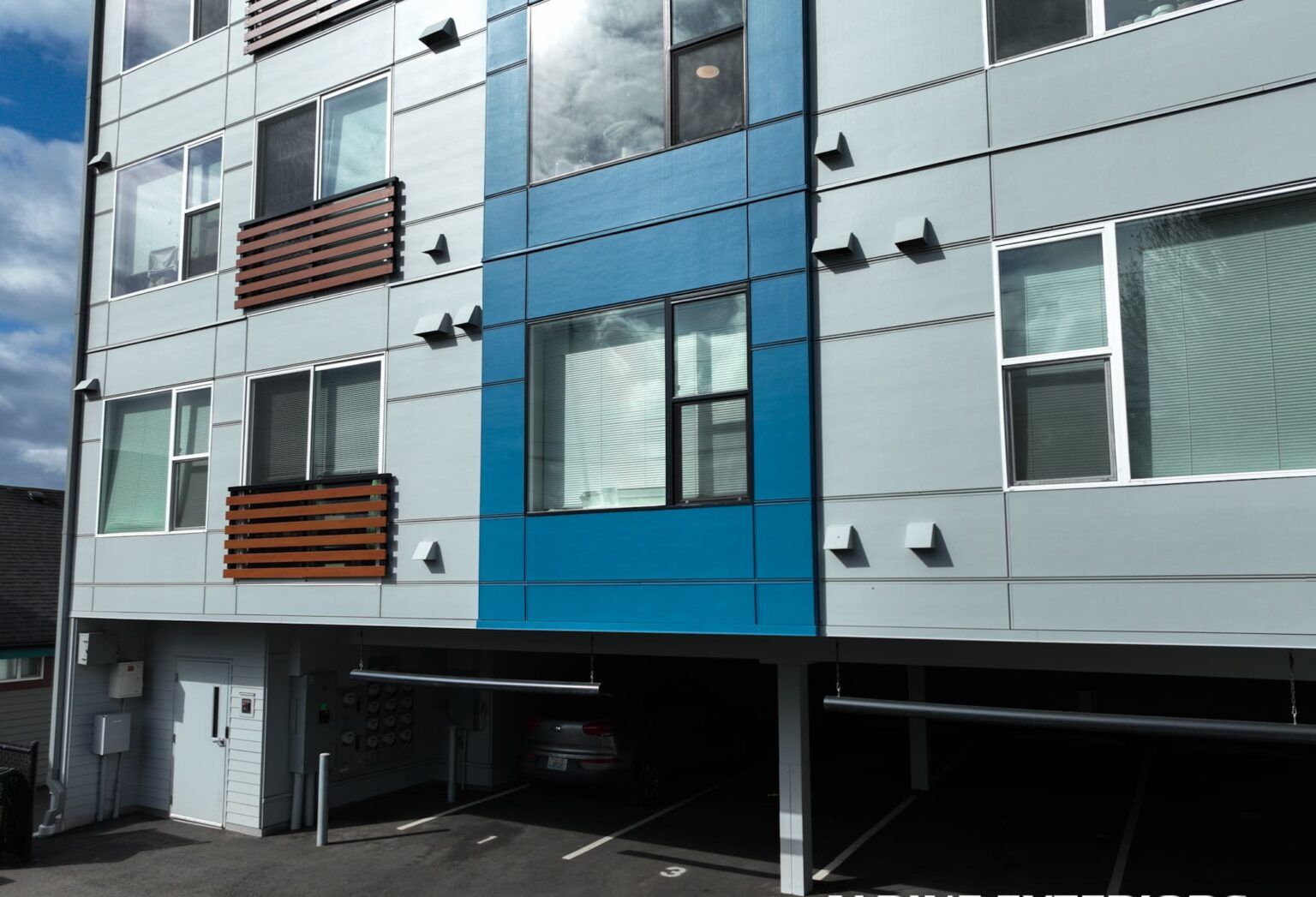
Most siding guidance written for Whatcom County assumes a coastal exposure — wind-driven rain coming off Bellingham Bay or the Strait of Georgia, salt air, and open unshaded lots. None of that is the primary concern for a home in Glacier or Maple Falls. These are forested, elevated communities well inland and upslope from the water, and the exposure profile is almost the opposite: less direct wind-driven rain, but far more persistent dampness from canopy shade, longer snow-to-rain transitions, and bigger daily temperature swings than you'd see closer to sea level.
That distinction actually changes the recommendation. On a coastal lot, the priority is often wind resistance and drainage at the wall-window interface. Up here, the priority is drying capacity — how quickly can the wall assembly shed and release moisture between weather events — plus resistance to the organic growth that thrives in shade. A siding system installed correctly for a coastal home in Blaine isn't automatically the right call for a shaded cabin lot outside Glacier, even though both are technically in Whatcom County.
There's also a practical access issue that's specific to the foothills. Materials, crews, and equipment all have to travel farther up the Mount Baker Highway than a job in Bellingham or Ferndale, and winter weather can close a work window faster than it would in town. It doesn't change what siding performs best, but it does mean scheduling around the season matters more out here, and any contractor bidding the job should be upfront about that instead of treating it like a standard in-town install.
Start by being honest about how much sun the walls actually get. A home tucked into fir trees near Maple Falls needs a different siding decision than one on a cleared lot with more southern exposure, even if they're a few miles apart. Walk the exterior at different times of day if you can, and note which walls stay shaded and damp longest — that's where moss, algae, and rot risk concentrate, and it's often worth spending more on material or detailing there even if you go simpler on the sunnier sides.
None of this is free, and it's worth saying plainly: better drainage detailing, higher-grade fasteners, and moisture-resistant materials cost more up front than a bare-minimum install. On a shaded foothills lot, that upfront cost is usually the cheaper path over ten or fifteen years, because the alternative is paying to fix rot damage that a properly vented and flashed wall assembly would have avoided.
Not inherently. Vinyl performs fine in this region as long as it's installed with correct drainage behind it and the trim details are done right, since vinyl itself doesn't rot or feed algae growth the way wood can. The failures we see with vinyl up here are almost always installation issues — panels hung too tight, poor flashing at windows — rather than the material itself being wrong for the climate.
It depends heavily on how shaded the wall is, but a shaded north-facing wall under conifers may need attention every year or two, while a sunnier wall might go several years between cleanings. Soft washing is generally safer for siding finishes than high-pressure washing, and catching moss early is much easier than removing an established colony that's already worked into seams.
Freeze-thaw itself doesn't usually crack intact fiber cement or vinyl panels, but it accelerates damage anywhere water has already gotten behind the siding or into a joint, and wood trim, caulked seams, and fastener penetrations are the most common places that happens. The real fix is preventing water intrusion in the first place through proper flashing and gapping, since no siding material is immune once moisture is trapped and repeatedly freezing.
If a project involves removing siding down to the sheathing, it's often the right moment to bring the wall assembly's insulation and air-sealing up toward current Washington State Energy Code expectations, even on an older home that wasn't required to meet them when built. It's worth discussing with your contractor early, since the added insulation work is far easier to do while the wall is already open than to retrofit later.
Homes in Glacier and Maple Falls deal with a different mix of moisture, shade, and temperature swings than the rest of Whatcom County, and the right siding plan reflects that instead of copying a spec written for a coastal lot in Blaine or Birch Bay. Alpine Exteriors, WA contractor license ALPINI751OW, works throughout Whatcom County including the Mount Baker Highway communities and can walk your specific lot with you before recommending a material or detailing approach. If you're weighing a repair against a full re-side, or just want an honest read on how much longer your current siding has, reach out to Alpine Exteriors for a straightforward assessment.