
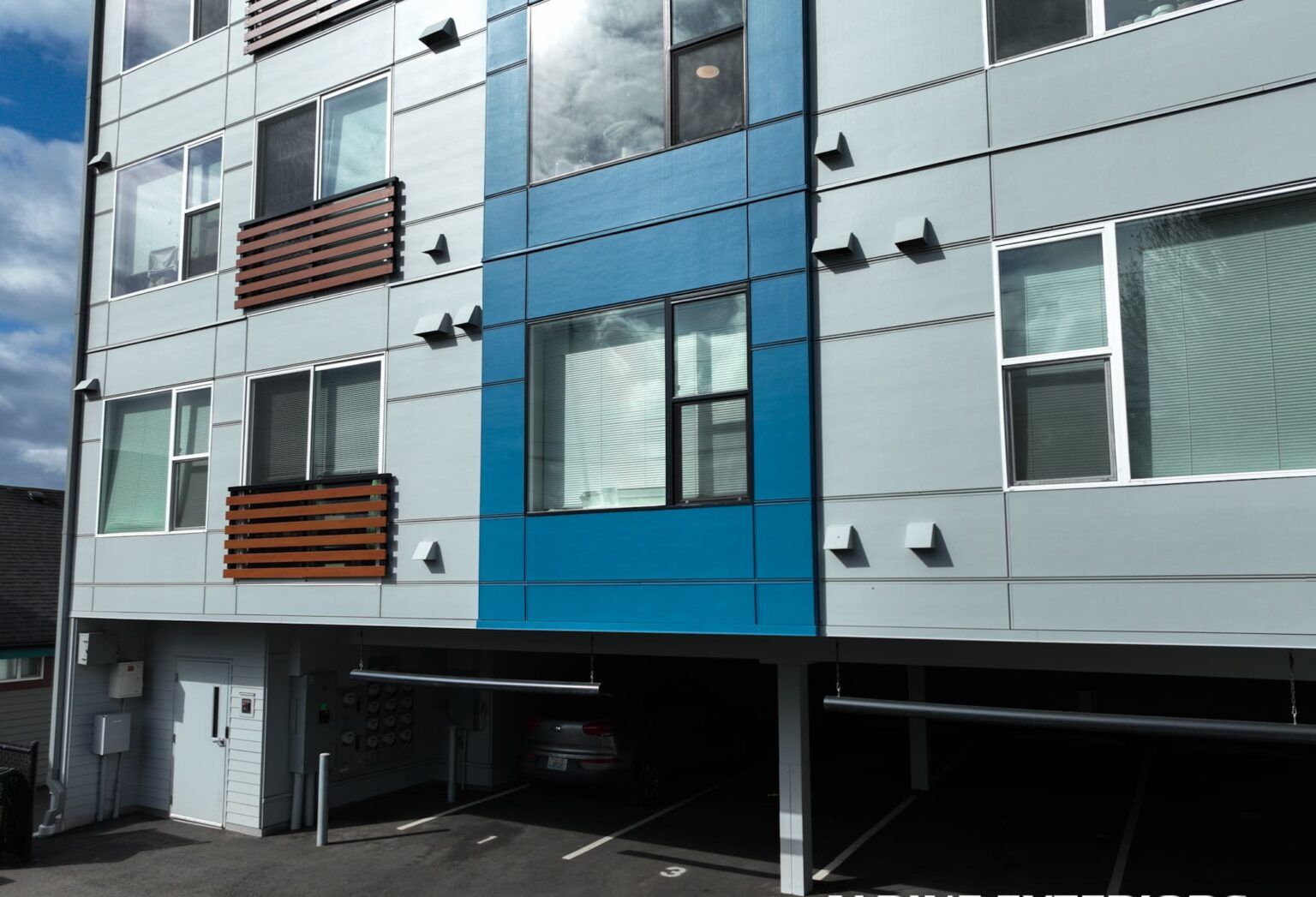
Silver Beach sits along the south shore of Lake Whatcom, close enough to Bellingham Bay and the Strait of Georgia that homes here take on a specific kind of weather: long stretches of steady drizzle, wind-driven rain that pushes moisture sideways into wall assemblies, and the shade and dampness from mature evergreens that keeps moss and algae growing on siding nearly year-round. Replacing siding on a Silver Beach home is a different job than the same project in a dry climate, and homeowners who understand the process ahead of time tend to have a much smoother experience. This guide walks through what actually happens, in order, from the first estimate to the final walkthrough.
For a typical single-family home in the 1,800 to 2,800 square foot range, the physical work of tearing off old siding and installing new material usually takes somewhere between five and ten working days, depending on the size of the house, the complexity of the roofline, and how much rot repair is needed once the old siding comes off. That said, the full project timeline — from signed contract to final inspection — is almost always longer than the installation window itself. Between scheduling, permitting, and material ordering, most Silver Beach projects run six to twelve weeks start to finish. Spring and summer, when every siding contractor in Whatcom County is booked solid, tend to push toward the longer end of that range, and custom colors or specialty trim profiles can add several more weeks of lead time.
It's worth being honest about the variables that are genuinely out of anyone's control: weather delays are common here, since fiber cement and most trim work need dry substrate and a reasonable weather window to install and finish correctly. A string of wet days in November or December can push a project back by a week or more, and a responsible crew will pause rather than install over wet sheathing.
Most residential siding replacement projects in Whatcom County require a building permit, particularly when the scope includes replacing sheathing, house wrap, or flashing rather than a simple like-for-like re-side. Because Silver Beach sits close to the Bellingham city limits line near Lake Whatcom, whether your permit is pulled through the City of Bellingham or through Whatcom County itself depends on exactly where your property falls — this is one of the first things to confirm before ordering materials, since inspection scheduling and code requirements can differ slightly between the two jurisdictions. Any siding installer working on your home should be able to tell you which jurisdiction applies and should be pulling the permit under their own contractor license, not asking you to do it.
If your property is part of an HOA or a covenant community — common around several lakefront pockets near Silver Beach and neighboring Sudden Valley — architectural review is a step that's easy to underestimate. Many associations require submitting siding color, material, and sometimes even manufacturer samples to an architectural committee before work begins, and that review can take anywhere from a couple of weeks to over a month depending on how often the committee meets. Starting this process early, ideally before signing a material order, avoids the frustrating scenario of having product on order that later gets rejected for color or style.
Material lead times are the other piece worth planning around. Fiber cement siding (the most common upgrade choice in this climate because of its resistance to moisture and rot) is often available in standard colors within a few weeks, but factory-primed or custom color-matched orders, along with certain trim profiles, can take six weeks or longer to arrive. Engineered wood and vinyl products have their own lead times that vary by manufacturer and season. Locking in material selections early is one of the most effective ways to keep the overall project on schedule.
Once permits are approved and materials are on site, the work itself follows a fairly consistent sequence:
A few days before work starts, it helps to clear a perimeter around the house — move patio furniture, potted plants, grills, and anything leaning against exterior walls at least a few feet back. Vehicles should be parked away from the immediate work zone so ladders, scaffolding, and material staging have room. Exterior-mounted items like satellite dishes, light fixtures, or house numbers that are directly in the work path may need to be temporarily removed and should be discussed with the crew ahead of time.
Inside the house, expect noise and vibration during tear-off and nailing, especially on walls where crews are working directly outside a room. It's a good idea to take down framed pictures or fragile items hanging on exterior walls. Pets and small children should be kept away from the work area during active hours, both for safety around tools and debris and because gates or fences may be temporarily open. If the home was built before the early 1980s, it's also worth discussing with your contractor whether any older siding or underlying building paper should be tested before removal, since some older materials from that era can contain asbestos.
Once installation is complete, any required jurisdiction inspection — through the City of Bellingham or Whatcom County, depending on where the property sits — needs to pass before the job is considered closed out. After that, cleanup should include a magnetic sweep of the yard and driveway for stray nails and staples, removal of all packaging and offcuts, and a general tidy of the work area. A final walkthrough with the homeowner is the time to point out anything that doesn't look right, whether that's a caulk line, a color mismatch, or a piece of trim that needs adjustment. A written punch list of any remaining items, with a clear timeline for addressing them, is a reasonable thing to ask for before final payment.
New siding materials typically carry a manufacturer's product warranty — for fiber cement products this is often measured in decades — separate from the installer's workmanship warranty, which covers the labor and installation quality. Alpine Exteriors, licensed in Washington under contractor license ALPINI751OW, provides a workmanship warranty on its installations and can walk homeowners through exactly what the manufacturer's warranty does and doesn't cover, since those terms vary by product line.
Ongoing maintenance in this climate is mostly about staying ahead of moss and algae. A gentle annual soft-wash (not high-pressure washing, which can force water behind panels or damage caulk lines) keeps growth from taking hold, especially on north-facing walls and areas shaded by trees. It's also worth walking the exterior once a year, generally in early fall before the wet season sets in, to check caulking around windows, trim, and penetrations, since sealant naturally breaks down faster under constant damp conditions than it would in a drier climate.
Installation itself usually runs five to ten working days for an average-sized home, but the full project — including permitting, HOA review if applicable, and material lead times — typically spans six to twelve weeks from contract signing to completion, longer during the busy spring and summer season.
In most cases, yes, especially if the project involves sheathing repair, new house wrap, or flashing changes rather than a simple surface-level replacement. Because Silver Beach is close to the Bellingham city boundary, confirm early whether the City of Bellingham or Whatcom County is the issuing jurisdiction for your specific address.
Given the region's persistent rain and humidity, some degree of hidden wood rot at corners, window sills, or roof-wall intersections is a common discovery once old siding comes off. Affected sheathing or framing gets cut out and replaced before the new weather barrier and siding go on. This can add time and cost to a project, which is why a contingency for unforeseen repairs is worth discussing before work begins.
Some prep and staging work can happen in wetter months, but the actual installation of house wrap, flashing, and siding needs reasonably dry conditions and dry substrate to perform correctly, so scheduling around forecasted dry windows is standard practice, and short weather-related delays should be expected during the wetter parts of the year.
Every Silver Beach home carries its own combination of sun exposure, tree cover, and wind exposure off the lake and the bay, which is why a walkthrough of your specific property is the best next step before locking in materials or a timeline. Alpine Exteriors serves Silver Beach and the surrounding Whatcom County communities and can provide a clear, honest assessment of what your home's exterior actually needs, along with a realistic schedule for getting it done right.