
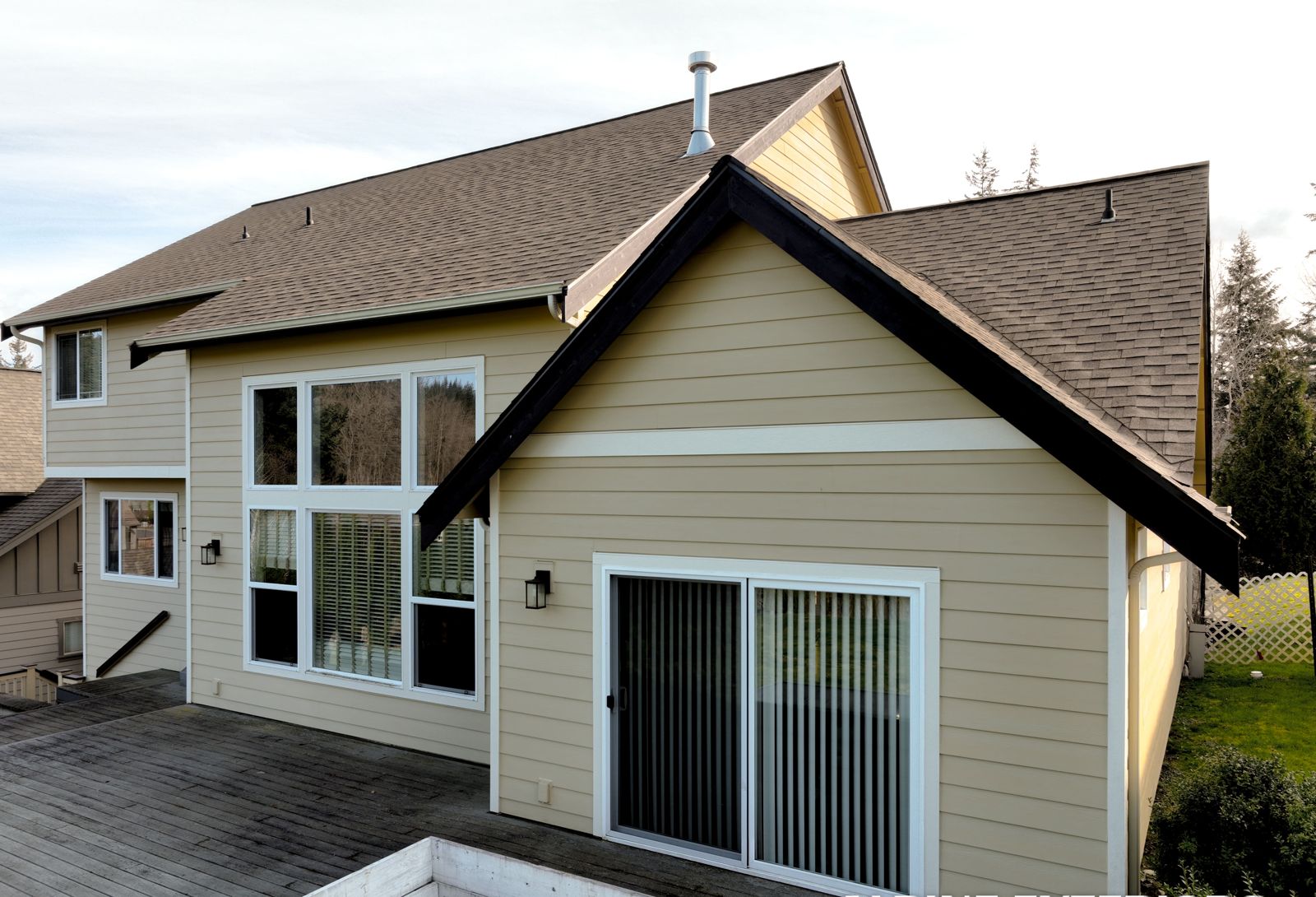
James Hardie shingle siding is one of the more popular upgrades we quote across Whatcom County — Bellingham, Ferndale, Lynden, Blaine, Birch Bay, Sudden Valley, and the islands. Its staggered-edge, cedar-shake look holds up to a wet marine climate far better than real wood, which matters here more than almost anywhere else in the state. Alpine Exteriors puts together a written, itemized quote for every project so homeowners can see exactly what they're paying for before any tear-off begins. This page walks through realistic price ranges for the region, what actually drives those numbers up or down, and what to look for when you're comparing bids.
Fiber cement shingle siding costs more than lap siding of the same brand, mainly because of the extra labor: individual shingle courses take longer to install than long horizontal boards, and staggered patterns take longer still. For a typical single-family home in Whatcom County, whole-house Hardie shingle siding — material and installation together — tends to land in the neighborhood of $9 to $16 per square foot, with most projects settling somewhere in the middle of that band once tear-off, moisture protection, and trim work are factored in. A full re-side on an average-size home in this area often ends up in the low five figures to the low-to-mid twenty-thousands, depending heavily on the condition of what's underneath the existing siding and how much of the exterior gets the shingle treatment versus a mix with lap or panel products.
Those are planning-level ranges, not a quote. The table below breaks out the individual factors that push a project toward the low end or the high end.
| Cost Factor | Tends Toward Low End | Tends Toward High End |
|---|---|---|
| Material grade & pattern | Straight-edge shingle, standard color options | Staggered-edge "cedar shake" pattern, premium ColorPlus finishes |
| Tear-off & disposal | Single layer of existing siding in fair condition | Multiple layers, or siding bonded to old lead paint requiring special disposal |
| Sheathing & wood rot repair | Dry walls, no rot found once siding comes off | Rotted sheathing or framing at windows, decks, and roof-wall intersections |
| Weather-resistive barrier & rain screen | Standard housewrap replacement | Added drainage-gap rain screen for high wind-driven-rain exposure |
| Trim, corners & fascia | Existing trim is sound and reused | Full trim, fascia, and frieze board replacement |
| Finish | Factory ColorPlus prefinished shingles | Field-painted after install (added labor and future repainting cost) |
| Access & building complexity | Single-story, flat lot, open access | Multi-story, steep Sudden Valley or waterfront lots, tall gables |
| Permits & code items | Straightforward re-side, no structural changes | Work triggering Washington State Energy Code upgrades or structural permits |
A handful of local conditions show up in almost every estimate we write in this county, and they matter more here than in drier parts of the state.
A vague, one-line "siding replacement" quote is a red flag no matter who provides it. A quote from Alpine Exteriors — or any contractor you're seriously considering — should spell out:
Because shingle siding installation is labor-intensive, the spread between bids on the same house can be wide even when everyone is quoting the same brand of product. A few things make the comparison meaningful rather than misleading:
Most homeowners paying for a full re-side aren't paying cash out of pocket for the whole project, and there are a few honest things worth knowing going in. Contractor-arranged financing plans and personal home-improvement loans are common ways to spread out the cost of a project in this price range; terms, rates, and approval vary by lender, so it's worth comparing at least two options rather than taking the first offer at the counter. A HELOC is another route some homeowners use, particularly when the siding project is bundled with other exterior work.
On the insurance side, it's important to be realistic: gradual wood rot from long-term moisture intrusion is typically treated as a maintenance issue, not a covered loss, under most homeowners' policies — insurers generally expect siding and moisture barriers to be maintained over time. Sudden, identifiable damage — a windstorm that tears siding loose, for example — is more likely to have coverage, but every policy is different, and coverage decisions are made by the insurer, not the contractor. If you suspect storm damage rather than gradual wear, it's worth having the affected area documented with photos and a written assessment before you file a claim, since adjusters generally want to see the difference between an acute event and years of accumulated moisture exposure.
Shingle siding is installed course by course rather than in long horizontal runs, which takes more labor hours for the same wall area. Staggered-edge patterns, which mimic the irregular look of split cedar shakes, take even longer to lay out and install than straight-edge shingle siding, and that labor difference is the main reason shingle products carry a higher installed cost than lap siding of the same brand and color line.
For homeowners who want the shake-style look without the ongoing maintenance that real wood shingles demand in a wet marine climate, most find it a reasonable trade-off. Fiber cement doesn't rot, and it resists the moss, algae, and moisture-driven decay that make real wood shingles a heavier maintenance commitment in Whatcom County. It's a personal cost-versus-upkeep decision rather than a universal answer, and it's worth weighing against a lap-siding option if budget is the main driver.
It depends on the age and condition of your home's exterior. Homes with a long history of moisture intrusion — common in older housing stock around Bellingham and the islands — sometimes have rotted sheathing or framing that isn't visible until the old siding is removed. A good contractor will inspect what's exposed during tear-off and give you a clear repair rate up front rather than surprising you with an open-ended change order.
Timelines vary with the size of the home, the amount of trim and repair work involved, and how cooperative the weather is — persistent rain in Whatcom County can stretch a schedule that would otherwise move faster in a drier climate. Most single-family re-side projects run from several days to a few weeks; larger homes, extensive rot repair, or multi-story access issues can extend that.
The only way to turn these regional ranges into a number that means something for your home is a walk-through and a written, itemized quote. Alpine Exteriors (WA contractor license ALPINI751OW) serves Bellingham, Ferndale, Lynden, Blaine, Birch Bay, Sudden Valley, and the surrounding islands, and every estimate spells out material, labor, moisture protection, and repair contingencies before any work begins. If you're weighing Hardie shingle siding against other options for a Whatcom County home, reach out for an on-site assessment and a quote you can actually compare against other bids.