
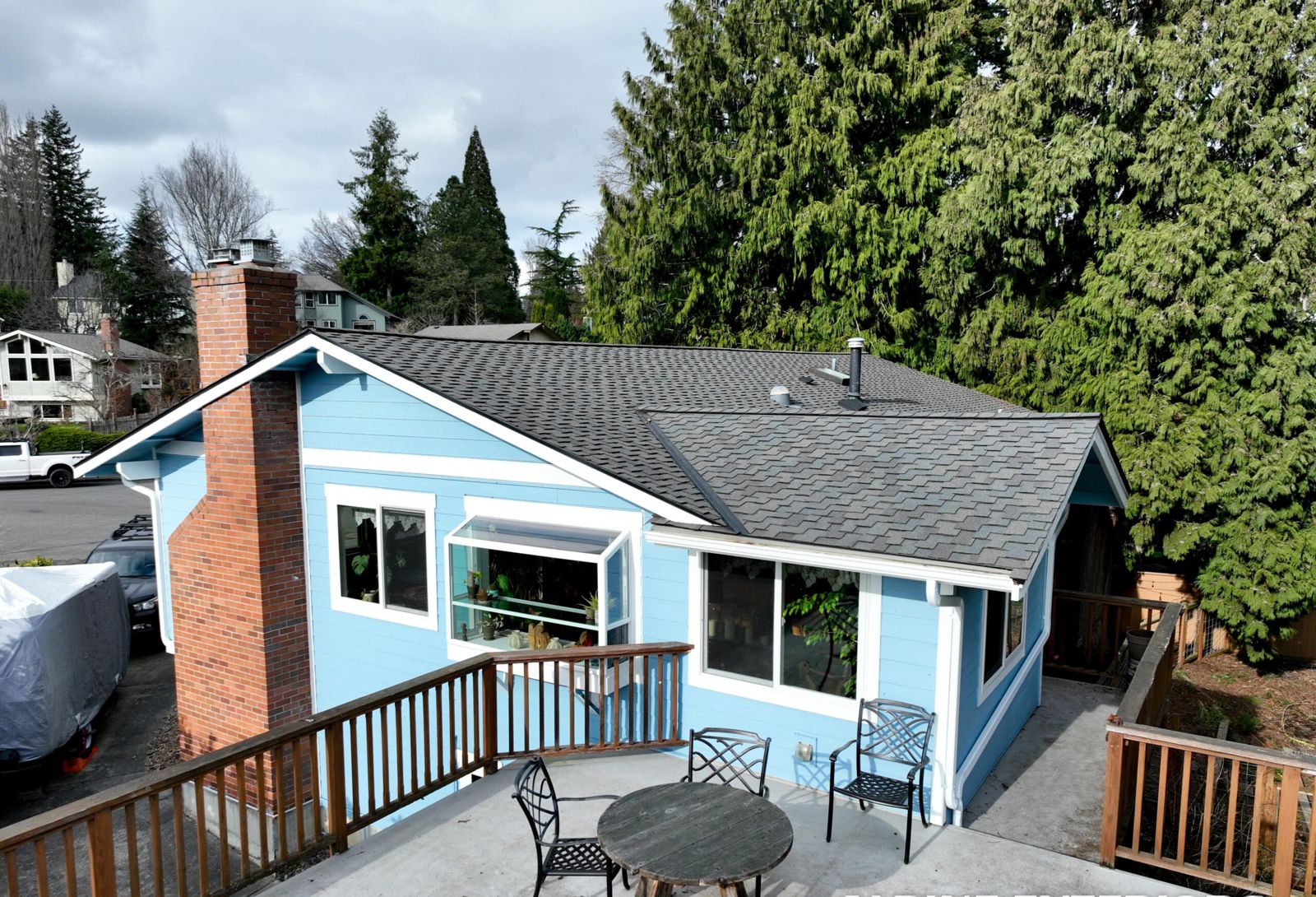
Birch Bay sits right on the water, which means its homes take a steadier beating from weather than houses a few miles inland in Ferndale or Lynden. Wind off the Strait of Georgia drives rain sideways into wall assemblies, salt-tinged air accelerates corrosion on cheap fasteners and trim, and the low winter sun does little to dry out siding that stays damp for days at a time. James Hardie fiber cement has become a common choice here because it resists moisture, doesn't feed rot the way wood does, and holds up to the freeze-thaw swings that show up in the nearby foothills without cracking the way some engineered products do. This page walks through realistic cost ranges for a Birch Bay project, what actually moves the number, and how to read a quote so you're comparing bids fairly.
There's no single number that applies to every house in Birch Bay, and any contractor who quotes a firm price before seeing your home, measuring elevations, and checking for hidden moisture damage is guessing. What follows are broad ranges pulled from how fiber cement projects typically scale with size, complexity, and existing wall condition in Whatcom County. Treat them as a starting point for budgeting conversations, not a promise.
For a full tear-off and re-side of an average single-family home, most homeowners in this area should expect total project costs somewhere in the low tens of thousands to the mid-forties-of-thousands range, with larger waterfront homes, homes with extensive trim detail, or homes needing structural repair running higher. Smaller ranch-style homes with simple rooflines and no rot repair land toward the lower end; two-story homes with dormers, bump-outs, or wraparound porches land toward the upper end.
| Cost Factor | Typical Low-End Impact | Typical High-End Impact |
|---|---|---|
| House size and number of stories | Small, single-story footprint | Large, multi-story with steep or complex roof access |
| Tear-off vs. install over existing siding | Sound sheathing, straightforward removal | Full tear-off with sheathing replacement due to hidden rot |
| Moisture and rot damage found at old siding | Little to no damage behind siding | Extensive rot around windows, corners, or lower wall sections |
| Trim, corner boards, and accessory work | Minimal trim, few penetrations | Heavy trim package, shutters, decorative bands |
| Finish choice | Field-painted after install | Factory-applied ColorPlus finish with matching fasteners |
| Siding profile | Standard lap siding | Shingle-style, board-and-batten, or mixed profiles |
| Access and site conditions | Flat, open lot with easy staging | Waterfront bluff, tight lot, or landscaping requiring protection |
The single biggest wildcard on almost every Birch Bay job is what's hiding underneath the existing siding. Homes built or last re-sided decades ago, especially those facing the water and taking direct wind-driven rain, often have wall sheathing or framing that's absorbed moisture over the years even when the exterior looked fine. Once the old siding comes off, a contractor may find soft sheathing, rusted nails, or rot around window openings that wasn't visible during the initial walk-around. This kind of repair isn't optional and it isn't padding — it's the difference between a wall that will hold paint and fasteners for decades and one that fails again in five years. Any reputable estimate should flag this as a real possibility and explain how it will be priced if found, usually as a per-sheet or per-linear-foot rate for sheathing and framing repair.
Roofline complexity is the next big driver. A simple rectangular home with a straightforward gable roof is fast to side. A home with multiple dormers, bump-outs, bay windows, or a wraparound porch has far more cutting, flashing, and trim work per square foot of coverage, and that labor adds up quickly. Story count matters too — second-story and steep-slope work requires scaffolding or lift equipment, which adds both time and equipment cost that a single-story ranch simply doesn't incur.
Finish choice is where many homeowners can control cost without sacrificing durability. James Hardie's factory-applied ColorPlus finish costs more upfront than field-painting after installation, but it comes with its own finish warranty and holds color more consistently against the moss, algae, and mildew growth that's common on shaded, damp elevations throughout Whatcom County. Field-painting costs less initially but shifts the maintenance burden to future repainting, which matters if you're planning to stay in the home long-term versus selling soon.
Finally, code-driven work can add cost that has nothing to do with the siding itself. Depending on your home's age and the scope of the project, re-siding can trigger requirements under the Washington State Energy Code for wall insulation or air-sealing improvements, particularly if the project also involves removing and replacing sheathing. A contractor pulling permits correctly in Whatcom County should be able to tell you up front whether your project is likely to cross that threshold.
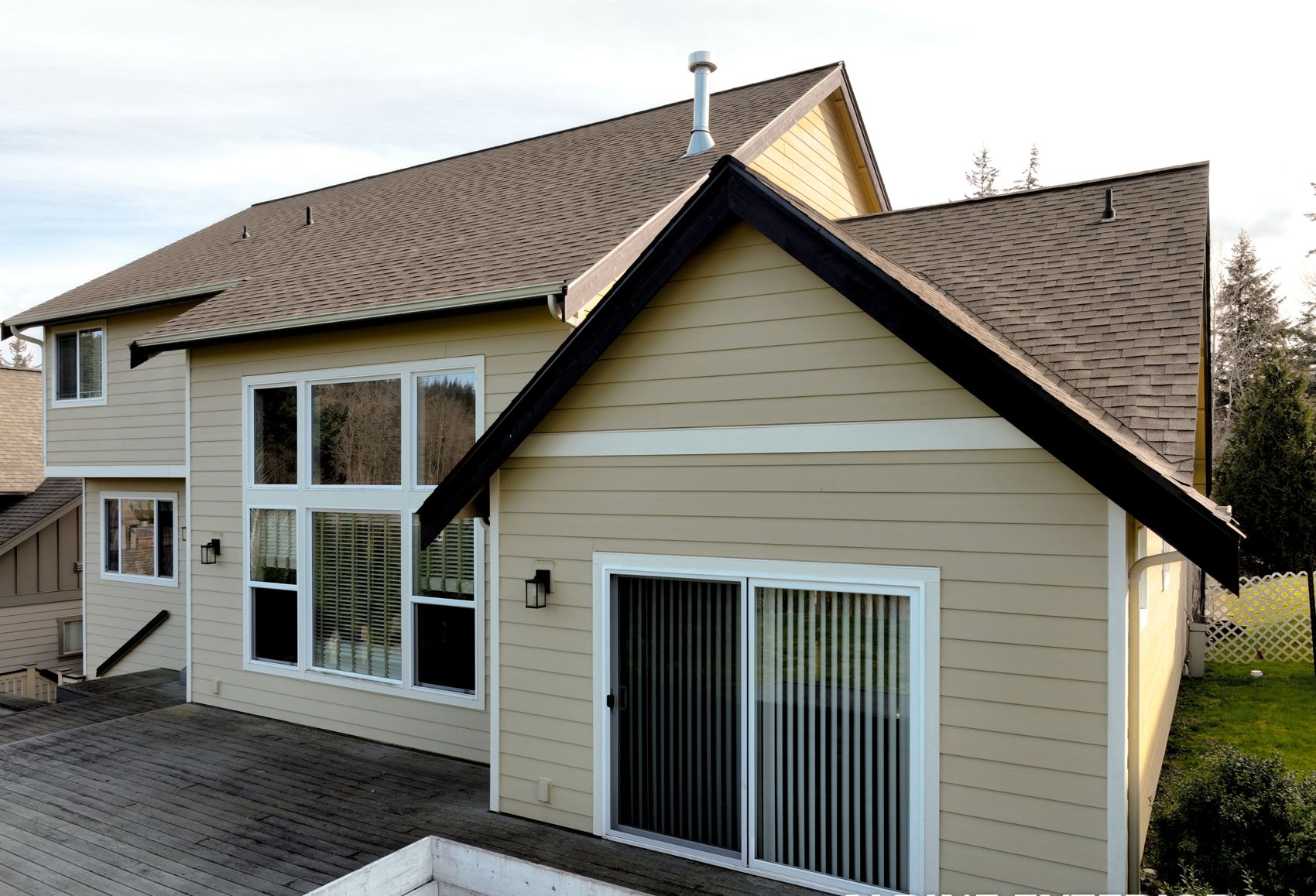
A complete, usable quote for James Hardie siding in Birch Bay should spell out more than a single lump-sum number. At minimum, look for these line items:
If a bid is missing several of these, it's worth asking for clarification before comparing it against a more detailed quote — a low number that skips tear-off disposal or fastener specification isn't actually a lower price, it's an incomplete one.
The most useful way to compare bids isn't to line up the bottom-line totals — it's to line up the scope behind each number. Two contractors quoting the same house can arrive at very different totals simply because one is planning for sheathing repair contingencies and better flashing details around windows, and the other isn't. Ask each bidder to walk through what happens if they find rot once the old siding is off, and get that answer in writing. Ask whether the quote assumes field-painting or factory finish, since that alone can shift a total substantially. And ask specifically how they'll detail flashing at window heads, deck ledgers, and roof-to-wall intersections — these are the spots where Birch Bay's wind-driven rain finds its way in over time if they're done poorly.
It's also reasonable to ask for local references or examples of similar work completed in Whatcom County, since a crew experienced with coastal wind exposure and heavy regional rainfall will detail those transition points differently than a crew used to drier inland conditions. Alpine Exteriors, licensed in Washington under contractor license ALPINI751OW, walks Birch Bay homeowners through exactly this kind of scope comparison so the number on a proposal reflects the actual condition of the home rather than a generic per-square-foot guess.
Many siding contractors, including Alpine Exteriors, can point homeowners toward third-party financing options that break a project into monthly payments rather than requiring the full amount upfront. Terms, rates, and approval vary by lender, so it's worth comparing more than one option rather than accepting the first offer presented alongside a quote.
On the insurance side, siding replacement is sometimes partially covered when it's tied to documented storm damage, wind damage, or a covered peril rather than routine wear or age-related deterioration. If a windstorm off the Strait has torn siding loose or a fallen limb has damaged a wall section, it's worth contacting your homeowner's insurance carrier before starting repairs to find out whether an adjuster needs to inspect the damage first. Routine replacement due to age, moss and algae staining, or general wear is typically treated as a maintenance cost rather than an insurance claim, so it's best to ask your carrier directly rather than assume coverage either way.
For homes taking direct wind and rain off the water, fiber cement's resistance to moisture, its stiffness in wind, and its compatibility with factory-applied finishes tend to make it a stronger long-term fit than vinyl, which can warp or crack in sustained wind exposure and doesn't hold up as well against the moss and algae growth common on shaded, damp elevations. Vinyl still has a lower upfront cost, so the right choice depends on your budget and how long you plan to stay in the home.
Timelines vary with house size and complexity, but homeowners in Whatcom County should build in extra buffer for weather delays, since sustained rain can halt exterior work for safety and material-handling reasons for stretches at a time, especially in the fall and winter months. A contractor should give you a realistic window rather than a single fixed date.
In most cases, yes — exterior work of this scope typically requires a building permit in Whatcom County, and depending on the extent of sheathing or wall assembly work involved, it may trigger insulation or air-sealing requirements under the Washington State Energy Code. A contractor familiar with local permitting should be able to tell you early whether your project is likely to cross that threshold.
Don't treat this as an upsell to be suspicious of by default — moisture damage behind old siding is common in this climate, particularly on walls that face prevailing wind and rain. Ask for photos of the damaged area, a clear explanation of the repair scope, and a per-unit rate that was ideally already spelled out in your original quote, so the additional cost is transparent rather than open-ended.
Every Birch Bay home carries its own combination of exposure, existing wall condition, and roofline complexity, and that's what actually determines where a project lands within these ranges. Alpine Exteriors serves Birch Bay along with Bellingham, Ferndale, Lynden, Blaine, Sudden Valley, and the islands, and can walk your property in person to give you a scoped, itemized quote rather than a generic estimate. Reach out to schedule an on-site assessment and get a number based on your actual home.