
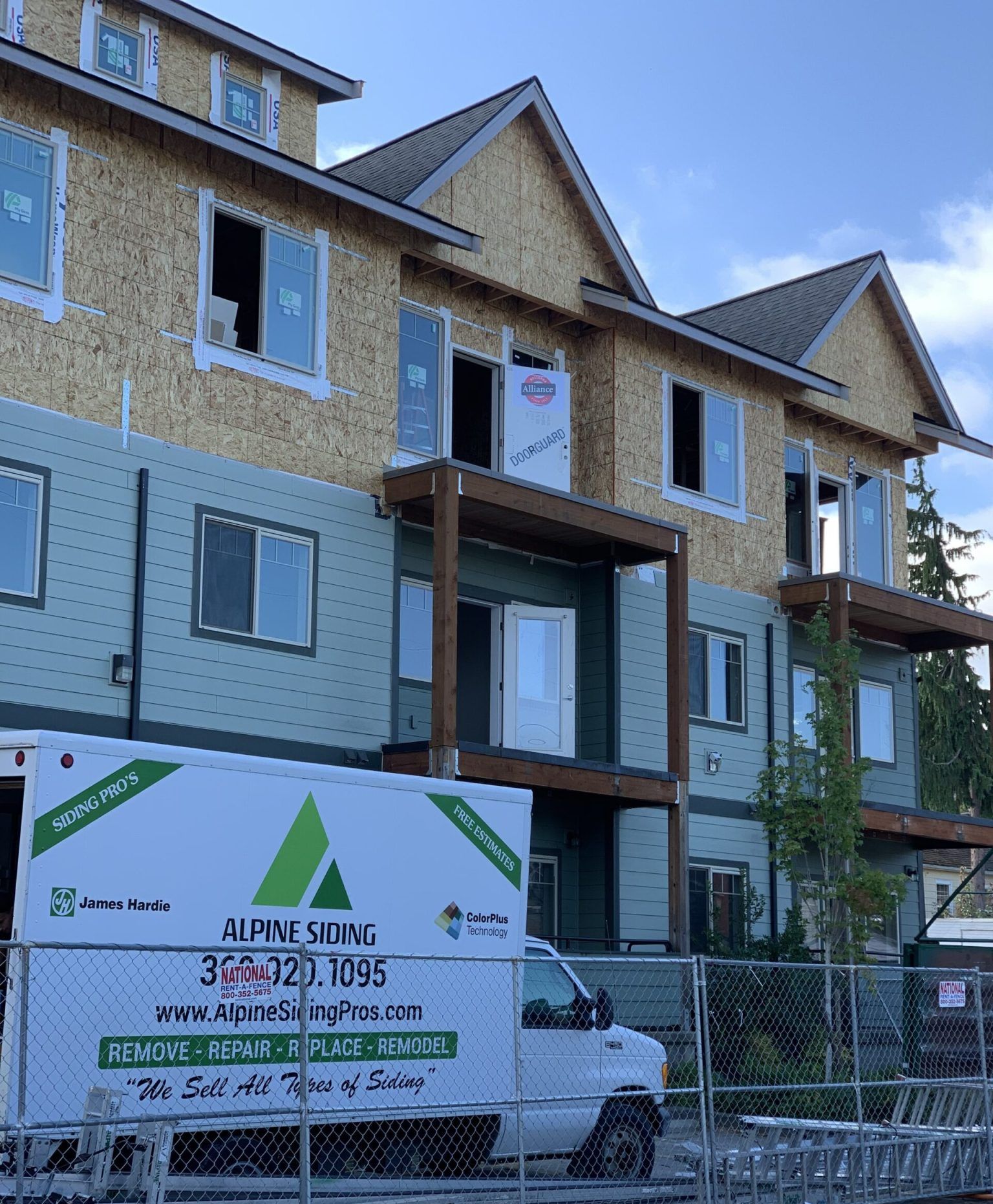
Ferndale sits where the Nooksack River flattens out toward Bellingham Bay, and that low, damp geography is exactly why siding here fails faster than the manufacturer's brochure suggests. If a wall shows soft spots, dark streaking, or panels that have pulled away from the sheathing, the honest first move is a close inspection before anyone decides between a patch and a full re-side.
Most damage in this area starts small — a cracked lap, a gap at a butt joint, a corner post that's been weeping water behind it for a season or two — and small problems caught early are genuinely cheaper to fix than the alternative of ignoring them until the sheathing underneath is compromised. The reason siding wears down the way it does in Ferndale comes down to how much time the material spends wet. Whatcom County gets a long, low-intensity rain season rather than short violent storms, and that steady moisture load is harder on siding than people expect. Wood and engineered wood products absorb water at cut ends, fastener holes, and anywhere caulk has shrunk or failed, and once moisture gets behind the cladding it doesn't dry out quickly in a climate where humidity rarely drops. Vinyl and fiber cement handle the water itself fairly well, but their weak points are the same everywhere: seams, trim transitions, and anywhere a previous repair used the wrong fastener or the wrong caulk. On a home that's been through fifteen or twenty Whatcom County winters, it's common to find a mix of problems layered on top of each other — old caulk that's cracked, a downspout that's been dumping water against one corner for years, and moss holding moisture against a north-facing wall that barely sees sun from October through March.
Most Ferndale siding problems can be repaired rather than replaced, as long as the damage is limited to a few panels or one section of wall and the sheathing behind it hasn't rotted. Full replacement becomes the more honest recommendation when rot has spread along a wall, when the siding is old enough that matching panels are no longer made, or when repeated repairs to the same area signal a moisture problem that a patch won't solve.
Walk the exterior of almost any older Ferndale home and the damage pattern tells a consistent story. The north and west-facing walls — the ones that catch the least sun and the most wind-driven rain off Bellingham Bay and the Strait of Georgia — carry more moss, more algae staining, and more soft wood than the south side of the same house. Moss is not just cosmetic. It holds water against the siding surface long after a dry spell has started elsewhere on the house, and its root structure works into seams and under lap edges, prying them open a fraction of a millimeter at a time. Algae growth, the greenish-black streaking that shows up below rooflines and around downspouts, signals a spot where water sheets down the wall regularly, which is often the same spot where caulk and flashing details need attention.
Wood rot is the damage that actually costs homeowners money, because it rarely stays contained to the piece of siding where it's visible. Rot starts where water sits — at the bottom of a butt joint, behind a poorly flashed window, under a deck ledger, or anywhere a gutter has been overflowing onto the wall below it. By the time a soft spot is visible on the surface, the moisture has usually been working on the sheathing behind it for a while. Probing suspect areas with an awl or a screwdriver is the only reliable way to know whether the damage is cosmetic or structural, and that's a step worth doing thoroughly rather than assuming a repair will hold.
Impact damage — cracked panels from a fallen branch, a ladder mishap, or a stray baseball — is the easiest category to diagnose and usually the easiest to repair, provided the panel profile is still available. Fastener-related damage, where panels have buckled or popped loose because they were nailed too tightly, a common installation mistake with vinyl, which needs room to expand and contract, is also straightforward to fix once identified, but it's worth having someone check nearby panels for the same mistake rather than fixing one spot and leaving the rest to fail on the same schedule.
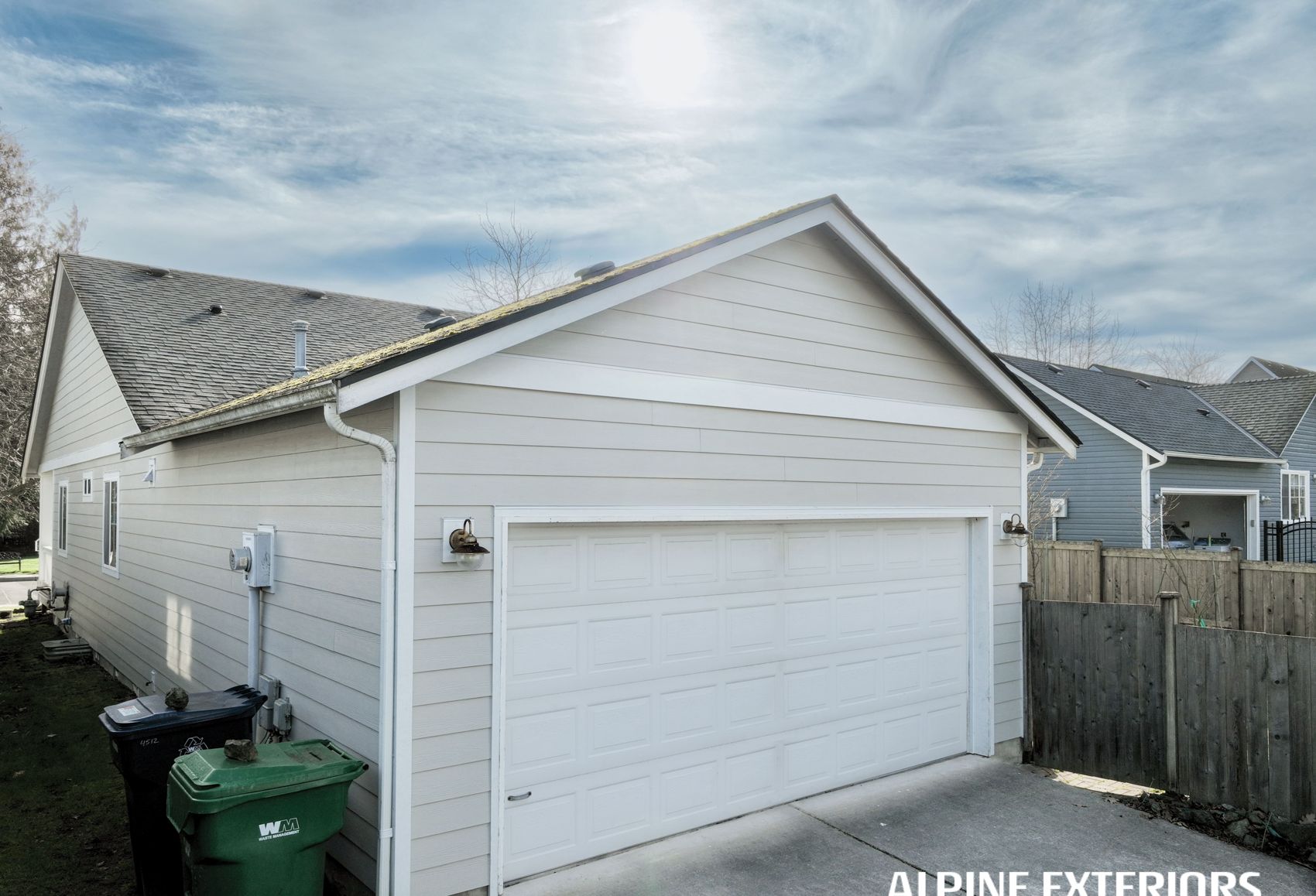
Ferndale's exposure to wind off Bellingham Bay is a real factor that a lot of general siding advice doesn't account for. Wind-driven rain doesn't just fall on a wall, it gets pushed sideways and upward into laps, seams, and trim joints that were designed to shed water falling straight down. Homes on more exposed lots — closer to the water, up on a rise, or without much windbreak from trees or neighboring structures — see this more than homes tucked into a sheltered subdivision. That's part of why two houses built the same year, a few miles apart, can be in noticeably different condition.
Moving east toward the foothills — out past Lynden and into the areas that climb toward the base of Mount Baker — freeze-thaw cycling becomes a bigger factor than it is right in Ferndale itself. Water that's worked its way into a crack or a gap can freeze on a cold night and expand, widening the damage, then thaw the next day and let more water in. Ferndale proper doesn't see this as often as the higher foothill areas do, but it still happens during the colder stretches of winter, and it's one more reason a small crack that seems harmless in August is worth sealing before November.
Salt air is a minor factor this far up the Sound compared to homes right on Birch Bay or Blaine's waterfront, but it's not zero, and it does mean fastener corrosion and finish fading show up a little sooner on siding closest to the water than on siding further inland around Sudden Valley or the islands. None of this is hurricane-force weather — Whatcom County doesn't deal with that — but persistent low-grade moisture exposure, moss, and wind-driven rain add up over a decade in a way that's easy to underestimate.
Any repair or replacement work also needs to account for the Washington State Energy Code, which sets requirements for the wall assembly's insulation and air-sealing performance whenever siding comes off down to the sheathing. This matters more than people assume: pulling siding for a repair is a real opportunity to add a weather-resistive barrier detail or rigid insulation that wasn't there originally, and skipping that step on a larger repair can mean redoing work later to meet code on a subsequent project.
Start with an inspection that covers the whole exterior, not just the spot that prompted the concern, because siding damage in this climate tends to cluster wherever water management has quietly been failing for years — a corner without kickout flashing, a gutter that's been undersized since the house was built, a spot where two rooflines meet and funnel extra water onto one section of wall. Alpine Exteriors typically checks gutters, flashing, and grade slope alongside the siding itself, because fixing the panel without fixing the water source behind it just buys a few more years before the same repair is needed again.
For matching existing siding, bring a sample panel or at least good photos to whoever is doing the estimate. Lap width, exposure, color, and texture all vary between manufacturers and even between production runs of the same product, and a mismatched patch is one of the most common complaints homeowners have after a repair. On older homes — anything from the 1980s or earlier — the original siding profile may simply not be manufactured anymore, which is one of the more common reasons a homeowner ends up replacing a full wall or elevation instead of patching a few boards, even when the rest of the house's siding is in fine shape.
Budget-wise, a straightforward panel-level repair on an accessible wall is a modest cost, while rot remediation that requires opening up the wall, replacing sheathing, and rebuilding flashing details climbs into a much wider range depending on how much water damage is found once the old siding comes off. It's reasonable to ask for a not-to-exceed number if hidden rot is a possibility, since nobody can fully price rot they can't see until the wall is open.
One honest drawback worth naming: repair work, even done well, rarely looks completely invisible on siding that's weathered for a decade or more, since sun fading and algae staining on the surrounding panels won't match new material exactly. On visible elevations, some homeowners decide a slightly higher cost for replacing the whole wall is worth it for a uniform look, while others are comfortable with a good-faith color match that's close but not perfect. Alpine Exteriors, licensed in Washington under contractor license ALPINI751OW, walks through that tradeoff with homeowners directly rather than assuming one answer fits every house.
Cosmetic damage is usually limited to the surface — cracked or faded panels, moss and algae staining, or a popped fastener — and the wood or sheathing underneath is still solid when probed with a screwdriver or awl. Structural damage means the material behind the siding gives way under light pressure, which signals rot or long-term water intrusion that needs to be opened up and repaired properly rather than covered over with a new panel.
Sometimes, but not always. Manufacturers change panel profiles, colors, and product lines over time, so siding installed ten or more years ago may no longer be available in an exact match, even from the same brand. Bringing a physical sample to the estimate is the best way to find out quickly whether a close match exists or whether a full wall or elevation replacement makes more sense.
Moss does real damage beyond how it looks. It holds moisture against the siding surface for longer than the wall would otherwise stay wet, and its growth works into seams and lap joints, gradually prying them open. Removing moss and addressing the shade or moisture conditions that let it grow — trimming back overhanging branches, improving airflow, or fixing a drainage issue — is worth doing alongside any repair, not just once as a one-time cleanup.
It can, in a good way, if the repair goes down to the sheathing. Any time siding is removed for repair, the Washington State Energy Code sets requirements for the wall assembly that go back up, which is a natural opportunity to correct gaps in the weather-resistive barrier or add insulation that wasn't part of the original build. A repair that only replaces the visible panel without addressing what's underneath won't improve energy performance, but a repair that opens the wall can.
If siding damage is showing up on a Ferndale home — whether it's a soft spot near a downspout, moss creeping across a north wall, or a section that's been patched before and failed again — an in-person inspection is the only way to know whether a repair will hold or whether it's time to talk about replacement. Alpine Exteriors serves Ferndale and the rest of Whatcom County, including Bellingham, Lynden, Blaine, Birch Bay, Sudden Valley, and the islands, and can walk a homeowner through what's actually happening behind the siding before recommending a fix. Reach out for an inspection and an honest assessment of what your home needs.