
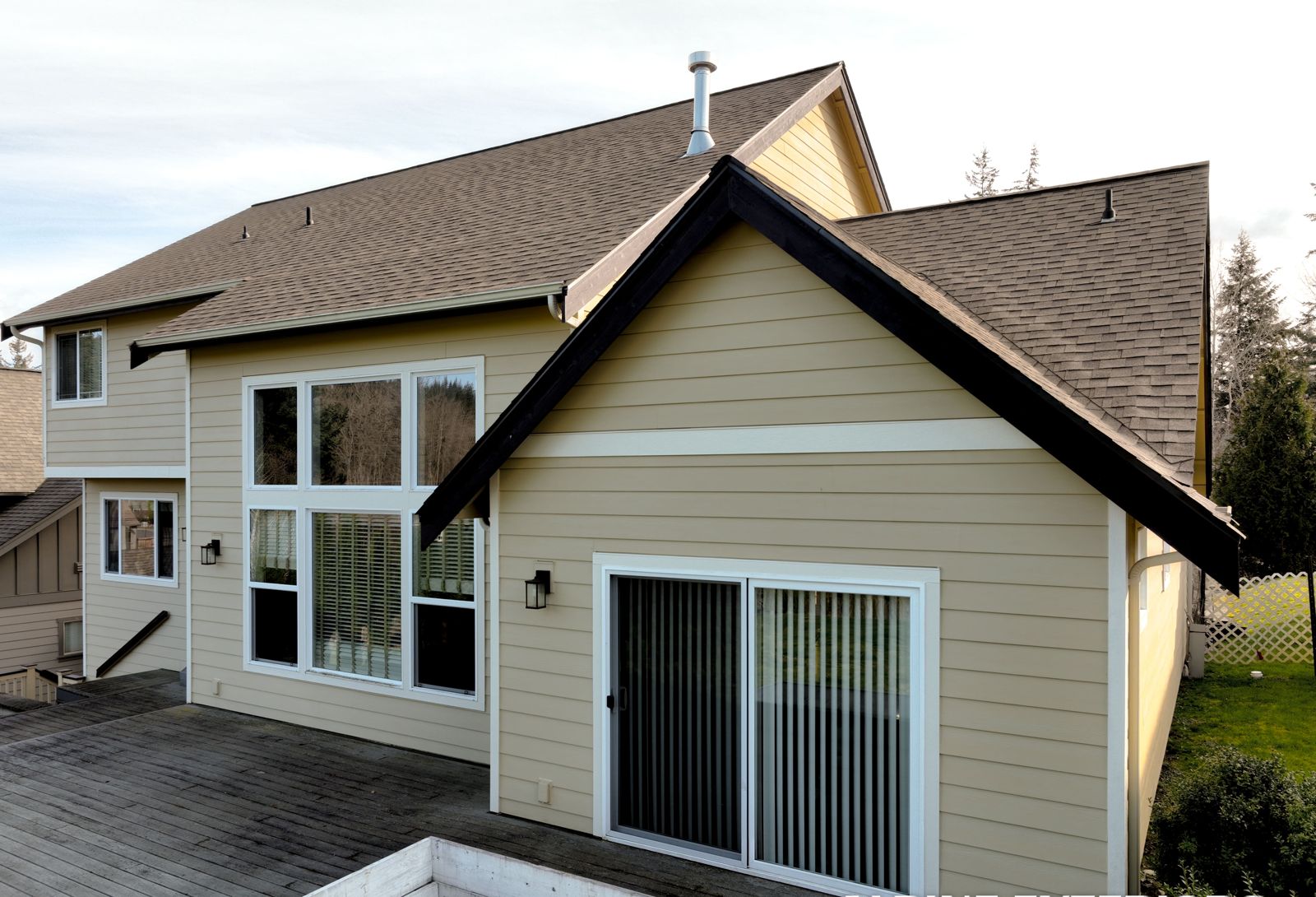
Any siding installed on a Silver Beach home has to satisfy the wind-resistance and water-management provisions of the International Residential Code as adopted and amended by the Washington State Building Code Council, plus the wall-assembly requirements of the Washington State Energy Code. In practice that means the product needs a documented wind-load rating for your site's exposure, an approved water-resistive barrier underneath it, and installation that follows the manufacturer's tested fastening schedule to the letter — not a generalized "it'll be fine, it's just siding" approach.
This is a different framework than what homeowners moving here from other parts of the country sometimes expect. Washington does not run a statewide product-approval catalog the way some coastal states do. Instead, code compliance rests on three things working together: a manufacturer's published wind-load table (usually backed by testing to ASTM D3679 for vinyl or ASTM E330 for structural performance under uniform static pressure), an ICC-ES evaluation report for products without a long code history, and a local building official who signs off based on those documents plus a visual check of the finished install. There's no single form that certifies a whole house at once — the approval lives in the paperwork for the specific product plus the inspector's field verification.
The wind-load side of the code is mostly about keeping panels attached under gusts, and that comes down to fastener count, fastener placement, and fastener type. IRC Section R703, which governs exterior wall coverings, requires siding to be installed per the manufacturer's instructions and, where those instructions specify a wind-load-rated fastening pattern, that pattern becomes the enforceable standard — not a generic "one nail every 16 inches" default. On a Silver Beach re-side, that usually means tighter nail spacing at corners and around openings, ring-shank or spiral-shank fasteners for pull-out resistance, and nails driven snug against (not through) the nailing hem, since overdriven fasteners are one of the most common reasons vinyl and engineered-wood siding fail early in wind events.
Corrosion resistance matters as much as pull-out strength here. Whatcom County's fastener requirements call for hot-dip galvanized or stainless steel nails and screws specifically because ordinary electro-galvanized fasteners corrode faster in a climate this consistently damp, and a corroded fastener loses holding power long before the siding itself shows any obvious wear. Underneath the cladding, the water-resistive barrier has to lap correctly — upper courses over lower courses, house wrap seams taped, and flashing integrated at every window, door, and roof-to-wall intersection so that wind-driven rain has nowhere to work its way behind the panel. Kick-out flashing at roof-wall intersections is one inspectors specifically look for, because a missing kick-out is a near-guaranteed path for hidden rot in this climate.
Silver Beach sits on the north shore of Lake Whatcom, and the surrounding terrain gives it a mixed exposure profile: parts of the neighborhood are somewhat sheltered by the lake basin and tree cover, while homes higher on the slope or closer to open water face more direct wind, similar to what you'd see around Sudden Valley on the lake's south end. Code doesn't care which side of that line your house falls on — the same wind-exposure category rules from the IRC apply county-wide — but it's worth knowing that a home on an open, elevated lot near the lake genuinely sees higher sustained wind loads than one tucked into a wooded low spot a quarter-mile away, and a good contractor should size the fastening pattern to your actual site, not just the neighborhood average.
The bigger factor across nearly all of Whatcom County, Silver Beach included, is moisture, not wind speed. This is not hurricane country, and nobody here needs to worry about a wind-mitigation inspection or a coastal storm-surge zone. What we do get is eight-plus months a year of persistent rain, frequent wind-driven rain off Bellingham Bay and the Strait of Georgia that pushes moisture sideways into wall assemblies, and enough shade and humidity on north- and east-facing walls to grow moss and algae on almost any siding material that isn't actively shedding water. Combine that with wood-frame construction that's been standard here for decades, and the real long-term threat to a Silver Beach home's exterior is trapped moisture leading to sheathing and framing rot — not a wind event peeling panels off in one afternoon. Homes higher in the foothills toward the Mt. Baker corridor also see real freeze-thaw cycling in winter, which stresses any siding material that traps water and then expands when it freezes, though Silver Beach itself, at lower elevation near the lake, sees this less severely than the higher country to the east.
The Washington State Energy Code adds another layer that's easy to overlook during a re-side. Many prescriptive compliance paths call for continuous insulation or an air-sealed assembly behind the cladding, which often means furring strips or a rainscreen gap between the water-resistive barrier and the siding itself. That gap isn't just an energy-code checkbox — in a climate this wet, a ventilated rainscreen is one of the single most effective things you can do to let incidental moisture dry out before it causes rot, so it's worth treating as a durability feature, not just a code hurdle to clear.
Start by confirming which jurisdiction issues your permit — Silver Beach falls within Bellingham city limits, so permitting runs through the City of Bellingham's building department, while a similar project in Sudden Valley, unincorporated areas near Lynden, or Blaine would go through Whatcom County instead. The code baseline is the same, but submittal requirements and inspection scheduling differ, and a contractor who works across both jurisdictions regularly will save you time here.
Ask any contractor bidding the job for the manufacturer's wind-load table for the specific product and profile they're quoting, not just a marketing brochure. A legitimate wind-load table will show maximum fastener spacing at different design pressures, and your contractor should be able to point to the number that applies to your site's exposure. If they can't produce that document or explain how your site's exposure factors into the fastening schedule, that's a real gap worth pushing on before you sign a contract.
Push for a proper water-resistive barrier and rainscreen detail even if it adds a modest amount to the bid — given how much of the actual risk here is moisture-driven rather than wind-driven, this is not the place to value-engineer down to the bare code minimum. Ask specifically about kick-out flashing at every roof-wall intersection, since it's inexpensive to install correctly during a re-side and expensive to fix after rot has already set in behind a missing one. And be realistic about maintenance: whichever siding material you choose, plan on periodic soft-washing to keep moss and algae from establishing on shaded walls, since even a correctly installed, code-compliant siding job will grow moss here eventually if it's never cleaned.
Alpine Exteriors holds Washington contractor license ALPINI751OW and works across Whatcom County, including Bellingham neighborhoods like Silver Beach, Ferndale, Lynden, Blaine, Birch Bay, and Sudden Valley. When we bid a re-side, we walk the site's actual exposure, pull the manufacturer wind-load documentation for the product in question, and detail the flashing and rainscreen assembly before a single panel goes up — because in this climate, the install detail behind the siding matters more to how the house holds up than the brand name on the panel.
Not as a separate code designation — the same IRC wind-exposure categories apply county-wide, from Bellingham out to Blaine and the islands. What varies is a given lot's actual exposure: a home on an open slope near Lake Whatcom or up toward Sudden Valley sees more direct wind than one sheltered by trees or terrain a short distance away, so a careful contractor sizes the fastening pattern to your specific site conditions rather than assuming every house in the neighborhood needs identical treatment.
There's no single county-issued approval list. Approval comes from the combination of the manufacturer's tested wind-load rating (often backed by ASTM D3679 for vinyl or similar standards for fiber cement and engineered wood), an ICC-ES evaluation report for newer products, and the local building official confirming the installed product and method match those documents. Vinyl, fiber cement, and engineered wood siding are all commonly used and code-compliant here when installed to their tested specifications; the failure point is almost always installation shortcuts, not the product category itself.
They're not measuring wind speed on-site — they're checking that the installed fastening pattern, fastener type, and flashing details match what the manufacturer's documentation calls for at your exposure level. That typically means confirming nail spacing at corners and openings, checking that fasteners are seated correctly rather than overdriven, verifying the water-resistive barrier laps properly, and looking for flashing and kick-outs at roof-wall intersections and penetrations. A lot of that has to be checked before the siding goes up, which is why a mid-installation inspection often catches issues a final walk-through would miss.
Not inherently, but it has real tradeoffs worth weighing. Vinyl sheds water well and resists rot itself since it's not an organic material, but it can become brittle and crack in a hard cold snap, and it still needs a properly detailed water-resistive barrier and rainscreen behind it because water that gets behind vinyl can rot the wood sheathing even though the vinyl itself is fine. Fiber cement resists moss better on the surface but is heavier, costs more, and needs periodic caulk and paint maintenance. Engineered wood needs diligent sealing at seams and cut ends or it's vulnerable to swelling. None of the three is maintenance-free in this climate — the right choice depends more on your budget and how much upkeep you're willing to do than on any one material being definitively superior here.
If you're planning a re-side in Silver Beach or anywhere else in Whatcom County, it's worth having someone walk the property, assess your actual wind exposure, and lay out which products and fastening details fit both the code and the local moisture conditions before you get a number. Alpine Exteriors (WA contractor license ALPINI751OW) serves Bellingham, Ferndale, Lynden, Blaine, Birch Bay, Sudden Valley, and the surrounding islands, and can walk you through the wind-load documentation, flashing details, and rainscreen assembly for your specific site as part of a straightforward estimate — reach out to schedule a look at your home.