
If you own a home on the Lettered Streets in Bellingham, the colors that hold up best over time are muted, mid-value tones — warm grays, weathered cedar browns, deep sage greens, and soft blue-slates. They read as at-home next to the neighborhood's century-old Craftsman and Foursquare houses, they don't show algae streaking as fast as bright white, and they don't chalk and fade as visibly as true black or navy under the region's long gray stretches followed by intense summer UV on south- and west-facing walls. None of that means brighter or darker colors are off the table — it means the tradeoffs are different here than they would be in a drier or sunnier climate, and it's worth understanding them before you commit to a color that's on the house for the next 20-plus years. We've helped enough Whatcom County homeowners pick colors and then watched how those houses actually aged — some three, five, ten years out — to have opinions grounded in what happens on real siding, not just what looks good on a sample chip in a showroom.
Lettered Streets has a specific set of conditions that separates it from, say, a new-build subdivision out past the airport. The tree canopy is mature and dense on many blocks, which means more shade, more standing moisture on north-facing walls, and more organic debris landing on the siding and gutters. The neighborhood sits on a slope with sightlines down toward Bellingham Bay, so some homes catch wind-driven rain off the bay and the Strait of Georgia on their west and southwest elevations, while the same house's north wall might stay damp for days after a storm. And because it's one of Bellingham's oldest, most walkable, most photographed neighborhoods, a lot of owners are thinking about how a color choice reads against neighbors' homes, whether it fits within any historic design guidance that applies to their block, and how it will look in real estate listing photos five years from now. We weighed each color option against:
| Color family | Best exposure | Moss/algae visibility | Typical fade risk |
|---|---|---|---|
| Warm/cool gray | Any | Low to moderate | Low |
| Weathered cedar/brown | Any, especially shaded lots | Low | Low to moderate |
| Sage or forest green | Tree-canopy lots | Very low | Moderate on west walls |
| Slate blue | Bay-view or open lots | Moderate | Moderate |
| White or cream | Open, sunnier lots | High | Low |
| Black or dark charcoal | Limited elevations, accents | Low | High (chalking, heat) |
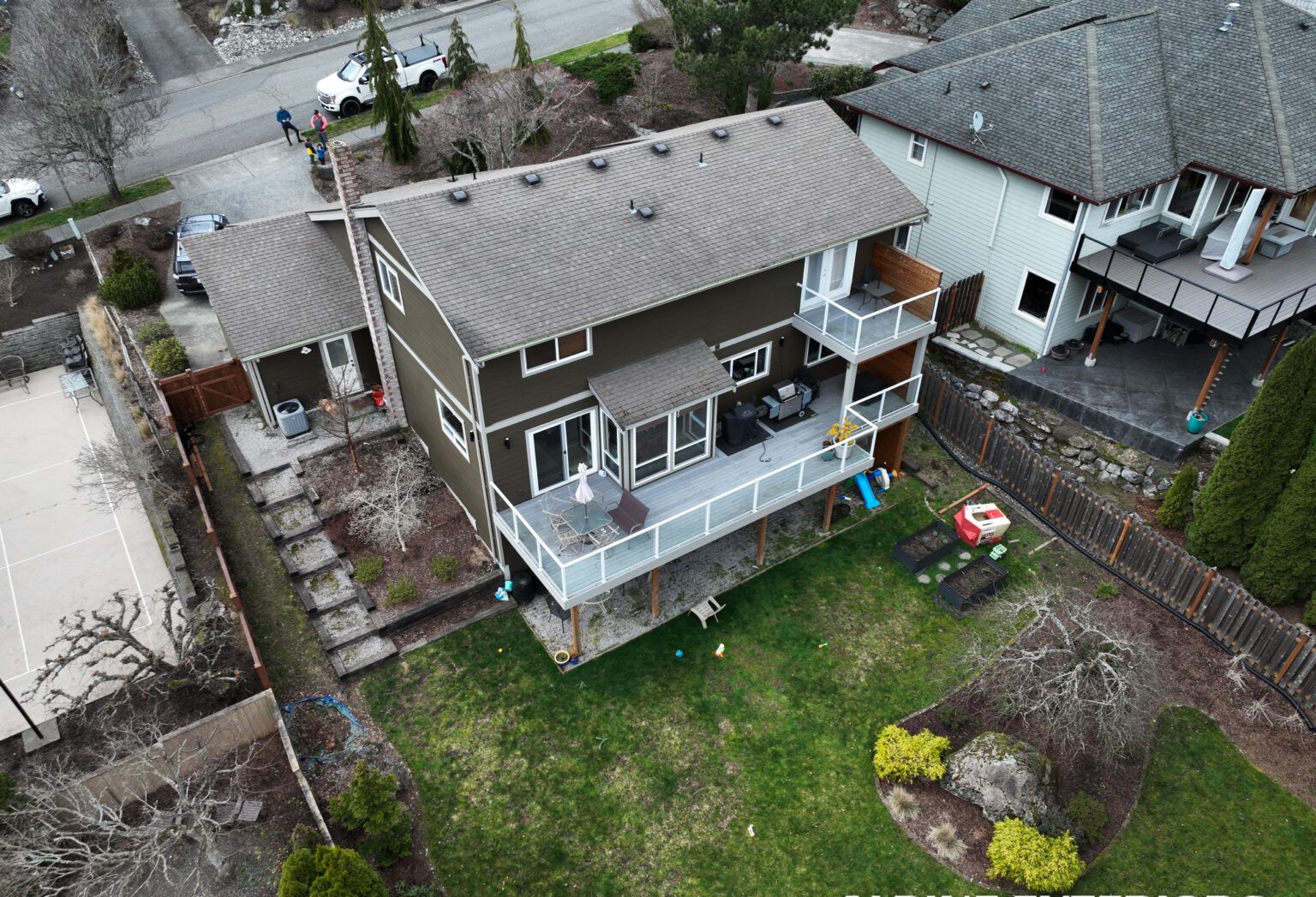
Gray has become close to a default in Whatcom County for good reason. It sits neutrally against the region's gray-sky months without looking washed out, it pairs easily with the black-framed windows and dark green or navy trim that show up often on Lettered Streets remodels, and mid-value grays are genuinely good at hiding the fine green-black algae film that develops on shaded siding between cleanings. The honest downside: gray can look flat or corporate if the undertone is wrong for your house's trim and roofline, and very light grays still show algae streaking on north walls faster than people expect. Warmer grays (with a hint of taupe or greige) tend to look more at home on older houses than cool, blue-grays, which can feel more contemporary than a 1905 Foursquare calls for.
Brown tones reference the original cedar siding and shingle work that a lot of these homes were built with, which is part of why they read as "correct" on Craftsman-style houses in particular. They're also quietly practical: mid-brown tones hide dirt, pollen, and moss shadowing better than almost any other family, and they don't show the harsh fade line between sunny and shaded walls that lighter colors do. The tradeoff is that some fiber cement and vinyl brown pigments have historically had a slightly shorter color life than grays or blues from the same product line — worth asking about directly rather than assuming — and a brown that leans too orange or too yellow can clash with the cooler light Bellingham gets for a good chunk of the year.
Green is the color most literally suited to a neighborhood defined by mature trees: a good sage or forest green sits into the landscape rather than fighting it, and it is one of the best performers for hiding algae and moss growth, since the color and the biological staining occupy a similar part of the spectrum. It's also a historically appropriate choice for Craftsman and cottage architecture. The catch is fade: a saturated green on a west-facing wall that gets real summer sun will noticeably lighten over years compared to the same green on a shaded north wall, so if your lot has one very exposed elevation, expect to see that difference eventually. Lighter, dustier sage tones fade less obviously than deep hunter greens simply because there's less pigment saturation to lose.
On the blocks with a real view down toward Bellingham Bay, a soft slate blue can look genuinely striking, and it's a color with real precedent in Pacific Northwest coastal towns. It photographs well and reads as intentional rather than trend-chasing when the tone is muted rather than bright. The downsides are real, though: blue shows water spotting and mineral streaking from gutters and downspouts more visibly than brown or gray, and on homes that catch direct wind-driven rain off the bay, that streaking can show up faster than the marketing photos suggest. Blue is also one of the harder colors to match later if you ever need a repair panel or an addition, since pigment lots can shift subtly over a product's production run.
White trim-and-body combinations are classic on this style of house and they make a small lot feel brighter under Bellingham's frequently overcast sky. Cream and off-white also tend to fade very evenly, since there's little pigment to break down in the first place. The real drawback in this climate is algae and moss visibility — white is simply the least forgiving color for the greenish-black staining that develops on north-facing and shaded siding, and homes under heavy tree cover will need more frequent washing to keep a white exterior looking like a design choice rather than a maintenance backlog. If you love white, it works best on lots with more open sun and good gutter maintenance, less well on the shadiest interior-block lots.
Black has become popular for trim, window frames, and accent gables, and it can look sharp used that way. As a full-body siding color it's a harder sell here: dark colors absorb more heat, which some manufacturers address by restricting how dark a color can go on certain vinyl profiles or by requiring specific fastening and furring details on fiber cement to manage expansion — a real consideration under Washington State Energy Code continuous-insulation assemblies, since the cladding and the insulation layer need to move together over decades, not fight each other. Dark colors also show UV chalking (a dusty, faded look) more visibly than mid-tones once they start to go, and touch-up paint is harder to color-match invisibly on a chalked dark finish. We generally recommend black and near-black as an accent — trim, shutters, a porch ceiling, a single gable — rather than the field color on a full elevation here.
Very bright, high-chroma colors — true red, bright yellow, saturated turquoise — tend to fight both the architecture and the light. Bellingham's overcast months mute colors visually, so a shade that looked lively on a sunny showroom sample can look garish or oddly flat under a gray Whatcom sky, and on a block where most homes sit in muted, historically plausible tones, a loud color stands out in a way that can affect how a house is received by neighbors and, eventually, by buyers. Pure white without a strong maintenance plan is a mistake on heavily shaded lots — you're signing up for regular washing that a mid-tone would let you skip. And an all-black or near-black field color is the option we'd flag hardest: between the heat and expansion questions on continuous-insulation assemblies and the visible chalking over time, it rarely ages the way the initial installation photos suggest it will. If a block falls under Bellingham's historic design guidance or a neighborhood association's architectural standards, check those requirements before ordering material — some areas restrict color families or finishes more specifically than owners expect, and it's a much cheaper conversation to have before the siding is on the truck.
Some blocks in and around the Lettered Streets carry local historic or neighborhood design guidance, while others don't — it varies by specific address and whether the home is part of a recognized historic grouping. Rather than guess, check with the City of Bellingham's planning department or your neighborhood association before finalizing a color, since the restriction, if any, is tied to the parcel, not the neighborhood name as a whole.
It depends heavily on tree cover and which elevation you're looking at. A shaded north wall under mature trees can develop visible algae film within a year or two even with a forgiving color, while a sunnier, more open wall might go several years between washes. Mid-tone colors like sage green, warm gray, or brown buy you the most time between cleanings; white and light gray show the same buildup sooner.
Color itself isn't an energy code item, but it can affect the cladding assembly. Darker colors absorb more heat, and some manufacturers limit how dark a product can go, or specify particular fastening and furring details, to manage the additional expansion and contraction against a continuous-insulation layer required under the Washington State Energy Code. It's a material-and-installation detail more than a code violation, but it's worth confirming with your product's technical documentation before you commit to a very dark color.
Yes — this is a normal part of the estimate conversation. Alpine Exteriors walks Whatcom County homeowners through how a shortlist of colors will actually behave on their specific lot, exposure, and roofline before any material is ordered, since a color decision made on a small sample chip doesn't always tell the same story as a full elevation seen from the street.
Picking a siding color that still looks right in ten years takes more than a preference for gray versus green — it takes an honest look at your lot's shade, sun exposure, and drainage, plus a clear sense of what your neighborhood expects. Alpine Exteriors, WA contractor license ALPINI751OW, works throughout Whatcom County — Bellingham's Lettered Streets, Ferndale, Lynden, Blaine, Birch Bay, Sudden Valley, and the islands — and can walk your specific home through this decision before you order material. Reach out for a consultation and a straight answer about which colors will actually hold up on your house.