
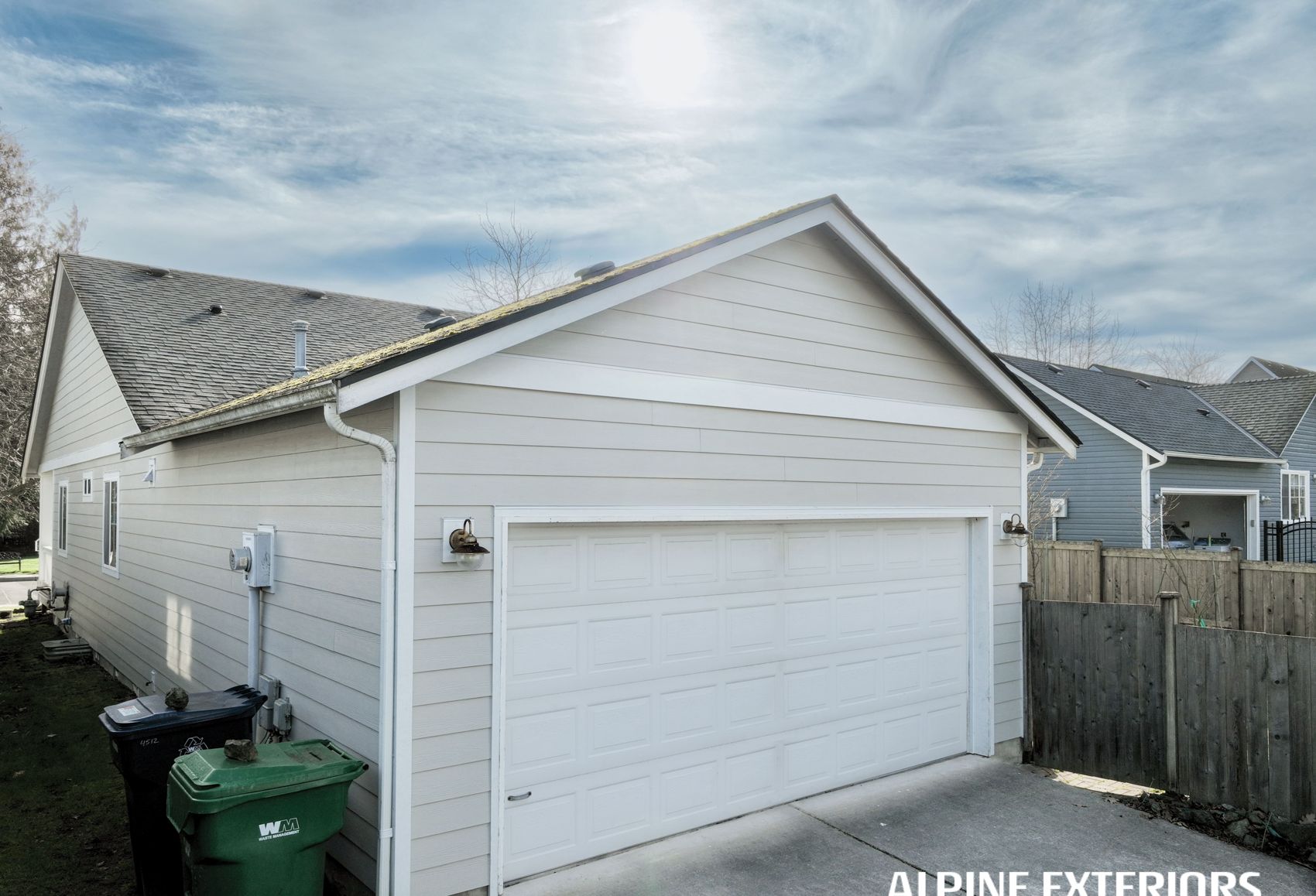
South Hill is one of Bellingham's oldest residential neighborhoods, and that history shows up in every siding estimate written for it. Steep lots, mature maples and cedars that shade north-facing walls for months at a time, and a housing stock that mixes early-1900s Craftsman and Victorian homes with mid-century infill all push South Hill siding jobs in a different direction than a flat, newer subdivision out toward Ferndale or Lynden. If you're trying to get a realistic number before you start calling contractors, this page walks through what siding replacement tends to cost in this part of Whatcom County, what actually moves that number up or down, and how to read a quote so you're comparing apples to apples.
Whole-house siding replacement in the South Hill area typically lands in a wide range, and the honest answer to "what will it cost" is: it depends heavily on your home's size, current siding material, access, and how much of what's underneath has to be repaired before new siding goes on. A modest single-story South Hill bungalow with straightforward access will sit toward the lower end of any range a contractor gives you. A three-story Victorian on a steep pitch with dormers, bay windows, and limited driveway access for staging materials will sit toward the higher end, sometimes well above it, largely because of labor time and scaffolding rather than material cost alone.
Below is a general breakdown of the cost factors we walk South Hill homeowners through during an estimate. These are ranges, not quotes — every home is different, and the only way to get an actual number is a site visit.
| Cost Factor | Typical Low | Typical High |
|---|---|---|
| Material choice (vinyl vs. fiber cement vs. engineered wood) | Budget-friendly vinyl | Premium fiber cement or wood-look composite |
| Home size / total square footage of wall area | Small single-story | Large multi-story with complex roofline |
| Wall condition underneath old siding | Sound sheathing, no rot found | Rot repair, sheathing replacement, framing work |
| Access and site logistics | Flat lot, easy staging | Steep South Hill lot, narrow access, tall walls requiring scaffolding |
| Trim, moisture barrier, and flashing detail | Standard trim package | Custom trim matching historic profiles, upgraded rainscreen/drainage plane |
| Removal and disposal of old siding | Single layer, easy tear-off | Multiple layers, lead-paint-era testing/handling on pre-1978 homes |
Notice that material is only one line in that table. On older South Hill homes, the condition of what's behind the siding often has a bigger effect on the final number than the siding brand itself.
A few conditions specific to this part of Whatcom County show up again and again in South Hill estimates:
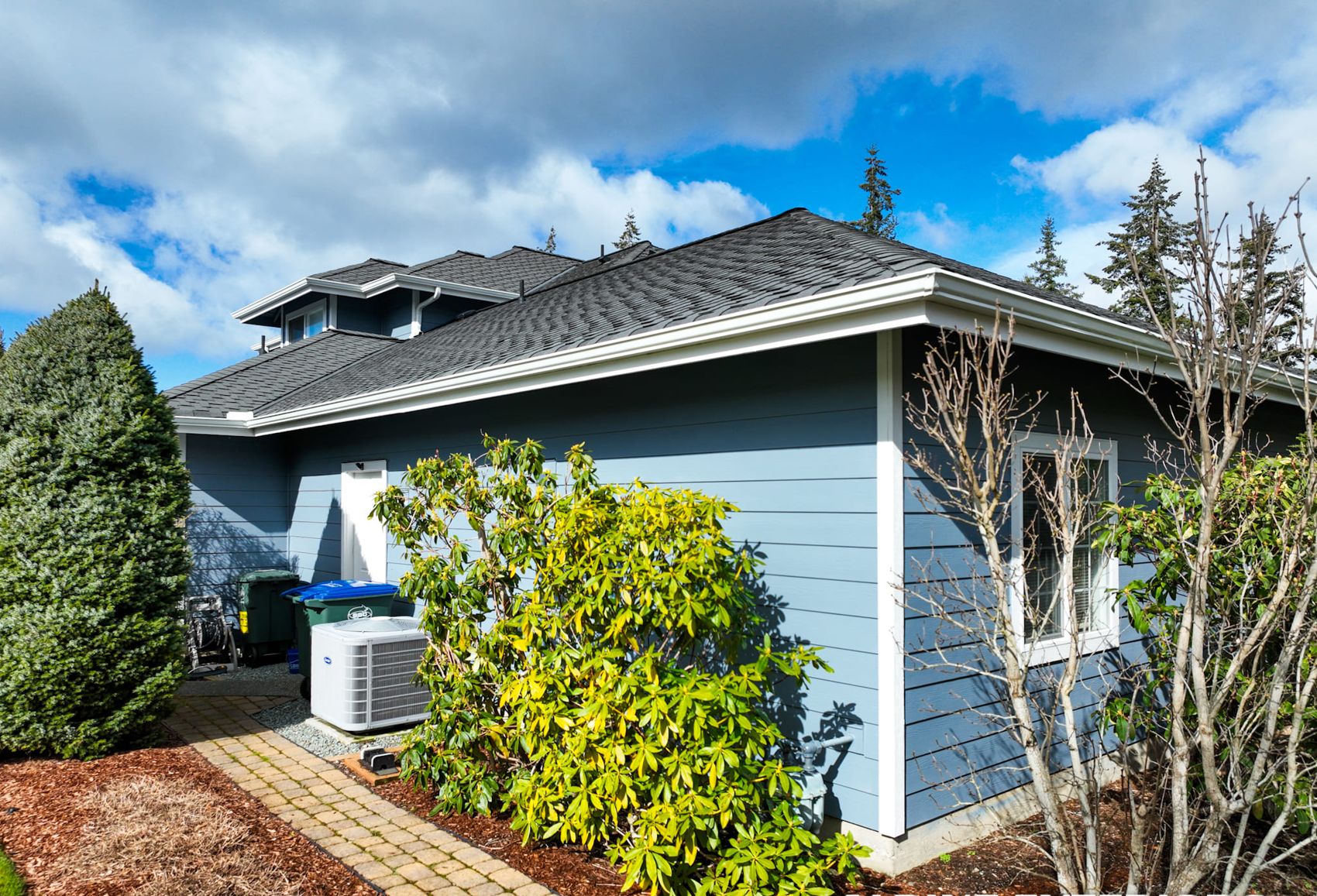
A complete siding quote is more than a single number. At minimum, it should spell out the material and manufacturer being proposed, the full scope of tear-off and disposal, what happens if rot or damaged sheathing is found once old siding comes off, the moisture barrier and flashing details being used, trim and finish work around windows and doors, paint or factory-finish specifics, cleanup, and the warranty terms — both on materials and on labor. If a quote is a single lump-sum price with no line items and no mention of what happens when hidden damage is found, that's a gap worth asking about before you sign anything. Alpine Exteriors writes South Hill estimates with a defined process for handling discovered rot or sheathing issues, so homeowners aren't blindsided partway through a tear-off.
The lowest number on paper isn't always the better deal, especially on a home with the layered history a lot of South Hill properties have. When comparing bids, check that every contractor is quoting the same underlying scope — same material grade, same trim treatment, same approach to moisture barrier and flashing — because two quotes that look far apart in price are often quoting two very different jobs. Ask each contractor how they handle rot discovered mid-project, whether that's billed as a change order with a defined rate or handled as pure guesswork. Confirm licensing directly; Alpine Exteriors holds Washington contractor license ALPINI751OW, and any contractor working on your home should be able to give you a license number you can verify independently through the state. Ask about crew makeup — subcontracted versus in-house — and get a clear timeline, since South Hill's rainy stretches can extend schedules if a contractor isn't planning around weather windows.
Many siding contractors, Alpine Exteriors included, can point homeowners toward financing options for larger siding projects, which can help spread cost over time rather than paying the full amount up front. Terms and eligibility vary by lender, so it's worth asking your contractor what options they work with and reviewing the terms carefully before committing. On the insurance side, siding replacement itself typically isn't a covered claim unless the damage stems from a specific, sudden event your homeowner's policy recognizes — general wear, moss growth, and long-term moisture damage are usually considered maintenance issues rather than insurable losses. If a storm event does cause sudden, identifiable damage, document it with photos right away and contact your insurer before demolition begins, since adjusters generally want to see the damage in its original state.
Timeline depends heavily on home size, access, and how much substrate repair is needed once old siding comes off, but homeowners should expect the process to run longer than a bare material-swap estimate suggests, especially if rot repair is involved or if rainy stretches interrupt work. Your contractor should give you a realistic window based on your specific home rather than a generic estimate.
It depends on the extent and location of the damage. Localized rot or a small damaged area can sometimes be repaired without a full tear-off, but on older South Hill homes where moisture has been an ongoing issue, patching one section often just delays a similar repair on the next section a year or two later. A contractor should be honest with you about whether patching is a real long-term fix or a short-term deferral.
New siding installed with proper moisture barrier, air-sealing, and insulation upgrades in line with the Washington State Energy Code can meaningfully reduce drafts and heat loss through the wall assembly, particularly on older homes that never had modern insulation installed. It's not a guaranteed fixed savings amount, since actual impact depends on your home's existing insulation, windows, and overall envelope, but it's a legitimate secondary benefit worth discussing with your contractor.
On South Hill homes specifically, hidden wood rot and damaged sheathing discovered after old siding is removed is the most common reason a final cost moves beyond the original estimate. This is exactly why it's worth asking upfront how a contractor prices and communicates that kind of discovery, rather than being surprised by it mid-project.
Ranges are useful for planning, but the only way to know what your South Hill home actually needs is a walk-through that accounts for its age, exposure, and current siding condition. Alpine Exteriors serves South Hill and the rest of Whatcom County, from Bellingham out to Ferndale, Lynden, Blaine, Birch Bay, Sudden Valley, and the islands, and can put together a detailed, line-item estimate based on what's really going on with your walls rather than a generic per-square-foot guess. Reach out to schedule an on-site assessment and get a straightforward look at what your project would actually involve.