
South Hill sits up on the bluff above downtown Bellingham, which means the homes there catch more wind off Bellingham Bay and the Strait of Georgia than houses tucked into the valleys east of I-5. Older homes on the hill — a lot of them built between the 1920s and the 1970s — are now showing what decades of Whatcom County weather do to original wood siding: moss and algae staining on the north- and west-facing walls, soft spots around window trim, and in some cases hidden rot in the sheathing behind the siding itself. A full siding replacement on a typical South Hill single-family home usually runs somewhere between one and three weeks of active on-site work, depending on square footage, how much of the wall assembly needs to be rebuilt versus simply re-clad, and how many layers of old material have to come off first.
That timeline is for the construction phase only. Add another two to six weeks on the front end for design decisions, permitting, and material ordering, and the whole project — from signed contract to final walkthrough — more realistically spans six to ten weeks. Homes with extensive rot repair, multiple stories, or steep roof lines that require additional fall-protection setup will run longer. We've found that the biggest variable isn't the crew's install speed — it's what they find once the old siding comes off.
South Hill is inside Bellingham city limits, so siding work is permitted through the City of Bellingham Permit Center rather than Whatcom County directly. Whether a permit is required depends on scope: a like-for-like re-side generally needs a building permit when it involves removing siding down to the sheathing, replacing damaged sheathing, or altering the weather-resistive barrier, since that work touches the building envelope covered by the Washington State Energy Code. Simple cosmetic panel swaps on a small area may fall under a lighter review, but we pull permits whenever the scope crosses that line rather than guess wrong and get red-tagged mid-project. Your contractor should tell you up front whether your specific job needs a permit and should be the one filing for it, not leave it to you.
Some of the newer developments on South Hill and along the ridge toward Sudden Valley have an HOA with architectural review requirements — usually around approved siding colors, trim details, or material types. If your property has an HOA, get their sign-off on color and product before ordering materials, not after. Reordering a color that gets rejected late in the process is one of the more avoidable delays we see.
Material lead times are the other thing worth planning around. Fiber cement siding (James Hardie and similar products) is popular in this region because it holds up well against the area's persistent damp and doesn't feed moss and algae growth the way untreated wood does, but factory lead times for specific colors or textures can run several weeks. Vinyl and engineered wood products often ship faster, but supply can still be inconsistent depending on the manufacturer and time of year. We order materials as soon as the contract and any HOA approval are final, because a two-week material delay in the middle of a Whatcom County wet season is a lot more disruptive than the same delay in July.
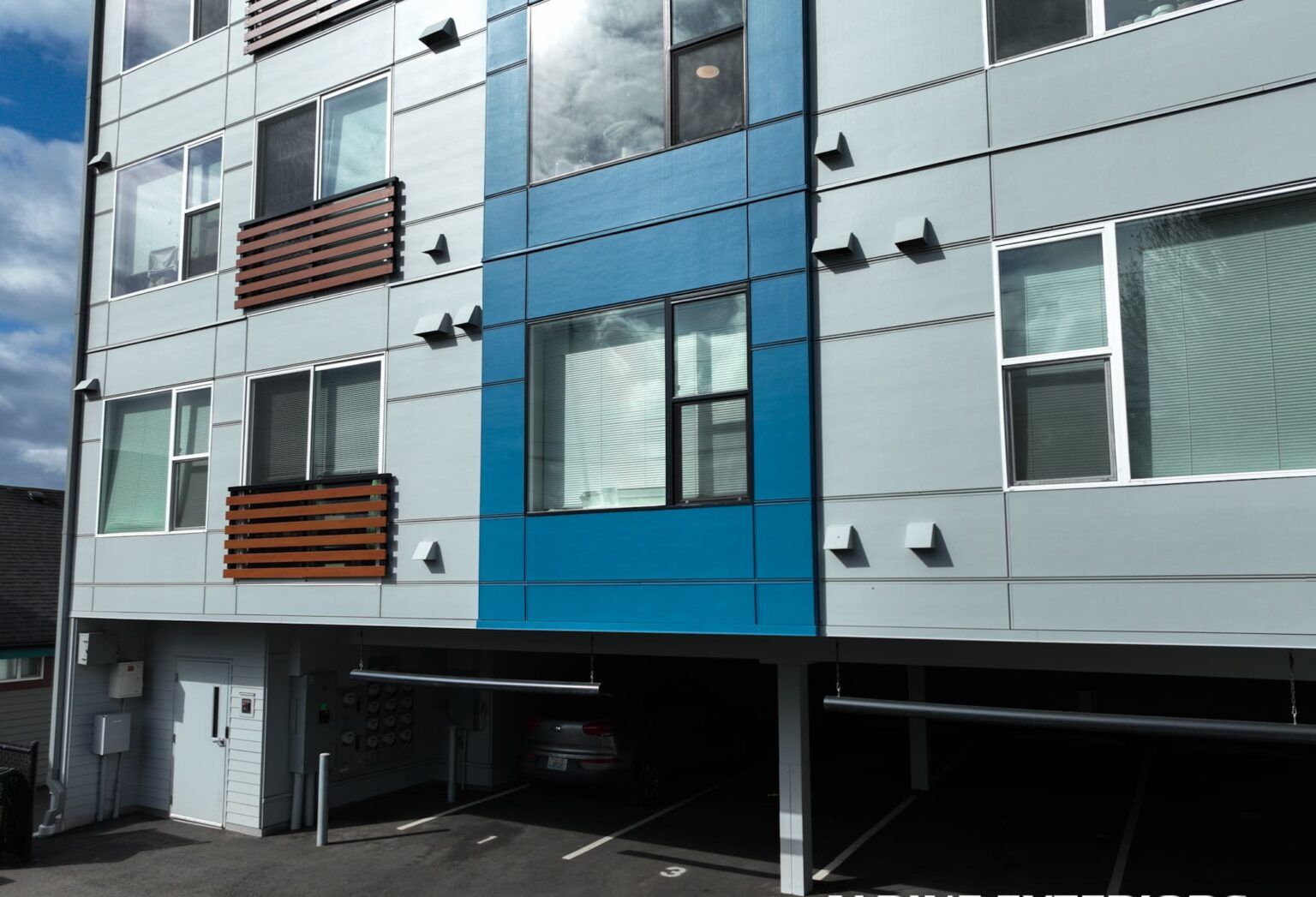
Every siding job has the same basic sequence, even though the details shift with each house. Here's the order it actually happens in:
The stages overlap somewhat on a real job site — trim work on a finished section can be happening while tear-off continues on another wall — but the order above is the logical sequence any competent crew follows.
A few things ahead of the crew's arrival make the project go smoother. Move vehicles out of the driveway and clear a path around the perimeter of the house — crews need access on all sides, including areas you might not normally think about, like a narrow side yard or a gate that's been painted shut. Anything hanging on exterior walls (address numbers, lights, decorations, hose reels) should come down before tear-off, since it will need to come off anyway and it's easier to remove and reinstall carefully than to have it fall off during demo.
Inside the house, expect noise and vibration during tear-off and fastening, especially near exterior walls. It's worth taking pictures or loosely securing anything fragile on shelves near outside walls. If you have pets, plan for a few days of extra activity and open gates or doors near the work zone — most owners find it easier to keep pets indoors or with a sitter during the loudest stretch of the job rather than trying to manage them around an active crew.
Because Whatcom County weather doesn't offer long dry stretches most of the year, your contractor should have a weather contingency plan — tarping open wall sections overnight or during a rain event, and sequencing work to avoid leaving large areas exposed. Ask what that plan looks like before work starts, and don't be surprised if the crew adjusts the daily schedule around a forecast. Working through a rain event just to hit a deadline is how water gets into open sheathing.
If the project pulled a City of Bellingham permit, a building inspector will need to sign off at specific points — typically after sheathing repair and WRB installation are complete but before the new siding covers everything up, since that's the layer that's hardest to verify once it's closed in. Scheduling that inspection is the contractor's job, and it can add a day or two of waiting depending on inspector availability, which is worth knowing about ahead of time rather than being surprised by it mid-project.
Daily cleanup during the job should include collecting nails, cut-offs, and packaging materials so your yard isn't accumulating debris over multiple weeks. At the end of the project, a magnetic nail sweep of the ground around the house catches stray fasteners before they end up in a tire or a bare foot. The final walkthrough should cover every elevation of the house in daylight — check caulk lines, paint consistency, trim alignment at corners, and that all fixtures, lights, and house numbers that were removed have been reinstalled. This is the point to flag anything that doesn't look right before the crew demobilizes, not weeks later.
New siding in this region still needs periodic attention, even though it's far lower-maintenance than the wood siding it likely replaced. Rinse down north- and west-facing walls once or twice a year to keep moss and algae from getting a foothold, especially on shaded sides of the house or under overhanging trees, which are common on the wooded lots around South Hill and Sudden Valley. Check caulking at trim and window edges annually, since caulk is the first thing to fail and the cheapest thing to fix before a small gap becomes a water intrusion problem.
Warranty coverage on a siding job is really two separate things: the manufacturer's product warranty, which covers defects in the material itself and varies by product and finish, and the contractor's workmanship warranty, which covers installation. Get both in writing, understand what voids each one — improper pressure washing technique is a common one — and keep your paperwork with the home's records. Alpine Exteriors provides written workmanship warranty terms with every siding contract, separate from whatever the manufacturer offers on the product side, so ask for both documents up front rather than assuming they're the same thing.
Most single-family homes take one to three weeks of active on-site work, though homes with significant hidden rot behind the old siding, steep multi-story walls, or complex rooflines can run longer. The extent of sheathing repair found during tear-off is usually the biggest factor in whether a project finishes on the early or late end of that range.
It depends on scope. Work that involves removing siding down to the sheathing, repairing structural sheathing, or altering the weather-resistive barrier typically requires a City of Bellingham building permit because it touches the building envelope. Minor cosmetic repairs on a small section may not require the same level of review, but your contractor should confirm this and handle the filing rather than leaving it to guesswork.
Work can proceed through the wetter months, but it requires a contractor who sequences the job in manageable sections and tarps open wall areas during rain events rather than leaving sheathing exposed overnight. Summer offers more predictable stretches of dry weather, which can speed up scheduling, but a well-run project doesn't have to wait for it.
The most common issues are moisture-damaged sheathing around windows and wall penetrations, and in some cases rot near ground contact points or under deck attachments, largely from years of wind-driven rain and persistent regional dampness working past aging wood siding. Not every home has significant damage, but it's common enough that a realistic estimate should include a contingency for sheathing repair rather than assuming the walls underneath are in perfect condition.
If your South Hill home has moss staining, soft trim, or siding that's simply reached the end of its service life, Alpine Exteriors can walk your property, look at what's actually going on behind the existing siding where it's accessible, and lay out realistic options and a timeline before you commit to anything. Alpine Exteriors holds Washington contractor license ALPINI751OW and works throughout Whatcom County, including Bellingham, Ferndale, Lynden, Blaine, Birch Bay, and Sudden Valley. Contact us to schedule a walk-through and get a written scope for your project.