
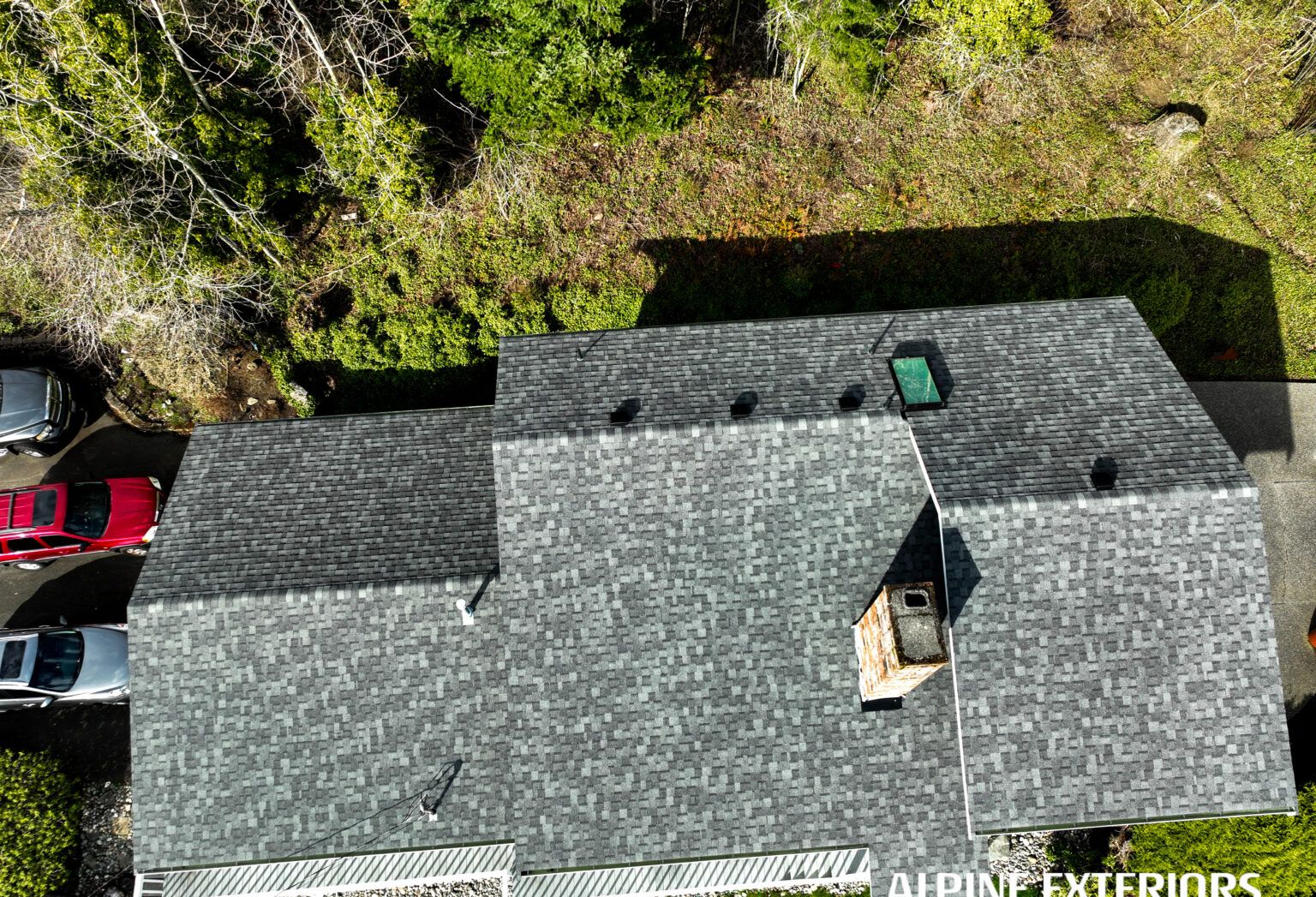
Fairhaven sits where Bellingham meets the water, and that location shapes everything about how siding performs here. The neighborhood's mix of century-old Victorians and craftsman bungalows near 12th Street, plus newer infill closer to Boulevard Park, all face the same problem: months of steady drizzle, wind-driven rain that comes sideways off Bellingham Bay and the Strait of Georgia, and a heavy shade canopy that keeps north-facing walls damp for days after a storm passes. Add in the freeze-thaw cycles that show up in the foothill pockets around Sudden Valley and Lake Whatcom, and you have a climate that is genuinely hard on exterior walls even though it never approaches hurricane-force wind. We wrote this guide from that reality, not from a generic national list, because the siding that wins in Arizona or Texas is often the wrong choice in Whatcom County.
For most Fairhaven homes, fiber cement siding is the strongest all-around choice. It shrugs off moisture, doesn't feed moss the way raw wood does, and holds paint far longer than most alternatives in a climate that rarely gives paint a chance to fully cure between rains. Engineered wood siding is a close second and often a better fit on a tighter budget, provided the installer seals every cut edge without exception. Cedar remains the right call on the historic Victorians and bungalows where matching the original clapboard or shingle profile matters more than minimizing maintenance, but only for owners willing to stay on top of refinishing. Vinyl can work on rental properties or homes where upfront cost is the deciding factor, though it has real limits in a marine climate that we'll get into below. There is no single "best" material for every house in Fairhaven — there's a best material for your specific house, your budget, and how much upkeep you're willing to do, and that's the judgment Alpine Exteriors walks through with homeowners on every estimate.
We weighed each siding option against the conditions that actually determine whether it lasts here, rather than generic durability claims that don't account for the Pacific Northwest:
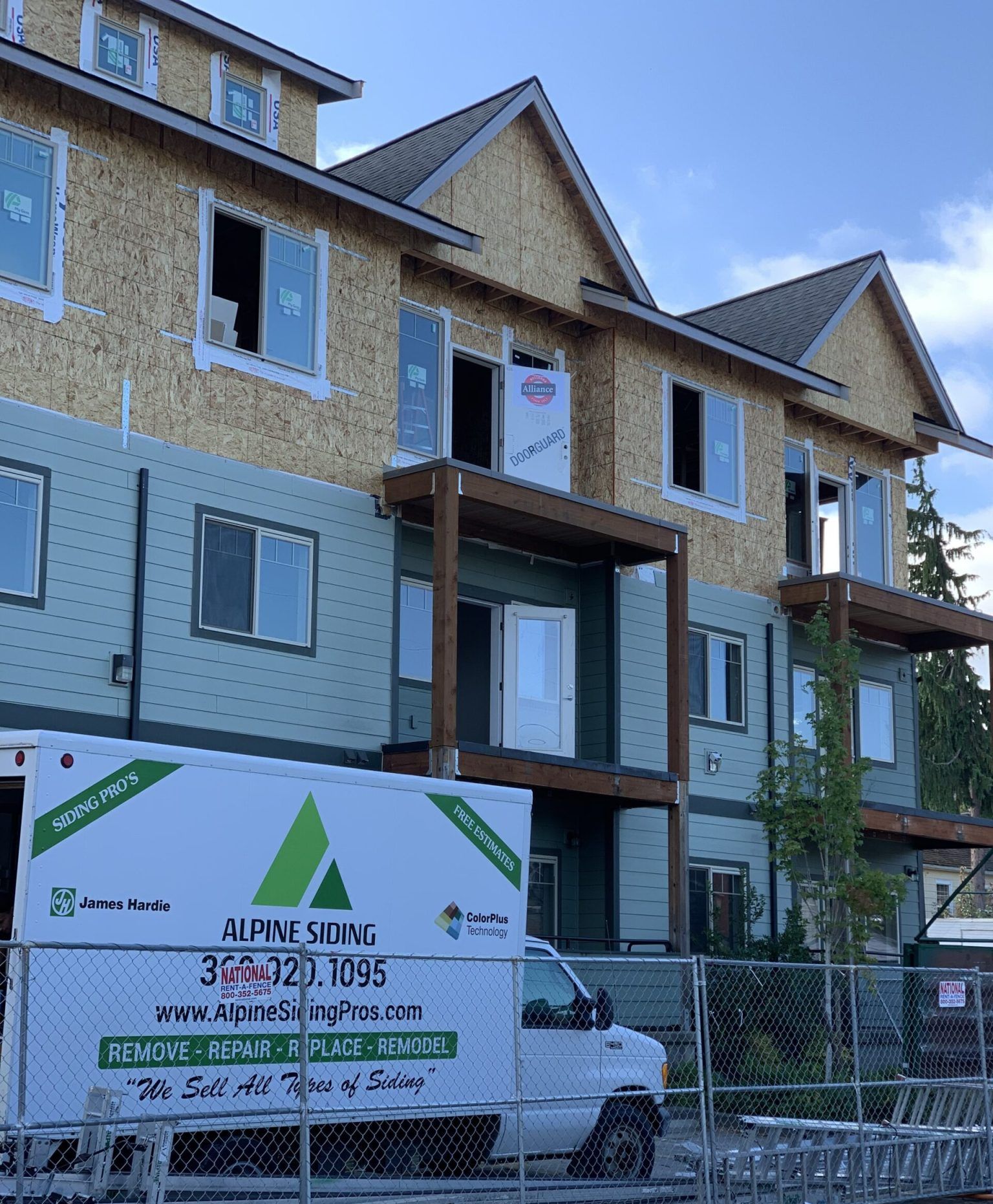
Fiber cement is a blend of cement, sand, and cellulose fibers pressed into planks or panels, and it has become the standard recommendation for coastal Washington for good reason. It doesn't absorb water the way wood does, so it resists rot and doesn't provide the organic material that moss and algae feed on as readily as bare cedar. It holds factory or field-applied paint far longer than wood in our climate, which matters when a fresh paint job can otherwise mean re-caulking and repainting every five to seven years. It's also heavy and rigid enough to resist the kind of denting or flexing that thinner materials can develop.
The drawbacks are real, though. Fiber cement is heavy, which makes installation more labor-intensive and less forgiving of a rushed crew — cut edges must be sealed and fasteners placed correctly, or the material's core water resistance gets undermined at the exact seams where wind-driven rain concentrates. It's also more expensive than vinyl or basic wood alternatives, typically landing in the higher end of siding cost per square foot once installation labor is included. And while it holds paint well, it isn't paint-free forever — most manufacturers still call for repainting on a longer but not infinite cycle.
Engineered wood siding (strand-based products like LP SmartSide are the common example) gives you the look and workability of traditional wood lap siding with an engineered core treated for moisture and insect resistance. It's lighter and easier to install than fiber cement, which can mean lower labor costs, and it takes paint and stain in a way that reads as more traditional than fiber cement to some homeowners trying to match an existing look in the neighborhood.
The honest tradeoff is that engineered wood's performance depends heavily on installation quality. Every cut end has to be field-sealed with the manufacturer's specified sealant, because an unsealed edge is where moisture gets into the strand core and causes swelling. In a climate with as much sustained damp as Fairhaven's, a crew that skips this step on even a few cuts creates a slow, hidden problem that doesn't show up until years later. When installed correctly, it's a durable, cost-effective option; when installed by a crew unfamiliar with the product, it's the siding most likely to disappoint an owner in this climate.
Cedar is the material most likely to be original on Fairhaven's older homes, and for the Victorians and craftsman bungalows where historic character is part of the property's value, matching or restoring cedar clapboard or shingle siding is often the right call — sometimes the only option that satisfies a historic district review. Western red cedar is naturally resistant to decay and insects compared to other softwoods, and it has a warmth and texture that manufactured products still don't fully replicate.
But cedar demands the most ongoing attention of any option here. It needs to be stained or painted on a recurring cycle, sealed at every joint and cut, and kept clear of the moss and algae growth that our damp, shaded lots practically invite. Left unmaintained even for a few years, cedar in this climate is exactly where we see the wood rot that eventually requires full board replacement rather than a simple repaint. Cedar is the right choice for an owner who wants the authentic look and is committed to the maintenance schedule — it's the wrong choice for someone who wants to install siding once and not think about it again.
Vinyl's main advantage is upfront cost — it's generally the least expensive option per square foot installed, it never needs painting, and it's widely available in a range of colors and profiles. For rental properties, budget-conscious remodels, or homes where resale value doesn't hinge on matching a historic aesthetic, it's a reasonable choice.
In this specific climate, though, vinyl has limits worth knowing before you commit. Thinner, lower-gauge vinyl can become brittle and crack in the colder snaps that hit the foothill areas around Sudden Valley, and it can warp or buckle if installed too tightly without allowing for thermal expansion. Vinyl's seams and J-channels also give wind-driven rain more opportunities to work behind the panel on bay-facing walls, and once moisture gets behind vinyl it can sit against the sheathing far longer than it would behind a rigid material, since vinyl itself doesn't manage or dry moisture the way fiber cement does. It's also the material least compatible with Fairhaven's historic district aesthetic, and some blocks may restrict it outright on designated structures.
A few choices show up again and again as the source of callbacks and premature repairs in Whatcom County, and they're worth naming directly. Skipping a rainscreen gap (a ventilated air space between the siding and the water-resistive barrier) is one of the most common mistakes we see corrected during a re-side, because without it, siding that gets wet from wind-driven rain has nowhere to dry out except back into the wall assembly. Unsealed or back-primed-only cut edges on any wood-based product — cedar or engineered wood alike — are the single most predictable cause of localized rot, usually first appearing at outside corners and window returns. Standard steel fasteners near the water in Fairhaven and Boulevard Park corrode faster than most owners expect given the salt-laden air off the Bay, so corrosion-resistant fasteners are worth the small upcarge. Finally, we'd steer most homeowners away from traditional stucco or EIFS systems in this climate; they depend on a nearly perfect, continuous seal to keep water out, and Whatcom County's persistent damp gives even small breaches in that seal a long time to do damage before anyone notices.
Parts of Fairhaven fall within areas where exterior changes to older or designated structures get additional review, and cedar or wood-look siding that matches the original profile is often required or strongly preferred over vinyl. If your home is on or near 12th Street or another historic block, it's worth checking with the City of Bellingham before ordering material, and Alpine Exteriors can help identify whether your property is likely to be affected before you commit to a product.
Costs vary widely by material, house size, and how much of the existing wall assembly needs repair before new siding goes on, but as a rough range, vinyl tends to sit at the lower end, engineered wood and fiber cement in the middle to upper range, and cedar restoration or replacement often runs highest once labor and finishing are included. An accurate number really depends on a site visit, since rot repair discovered mid-project is the most common reason estimates change.
Fiber cement generally holds up better on bay-facing and bluff-facing walls because it's rigid, seals tightly at laps, and doesn't rely on flexible channels the way vinyl does. Vinyl's panel system has more seams where wind-driven rain can be pushed behind the cladding, and once water gets behind vinyl it has less of a path to dry out than it does behind a properly installed rainscreen system under fiber cement.
It depends heavily on how much shade and moisture the specific wall gets — a sun-exposed south wall might need cleaning every few years, while a shaded north wall under mature trees can develop visible growth annually. Fiber cement and properly sealed engineered wood are easier to clean without damaging the finish than raw or lightly finished cedar, which is one more reason material choice matters as much as maintenance habits.
Every one of these materials can perform well in Fairhaven when it's matched to the right house and installed correctly for our climate — and every one of them can fail early when it isn't. Alpine Exteriors is a licensed Washington contractor (license ALPINI751OW) serving Bellingham, Ferndale, Lynden, Blaine, Birch Bay, Sudden Valley, and the islands, and we're happy to walk your specific property, point out where wind-driven rain or moss exposure should change the recommendation, and give you a straightforward comparison of what each material would actually cost and require on your house. Reach out to Alpine Exteriors for a no-pressure look at what makes sense for your home before you decide.