
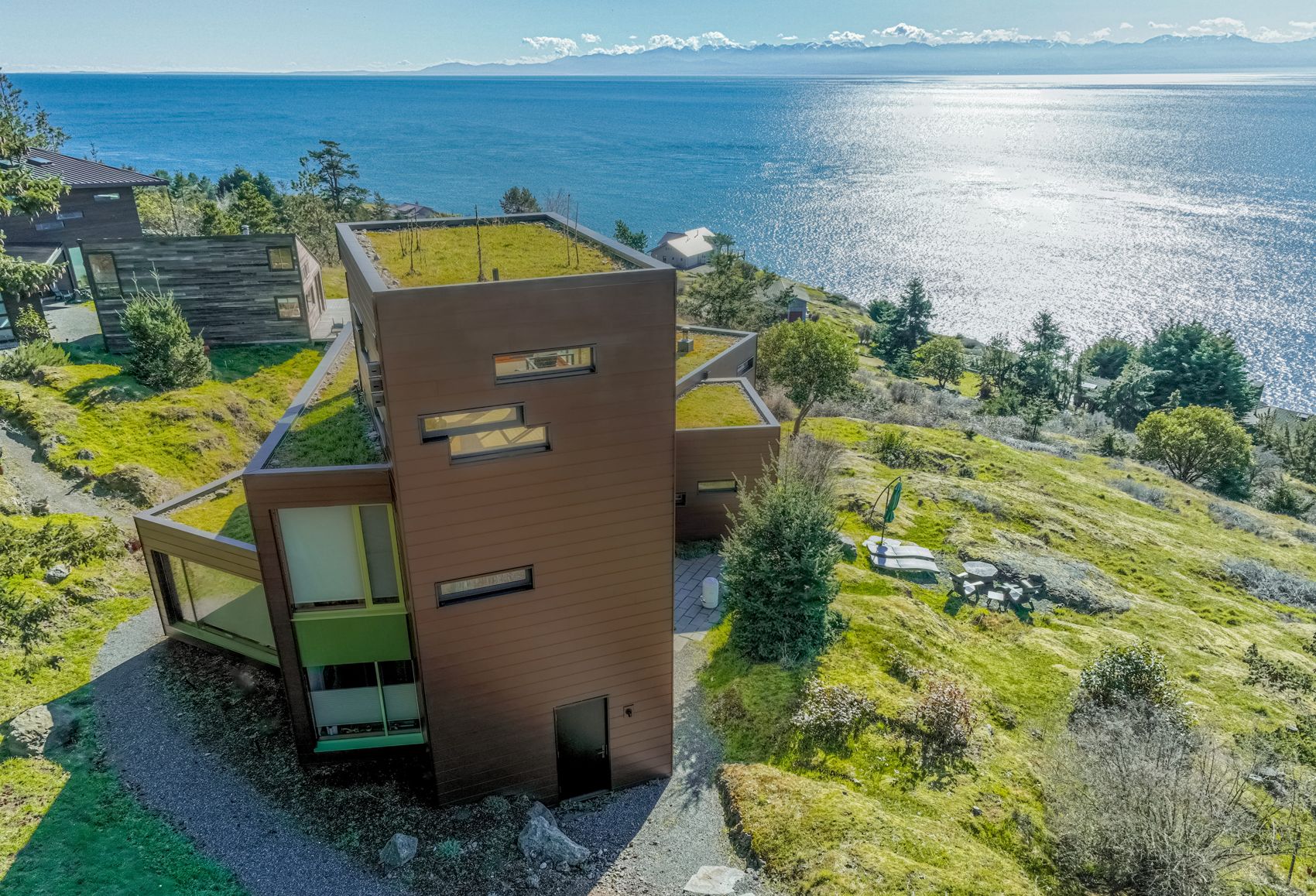
If you're holding siding swatches outside on a gray Bellingham afternoon and every one looks different than it did under the store's lights, that's not your imagination. Whatcom County's overcast, diffused light changes how pigment reads on a house, and a color that looks sharp in a catalog can look flat or muddy once it's on a wall in Ferndale or Lynden. For most homes in this area, the colors that hold up best both visually and physically are warm grays and greiges, charcoal or near-black, deep navy or slate blue, and cedar-tone wood-look finishes. They read true without direct sun to define them, they sit comfortably against the evergreen backdrop most properties have, and they're forgiving of the moss and mineral streaking that shows up on any exterior in a climate this wet. That doesn't rule out lighter colors — it just means they come with tradeoffs worth understanding before you commit, which is what the rest of this page covers.
Picking a siding color here is a different exercise than doing it somewhere sunnier and drier, so at Alpine Exteriors we weighted a few factors that actually matter in this region:
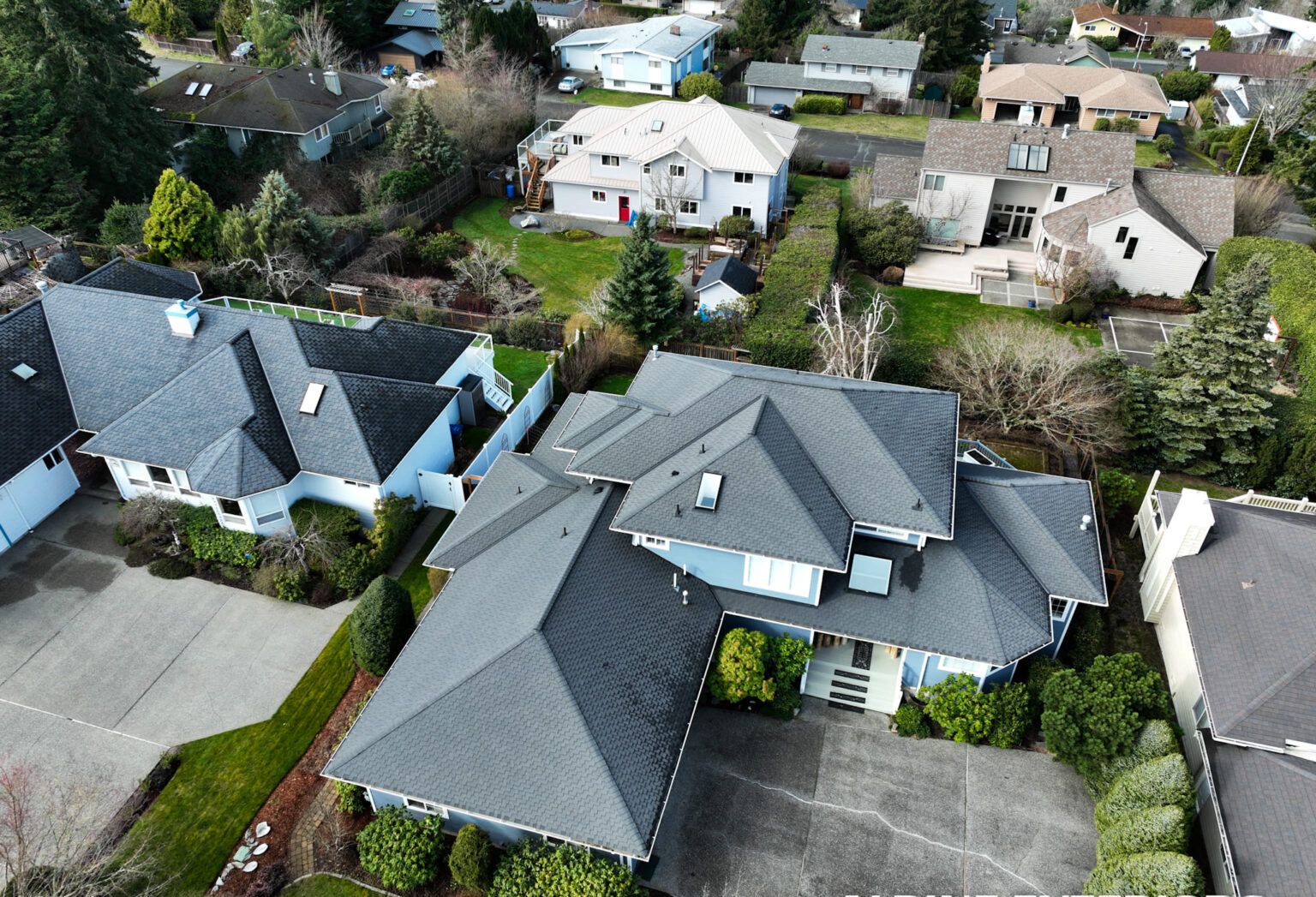
Here's a quick comparison before the detail on each one:
| Color Family | Works Well Because | Watch Out For |
|---|---|---|
| Warm gray / greige | Reads consistent in overcast light; hides light streaking | Can look flat without varied trim or texture |
| Charcoal / near-black | Strong contrast against evergreens; hides dirt and streaking well | Shows dust and pollen film; absorbs more heat on vinyl |
| Deep navy / slate blue | Complements water and sky views; dark enough to hide streaking | Can read purple-black in low light; overwhelms small homes |
| Forest / hunter green | Blends naturally with tree cover | Hard to pair with trim; can disappear against foliage |
| Warm white / soft cream | Brightens shaded lots; classic look on farmhouses | Shows moss and algae streaking fastest of any option here |
| Cedar-tone wood look | Fits the region's timber character; warm against gray sky | Real wood grays and needs upkeep; fiber cement holds tone longer |
This is the color family we point most Whatcom County homeowners toward first, and for practical reasons more than trend. A mid-tone warm gray doesn't shift much between a sunny July afternoon and a socked-in November day, which matters when you get as many overcast days as this county does. It also does a decent job of visually blending early moss growth on shaded elevations rather than announcing it. The tradeoff: on a simple ranch or box-style home without much trim contrast or roofline variation, an all-over gray can read a little flat. Pairing it with a darker gray or black trim package, or a wood-tone accent on gables, fixes that.
Charcoal siding has become common on newer builds around Bellingham and for good reason — against a backdrop of Douglas fir and cedar, it reads as intentional rather than stark, and it genuinely hides algae streaking and dirt better than pale colors do. The real drawback is heat and material behavior: on vinyl siding, dark colors absorb more solar heat, which over time can contribute to warping on lower-quality or thin-gauge panels, particularly on south- and west-facing walls that catch afternoon sun. Fiber cement and quality engineered wood don't have that problem the same way. Charcoal also shows dust, pollen, and water-spot film more visibly than a mid-gray, so expect to rinse it down more often to keep it looking sharp.
On waterfront or view lots in Blaine, Birch Bay, or the islands, a deep navy or slate blue can look genuinely at home — it echoes the water and gray sky instead of fighting them, and it's dark enough to hide the same streaking issues charcoal handles well. It's a harder color to get right on a smaller or more modest home, where it can feel heavy, and it needs the right lighting to avoid looking almost black or slightly purple on an overcast day. It also narrows your trim options; white or cream trim works, but warm wood tones can clash.
A true forest or hunter green disappears into the tree line on wooded lots around Sudden Valley or the foothills toward Mount Baker, which some homeowners want and others don't. Done well, it's one of the more distinctive choices in the area precisely because so few homes use it. The honest downside is that it can be genuinely hard to see the house from the road on a heavily treed lot, and trim colors that look good with green are more limited than with gray or navy — you're mostly choosing between white, cream, or a complementary dark brown.
A warm white or cream reads bright and classic, especially on farmhouse-style homes around Lynden and Ferndale, and it does the best job of any color on this list of brightening a heavily shaded lot. The tradeoff is real and worth being honest about: light colors show moss, algae, and mineral streaking faster and more visibly than any other option here, particularly on north-facing walls and under roof valleys where runoff concentrates. It's not a reason to avoid white outright, but it does mean planning for more frequent gentle washing if you choose it, and it performs best on lots that get reasonable sun and airflow rather than deep, permanent shade.
Wood-tone siding fits the region's character — this is timber country, and a warm cedar or driftwood tone against a gray sky has a look that flat colors don't replicate. The catch depends entirely on material. Real cedar siding left to weather naturally will gray over time and needs staining or sealing to hold its color, and in a climate this damp it's also more exposed to wood rot if it isn't detailed and maintained correctly, especially at butt joints, trim intersections, and anywhere water can sit. Fiber cement products manufactured with a wood-grain texture and factory-baked color hold their tone far longer with far less maintenance, which is why we steer most homeowners who want the wood look toward that material rather than real wood.
A few choices consistently cause regret in this climate. Bright, stark white is the most common one — it looks crisp on day one, but Whatcom County's combination of shade, humidity, and rain means moss and algae streaking shows up faster and more visibly on stark white than on almost any other color, particularly on north walls and anywhere near overhanging trees. Very pale pastels have the same problem for the same reason. On the dark end, be cautious with near-black or deep colors on standard vinyl siding on full south- or west-facing walls; the heat absorption can contribute to warping on lower-grade panels over years of sun exposure, so if you want a very dark color, fiber cement is the safer material match. Finally, be careful with saturated warm colors like bright red, orange, or yellow — beyond looking out of place against the region's green-and-gray palette, high-saturation pigments tend to fade unevenly faster than muted tones under UV exposure.
Fading has more to do with UV exposure and material quality than with the region generally, but darker colors do show fading and chalking more noticeably than lighter ones once it starts, simply because the contrast is more visible. Factory-baked finishes on fiber cement typically hold color longer than field-painted siding or lower-grade vinyl.
Yes, this is one of the more consistent patterns we see across Whatcom County homes. Light colors, especially stark white and pale pastels, make moss and algae streaking visible sooner and more clearly than mid-tone or dark colors, particularly on shaded or north-facing walls. It's manageable with periodic gentle washing, but it's worth factoring into the decision.
Not directly. The Washington State Energy Code sets requirements for wall assembly performance — insulation levels, air sealing, and continuous insulation in many assemblies — regardless of what color the exterior is. Color can have a small effect on surface heat absorption, but it isn't a code-driven consideration here the way wall insulation and assembly details are.
In our experience, factory-finished fiber cement holds pigment longest with the least maintenance in a climate this consistently damp. Quality vinyl holds up reasonably well in lighter and mid-tone colors but is more prone to heat-related issues in very dark colors. Real wood offers the most authentic look but requires the most upkeep to keep its color and to stay ahead of rot.
Choosing a siding color is easier when you can see real options against real Whatcom County light, not a paint chip under fluorescent lighting. Alpine Exteriors works with homeowners throughout Bellingham, Ferndale, Lynden, Blaine, Birch Bay, Sudden Valley, and the surrounding islands, and we're happy to bring samples out to your property so you can see how a color performs against your home's exposure and tree cover before you commit. If you're weighing a full re-side or just want an honest read on how a color choice will hold up over time, reach out to Alpine Exteriors — Washington contractor license ALPINI751OW.