
In Whatcom County, who issues your siding permit depends on where the house sits: inside Bellingham, Ferndale, Lynden, or Blaine city limits, it's that city's own building department, and everywhere else — Birch Bay, Sudden Valley, the islands, and other unincorporated areas — it's Whatcom County Planning & Development Services. Most straightforward re-siding jobs don't need a permit at all, but the moment the work touches structural sheathing, the weather-resistive barrier, or window and door flashing, it almost always does.
Washington's building code framework is based on the International Residential Code as adopted and amended by the Washington State Building Code Council, and every jurisdiction in Whatcom County enforces it locally rather than through a single county-wide office. That's the part homeowners trip over — Bellingham has its own permit center, Ferndale and Lynden each run their own, Blaine issues its own permits for anything inside city limits, and Whatcom County PDS in Bellingham handles the unincorporated pockets in between. There isn't one phone number that covers the whole county, which means the first real step in any siding project is figuring out which jurisdiction your parcel actually falls under, since city and county boundaries in this area don't always match up with the mailing address or the school district.
What actually triggers a permit is less about the word "siding" and more about what's underneath it. A straightforward panel-for-panel swap — pulling off old lap siding or fiber cement and putting up the same material in the same place, without opening up the wall assembly — is often treated as maintenance and doesn't require a permit in most Whatcom County jurisdictions. But re-siding almost never stays that simple once a crew gets into it, especially on older homes. If the tear-off exposes plywood or OSB sheathing that needs replacing, if the housewrap or building paper is being torn out and reinstalled, if window and door trim is coming off and flashing is being redone, or if the project is bundled with new insulation or a larger exterior remodel, that crosses the line into work that needs a permit and, in most cases, triggers a Washington State Energy Code compliance check on the wall assembly. Structural repairs — replacing rotted studs, rim joists, or sheathing sections — always need a permit regardless of jurisdiction, because that's load-bearing and moisture-barrier work, not cosmetic work.
Once a permit is pulled, expect at least one inspection before the job closes out, and often two: a "dry-in" or sheathing/weather barrier inspection after the old siding is off and the wall is wrapped but before new siding goes up, and a final inspection once the siding, trim, and flashing are complete. The first inspection matters more here than in drier climates, because it's the inspector's one chance to see the sheathing and the water-resistive barrier before they're covered up again — and in a county that gets this much rain, a barrier installed wrong is a problem that doesn't show up for two or three winters.
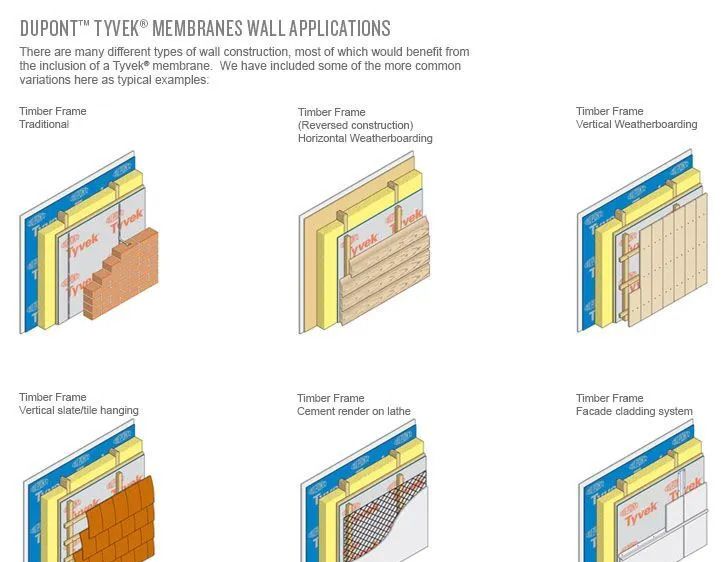
Whatcom County's building departments pay close attention to siding work because of what the climate does to a wall assembly here, not because of any single dramatic weather event. This is a rain-driven code environment, not a hurricane one — there's no wind-mitigation form or wind-load rating to chase, but there's a near-constant moisture load that inspectors are specifically watching for.
Start by confirming jurisdiction, not by guessing. A property with a Bellingham mailing address isn't necessarily inside Bellingham city limits — plenty of Whatcom County addresses that feel like "Bellingham" are actually unincorporated county land handled by Planning & Development Services. The same mismatch happens around Ferndale, Lynden, and Blaine. A quick call or a parcel lookup on the county assessor's site settles it before any bids come in.
Next, get the scope of work in writing before assuming a permit isn't needed. "We're just re-siding" can mean a same-day panel swap or a full tear-off to bare studs, and those two jobs sit on opposite sides of the permit line. Ask the contractor directly: is the sheathing coming off, is the weather-resistive barrier being replaced, and is any flashing around windows and doors being redone? Those three questions predict whether a permit application is coming.
If rot turns up mid-project — which happens often enough on older Whatcom County homes that it shouldn't be a surprise — expect the project to pause while a permit is pulled or amended and the repair is documented for inspection. That delay is normal and it's the system working as intended, not a red flag on the contractor. What is worth pushing back on is a contractor who wants to cover discovered rot without documenting it or without adjusting the permit status, since that's the exact shortcut that turns into a much larger repair once it's hidden behind new siding.
Finally, don't skip the inspection scheduling even when it feels like an extra step. The sheathing/weather-barrier inspection is the one point in the entire project where the wall is open enough for an inspector to actually see whether the water-resistive barrier is lapped correctly and the flashing is integrated with it. Once new siding goes up, that's no longer visible — to the inspector or to the homeowner. Alpine Exteriors schedules that inspection window as a fixed step in every re-siding job that requires one, rather than treating it as optional paperwork, because it's the cheapest moment in the whole project to catch a mistake.
Alpine Exteriors holds Washington contractor license ALPINI751OW and pulls permits directly with the relevant Whatcom County jurisdiction — Bellingham, Ferndale, Lynden, Blaine, or the county's Planning & Development Services office — rather than leaving that step to the homeowner. That includes handling the paperwork if rot or sheathing damage is found mid-project, since that's the scenario that most often catches homeowners off guard.
Not always. If crews are removing the existing siding and installing new siding of a similar type without disturbing the sheathing, house wrap, or window and door flashing, the City of Bellingham typically treats it as maintenance and no permit is required. As soon as the sheathing or weather-resistive barrier is exposed and replaced, or the project is bundled with insulation or structural repairs, a permit is required and at least one inspection will be scheduled before the job is signed off.
Unincorporated areas of Whatcom County, including Birch Bay, Sudden Valley, and the islands, fall under Whatcom County Planning & Development Services rather than any city building department. Confirming jurisdiction before applying matters, because a Bellingham or Ferndale mailing address doesn't necessarily mean the property is inside those cities' permit authority — a quick parcel lookup avoids applying to the wrong office.
This is common enough in Whatcom County's older housing stock that it shouldn't derail a project, but it does change the permit picture. Structural or sheathing repairs need to be documented and typically require a permit (or an amendment to an existing one) along with an inspection before new siding goes back up, since that repair affects both the structural integrity and the moisture barrier behind the wall.
It can. If the project opens up the wall assembly, adds or changes insulation, or is part of a larger exterior remodel, it's generally reviewed against current Washington State Energy Code requirements for the building envelope in addition to the structural permit review. A simple like-for-like siding swap that doesn't touch insulation or sheathing usually doesn't trigger that review.
Every property in Whatcom County sits under a specific jurisdiction with its own permit process, and the right answer for a house in Lynden isn't automatically the right answer for one in Blaine or on Lummi Island. Alpine Exteriors can look at your specific home, tell you honestly whether your project is likely to need a permit, and handle the application and inspection scheduling with the correct city or county office if it does. Reach out for a straightforward assessment before work starts, not after the siding's already back on the wall.