Siding Repair in York, Bellingham: Common Damage, Repair vs. Replace, and Matching Existing Siding
Updated August 2026 · Alpine Exteriors · WA contractor license ALPINI751OW
The Short Answer
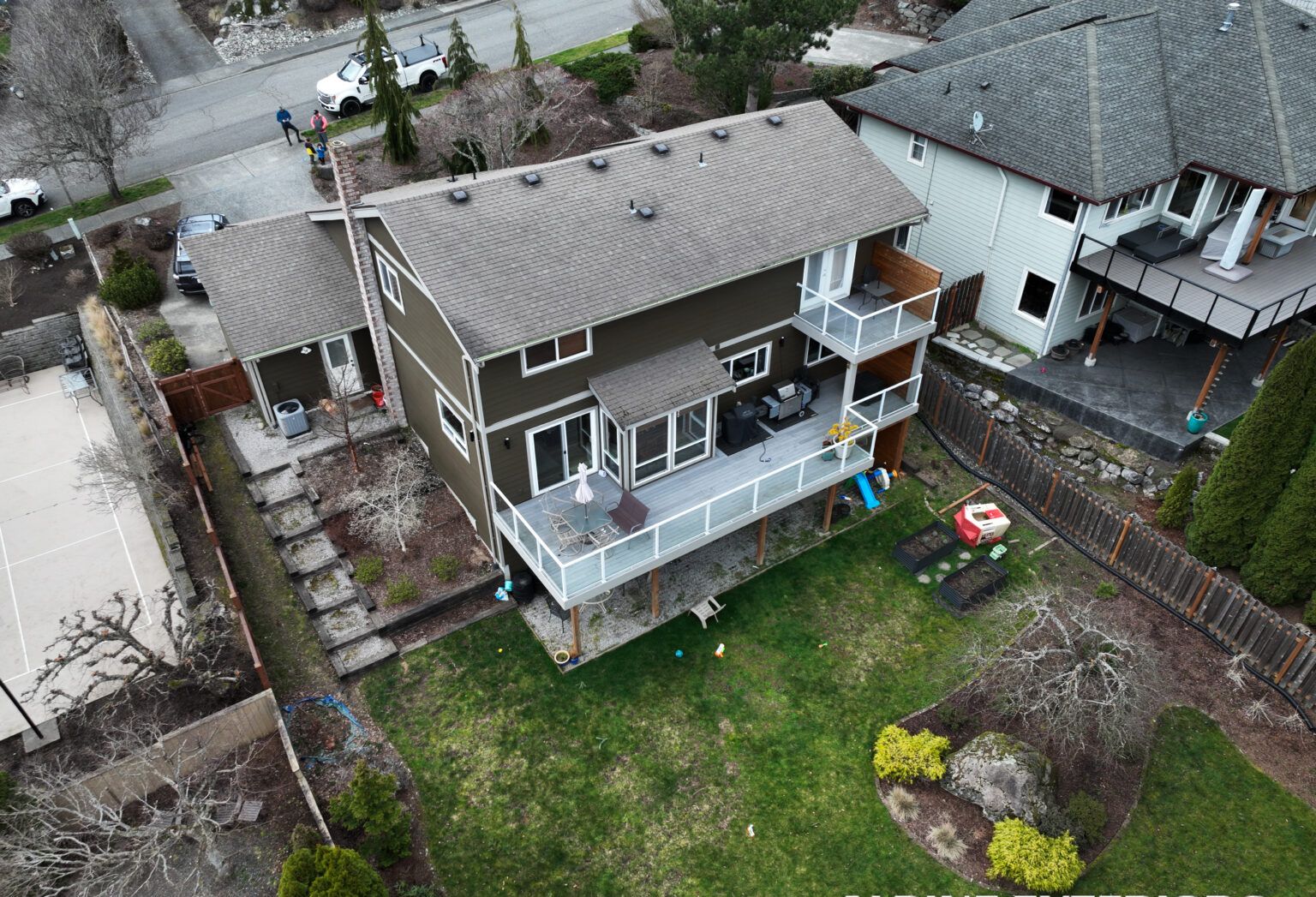
Most siding problems in the York neighborhood come down to trapped moisture — behind a cracked board, under a failed caulk joint, or inside a section that's been shaded by mature trees long enough to hold algae and moss year-round. If the damage is limited to a few boards or a single wall section and the sheathing underneath is still dry and solid, repair is almost always the right call. If moisture has been getting in for more than a season or two, or if it's spread across multiple walls, replacement of that section — sometimes the whole elevation — usually costs less over time than repeated patch repairs.
What's Actually Going Wrong Under the Siding
York is one of Bellingham's older residential neighborhoods, with a lot of homes built between the 1900s and the 1950s and plenty of infill and remodels since. That mix matters for siding repair, because the housing stock includes original wood lap and shingle siding, decades-old cedar that's been painted over a dozen times, 1980s-90s hardboard siding that's notorious for delaminating, and newer fiber cement and vinyl on remodeled homes. Each of those materials fails differently, and a repair contractor needs to know which one they're looking at before recommending anything.
The damage we see most often on service calls in this part of Bellingham falls into a handful of categories:
- Wood rot at butt joints and bottom courses. Water runs down a wall, collects at horizontal seams, and if the caulk or paint film has failed, it wicks into the wood grain. This shows up first as soft, spongy spots you can press a thumb into, usually near the ground, under windows, or below roof-to-wall transitions.
- Moss and algae growth on north- and west-facing walls. York's tree canopy — a real asset for the neighborhood's character — also means a lot of shaded, slow-drying wall surfaces. Moss holds moisture against the siding face far longer than open sun-exposed walls, which accelerates rot underneath even when the visible siding still looks paintable.
- Cracked or split boards from age and movement. Older wood siding that's been through decades of wet-dry cycles develops hairline splits, especially around nail heads. Once a split opens, it's a direct path for water.
- Delaminating hardboard siding. Homes remodeled in the 80s and 90s sometimes have composite hardboard siding that swells, bubbles, or crumbles at the edges once water gets into the substrate. This material generally isn't repairable board by board — once it's compromised, it needs to come off.
- Impact and wind damage. Fallen branches are common under a mature canopy, and gusty wind events off the water can drive rain sideways into gaps, joints, and any siding that's already loose or under-fastened.
None of this is unusual for a Pacific Northwest neighborhood with this much tree cover and this much housing stock older than 60 years. It's also very manageable, as long as it gets caught before the framing behind the siding is affected.
What Makes Whatcom County Different
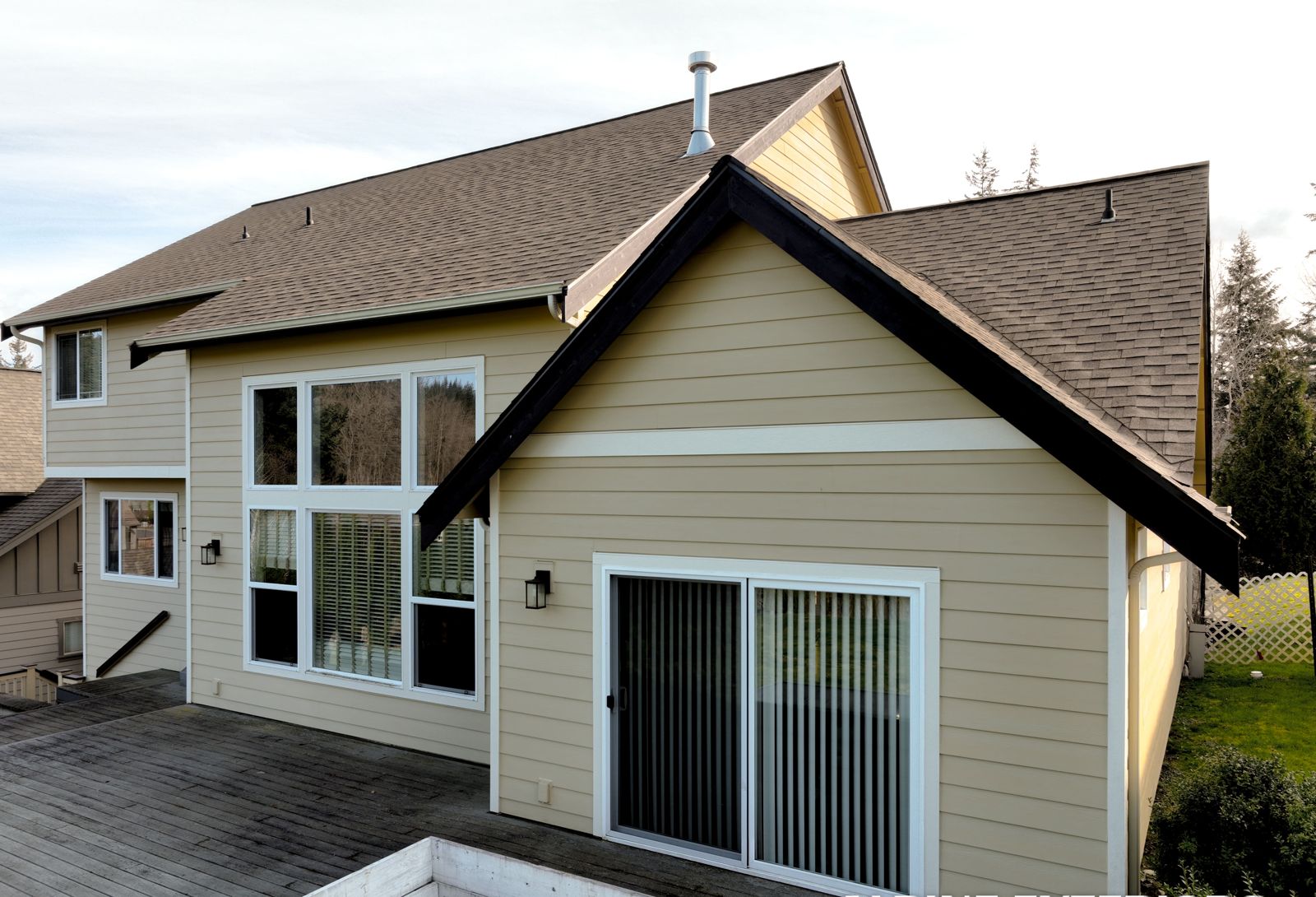
Siding repair here isn't governed by the same conditions a contractor in a drier or warmer climate deals with. A few things are specific to Bellingham and the surrounding Whatcom County towns — Ferndale, Lynden, Blaine, Birch Bay, Sudden Valley, and the islands — that shape how repairs should be done:
- Persistent rain, not storms, is the main enemy. Whatcom County doesn't deal with hurricane-force wind events. The damage here is cumulative — long stretches of drizzle and low-intensity rain that give water months at a time to find its way behind poorly sealed siding. A repair that looks fine on day one but wasn't properly flashed will fail slowly over a wet winter, not all at once.
- Wind-driven rain off Bellingham Bay and the Strait. Homes on west- and northwest-facing exposures, particularly closer to the water in Bellingham, Blaine, and Birch Bay, take on rain that's being pushed sideways by onshore wind rather than falling straight down. That means lap siding needs proper overlap and sealed joints on those walls specifically — a repair that would hold up fine on a sheltered east wall can still leak on an exposed west wall.
- Moss and algae are a maintenance issue, not just cosmetic. In a drier climate, algae staining is mostly an appearance problem. Here, sustained moisture under moss growth softens wood fibers and holds fastener holes open longer, which is why we treat heavy moss coverage as a signal to inspect, not just clean.
- Freeze-thaw cycling in the foothills. Areas up toward Sudden Valley and the foothill fringe of the county see more freeze-thaw days than lower-elevation, closer-to-water spots like downtown Bellingham or Birch Bay. Water that's gotten into a crack or seam and then freezes expands that opening, which is why small splits in this area tend to get worse faster than the same damage would near sea level.
- The Washington State Energy Code. Any siding replacement that opens up the wall assembly — not a simple board swap, but removing sheathing or working past the water-resistive barrier — needs to meet current Washington State Energy Code requirements for wall insulation and air sealing. This doesn't apply to a straightforward board-for-board repair, but it does apply once a project becomes a re-side or a wall is opened up for rot remediation, and it's worth knowing before assuming a repair will be quick and inexpensive.
Repair vs. Replace: How to Actually Decide
The decision isn't just about how bad the damage looks from the ground. A few checks make the difference between a straightforward repair and a job that turns into more than expected once the siding comes off:
- Probe the wood. A screwdriver or awl pressed into suspect boards tells you a lot. If it sinks in easily or the wood feels punky rather than solid, rot has progressed past the surface.
- Check how far the damage spreads. Rot at one board near a downspout is a localized fix. Rot along an entire bottom course, or damage showing up on more than one wall, usually means water has been getting in longer than the visible symptoms suggest, and it's worth opening a section to see what the sheathing looks like.
- Know your siding material. Original cedar can often be spot-repaired — cutting out a damaged section and splicing in matched material is a normal, cost-effective approach. Hardboard siding from the 80s and 90s is a different story; once it delaminates, patch repairs rarely hold, and replacing that elevation, or the whole house if the material is uniformly aging out, is usually the more honest recommendation.
- Consider the age of the paint or finish, not just the siding. A board can be structurally fine but failing at the surface because the paint film is 15+ years old and no longer shedding water. Sometimes what looks like a siding problem is really a finish problem, and repainting with proper prep solves it without touching the boards.
- Weigh repeated repairs against a full re-side. If a wall has needed patch repairs two or three times in the same area over a few years, that's usually a sign of an underlying flashing or drainage problem that board replacement alone won't fix. At that point, a full re-side of that wall, done with correct water-resistive barrier and flashing details, tends to be the more durable and ultimately less expensive path.
Cost is a real factor, and it's fair to expect a wide range depending on scope. A small, localized wood siding repair — a few boards, standard access — often lands in the low hundreds to low thousands of dollars. A larger repair involving sheathing replacement, or a full wall re-side, climbs well beyond that, and a whole-house re-side is a much larger investment. Any contractor who gives you a firm number without inspecting the wall in person and, ideally, opening up at least one damaged section first is guessing.
Matching Existing Siding: What's Realistic
Matching new material to old siding is one of the more honest conversations to have upfront, because it doesn't always go perfectly. A few realities worth knowing:
- Wood siding weathers and fades unevenly. A newly milled cedar board spliced next to 40-year-old, sun- and rain-weathered siding will look slightly different in color and grain until it weathers in, which can take a season or two, even with matched paint.
- Discontinued profiles are common on older York homes. Exact board width, reveal, and butt-joint style used decades ago aren't always available new. A close match is usually achievable, but identical sometimes isn't, especially on houses with custom or historic-era profiles.
- Hardboard and older vinyl are the hardest to match. Discontinued colors and profiles from 80s and 90s manufacturers are frequently no longer produced, which is one more reason full-wall or full-house replacement is often more practical than chasing a match for a single damaged section.
- Paint is the great equalizer. When board profiles are close but not exact, a full repaint of the repaired wall — or the whole house — after the work is done usually closes the visual gap far more than trying to find a perfect factory match.
Alpine Exteriors walks homeowners through this tradeoff honestly before work starts — whether a spliced repair will blend in, whether it's worth repainting the affected wall, or whether the smarter long-term move is replacing a full elevation rather than chasing a match that may never be perfect.
What a York Homeowner Should Actually Do
Start with a visual walk of the exterior, ideally after a stretch of dry weather so you're not just looking at wet, dark boards. Look specifically at bottom courses, areas below windows, roof-to-wall intersections, and any wall that's shaded by tree cover for most of the day — those are the spots that fail first in this climate. Press on any board that looks discolored, blistered, or has visible moss. If it gives at all, that's worth a closer look, not a wait-and-see.
From there, get an in-person inspection rather than relying on photos or a phone estimate. Siding damage in older homes is often worse under the surface than it looks from the yard, and the only reliable way to know whether you're looking at a board-level repair or something that involves the sheathing is to open up a section. Ask any contractor bidding the work how they handle flashing and water-resistive barrier detailing at repaired sections — that detail matters more to long-term performance in this climate than the siding material itself. And if the project moves from a repair into re-siding a wall or opening up the assembly, ask how the work will meet Washington State Energy Code requirements for that wall, since that changes both the scope and the cost.
Alpine Exteriors is licensed in Washington (contractor license ALPINI751OW) and works throughout Whatcom County, including Bellingham neighborhoods like York, Ferndale, Lynden, Blaine, Birch Bay, and Sudden Valley. An in-person look at the damage — including opening a section if there's any doubt about what's underneath — is the most useful next step for most homeowners weighing repair against replacement.
FAQ: Siding Repair in York, Whatcom County
How do I know if my siding damage is cosmetic or structural?
Surface staining, faded paint, and light moss on an otherwise solid board are cosmetic and can usually be addressed with cleaning and repainting. Structural damage shows up as soft or spongy wood when pressed, visible cracks that run through the board rather than just the paint film, or any give when you push on the wall near the base or under a window. When in doubt, a contractor probing a few suspect spots with an awl takes only a few minutes and answers the question far more reliably than looking from the ground.
Can moss and algae actually damage siding, or is it just an appearance issue?
Both. On its own, algae staining is cosmetic and a wash or gentle cleaning handles it. But moss growth that's been left for multiple seasons holds moisture directly against the wood surface, which softens fibers over time and keeps the area behind the siding wetter for longer stretches than an exposed, sun-drying wall. In a neighborhood with as much tree cover as York, heavy moss is worth treating as a signal to check for rot underneath, not just to power-wash and move on.
Will a repaired section of siding look different from the rest of the house?
It can, at least initially. New wood siding weathers in over a season or two and may look slightly lighter or differently grained than decades-old boards until it does. Discontinued profiles, especially on older hardboard or vinyl siding, sometimes can't be matched exactly. A full repaint of the repaired wall after the work is done is usually the most effective way to blend a repair, and it's worth discussing that option before assuming a spot repair will be invisible.
Does a siding repair need to meet the Washington State Energy Code?
A simple board-for-board repair generally doesn't trigger code review. Once a project involves removing sheathing, working past the water-resistive barrier, or re-siding a full wall, it typically needs to meet current Washington State Energy Code requirements for wall insulation and air sealing. It's worth asking your contractor early which category your project falls into, since it affects both scope and cost.
Get a Straight Answer on Your Siding
If you're looking at damaged, discolored, or moss-covered siding on a York home and aren't sure whether it's a quick repair or something more, Alpine Exteriors can take a look in person and give you an honest read on what's underneath before recommending a fix. Reach out to schedule an inspection for your Bellingham or Whatcom County home.
Want a straight answer for your home? Alpine Exteriors gives free on-site assessments across Bellingham, Ferndale, Lynden, Blaine, Birch Bay, Sudden Valley and the islands.
Call (360) 543-4799 or
request an estimate.