
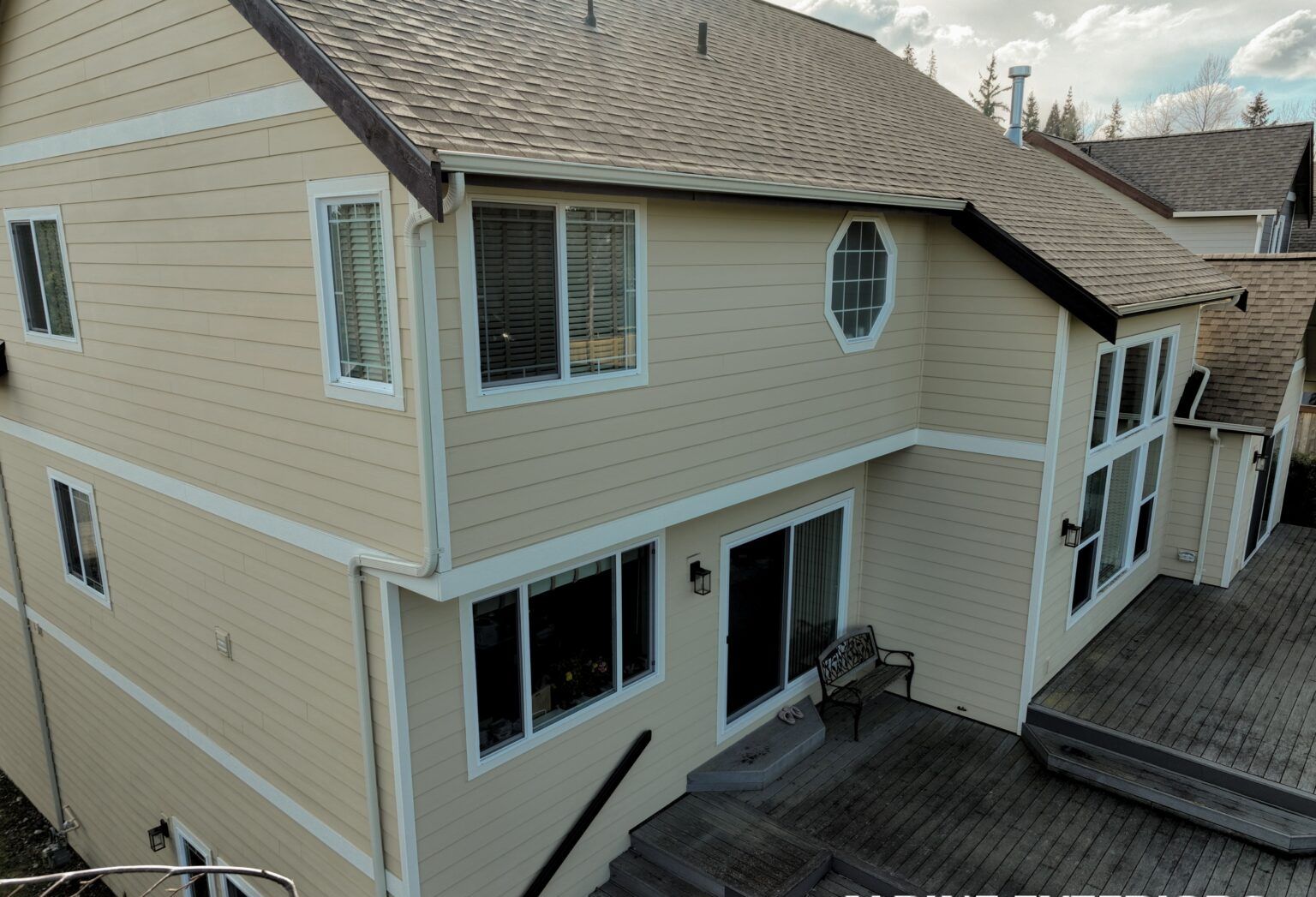
If you want one paragraph before the full breakdown: for most Edgemoor homes, the safest and best-performing choices are warm greige or weathered-cedar tones, deep charcoal or soft black used as an accent or on a smaller-footprint home, and muted blue-gray 'coastal slate' shades that echo Bellingham Bay without competing with it. These hold up best against the specific conditions of this neighborhood: heavy tree cover, near-constant marine moisture, and a housing stock that leans traditional and Craftsman, and they tend to sit well within the informal architectural expectations that shape a lot of remodeling decisions along the bluff and down toward the water. Bright white and true black both work in small doses but come with real maintenance trade-offs we'll get into below. There's no single 'correct' color; there's a color that suits your lot's light, your home's style, and how much upkeep you're willing to do.
Edgemoor isn't a typical suburban grid. Lots back up to Chuckanut sandstone bluffs, mature fir and cedar canopy, and in many cases direct or filtered views of Bellingham Bay and the San Juans. That combination changes how a siding color actually reads and performs, so we weighed each option against four criteria specific to this setting rather than generic curb-appeal advice.
This is the workhorse recommendation for Edgemoor, and for good reason. Warm greige, driftwood, and weathered-cedar tones sit comfortably against both the green of the tree line and the gray-blue of the bay, and they don't fight with natural wood accents, stone foundations, or the exposed timber detailing common on the neighborhood's older Craftsman and Northwest Contemporary homes.
Pros: forgiving in changing light, hides pollen and light dust between washes, pairs easily with black or bronze window frames, and tends to read as timeless rather than trend-driven, which matters if you plan to sell in a market where buyers expect a certain look in this part of Bellingham.
Cons: greige can drift green or pink depending on the exact pigment mix and the quality of the light that day, so it's worth viewing a large sample board on the actual house, in actual Whatcom County weather, rather than trusting a small chip or a screen. It's also common enough in the neighborhood that some owners find it a little unremarkable if they want the home to stand out.
Dark siding has become popular across the Pacific Northwest, and it can look genuinely striking on the right Edgemoor lot, especially a smaller-footprint home tucked against evergreens, where the dark tone recedes into the tree line rather than dominating the street.
Pros: strong contrast against white trim, excellent at visually minimizing a home's bulk on a narrow or heavily shaded lot, and dark pigments do a good job of disguising the fine soot-gray streaking that shows up on north-facing walls in wet climates.
Cons: dark colors show water spotting and mineral deposits from sprinklers or roof runoff more obviously than mid-tones do, and on a full two-story elevation that gets real afternoon sun, dark fiber cement or vinyl can run noticeably warmer, which is worth discussing with your installer relative to the wall assembly and insulation required under the Washington State Energy Code. It's also a bigger visual commitment on a large or highly visible home, and a few Edgemoor blocks with an older, quieter character may see it as a departure from what's typical.
For homes with any real sightline to the water, a muted blue-gray shade, sometimes marketed as slate, storm, or driftwood blue, is one of the more context-appropriate choices available. It nods to the bay without trying to literally match it, which almost never works anyway since water color shifts hour to hour.
Pros: reads as calm and intentional against both gray winter skies and summer blue, ages gracefully because a slight color shift over the years is nearly invisible on a color that's already muted, and pairs naturally with the region's stone and timber accents.
Cons: the wrong blue-gray can lean too cool and institutional, especially on a home with little landscaping softening the facade. It also needs to be sampled carefully, because lighting conditions here shift a lot between the flat gray light of a rainy week and the low, warm light of a clear fall afternoon off the water.
Lighter siding has real advantages in a place that sees this much overcast weather: it brightens a home tucked under heavy tree cover and makes a shaded lot feel less enclosed. Dove gray in particular has become a common, safe choice on remodels throughout Bellingham.
Pros: maximizes light on a shaded lot, shows off trim and architectural detail well, and tends to be the easiest color to get approved without controversy in a neighborhood that leans traditional.
Cons: this is the category most vulnerable to the moss and algae that thrive in Whatcom County's damp, shaded microclimates. On north-facing walls, under gutters, or anywhere airflow is limited by dense landscaping, light siding will show green and black streaking faster than a mid-tone will, and it will show it more visibly. It's a real color, not a bad one, but owners should go in expecting a wash-down every year or two on the shadiest elevations, and should ask about a siding profile and installation detail that keeps water moving off the wall rather than pooling behind trim.
A few color choices tend to cause more regret than satisfaction on homes in this specific setting, and it's worth naming them directly rather than leaving owners to find out the hard way.
Alpine Exteriors generally recommends holding a full-size sample against each exposed wall of the house, not just the street-facing elevation, since shaded and sun-exposed walls can make the same color look like two different products.
Color itself doesn't cause moss or algae growth, moisture, shade, and airflow do, but color affects how visible that growth is. Lighter colors show green and black streaking sooner and more starkly than mid-tone or darker colors, which is why a lot of homes on heavily shaded Edgemoor lots lean toward greige, slate, or charcoal rather than white on their north-facing walls.
It can run a few degrees warmer on the wall surface during direct sun exposure, though Whatcom County's summers are mild enough that this is a much smaller factor here than it would be in a hotter climate. The bigger consideration is usually how the wall assembly and insulation are detailed to meet the Washington State Energy Code, which matters more for comfort and energy use than siding color alone.
It depends on the specific street or association; Edgemoor doesn't operate under one uniform HOA, but some sections do have covenants or design guidelines. It's worth checking your property's specific covenant documents or asking neighbors before ordering materials, especially for a bold or unusual color choice.
This varies by material and pigment quality more than by brand claims, and we won't invent a specific number of years since it depends on sun exposure, wall orientation, and product. In general, muted and mid-tone colors show fading less obviously than very dark or very saturated colors, and south- and west-facing walls will always show wear sooner than shaded north walls.
Picking a siding color from a photo or a small swatch is guesswork; the light on a bluff-side Edgemoor lot under fir canopy is nothing like a showroom. Alpine Exteriors, WA contractor license ALPINI751OW, works throughout Whatcom County, including Bellingham, Ferndale, Lynden, Blaine, Birch Bay, Sudden Valley, and the islands, and can bring large-format samples out to your actual home so you can see how a color behaves against your trees, your stone, and your particular stretch of gray sky before you commit. Reach out to set up an on-site color consultation and a straightforward look at how each material option holds up in this climate.