
Walk through the Columbia, York, or South Hill neighborhoods on a wet November afternoon and you'll see the whole history of siding decisions in Whatcom County on display: century-old cedar clapboard gone soft at the bottom courses, 1980s vinyl gone brittle and gray, and newer fiber cement holding its paint line sharp against the drizzle. Downtown Bellingham's housing stock is a mix of turn-of-the-century Craftsman and Victorian homes, mid-century infill, and newer construction near the waterfront and Fairhaven corridor, and every one of those homes is fighting the same climate: long stretches of low-intensity rain, shoulder seasons where wood never quite dries out, wind-driven rain off Bellingham Bay and the Strait of Georgia, and moss and algae that will colonize any siding that stays damp. This guide walks through what actually holds up here, what doesn't, and why — based on what we see tearing off old siding and installing new siding across Bellingham, Ferndale, Lynden, Blaine, Birch Bay, Sudden Valley, and the islands.
For most Downtown Bellingham homes, fiber cement lap siding is the safest default choice, and engineered wood siding is a reasonable step-down in cost with a few more maintenance caveats. If you own one of the neighborhood's older Craftsman or Victorian homes and want to preserve its character — or you're in a historic overlay where the design review board cares about materials — real cedar siding, properly detailed and finished, is still a legitimate option, just a higher-maintenance one. Vinyl remains the budget choice and has genuinely improved, but it's the option we'd steer away from on any home taking direct wind-driven rain off the Bay. None of these are universal answers; the right pick depends on your home's exposure, your budget, and how much upkeep you're willing to do. The sections below explain why, honestly, including the downsides of each.
We're not ranking these products against national averages. We're ranking them against Whatcom County's specific conditions, which are different from most of the country:
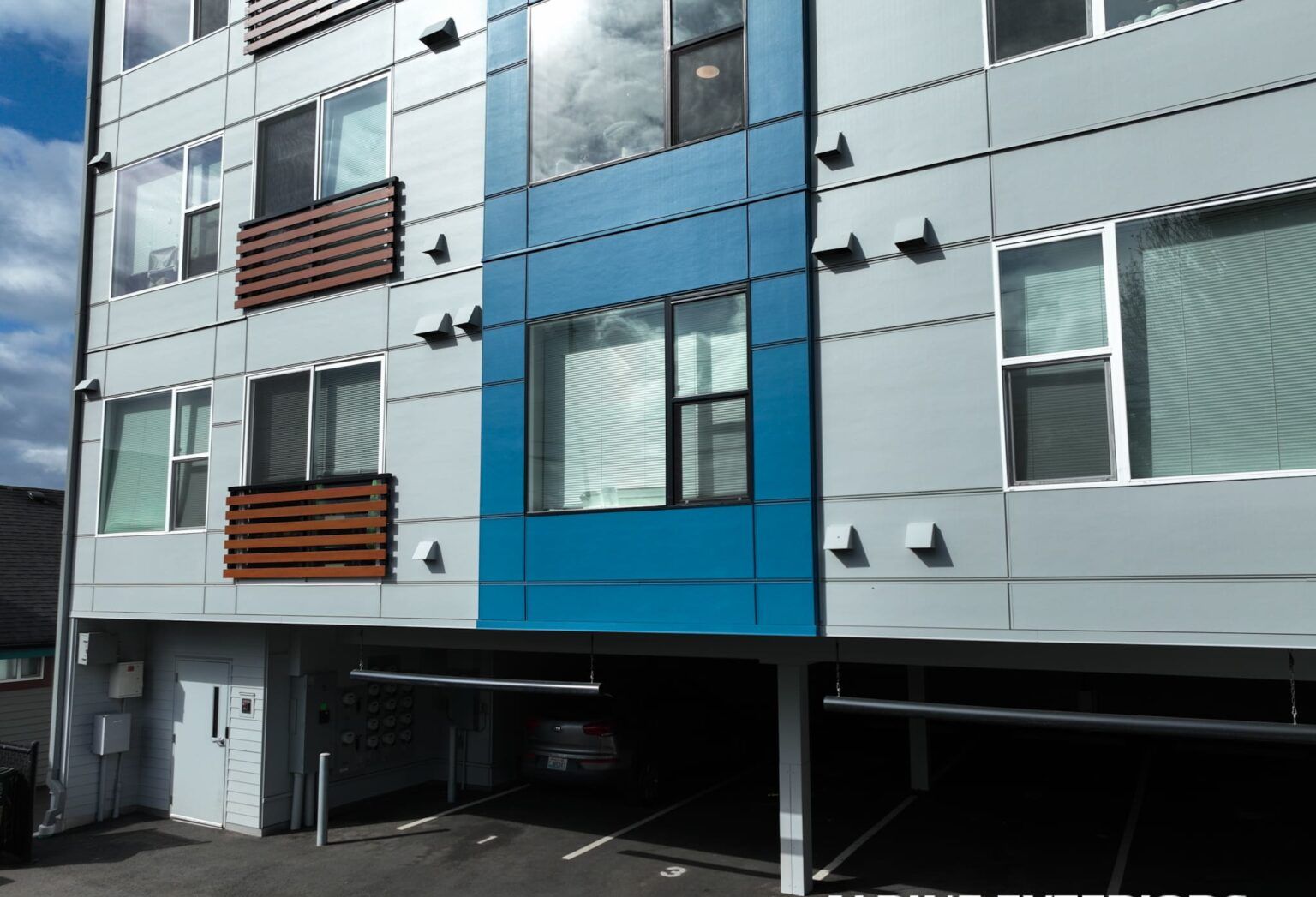
Fiber cement (cement, sand, and cellulose fiber pressed into planks or panels) is the material we install most often on Downtown Bellingham homes, and for good reason. It doesn't rot, it doesn't feed moss the way bare wood grain does, and factory-primed or pre-finished products hold paint far longer than site-painted wood does in this climate. It stands up well to wind-driven rain when it's installed with proper flashing, a drainage gap, and correctly lapped joints — which matters more than the material itself, honestly.
Pros: excellent moisture and rot resistance, holds paint and color for years longer than wood, resists moss better than bare wood siding, wide range of profiles that can match Craftsman lap or shingle-style detailing, non-combustible.
Cons: heavier and more labor-intensive to install than vinyl or engineered wood, meaning higher installed cost; it must be painted or pre-finished, and repainting is still eventually necessary; field cuts require dust control; it's less forgiving of a sloppy install than people assume — poor flashing detail behind fiber cement still lets water in, it just hides the damage longer before it shows.
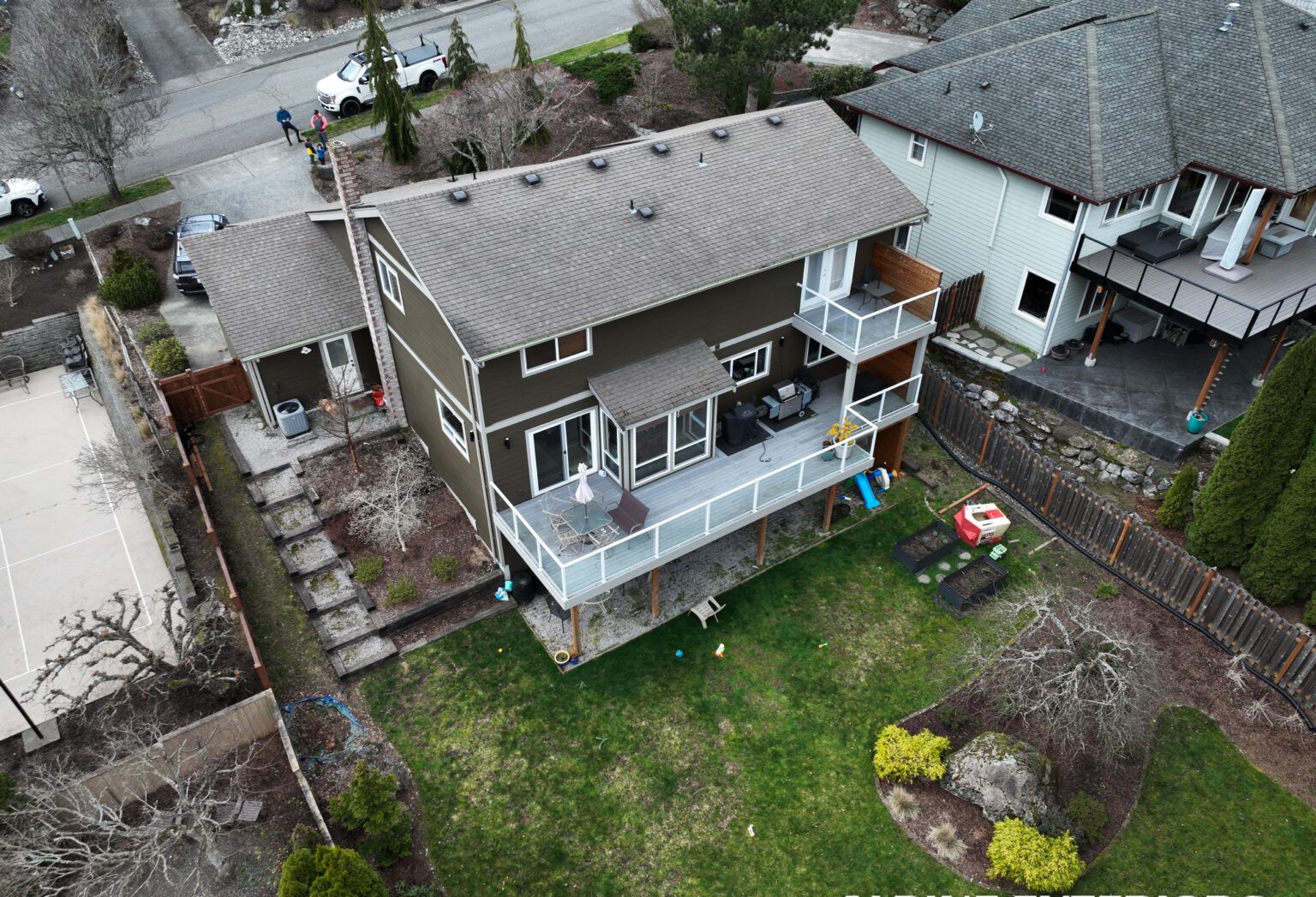
Engineered wood siding (wood strand products bonded with resin and treated with a borate-based preservative, factory-primed) has gotten genuinely better over the last decade and shows up a lot in newer Whatcom County construction and re-sides where budget matters but the owner still wants a wood look. It handles moisture better than old-style hardboard siding from the 1980s and 90s, which is worth saying because that older product's bad reputation still follows the category around unfairly.
Pros: lower material and install cost than fiber cement, lighter and easier to work with, accepts paint well, decent impact resistance, borate treatment resists fungal decay better than untreated wood.
Cons: it's still wood at its core, so edges and cut ends need to be sealed and primed properly at install or it will wick moisture; long-term track record in a climate this wet is shorter than fiber cement's; if a previous installer skipped caulking or flashing details, it's less forgiving of that neglect than fiber cement is.
A lot of Downtown Bellingham's character comes from original or well-matched wood siding — clapboard on the Victorians, shingle siding on the Craftsman bungalows. Western red cedar is genuinely well-suited to this climate when it's detailed and maintained correctly; it's naturally decay-resistant compared to other woods, and it's the historically accurate choice on older homes, which matters if you're trying to preserve resale value or satisfy a design review process.
Pros: unmatched authenticity on period homes, naturally resistant to decay and insects compared to non-cedar species, ages well when finished properly, can be repaired board-by-board rather than replaced wholesale.
Cons: highest maintenance of any option here — expect to repaint or restain on a real schedule, not an aspirational one, and expect to catch failed caulk joints and open end-grain before they turn into the rot we mentioned above. It's also the most expensive option up front and the most dependent on correct back-priming and proper rain-screen detailing behind it. On a home with heavy tree cover or a shaded, damp wall, plain cedar left unmaintained is the fastest path to the moss and soft-wood problems we get called out for constantly.
Vinyl is common on more budget-conscious builds and some of the newer infill around Whatcom County, and it's not a bad product — modern vinyl is thicker and better engineered than what was on the market twenty years ago. It never needs painting, it's inexpensive relative to the alternatives, and it doesn't rot because there's nothing organic in it for moisture to attack.
Pros: lowest material cost, no repainting, doesn't rot or feed fungal growth, wide color and profile selection, low-maintenance in sheltered locations.
Cons: this is where we're honest about where it falls short here. Vinyl relies on lapped panels rather than a sealed surface, and on homes taking direct wind-driven rain off Bellingham Bay or the Strait, wind can drive water behind panels at the laps in ways that don't happen as much on a sheltered inland lot. It can also become brittle over time in the foothills' freeze-thaw swings, and it doesn't hold up to impact as well as fiber cement. It's a legitimate option on a sheltered south- or east-facing wall away from the water; we'd think twice about it as the primary siding on an exposed waterfront or bluff-facing elevation.
A few choices come up in Whatcom County that we'd steer most homeowners away from, or at least flag hard before you commit:
It depends on your specific block and whether your home falls under a historic preservation guideline or neighborhood design expectation. Some areas care primarily about the finished look — matching lap width, trim detail, and paint scheme — rather than mandating real wood specifically, which means fiber cement profiles that mimic traditional cedar clapboard or shingle patterns are often acceptable. If your home is in a formally designated historic area, check with the City of Bellingham's planning department before finalizing a material, since requirements vary by property.
If your project is a significant re-side or part of a larger renovation rather than a like-for-like patch, the Washington State Energy Code's prescriptive insulation requirements can come into play, often pushing toward continuous insulation or an equivalent performance path. That affects wall thickness, how furring strips and drainage gaps get built out, and which siding attachment methods work cleanly with the added insulation layer. It's worth discussing scope with your contractor early, since it changes the framing-out details more than the siding choice itself.
More than people expect. On tear-offs of older downtown homes, we regularly find that the siding material held up fine and the failure point was underneath it — a missing weather barrier, unflashed window, or a caulk joint that failed years earlier and let water track down into the wall cavity. Choosing a better material helps, but correct flashing, a drainage gap, and prompt repair of small failures (a cracked caulk line, a loose board) matter just as much for keeping wood rot out of a Bellingham home.
Not usually on its own. Moss and algae staining is common on shaded and north-facing walls throughout Whatcom County and can often be managed with periodic cleaning and, where budget allows, a moss-resistant or algae-resistant finish rather than a full re-side. Re-siding makes more sense when the moss is a symptom of a deeper problem — soft wood underneath, failed caulk, or siding that's held moisture long enough to start decaying — which is worth having inspected before you decide.
Every home in Downtown Bellingham faces this climate a little differently depending on its exposure, tree cover, and age, which is why we look at the actual wall assembly before recommending a material rather than pushing one product for every job. Alpine Exteriors is a licensed Washington siding contractor (WA license ALPINI751OW) serving Bellingham, Ferndale, Lynden, Blaine, Birch Bay, Sudden Valley, and the islands, and we're glad to walk your property, point out any rot or flashing issues we find, and lay out honest options for fiber cement, engineered wood, cedar, or vinyl based on what your home actually needs. Reach out to Alpine Exteriors for a straightforward assessment before you commit to a material.