
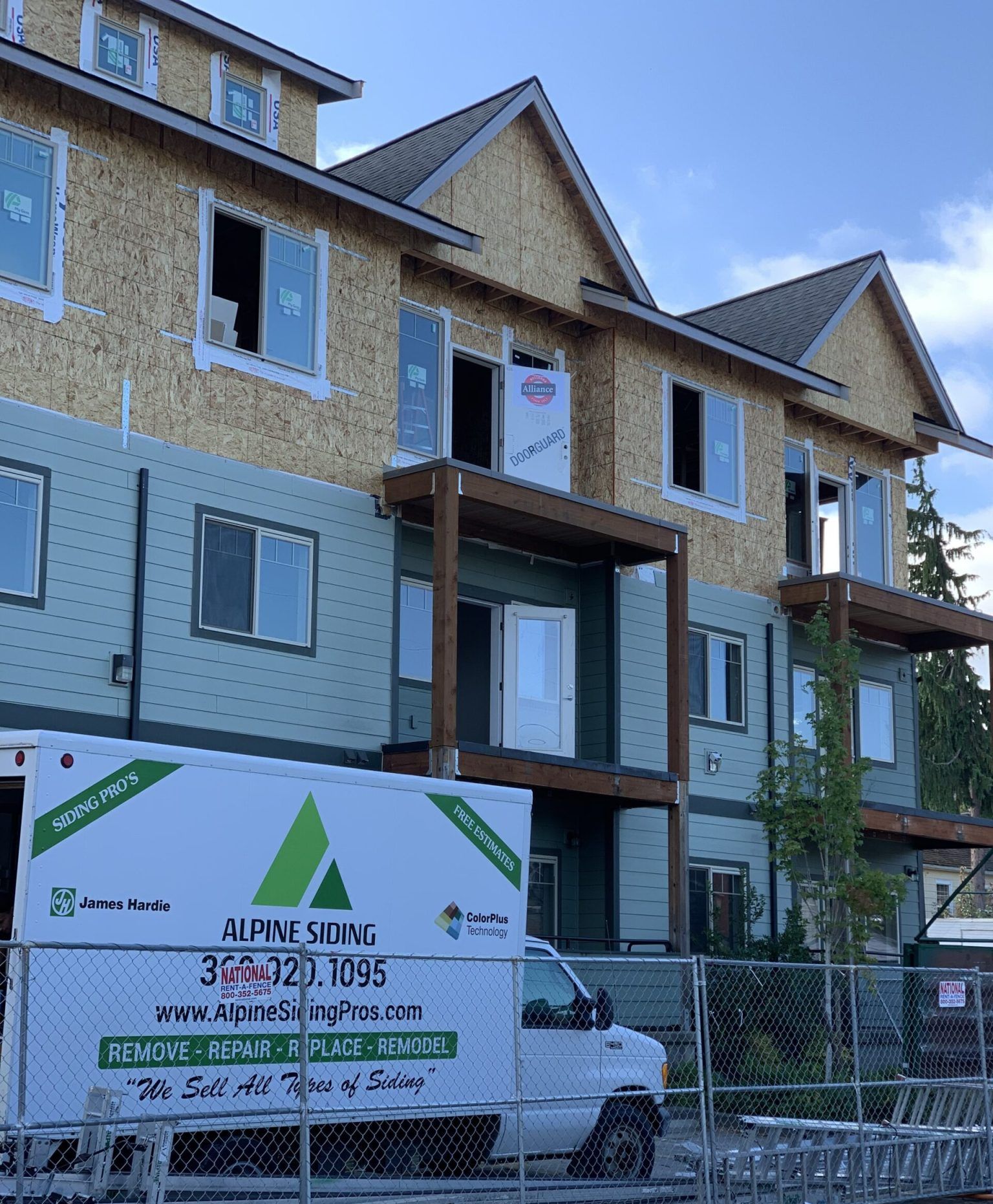
Happy Valley sits in that in-between zone south of downtown Bellingham where big second-growth conifers, older Craftsman-era homes, and newer infill construction all share the same hillside light. Choosing a siding color here is not the same exercise as picking a color from a fan deck in a sunny showroom. The color has to survive months of low, flat, diffused light; it has to hold up against moss and algae that thrive in shaded, damp side yards; and on the exposed south- and west-facing walls it has to resist wind-driven rain coming off Bellingham Bay and the Strait of Georgia. We put together this guide from what we actually see on Whatcom County homes — from Happy Valley and the Lettered Streets down through Fairhaven, out to Ferndale and Lynden, and up into the higher, colder pockets around Sudden Valley — not from a manufacturer's marketing brochure.
For most Happy Valley homes, the safest long-term picks are mid-tone warm grays, greige (gray-beige) blends, and deep, muted greens — colors that read as intentional against a backdrop of Douglas fir and cedar rather than colors that are trying to fight the landscape. If we had to name three starting points: a warm graphite gray for a modern look, a soft greige for a color that ages gracefully and hides both dirt and algae streaking, and a deep forest or hunter green for homes tucked under heavy tree cover where a paler color would show every water stain within two years. White and cream still work, but only with eyes open about the maintenance that comes with them here — more on that below. None of these are universal rules; a color that's right for a sun-exposed lot on a bluff above the bay may be wrong for a shaded lot backed up against a greenbelt three blocks away, and we'd rather walk your specific site with you than hand you a single "best" answer.
Whatcom County's climate narrows the field faster than most people expect. We evaluated every color option against five criteria that actually matter on the ground here, not against generic curb-appeal advice written for a different part of the country:
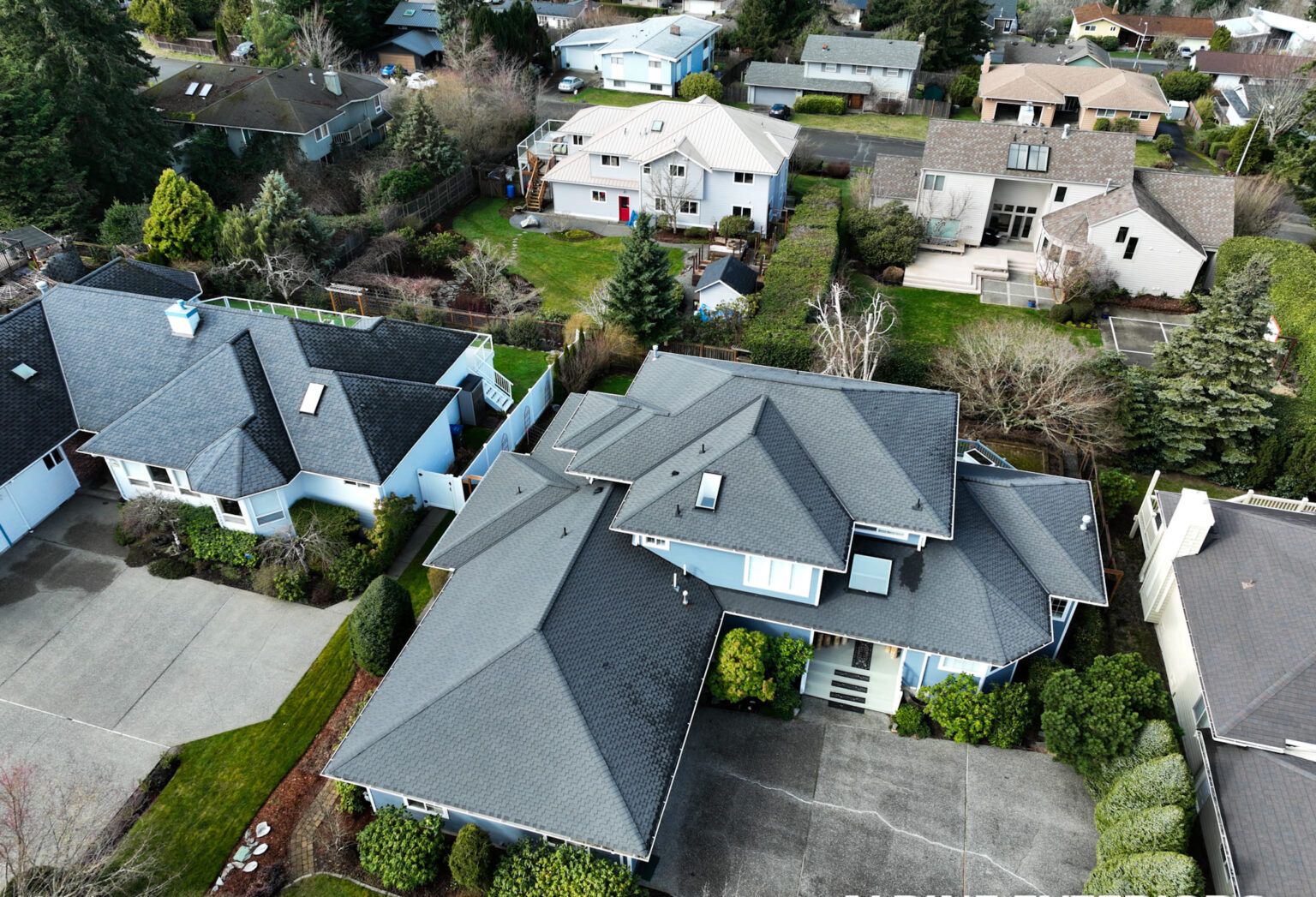
Deep charcoal and graphite grays have become one of the most requested colors we install, and there's a real reason for it: against a gray winter sky, gray siding doesn't fight the environment, and it pairs cleanly with black window frames and metal roofing, both popular here. The honest drawback is heat and fade behavior. A true charcoal on a west-facing wall that gets several hours of direct summer sun will run noticeably hotter than a mid-tone color, and over years that can mean slightly faster chalking or sheen loss on that exposure specifically, even with a quality factory finish. Charcoal also shows pollen, dust, and cobwebs more than a lighter color, which matters on homes tucked under conifers that drop a steady rain of needles and pollen in spring.
Greige — the gray-beige blend that's been popular in Pacific Northwest siding for close to a decade now — remains one of our most durable recommendations for a practical reason: it's forgiving. It hides water spotting, minor algae haze, and dust better than either a pure white or a pure dark gray, and it reads as neutral enough that it won't look dated the way a stark trend color might in ten years. The drawback is that "forgiving" can also mean "unremarkable" — on a lot with strong architectural bones, a flat greige can undersell the house. We usually pair it with a contrasting trim or a darker accent band to keep it from reading flat under overcast light, which is most days here.
On heavily wooded Happy Valley lots, or anywhere backed up to a greenbelt, a deep green does something no gray or white can: it makes the house look intentional rather than like a light-colored object dropped into a dark landscape. It also does real work hiding the moss and algae staining that inevitably develops on shaded walls, since the color family is close enough to the staining itself that streaking is far less visible than it would be on white or pale gray. The tradeoff is depth perception — from the street, a dark green home under heavy tree cover can visually recede and lose architectural detail unless trim, window casings, or a covered entry are called out in a contrasting lighter tone. It's also a color that a future buyer either loves or wants to repaint; that's worth knowing if resale in the next five years is part of your plan.
Classic, and still common on Craftsman and farmhouse-style homes throughout Bellingham and Ferndale, white siding brightens a lot that gets limited direct sun and photographs well against green landscaping. It is, honestly, the highest-maintenance choice for this specific climate. White and cream show algae and moss growth earliest and most visibly of any color family, particularly on north-facing walls and under roof overhangs where wind-driven rain can't naturally rinse the surface. Homeowners who choose white here should plan on a soft-wash cleaning cadence — we typically suggest checking shaded elevations annually — rather than treating it as a low-maintenance color the way it might be marketed elsewhere.
A nod to the bay without going full "nautical," muted blue-gray sits between charcoal and greige in terms of both heat absorption and moss visibility, and it works particularly well on homes with water glimpses toward Bellingham Bay, Birch Bay, or the islands. The honest limitation is that true blue-based colors can look flat and a little cold under the area's frequent flat overcast light — a blue-gray that looks rich on a sunny sample chip can read as dull gray-blue on a drizzly November afternoon, which is most afternoons. We recommend seeing a large sample board on the actual house, in actual weather, before committing.
For homes going for a natural, blended-into-the-trees look, a warm cedar or driftwood tone in fiber-cement plank or true cedar can look excellent tucked among Douglas firs. The tradeoff is that wood-tone finishes — especially real wood — need more attentive maintenance in this climate; real cedar left unsealed or unstained is a wood-rot risk given how much of the year the siding stays damp, and even a wood-look fiber-cement product in a lighter cedar tone will show algae streaking on horizontal battens faster than a solid darker color would.
| Color Family | Moss/Algae Visibility | Fade Risk (Sun-Exposed Wall) | Best Fit |
|---|---|---|---|
| Warm Graphite/Charcoal | Low | Moderate–Higher | Modern homes, open/sunnier lots |
| Greige/Taupe | Low | Low | Most lots; safest long-term pick |
| Deep Forest Green | Low | Moderate | Heavily wooded, shaded lots |
| Soft White/Cream | High | Low | Farmhouse style; owners okay with cleaning |
| Blue-Gray/Slate | Moderate | Moderate | Water-view lots |
| Cedar-Tone/Wood-Look | Moderate–High | Low–Moderate | Natural aesthetic, needs upkeep |
A few choices that work fine elsewhere are consistently a poor fit for Happy Valley and the surrounding county, and we'd rather say so directly than let a homeowner find out the hard way.
The color itself doesn't cause moss or algae growth — moisture, shade, and organic debris (needles, pollen, leaf litter) do that. But color affects how visible the growth is and how long it takes before it looks like a problem. Lighter colors, especially white and pale gray, show the earliest stages of algae staining far sooner than mid-tone or dark colors, simply because the contrast is higher. A shaded wall in a mid-tone gray or green can carry the same amount of biological growth as a white wall next to it and look noticeably cleaner for a longer stretch between washes.
No — the Washington State Energy Code governs things like wall and ceiling insulation R-values, air sealing, window performance, and overall building envelope efficiency, not exterior paint color. Siding color has no direct code implication. Where color does matter indirectly is comfort and long-term material performance: a dark color on a wall that already meets current code insulation and ventilation standards is not a concern, but on an older home being re-sided without an insulation upgrade, a very dark color can add some avoidable heat load worth discussing with your contractor.
Some communities in Whatcom County, including Sudden Valley, have design or architectural review guidelines that homeowners are expected to follow, and those guidelines often steer toward muted, earth-tone, or "natural" palettes rather than bright or high-contrast colors. Even in Bellingham neighborhoods without a formal HOA, it's worth checking your specific plat or covenant documents, and it's always worth a quick look at what colors are already established on your block — not because it's required, but because it affects how the finished home reads from the street. We're happy to help you check before you commit to a color.
This varies more by material, finish quality, and sun/shade exposure on a given wall than by color alone, so we're cautious about quoting a single number. In general, sun-exposed south and west walls will show fading before shaded north walls do, and shaded walls will show moss and algae staining before sun-exposed walls do — meaning most homes end up needing some attention on at least one elevation well before the whole house does. A quality factory-applied finish on fiber cement typically holds color better over time than field-applied paint on any material, which is one reason we lean toward factory-finished products for color-critical projects in this climate.
A color chip looks different in a showroom than it does on your actual wall, in actual Whatcom County weather, with your actual tree cover and sun exposure. Alpine Exteriors (WA contractor license ALPINI751OW) works on homes throughout Bellingham, Ferndale, Lynden, Blaine, Birch Bay, Sudden Valley, and the islands, and we're glad to bring large-format samples to your property, walk your specific lot's shade and wind exposure with you, and talk through how a color choice will actually age on your home rather than how it looks on a sample card. If you're planning a re-side in Happy Valley or anywhere else in the county, reach out to Alpine Exteriors and we'll help you land on a color you won't regret in five years.