
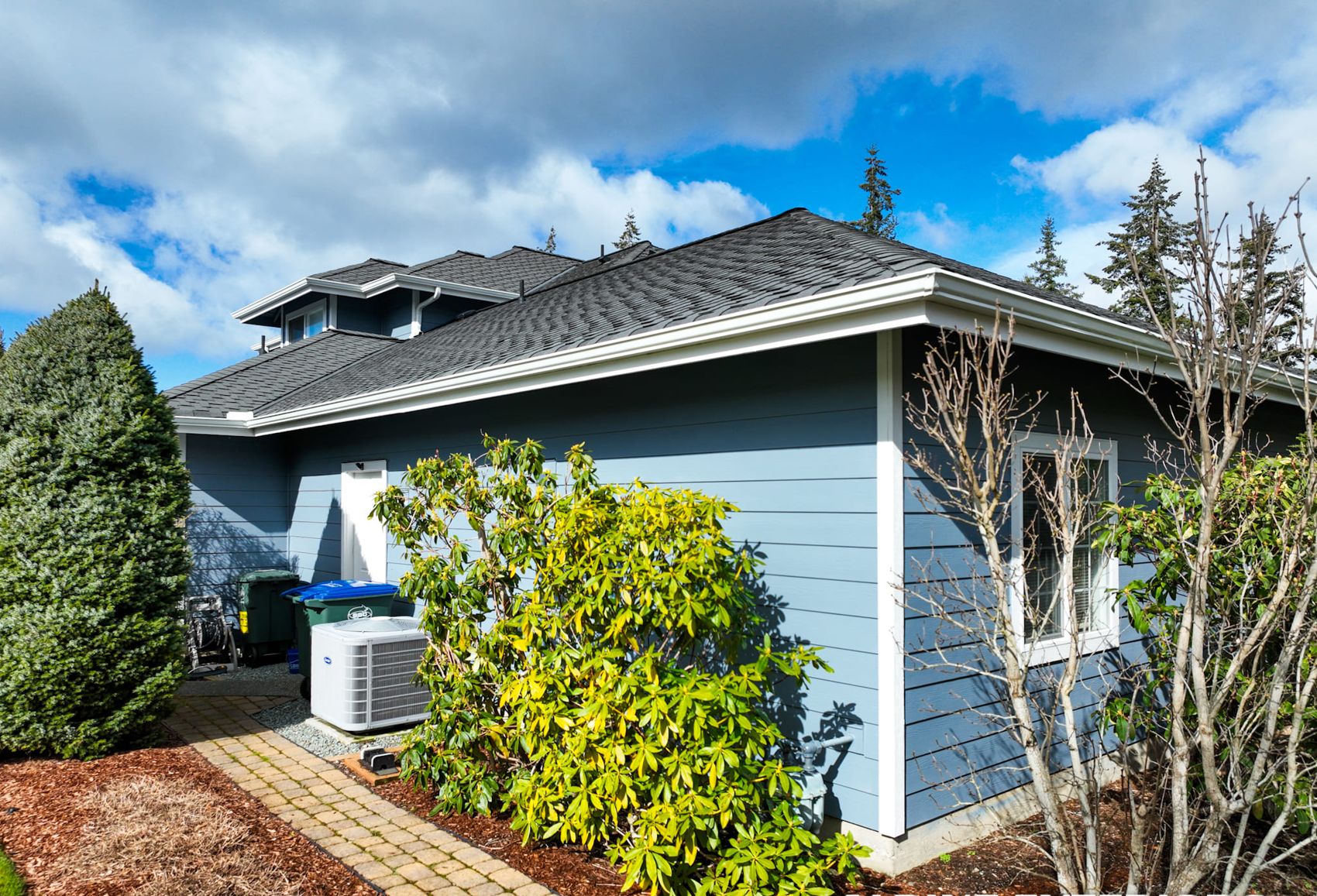
If you're pricing out siding for a home in Blaine, Birch Bay, or anywhere along Semiahmoo Bay, you've probably already noticed that quotes vary a lot from one contractor to the next. Some of that is normal bidding variation. Some of it is scope — one bid includes tear-off, rot repair, and a proper moisture barrier, and another quietly assumes your walls are in perfect shape underneath. This page walks through realistic cost ranges for this stretch of Whatcom County, what actually moves the number up or down, and how to read a quote so you're comparing apples to apples. As always, these are ranges, not quotes — every home is different, and the only way to get a real number is a site visit.
Siding costs in Blaine and Birch Bay tend to run a bit higher than the statewide average for a few reasons specific to this corner of Washington. Homes here sit close to open water — Semiahmoo Bay, Drayton Harbor, the Strait of Georgia — and take direct, wind-driven rain for much of the year. That exposure means more attention to flashing, house wrap, and water-shedding detail than a similar job might need forty miles inland, which adds labor time even when the material cost is the same. It also means a higher share of homes we open up have some degree of hidden wood rot at window sills, corner boards, or bottom plates, which isn't known until the old siding comes off.
| Cost Factor | Typical Low End | Typical High End |
|---|---|---|
| Vinyl siding, full re-side | Lower-cost option, straightforward walls | Rises with upgraded panel profiles or insulated backing |
| Fiber cement (plank or panel) | Mid-range starting point | Higher end for factory-primed/painted premium lines |
| Cedar or engineered wood siding | Mid-to-upper range | Highest end with custom stains and detailing |
| Tear-off and disposal of old siding | Modest add-on for single-layer removal | Significant add-on if multiple layers or asbestos-era product is present |
| Rot repair / sheathing replacement | Minor line item for isolated spots | Substantial add-on if framing or sheathing needs rebuilding |
| Trim, fascia, and flashing detail | Standard trim package | Higher with extensive window/door trim or custom corners |
| House wrap / moisture barrier upgrade | Code-minimum barrier | Higher-performance rainscreen or drainage wrap system |
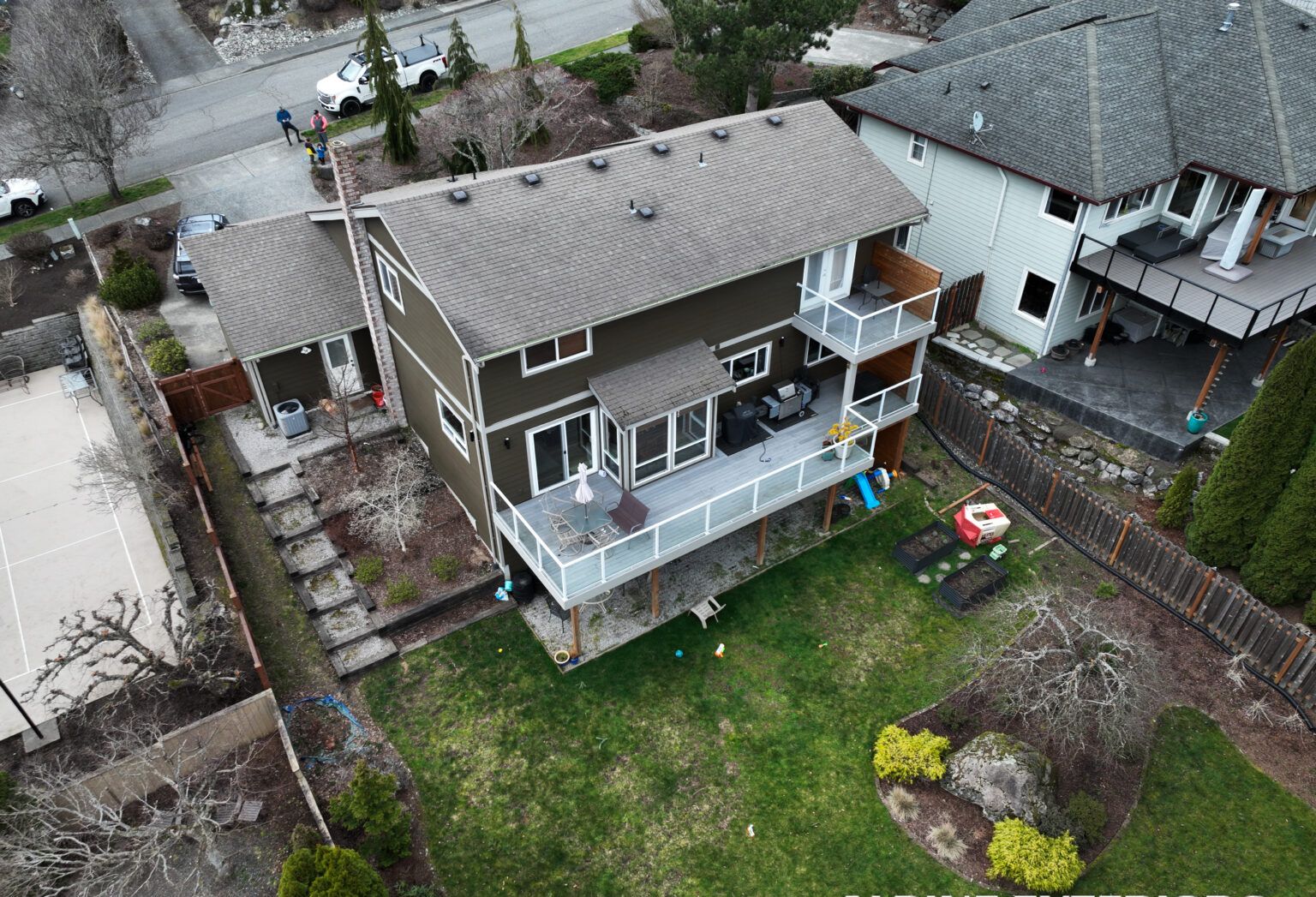
Two houses of the same square footage can land at very different totals once these factors stack up. A single-story rambler in Birch Bay with sound sheathing and easy access is a very different project from a two-story home on a bluff lot with decades-old siding hiding water damage behind it.
Beyond material choice, a handful of things push a bid up or down: the number of stories and how steep or complex the roofline is, how much window and door trim has to be cut and fitted, whether the crew can work off ladders and simple scaffolding or needs lift equipment for tall gables, and how much of the old wall assembly is salvageable versus needing to be rebuilt. Waterfront and view-lot homes around Birch Bay and Semiahmoo sometimes add access costs simply because of narrow lots, retaining walls, or limited staging space. Color and finish also matter — factory-finished fiber cement in a premium color line costs more than field-painted trim, and custom cedar stains add labor. Permit fees, which are typically required for a full re-side in Whatcom County jurisdictions, are a smaller but real line item that some bare-bones quotes leave out entirely.
A complete siding quote should spell out the material and profile by name (not just "vinyl" or "Hardie-style"), the scope of tear-off and disposal, whether damaged sheathing or framing repair is included or billed separately as discovered, the type of house wrap or moisture barrier being installed, flashing and trim details around windows, doors, and rooflines, the fastening schedule, cleanup and job-site protection, and both material and labor warranty terms. It should also include the contractor's license number — ours is ALPINI751OW — and proof of active liability insurance. If a quote is missing several of these, it's worth asking why before you compare it on price alone.
The most useful thing you can do when comparing bids is line them up by scope, not just by bottom-line number. A quote that's a few thousand dollars lower but doesn't include tear-off, doesn't upgrade the moisture barrier, or has a vague allowance for rot repair isn't actually cheaper — it just moves cost to a change order later. Ask each contractor to walk the exterior with you and point out where they expect to find rot or soft sheathing, since that's often the single biggest source of price variation between bids on older Whatcom County homes. Check that the license and insurance are current, ask how they handle unexpected damage once the old siding is off, and get a sense of their timeline, since a job that stalls partway through a wet stretch on the water can leave your home exposed longer than planned. At Alpine Exteriors, we try to flag likely rot areas during the initial walkthrough so the number we give is closer to the number you end up paying.
Many homeowners spread the cost of a full re-side through contractor-arranged financing, a home equity line, or a personal loan, and it's worth asking any contractor you're considering what financing partners they work with and what the terms actually are before signing anything. On the insurance side, standard homeowners policies generally don't cover the cost of replacing siding that's simply worn out, faded, or slowly failing from years of coastal moisture exposure — that's considered maintenance, not damage. Coverage is more likely to apply when siding failure can be tied to a specific covered event, such as wind damage during a storm. If you suspect storm damage, document it with photos as soon as it's safe to do so and contact your insurer before any repair work begins, since starting work first can complicate a claim. We're happy to provide a written assessment of damage for insurance purposes, but we don't guarantee what any particular policy will or won't cover — that's between you and your carrier.
Homes directly exposed to Semiahmoo Bay, Drayton Harbor, or the Strait take more direct wind-driven rain, which means more careful flashing and water-management detail, and it's also more common to find wood rot or degraded sheathing underneath older siding once it comes off — both of which add labor and material beyond a straightforward re-side.
It varies widely depending on the home's age, how well the old siding was maintained, and how much direct rain exposure the walls have had over the years; a good contractor will give you a realistic range for possible rot repair up front and confirm the actual scope once the old siding is removed, rather than guessing at a fixed number before anyone has looked underneath.
Yes, in some cases. When a project involves removing siding down to the sheathing, the Washington State Energy Code can require that the wall assembly meet current insulation and air-sealing standards, which may mean adding or upgrading insulation, house wrap, or a rainscreen gap behind the new siding — a legitimate cost driver that a code-aware contractor should flag during the quote, not after the walls are already open.
Both have a place here: vinyl generally costs less up front and holds up reasonably well against coastal moisture when installed with proper drainage detail, while fiber cement costs more initially but tends to resist moss, algae staining, and impact better over time, which some homeowners value enough to offset the higher starting price — the right choice depends on your budget, how long you plan to stay in the home, and how much maintenance you want to take on.
Ranges are a starting point, not a quote. If you'd like an on-site assessment for a home in Blaine, Birch Bay, Bellingham, Ferndale, Lynden, Sudden Valley, or the islands, Alpine Exteriors (WA contractor license ALPINI751OW) can walk the exterior with you, point out likely problem areas, and put together a written scope and price specific to your house.