
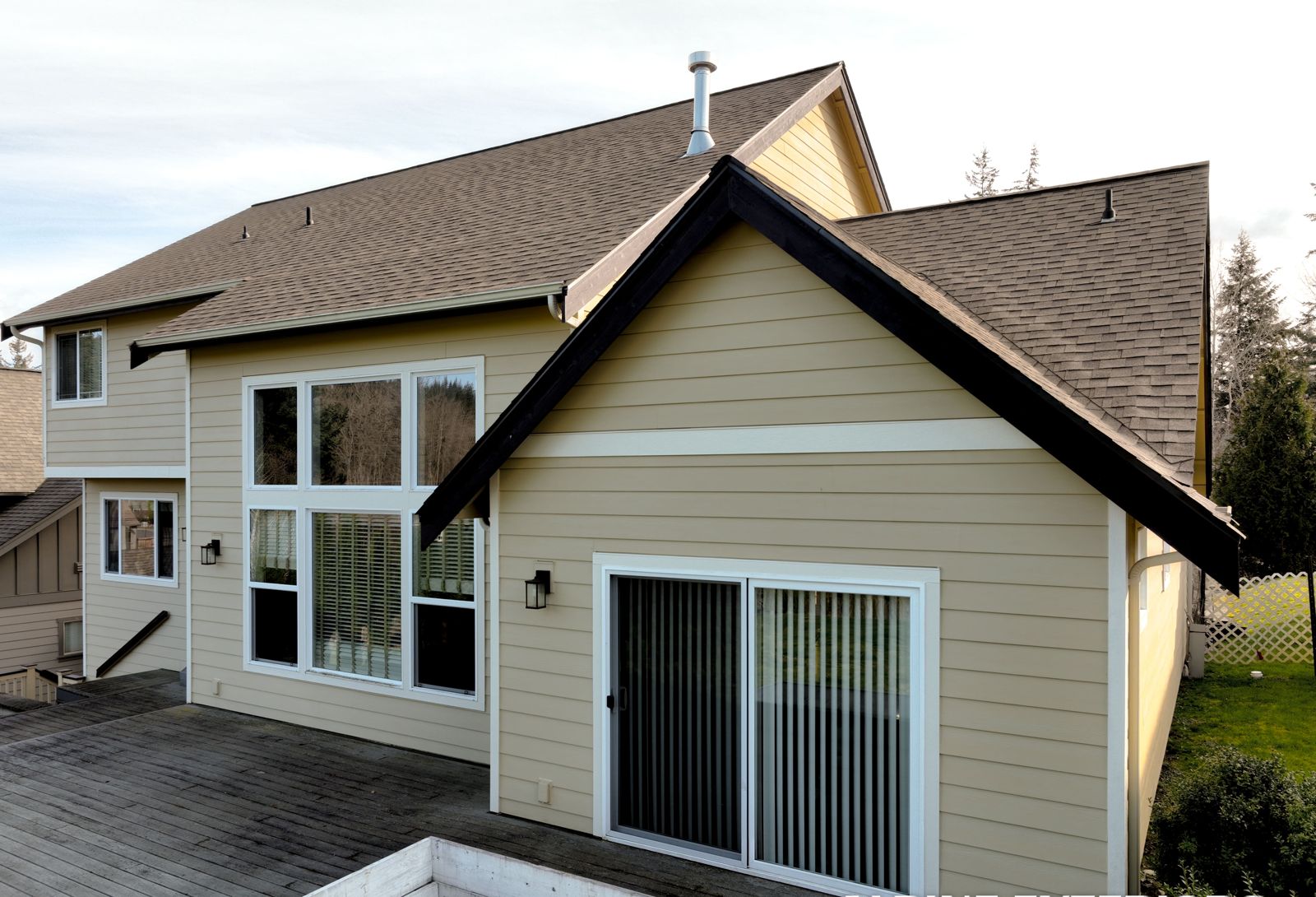
Wavy or buckled lap siding usually shows up first as a subtle ripple you notice when afternoon light rakes across a wall at a low angle. Left alone, a barely visible undulation can turn into boards that cup, bow outward at the butt joints, or pull away from the sheathing enough to slip a fingertip behind them. On homes around Bellingham, Ferndale, and Lynden, we most often see this on south- and west-facing walls that take the brunt of sun and wind-driven weather, though shaded, damp north walls can show a related version of the same problem.
There are really two patterns worth telling apart. A smooth, even waviness along a run of siding, often near the ends of boards or at nail lines, is usually a fastening or expansion issue. Localized buckling — a cupped or split section, darkened or soft wood at a seam, paint blistering in a stripe near a board's bottom edge, or a musty smell near an exterior wall inside the house — points toward trapped moisture instead, and deserves a closer look sooner rather than later.
Other clues worth checking: nail heads backed out into "smiley" depressions, cracked and separated caulk lines at seams, and gaps opening at outside corners or window trim. None of these are dramatic alone, but together they tell you whether you're looking at a cosmetic nuisance or the early stage of something happening behind the siding.
Whatcom County's climate is hard on lap siding in a few specific ways. The biggest is simply how much rain the siding sees over a year — not intense downpours so much as long stretches of steady, low-intensity rain that keep wood and fiber cement damp for days at a stretch. Lap siding is built to shed water, not to stay wet indefinitely, and prolonged dampness is what drives both moisture-related buckling and the wood rot that often comes with it.
Wind is the second factor, and here it's a coastal issue rather than a storm issue. Homes closer to Bellingham Bay, Birch Bay, and Blaine take wind-driven rain directly off the water, working up under lap edges and behind aging caulk in a way vertical rain doesn't. This isn't the hurricane-driven wind load you'd design for in the Southeast — there's no storm-surge or high-wind building-code trigger here — but the steady, moisture-carrying wind off the Strait of Georgia and the Salish Sea is a real, ongoing stressor on siding near the water.
Moss and algae don't cause buckling on their own, but a shaded wall with a moss colony holds water against the siding far longer than a clean, sun-exposed wall would, slowing drying and speeding up both paint failure and rot in wood-based products. We see this most on north walls under overhangs and on homes tucked into tree cover around Sudden Valley and the county's more wooded pockets.
At higher elevations toward the foothills, freeze-thaw cycling adds another layer: water already trapped behind or inside a piece of siding can freeze on a cold night and expand, working fasteners loose and stressing seams already weakened by moisture. It's not the dramatic freeze-thaw damage of a harsher inland climate, but enough cold snaps hit the county each winter that a wall already holding moisture shows accelerated wear.
A fair number of buckling cases trace back to installation rather than weather at all. Lap siding, especially fiber cement and wood, needs room to expand and contract with temperature and humidity swings. Boards nailed too tightly, over-driven fasteners that crush the material, or siding installed without the manufacturer's specified gap at butt joints will buckle even on a dry, well-built wall. We also see this after energy retrofits: adding rigid exterior insulation to meet Washington State Energy Code continuous-insulation targets is good for a home's heating bill, but without a proper water-resistive barrier and drainage gap behind the new siding layer, it can trap moisture with nowhere to go, and buckling follows within a year or two.
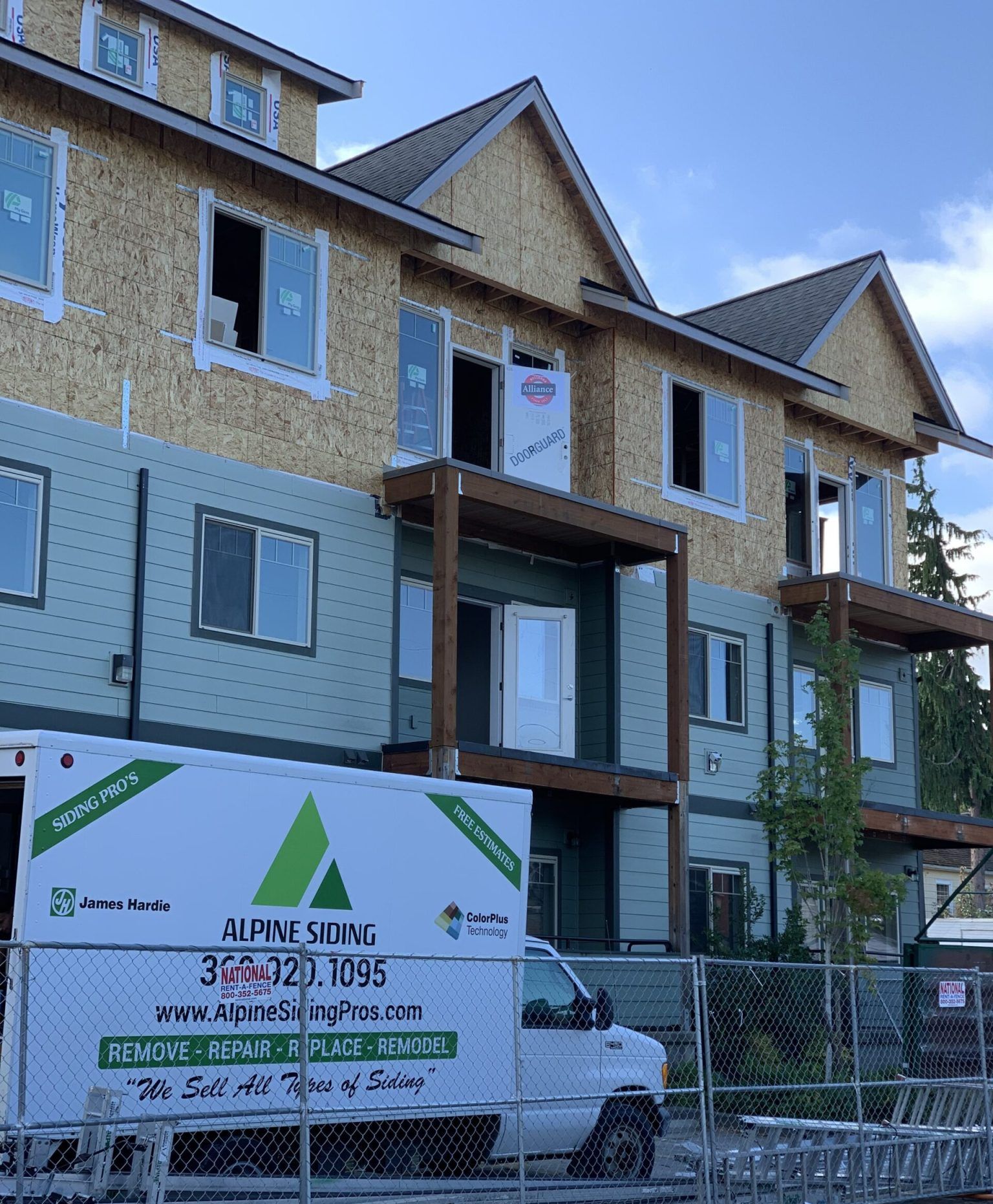
Not every wavy board is an emergency. Mild, even waviness across a wall with tight seams, no soft spots, and no interior signs of moisture is often a lower-priority item — worth noting for your maintenance list, not a same-week call. That pattern is common with fastener or expansion issues that haven't yet let water in behind the cladding.
Buckling paired with soft or spongy wood, dark staining, a musty smell, or a section visibly separated from the wall is a different matter. Whatcom County's rain pattern means that once water gets behind siding, it often doesn't get a long enough dry spell to fully evaporate before the next system arrives, keeping sheathing and framing damp for extended periods — exactly the condition wood rot and mold need. Problems that might sit dormant longer in a drier climate tend to progress faster here, so a section with clear moisture signs is worth having looked at within the next few weeks, not left for next year.
A simple middle-ground check: press gently on the buckled section and the surrounding boards. Firm resistance with no give is a good sign. Any softness or a hollow feel means there's likely already damage behind the surface, and it's time to get a professional look before the next wet season sets in.
Whether a wavy or buckled section calls for a spot repair or a broader re-siding job depends on how far the problem has spread and what's found once a board or two comes off. If the issue is isolated to a handful of boards, the fasteners are the culprit, and the sheathing underneath is dry and sound, a repair is usually right: remove the affected boards, correct the nailing or add the missing expansion clearance, and reinstall or replace just those pieces. A targeted repair like this might run from a few hundred dollars for a small section up to a couple thousand for a larger run, depending on material and trim work involved.
Replacement is the more honest recommendation when buckling shows up in multiple, unrelated areas of the house, when the sheathing or framing behind the siding has soft or rotted wood, or when the existing siding is old enough that matching material and color for a patch isn't practical. Full or partial re-siding is a bigger investment — costs vary widely with square footage, material choice, and how much sheathing repair is needed underneath — but it also lets you correct the underlying installation issue, a proper rainscreen gap, an upgraded house wrap, better flashing, instead of replacing boards that will just buckle again in a few years under the same conditions.
One honest drawback worth naming: repair is cheaper up front, but if the root cause is a systemic installation problem rather than a couple of bad boards, a patch can fail again and you end up paying for the fix twice. Part of a good inspection is being clear about which situation you're actually in before recommending either path.
Most of the buckling and waviness we see in Whatcom County traces back to a handful of preventable issues:
None of this eliminates the need for periodic maintenance — the county's weather is persistent enough that even well-installed siding benefits from an occasional look-over, especially heading into the wetter fall and winter months.
Temperature- and fastener-related waviness tends to be smooth and even across a run of boards, with the material still firm to the touch and no discoloration. Moisture damage usually shows up as localized buckling or cupping, often paired with soft spots, dark staining near seams, peeling paint in one area, or a musty smell nearby. If you're unsure which you're looking at, a quick press test — firm and solid versus soft or spongy — is a reasonable first check before calling for an inspection.
Often, yes, if the problem is limited to a few boards and the sheathing behind them is dry and sound. Correcting the fastening pattern, adding proper expansion clearance, and replacing just the affected pieces is a common, reasonable fix. Full replacement makes more sense when damage is widespread, the framing underneath has rot, or the same failure keeps recurring because of a systemic installation issue rather than a couple of bad boards.
Moss and algae don't directly warp siding, but they hold moisture against the surface far longer than a clean, dry wall would. That extended dampness accelerates paint failure and, on wood-based siding, contributes to the rot that often shows up alongside buckling. Washing shaded or north-facing walls periodically to keep moss from establishing is a simple, low-cost way to cut that risk.
It comes down to how long siding stays wet. In a drier climate, a rain event is usually followed by enough dry weather for siding and the wall assembly behind it to fully dry before the next one hits. Whatcom County's long, steady rain, wind-driven moisture off Bellingham Bay and the Strait, and periodic freeze-thaw cycling at higher elevations mean siding and sheathing often don't get that recovery window, so moisture problems tend to progress faster here than in a less persistently wet region.
If you're seeing waviness or buckling anywhere from Bellingham and Ferndale out to Lynden, Blaine, Birch Bay, Sudden Valley, or the islands, it's worth having someone look before another wet season adds to the problem. Alpine Exteriors is a licensed Washington contractor, license ALPINI751OW, serving Whatcom County, and we'll tell you honestly whether you're looking at a straightforward repair or something that calls for a broader fix — no pushing the more expensive option when a smaller one will genuinely hold up. Reach out to schedule a walk-through and get a clear, written assessment.