
If a windstorm or a stretch of hard, sideways rain has just moved through the Roosevelt neighborhood, the damage worth worrying about is rarely a dramatic hole in the wall. It's almost always water finding a way behind a lifted panel, a pulled-loose corner board, or a gap around a window that opened up under wind pressure — and in a climate that stays wet for months at a time, that small entry point turns into rot and mold long before anyone notices a problem from the curb.
Roosevelt's mix of older post-war homes and newer infill sits close enough to Bellingham Bay that wind-driven rain is a real factor, and far enough into the tree canopy along Whatcom Falls Park and Silver Beach that shade-driven moss and algae are a constant background condition on siding, whether or not a storm ever hits. Sorting out which is which — genuine storm damage versus ordinary regional wear — matters a lot once an insurance claim is involved.
Whatcom County doesn't get hurricanes, and it's worth saying plainly because a lot of generic siding advice online is written for places that do. What comes through Bellingham instead is a series of Pacific frontal systems: sustained wind in the 30-50 mph range during the strongest events, paired with rain that can fall steadily for days rather than dumping all at once. Individually, neither the wind nor the rain in a typical Whatcom County storm is extreme. The damage comes from the combination, repeated over and over across a wet season that often runs from October through April.
Wind loosens fasteners and lap joints over time, especially on the west- and southwest-facing walls of a house that catch the brunt of storms moving in off the water. Once a panel is even slightly proud of the wall, wind-driven rain gets behind it during the next storm, and from there gravity does the rest — water tracks down the housewrap or building paper, pools at window heads and sill flashing, and soaks into the sheathing and framing where it can't dry out between storms because the next one is only a few days off. This is different from a single catastrophic wind event; it's cumulative, and that's exactly why so much of it goes unnoticed until a homeowner is doing something unrelated, like replacing a light fixture, and finds soft, black wood inside the wall.
Three things set Whatcom County apart from the generic storm-damage advice you'll find elsewhere, and all three show up in Roosevelt specifically.
Persistent low-grade moisture, not intense short-term rainfall. Bellingham's marine west coast climate means a lot of rain days rather than a few intense storms. Siding here rarely fails from one event; it fails from wood and fastener systems that never get a real chance to dry between fall and spring. Wood rot is the predictable end result on any home where trim, fascia, or fiber-cement siding has a compromised joint, and it's frequently mistaken for storm damage when in fact the storm just exposed a weak point that had been building for a season or two.
Wind-driven rain off the Bay and the Strait. Roosevelt sits close enough to Bellingham Bay, and in the sightline of weather funneling down the Strait of Georgia and the Strait of Juan de Fuca, that wind direction matters as much as wind speed. A west or southwest gust pushes rain almost horizontally into lap siding, J-channel, and window flashing on that exposure — surfaces that would stay comfortably dry in a straight-down rain. Homes on the west side of a lot, or with less tree cover breaking the wind off the water, take more of this than homes tucked into the Roosevelt canopy.
Freeze-thaw in the foothills, not on the flats. Roosevelt itself rarely sees hard freezes, but homeowners with property extending toward Sudden Valley or the Lynden foothills deal with a different mechanism: water that's already worked into a seam or crack freezes, expands, and widens the gap, then thaws and lets more water in on the next cycle. It's a slower, more mechanical form of damage than wind, and it tends to show up as cracking and separation rather than the softening you see from straight rot.
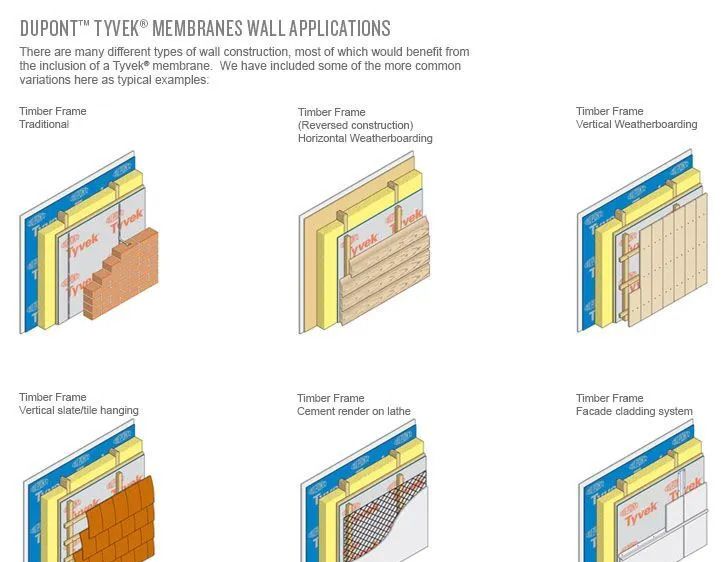
None of this is hurricane-scale wind or storm-surge flooding, and it's worth resisting any repair recommendation built around that kind of risk. What Whatcom County siding actually needs to resist is chronic dampness, moss, and wind-driven water intrusion — which changes what "storm damage" repair should look like, and it's also why the Washington State Energy Code's requirements for continuous weather-resistive barriers and proper flashing details matter more here than in a drier climate. A re-side done without attention to housewrap lapping and window flashing sequencing will let the same failure happen again within a few wet seasons, regardless of how new the siding looks.
The first 48 hours after a storm are mostly about documentation, not repair. Walk the exterior — safely, from the ground, without climbing on wet roofs or ladders in gusty conditions — and photograph anything that looks lifted, cracked, missing, or newly stained. Note the date and, if you can, the storm event itself, since insurers will often want to tie damage to a specific weather occurrence rather than accept it as general deterioration.
Press gently on any siding that looks discolored or swollen. A spongy or soft spot almost always means moisture has already reached the wood behind the surface material, and it won't resolve on its own — covering it up without addressing the source just traps the problem. Pay particular attention to corners, the bottom courses near grade, areas under downspout discharge points, and anywhere trim meets a window or door, since those are the seams that fail first under wind-driven rain.
Before calling your insurance company, understand how the claim is likely to be evaluated. Wind and storm-related damage from a discrete weather event is typically covered under a standard homeowners policy. Gradual deterioration — moss growth, long-term wood rot from a chronic leak, or wear that built up over several seasons without a specific storm event — is usually treated as a maintenance issue and excluded. This is the single most common point of friction in siding claims in this region: an adjuster sees moss staining and rot at the same site as storm damage and may attribute the whole thing to lack of maintenance rather than the wind event that actually opened the gap. Clear, dated photos from before and after a storm, and a written assessment from a contractor who can distinguish acute wind damage from ordinary regional wear, make a real difference in how that claim gets resolved.
Alpine Exteriors, WA contractor license ALPINI751OW, does these assessments for homeowners around Bellingham, Ferndale, Lynden, and the Roosevelt area regularly enough to know what an adjuster is going to ask for and what actually needs replacing versus what can be repaired in place. A second opinion before signing off on a claim, or before agreeing to a full re-side that may not be necessary, is a reasonable thing to ask for — and a contractor with no stake in whether the insurer approves more or less work is generally the more useful opinion to get.
Often yes, if the damage can be tied to a specific wind or storm event — lifted panels, cracked boards, or trim torn loose during a documented windstorm are the kind of acute damage most standard policies cover. What's frequently denied is damage that an adjuster reads as gradual: long-standing rot, moss-driven deterioration, or wear that accumulated over multiple seasons without a clear triggering event. The distinction matters, and having dated photos and a contractor's written assessment tying the damage to a specific storm improves the odds of a fair outcome.
Storm damage tends to be localized and mechanical — a section of siding physically displaced, cracked, or separated on the wind-exposed side of the house, often appearing suddenly after a specific weather event. Moss and algae growth, by contrast, builds gradually across shaded or north-facing walls regardless of storms and is considered routine maintenance in this climate rather than damage. The complication is that a storm can expose or worsen an area that already had moss-related rot underneath it, which is why both should be inspected together rather than assumed to be one or the other.
Faster than most homeowners expect, precisely because the region rarely gets a long enough dry stretch for trapped moisture to fully evaporate. A gap that lets water in during one storm may not dry out again before the next system arrives a few days later, so what would be a minor, self-resolving issue in a drier climate can become active wood rot within a single wet season here. That's the core reason a quick post-storm inspection is worth doing rather than waiting until spring to check for damage.
Fiber-cement and properly installed vinyl both perform reasonably well here when the underlying weather-resistive barrier and flashing details are done correctly, which matters more than the surface material itself in this climate. Wood siding requires more diligent maintenance to resist rot given the persistent dampness and is a legitimate choice only for homeowners willing to keep up with painting and sealing on a strict schedule. Whatever material is chosen, installation quality — lapping the housewrap correctly, flashing window and door openings properly, and meeting the Washington State Energy Code's continuity requirements for the weather barrier — has more influence on long-term performance than the brand or style of siding.
A storm that lifts a few panels of siding in Roosevelt doesn't necessarily mean a full re-side, and it doesn't always mean an insurance claim will go through cleanly either — but guessing at either one usually costs more than getting a straight answer first. Alpine Exteriors serves Bellingham, Ferndale, Lynden, Blaine, Birch Bay, Sudden Valley, and the surrounding islands, and can walk your property, document what's actually storm-related versus ordinary regional wear, and give you a written scope you can hand to your insurer or simply use to plan the repair. If a recent storm has you wondering what's really going on behind your siding, reach out to Alpine Exteriors for an inspection before water damage has a chance to spread any further.