
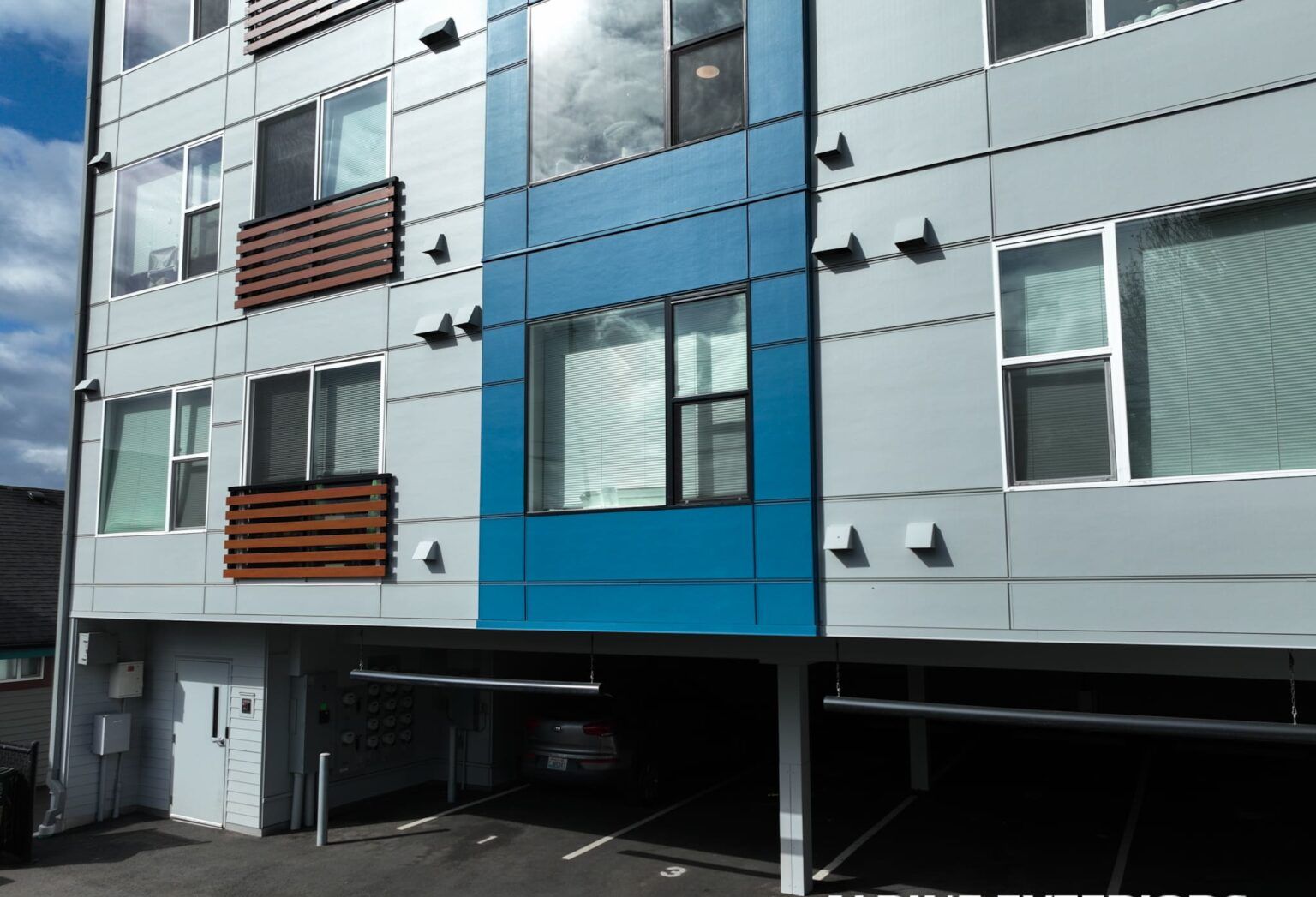
No — Whatcom County isn't a hurricane wind zone, but every home here, including the mid-century ramblers and hillside daylight basements scattered through Happy Valley, still has to meet the wind pressure and installation requirements written into the Washington State Building Code, which adopts the International Residential Code (IRC) with state amendments. In practice that means the siding job isn't just a color and material choice — the product has to carry testing that covers our wind exposure, and it has to go on using the fastening pattern the manufacturer and the code both require.
Washington doesn't run a state product-approval database the way some hurricane-prone states do. Instead, siding compliance here rides on manufacturer testing and published installation instructions, which the IRC treats as the approved method as long as the product is backed by recognized testing — ASTM D3679 for vinyl siding, ASTM D7254 and related standards for engineered wood siding, and ICC-ES evaluation reports for fiber cement products. Whatever the material, the manufacturer's instruction sheet becomes the enforceable installation standard on your job, and it's the document a Whatcom County or City of Bellingham inspector will actually reference.
At inspection, a few things get checked every time, regardless of which siding brand goes up:
None of this involves filling out anything like a wind mitigation form — that's a hurricane-state concept. What Whatcom County inspectors want to see is documentation: the product's listing or evaluation report on file, and the installation matching that document, course by course.
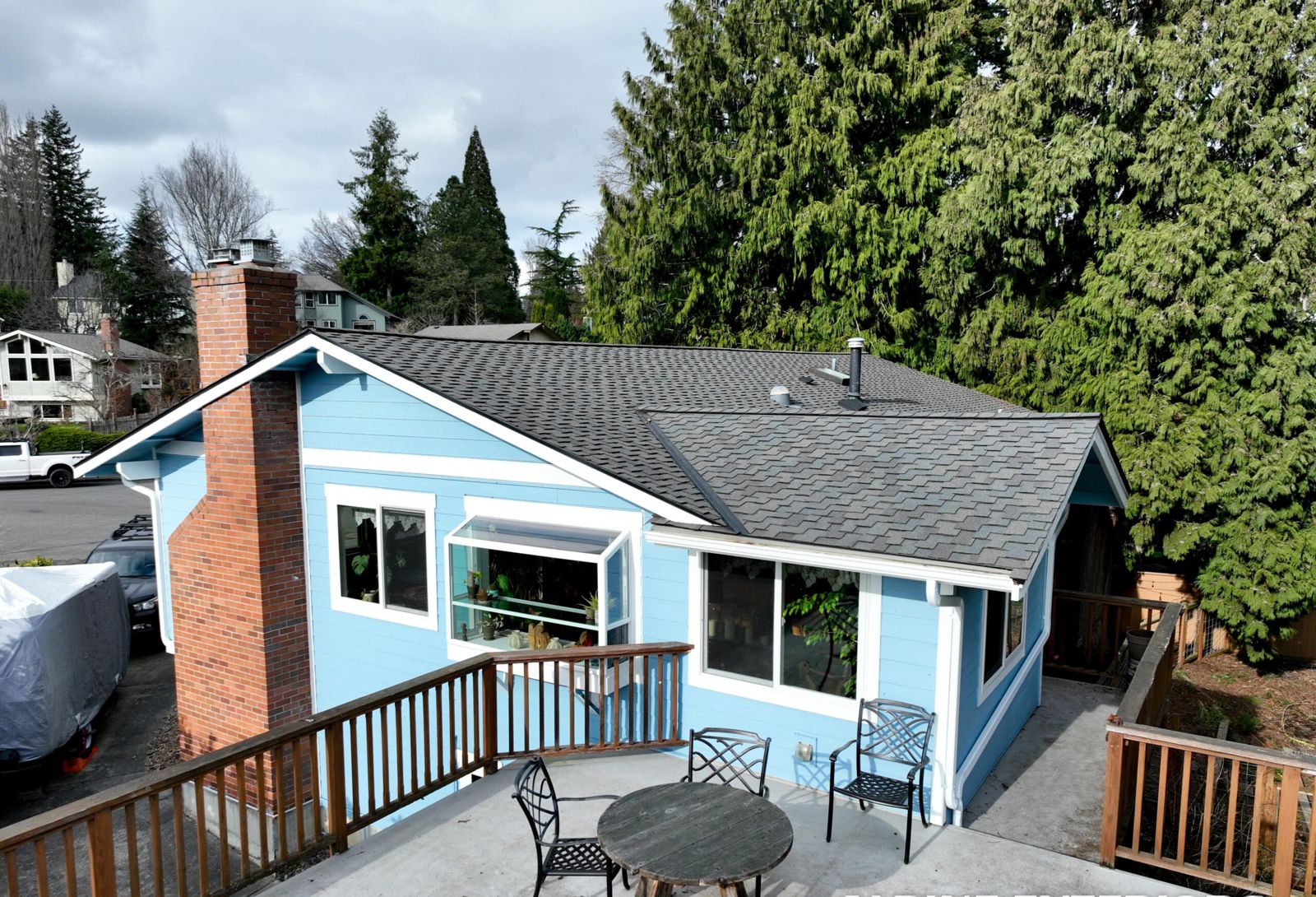
The wind loads that matter here aren't hurricane gusts — they're the sustained fall and winter storm systems that push moisture-laden air off Bellingham Bay and the Strait of Georgia and drive rain sideways into west- and south-facing walls for hours or days at a stretch. That's a different stress on a siding assembly than a short, violent event: it's less about a single fastener failure and more about whether water finds a gap and sits there. Happy Valley's tree canopy and hillside lots add a related problem — shaded, slow-drying walls grow moss and algae faster than open, sunny elevations, and homes tucked under mature trees often show green streaking on north walls within a few years of a re-side if the siding profile doesn't shed water and drain properly.
Trapped moisture behind older siding is the quieter risk. A lot of Happy Valley's housing stock predates current code, and when we tear off original siding on those homes we regularly find sheathing rot around old, poorly flashed window trim or at butt joints that were never sealed. Re-siding is usually the first time in decades that wall is opened up and actually checked against current wind and moisture standards, which is exactly why the code treats it as a full inspection trigger rather than a cosmetic swap.
Elevation matters too, even within a few miles. Happy Valley itself sits at a lower, somewhat more sheltered elevation than neighborhoods like Sudden Valley up in the foothills, where freeze-thaw cycling is more pronounced and where any water that does get behind siding has more opportunity to freeze, expand, and pry joints apart over a winter. A Happy Valley home won't see freeze-thaw as often, but it gets the same storm systems and the same wind-driven rain, just with a bit more shelter from surrounding hills and tree cover.
Start with the permit — don't let anyone talk you into skipping it because "it's just siding." A permitted job means the fastening schedule, the weather barrier, and the finished wall get checked by someone with no financial stake in cutting corners, and it means you have a paper trail if a wind or water problem shows up later and you need to show the work was done to code. Ask whoever installs your siding which manufacturer testing backs the product going on your walls, and keep that documentation with your other home records — it matters for warranty claims and can matter at resale.
Budget for the possibility of hidden damage. On any tear-off of older siding in this area, there's a real chance of finding soft or rotted sheathing that needs to be replaced before new siding goes on, and that's not something an honest contractor can quote precisely until the old siding is off the wall. It's a genuine added cost, not an upsell, and it's better to plan for it than be surprised by it. It's also worth knowing that properly wind- and moisture-resistant installation — full fastener counts, correctly lapped house wrap, sealed joints — takes more labor and material than a bare-minimum install, so a quote that's noticeably cheaper than others may be skipping steps that only show up as a problem two winters later.
Finally, think about the wall assembly, not just the siding face. If you're re-siding anyway, it's usually a modest incremental cost to add or upgrade the water-resistive barrier and bring the wall closer to current Washington State Energy Code performance, and it's far cheaper to do that while the wall is already open than to come back and do it separately later. Alpine Exteriors walks Whatcom County homeowners through this decision on every estimate, because the siding material is only half of what determines how the wall performs in a wet, windy winter.
In almost all cases, yes. Re-siding is treated as work that affects the building envelope, so it triggers a permit and inspection under the Washington State Building Code, and the inspection covers both the siding installation and, where applicable, energy code items like the water-resistive barrier and insulation. A licensed contractor pulling the permit on your behalf is the norm and keeps the paper trail clean if you sell the home later.
Both vinyl and fiber cement siding sold for use in Washington carry testing that covers a range of wind exposures, and either can be installed to meet code here — Whatcom County isn't asking for hurricane-rated products. The real differentiator is moisture and impact performance in our wet climate: fiber cement tends to hold paint and resist moss growth differently than vinyl, and it costs more upfront, while vinyl is lighter and less expensive but can show more visible movement in temperature swings if it isn't fastened correctly. Neither is a wrong answer purely on wind grounds.
Soft spots when you press on the wall, dark staining or bubbling paint near the bottom of the siding or around window trim, and a musty smell in an adjacent interior wall are the common signs. By the time these show up, the sheathing behind the siding has usually been wet for a while, which is why catching a failed joint or missing flashing early — before a full re-side is even due — is worth a look if your home is more than fifteen or twenty years old.
There's no fixed number, but the incremental cost is usually modest relative to the total siding job — more fasteners, better-lapped house wrap, and careful flashing detail add labor time more than material cost. Skipping tear-off and hidden rot repair, if it's needed, is the bigger cost swing on most Whatcom County re-sides, and that's something no honest contractor can price until the old siding comes off.
If you're planning a re-side in Happy Valley, Bellingham, or anywhere else in Whatcom County, Alpine Exteriors can walk your property, check the current wall assembly, and put together a plan that meets Washington State Building Code and Washington State Energy Code requirements from the fasteners out. Alpine Exteriors holds Washington contractor license ALPINI751OW and pulls permits on every re-side, so the inspection process is handled as part of the job, not left for you to navigate alone. Reach out for a walkthrough and an honest look at what your walls need before winter's storm season arrives.