
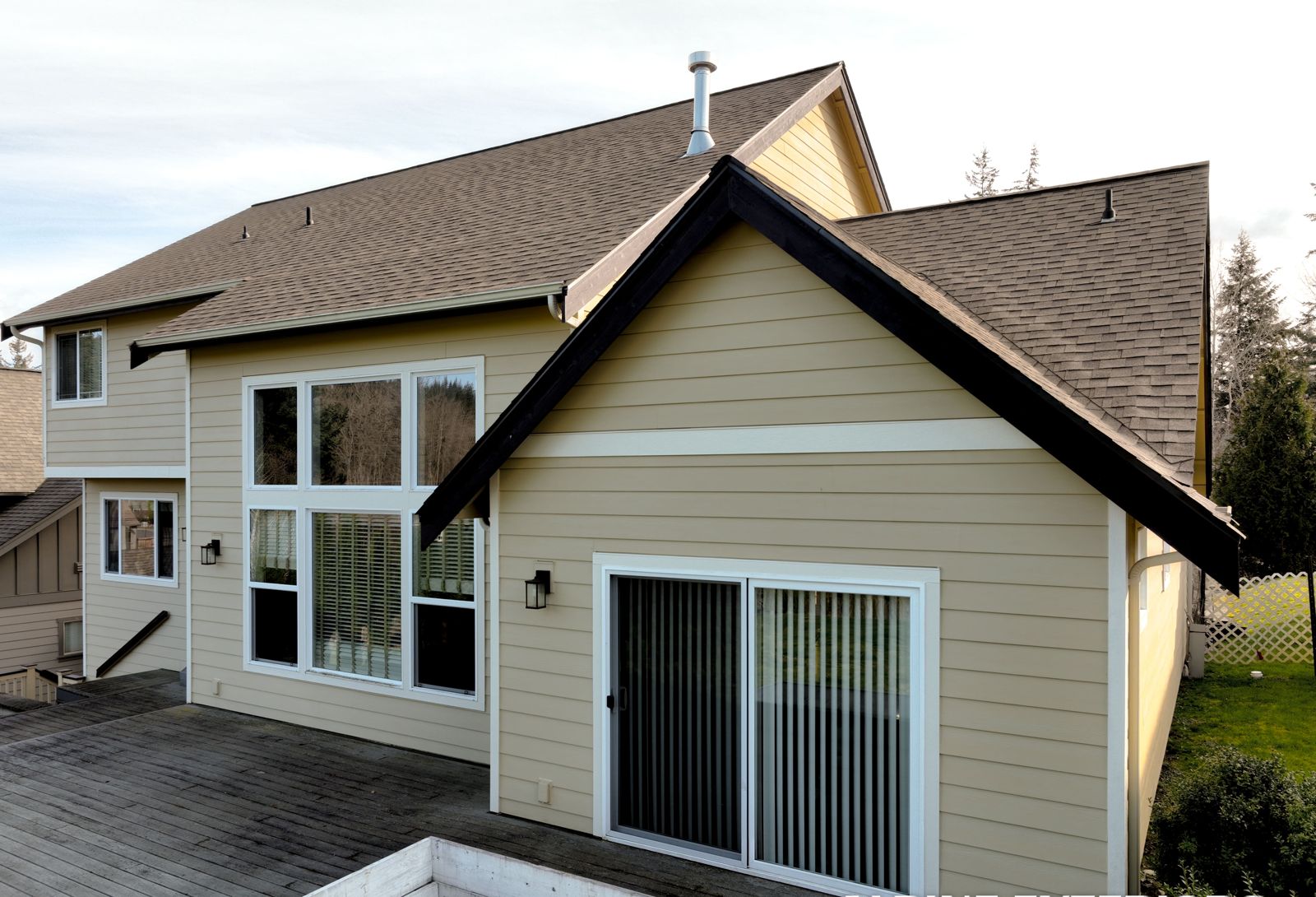
Storm damage to siding in Happy Valley almost never looks like a single dramatic event. In most cases, wind-driven rain finds a seam, a nail hole, or a caulk joint that was already marginal, and the damage you notice after a windstorm was actually forming underneath the surface for months before that.
That distinction matters. It changes what you should look for on your own walls, and it changes how an insurance adjuster is likely to classify the repair. A cracked panel from a falling branch is a straightforward storm claim. Soft, dark siding near a downspout that finally buckled during a windstorm is a maintenance issue that a storm happened to expose, and those get treated very differently by most policies.
Wood, engineered wood, and even fiber cement siding are not fully waterproof on their own — they rely on lapped installation, caulking at joints, and a weather-resistant barrier (WRB) behind the panels to keep bulk water out of the wall assembly. Under normal rainfall, water runs down the face of the siding and off the bottom edge of each lap. Wind changes that. When gusts push rain sideways instead of down, water gets driven up and under laps, into nail penetrations, and into any gap around trim, window flashing, or utility penetrations that wasn't sealed correctly the first time.
Once water gets behind the siding, it doesn't dry quickly here. Whatcom County's climate keeps humidity and rainfall high enough, often enough, that wall cavities and sheathing can stay damp for extended stretches rather than drying out between storms the way they might in a drier climate. That's the mechanism behind most of what homeowners describe as "storm damage": the storm event is the trigger, but the vulnerability — a missing rainscreen gap, degraded caulk, a WRB that was cut short around a window — was already there.
This is also why cosmetic problems and structural problems can look similar from the ground. Moss and algae staining on a north-facing wall is a moisture and sunlight issue, not storm damage, even though it's often most visible right after a wet, windy stretch knocks debris loose and exposes it. Genuine wind damage — cracked or split panels, siding pulled loose from the studs, trim torn away — usually has a cleaner, more sudden signature: it appears in the direction the wind was blowing from, and it's often paired with other storm evidence like downed branches or fence damage in the same yard.
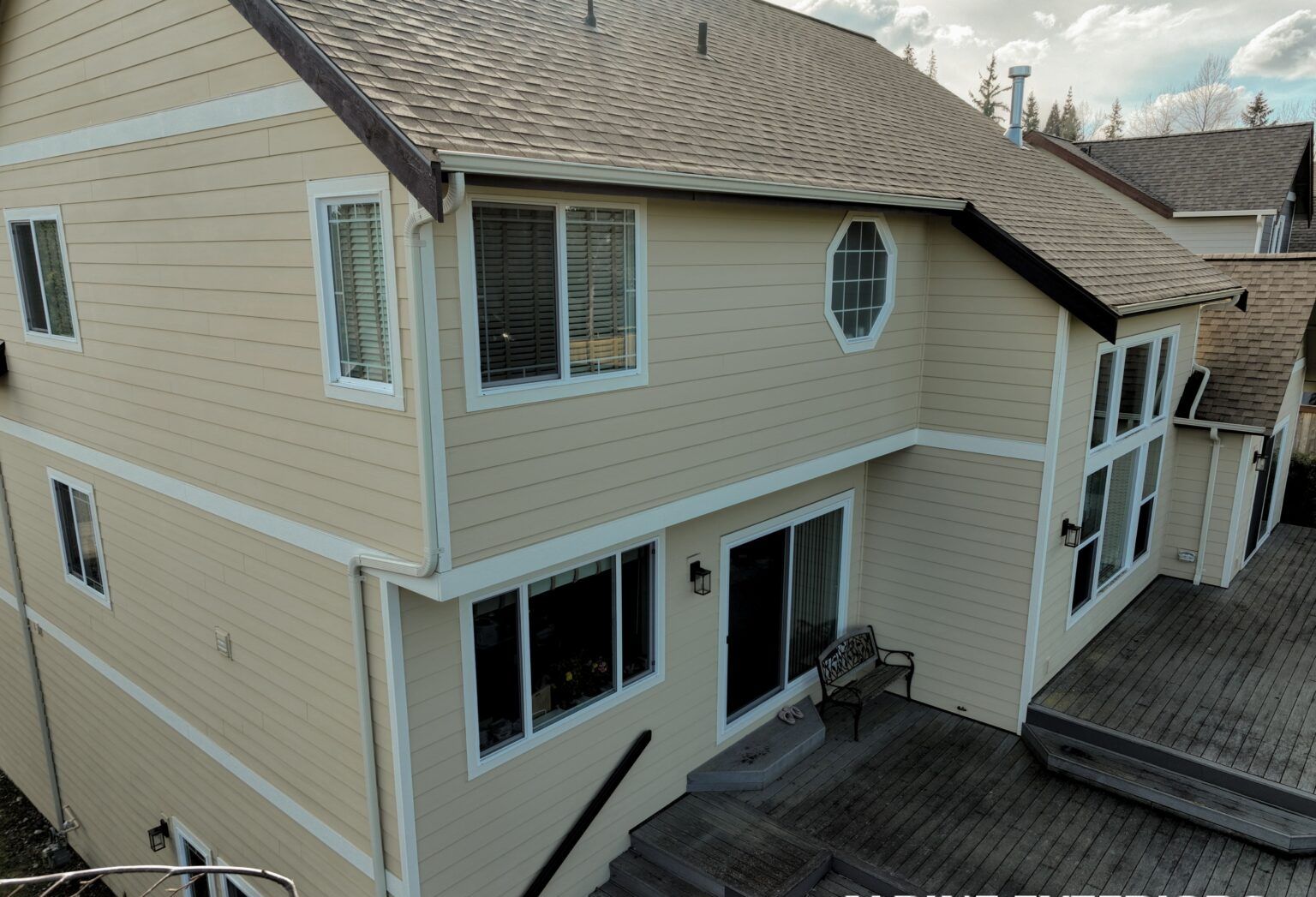
A few things about this specific area change how siding fails compared to drier or milder climates:
None of this means Whatcom County siding is unusually fragile. It means the failure mode here is almost always water finding time and a path in, rather than a single violent event overwhelming a sound wall.
After a windstorm, or if you're just noticing problems with siding that's a decade or more old, work through this in order rather than jumping straight to a claim or a full re-side.
One honest caveat: even a clean, well-documented wind claim can turn into a larger project than expected once a contractor opens up a wall and finds the sheathing behind a damaged section is delaminated or the WRB was never properly lapped. That's not a sales tactic — it's a real possibility with older siding in a climate this wet, and a straight answer up front is more useful than a lowball estimate that grows once the work starts.
| Sign | More likely storm damage | More likely gradual moisture damage |
|---|---|---|
| Timing | Appeared right after a specific windstorm | Noticed gradually over a season or more |
| Pattern | Concentrated on the wind-exposed side of the house | Concentrated near downspouts, grade, or shaded/tree-covered walls |
| Appearance | Cracked, split, or missing panels and trim | Soft, dark, or spongy wood; moss or algae staining |
| Other evidence | Downed branches, fence or roof damage nearby | No other storm-related damage on the property |
Often, but only for the damage that's genuinely "sudden and accidental" — a branch that punctures a wall, wind that tears panels off. Most policies exclude or limit coverage for gradual deterioration such as long-term rot, moss and algae staining, or damage tied to lack of maintenance, since insurers treat that as a homeowner upkeep issue rather than a covered peril. The safest approach is to get an inspection and dated photos before you file, so you and the adjuster are looking at the same evidence about when and how the damage occurred.
Storm damage tends to be sudden and localized to the wind-exposed side of the house, with cracked, split, or missing pieces that showed up around the same time as other storm evidence like downed branches. Long-term rot tends to show up gradually as soft, dark, or spongy wood, often near grade, downspouts, or shaded areas where moisture lingers longest. A windstorm can absolutely be the final push that makes long-standing rot visible, which is why both causes are often present in the same repair.
Sooner rather than later, ideally before the next significant rain. Once water finds a way behind siding, delaying an inspection just gives it more time to reach the sheathing and framing underneath, which turns a manageable repair into a larger one. This matters even more in Happy Valley's tree-covered lots, where storm debris and standing moss can hide damage from view until it's been sitting wet for a while.
Yes, when a project involves permitted work on the wall assembly — a full re-side, for example — the Washington State Energy Code's requirements for the exterior envelope come into play, including how the weather-resistant barrier and insulation are handled. A small patch repair to a section of existing siding typically doesn't trigger those requirements the same way, but a larger storm-driven repair is often a reasonable moment to bring an older wall assembly up to current code rather than simply replacing like-for-like.
If a recent windstorm left you with cracked or missing siding, or you're just noticing soft spots and staining that have been creeping across a wall in Happy Valley for a while, it's worth getting an honest look before you decide whether it's an insurance claim, a repair, or a bigger project. Alpine Exteriors is a licensed Washington contractor (license ALPINI751OW) serving Bellingham, Ferndale, Lynden, Blaine, Birch Bay, Sudden Valley, and the islands, and we'll tell you plainly what we find — including when a section doesn't need full replacement. Reach out for an inspection before the next storm makes the decision for you.