
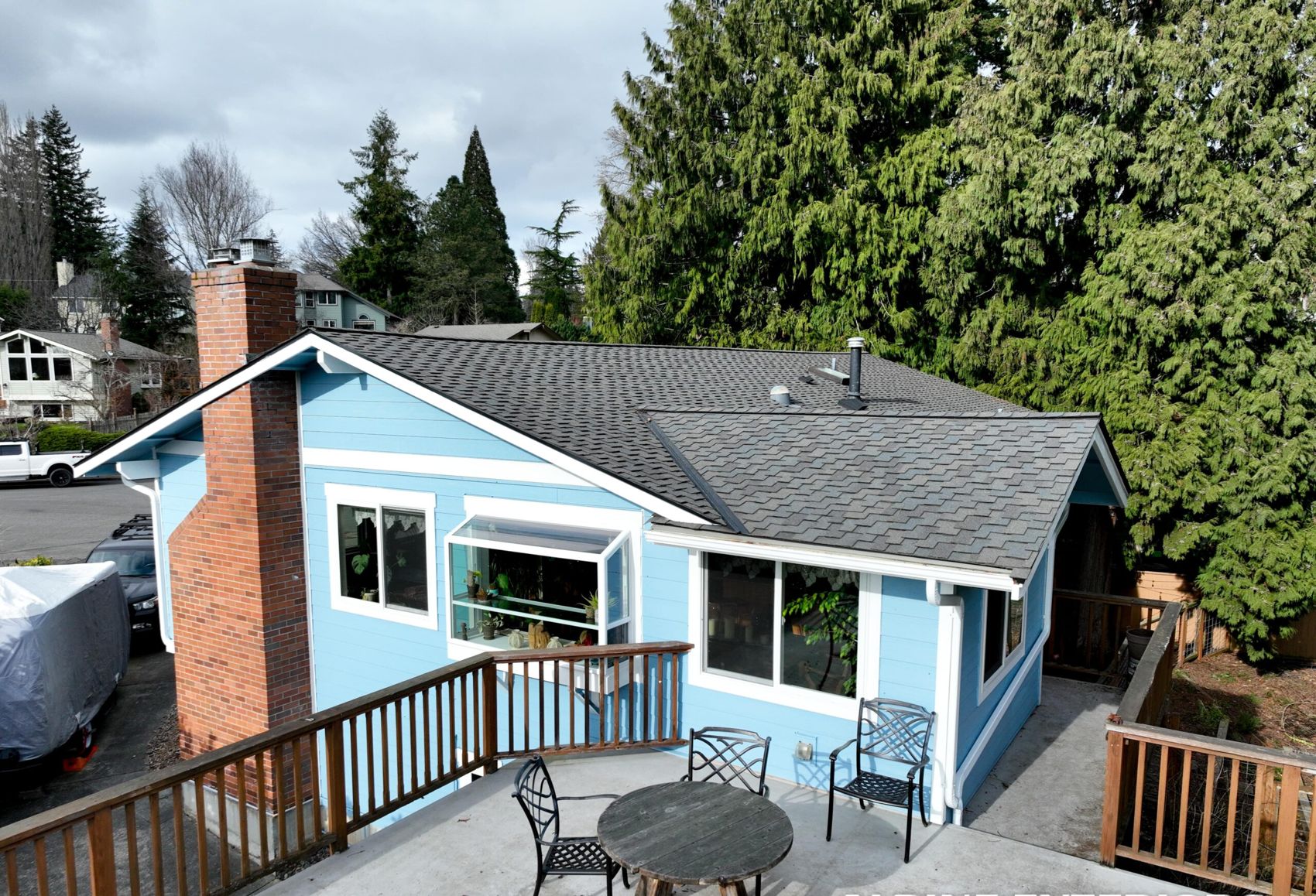
Winterizing your Whatcom County home comes down to three things: clear the water paths (gutters, downspouts, and grading), seal the gaps that let wind-driven rain in around windows and trim, and check your roof and siding for any damage before the rain settles in for the season. Do this in October or early November, before the wettest months arrive, and you'll head off most of the rot, leaks, and moisture damage that show up every spring.
Whatcom County doesn't get freeze-thaw cycles the way inland Washington does. What it gets instead is months of low-intensity, high-volume rain, punctuated by wind events that push that rain sideways. A home here isn't fighting one big storm — it's fighting thousands of hours of sustained moisture exposure between October and April.
That slow, steady water is what causes the real damage. It works into any gap in flashing, caulk, or siding laps and just sits there, because the wood underneath rarely gets a chance to fully dry out between rain events. Over a few winters, that's how you get soft trim boards, delaminating siding, and rot at window sills and roof-wall intersections — problems that started as something you could have caught with a five-minute look from a ladder.
Gutters and downspouts matter more here than almost anywhere else. A clogged gutter in a light-rain climate might overflow occasionally. A clogged gutter in Whatcom County during a November atmospheric river event overflows constantly, for days, and that water runs straight down your fascia and siding instead of away from the house.
A few local conditions shape what winterizing actually means here, and they're different from what you'd read in a generic home-maintenance article:
Most of this is inspection and small maintenance, not major work. The goal is to find problems while they're still small and dry, not after a wet winter has made them worse.
Not every home needs the same level of attention. A newer, well-detailed home with fiber cement siding and proper flashing may only need the gutter and vegetation work. An older home with original wood trim, especially one exposed to weather off Birch Bay or the Strait, deserves a closer look every year. If you're not sure which category your home falls into, a walk-around inspection is a reasonable way to find out before committing to any repair work.
Early-to-mid fall is the practical window — after leaves have mostly dropped but before the heaviest rain sets in, which is usually by late October or November in this area. Doing gutter and inspection work in summer means you'll likely need to redo it once fall leaf drop happens.
Less than homes in colder climates, but it's not zero. Whatcom County gets occasional hard freezes, and a poorly ventilated attic can still produce ice dams during a cold snap. It's a secondary concern here compared to the ongoing rain exposure, but attic ventilation checks address both issues at once.
It's more than cosmetic. Moss holds water against roofing material longer than it would otherwise sit, and as it grows it can lift shingle tabs slightly, creating small openings for water. It's rarely an emergency, but left untreated over several seasons it contributes to a shorter roof life.
Gutter cleaning, vegetation trimming, and a visual inspection are reasonable DIY tasks if you're comfortable on a ladder. Caulking repairs, moss treatment on steep or high roof sections, and anything involving flashing or siding repair are worth having a contractor look at, since doing them incorrectly can trap moisture rather than keep it out.
If you'd rather not guess whether your siding, roof, and trim are ready for another wet Whatcom County winter, Alpine Exteriors can walk the exterior with you and point out what actually needs attention this year versus what can wait. We work with homeowners throughout Bellingham, Ferndale, Lynden, Blaine, and Birch Bay, and we're familiar with how this specific climate wears on different materials over time. Reach out to Alpine Exteriors to schedule a look before the rain settles in.