
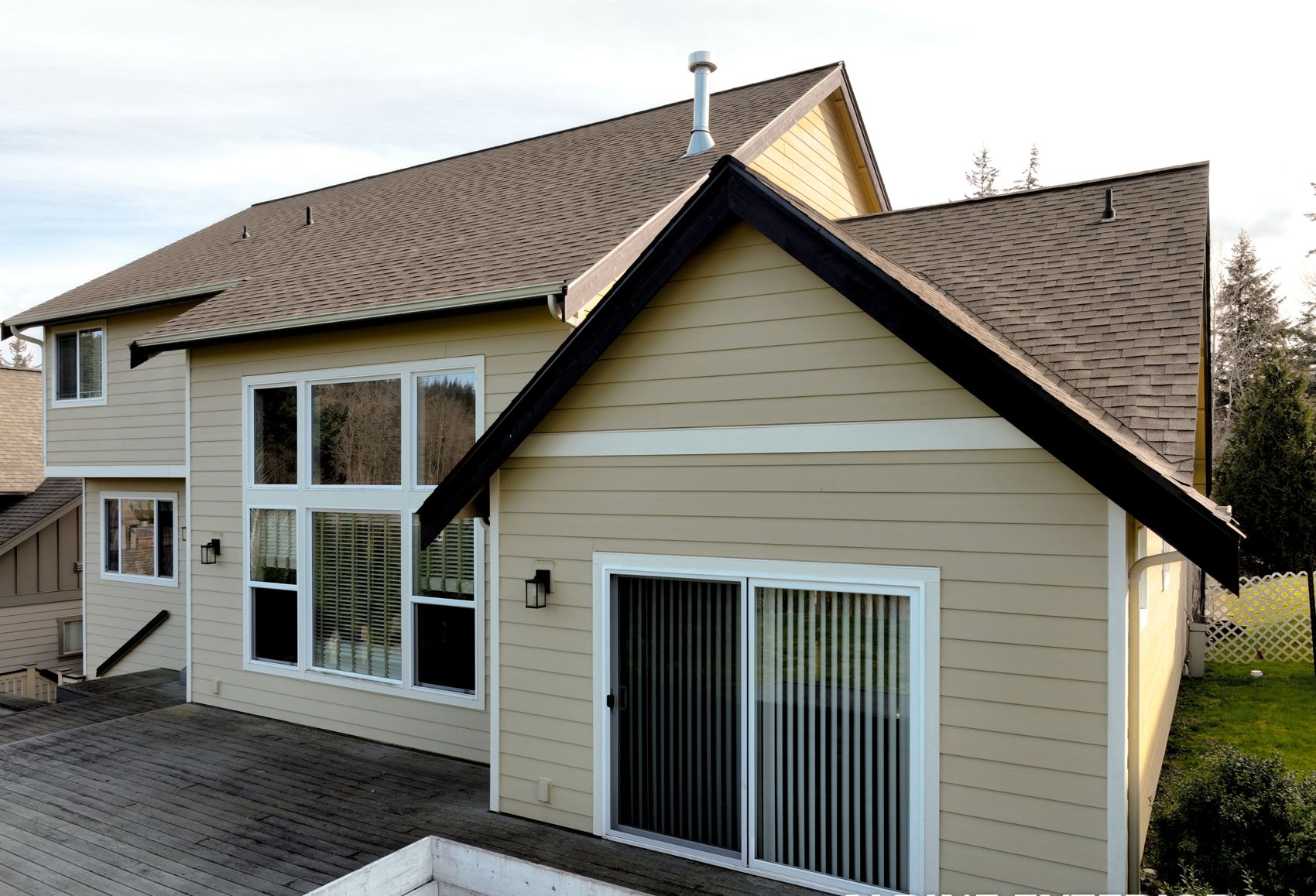
If you own a home in Sehome or elsewhere in Whatcom County and you're trying to decide between James Hardie fiber cement and vinyl siding, here's the short version: fiber cement is the stronger choice for homes with real exposure to wind-driven rain off Bellingham Bay and the Strait of Georgia, for houses sitting under heavy shade and moss pressure from mature fir and cedar canopy, and for anyone who wants the Craftsman or Pacific Northwest look that's common on Sehome's older streets near the Arboretum and Western Washington University. Vinyl siding is still a legitimate option for homes that are more sheltered, for owners working with a tighter renovation budget, or for rental and investment properties where low maintenance matters more than a premium look. Neither product is a bad choice for this climate — the right answer depends on your home's exposure, your budget, and how long you plan to stay in the house. Alpine Exteriors installs both products throughout Whatcom County and can look at your specific site — elevation, sun exposure, tree cover, wind direction — before recommending one over the other.
James Hardie siding is made from a mix of Portland cement, sand, and cellulose fiber, pressed into planks, shingle-style panels, or board-and-batten profiles and cured into a rigid board. It doesn't rot, it doesn't feed carpenter ants or other wood-boring insects, and it holds up to the kind of relentless, low-intensity rain that defines a Whatcom County winter far better than raw wood siding does. That matters a lot here, because most of the siding failures we see on older Sehome homes aren't dramatic storm damage — they're slow wood rot at butt joints, window trim, and lower courses where wood siding stayed damp for months at a stretch.
Hardie's factory-applied ColorPlus finish is baked on and holds color noticeably longer than field-applied paint, which cuts down on repainting cycles — a real consideration on the three-story homes common on Sehome's hillside, where scaffolding and lift access add real cost to any repaint job. Hardie also comes in profiles that read much closer to real wood shake or cedar lap than most vinyl does, which is part of why it's become a common replacement siding for Craftsman-era homes in this part of Bellingham.
The tradeoffs are real, though. Fiber cement is heavier than vinyl and needs to be fastened correctly into framing rather than just tacked up loosely, and it performs best over a proper water-resistive barrier with a drainage gap behind it, so that any bulk water that gets past the siding can drain out instead of sitting against the sheathing — an important detail given how much annual rainfall Whatcom County gets. It's also more expensive to buy and install than vinyl, cutting it on-site produces silica dust that requires proper dust control, and boards that are only primed rather than factory-finished will eventually need repainting like any other painted exterior. It can also chip or crack under a sharp, hard impact, which is worth knowing if you've got large fir or cedar trees that shed branches onto the house during windstorms — a fairly common occurrence on wooded Sehome lots.
Vinyl siding is an extruded PVC panel system that interlocks course by course and comes in a wide range of colors, profiles, and thicknesses, including versions with rigid foam backing for a bit of extra insulation and stiffness. Its biggest advantages are cost and maintenance: it's less expensive to buy and install than fiber cement, it never needs painting, and cleaning it typically just means an occasional low-pressure wash to knock off algae and grime. For a rental property, a starter home, or a house on a tighter budget, that combination is genuinely appealing.
The honest drawbacks matter here too. Vinyl is a "shedding" cladding, not a moisture barrier — it's designed to direct water down and away, but it relies entirely on the house wrap, flashing, and drainage plane installed behind it to actually keep water out of the wall assembly. If those details get cut corners on, vinyl can hide a wet wall for a long time before anyone notices, since it doesn't show water staining the way wood or fiber cement does. Vinyl also gets more brittle in cold temperatures, and while Whatcom County's marine climate is mild overall, the higher and more inland parts of the county — Sudden Valley, the foothills toward Mount Baker, and areas around Lake Whatcom that see harder overnight freezes — get cold snaps that make older or lower-grade vinyl panels more prone to cracking from a stray impact, like a ladder, a thrown rock from mowing, or wind-blown debris. Vinyl's horizontal channels and lap lines can also trap moisture and organic debris, so it isn't immune to the moss and algae growth that's common on shaded, tree-covered lots throughout Sehome — it just doesn't rot from it the way wood does. Color options have historically skewed lighter, since dark vinyl absorbs more heat and can warp, though newer engineered products handle deeper tones better than older stock.
| Factor | James Hardie Fiber Cement | Vinyl Siding |
|---|---|---|
| Upfront cost | Higher material and labor cost; generally the pricier of the two per square foot installed | Lower material and labor cost; typically the more affordable option to install |
| Lifespan | Long-lived when properly installed and maintained; James Hardie backs its lap siding with a lengthy limited material warranty, and ColorPlus finishes carry a separate finish warranty | Can last decades in a sheltered location, but is more vulnerable to cracking, fading, and warping over time, especially with impact damage or extreme temperature swings |
| Maintenance | Low if factory-finished with ColorPlus; field-primed boards will eventually need repainting; occasional soft-washing helps control moss and algae | Very low; no painting ever needed, but a cracked panel usually means a full panel replacement, and matching older, sun-faded color can be difficult |
| Appearance | Authentic wood-grain, shingle, and board-and-batten profiles; holds crisp lines and deep colors well | Wide color and profile selection, but reads flatter and more uniform up close compared to fiber cement |
For most homes in Sehome itself — a hillside neighborhood with heavy tree cover running from the Arboretum down toward the water — the deciding factor is usually exposure combined with the age and condition of the existing siding. Homes on west- and northwest-facing slopes that catch wind-driven rain coming off Bellingham Bay and the Strait of Georgia take a real beating on their exterior walls over a typical Whatcom County winter, and that's exactly the situation where fiber cement's rigidity and rot resistance earns its higher price tag. If you're re-siding a home that's already on its second or third layer of wood siding and showing rot at the bottom courses or around window trim, putting vinyl over the same underlying problems doesn't actually fix anything — the wall still needs a proper water-resistive barrier and drainage gap behind the new cladding, and once that work is being done anyway, fiber cement is often worth the added cost.
Homes set further back from direct exposure — downhill in more sheltered pockets of Sehome, or on lots protected by neighboring structures and mature trees from the worst of the wind-driven rain — can do just fine with vinyl, provided the installer pays close attention to flashing at windows, doors, and roof-wall intersections. That detail work matters more than the cladding choice on a sheltered site. For rental properties or homes where the owner's priority is a low-maintenance, budget-conscious re-side rather than resale value or historic character, vinyl remains a reasonable call, and Alpine Exteriors will say so plainly rather than upselling fiber cement where it isn't needed.
If your property sits higher up — toward Sudden Valley, the Lake Whatcom foothills, or other spots that see harder overnight freezes than the Bellingham lowlands — factor in that vinyl becomes more brittle in cold weather, and repeated freeze-thaw cycling winter after winter is tougher on vinyl's long-term flexibility than it is on fiber cement.
On code: the Washington State Energy Code governs the insulation and air-sealing performance of your exterior wall assembly, not the siding material itself — neither vinyl nor fiber cement is an insulation product on its own. What actually matters for code compliance is the assembly behind the cladding: continuous insulation, air sealing, and the water-resistive barrier. In practice, a fiber cement rainscreen assembly is often paired with continuous rigid insulation to help meet the prescriptive path, while insulated vinyl adds a modest R-value boost of its own. Either way, Alpine Exteriors builds the wall assembly to meet Washington State Energy Code requirements regardless of which cladding you choose, so code compliance shouldn't be the deciding factor between the two products — exposure, budget, and appearance should be.
Vinyl itself won't rot, so persistent rain alone doesn't damage the panels the way it can damage wood. What rain and shade do affect is the wall assembly behind the vinyl and the surface growth on top of it — shaded, tree-covered lots common throughout Sehome can develop moss and algae on vinyl's horizontal channels just as they can on any other siding, so plan on an occasional low-pressure wash. The bigger risk with vinyl in this climate is what's happening behind it: if the house wrap and flashing aren't installed correctly, a home can stay wet for a long time without any visible warning sign on the vinyl surface itself.
Fiber cement generally costs more than vinyl for both materials and labor, and the exact gap depends on the profile you choose, how much trim and detail work is involved, and the condition of the wall underneath. As a rough guide, expect vinyl to sit toward the lower end of siding costs and James Hardie to run meaningfully higher per square foot installed. Alpine Exteriors can walk your specific home and put together an itemized estimate so you're comparing real numbers rather than rules of thumb.
It can, particularly in the colder pockets of the county like Sudden Valley and the Lake Whatcom foothills, where overnight freezes run harder than in the Bellingham lowlands. Vinyl becomes more brittle as temperatures drop, so a stray impact from a ladder, a falling branch, or debris thrown by a mower is more likely to crack a panel in freezing weather than in mild weather. It's a real limitation worth weighing if your property sits at higher elevation or in a colder microclimate.
Siding itself isn't an insulation product under the Washington State Energy Code — compliance comes from the wall assembly's continuous insulation, air sealing, and water-resistive barrier, not the cladding on top of it. Both fiber cement and vinyl can be part of a wall assembly that meets code, typically by pairing the siding with continuous rigid insulation or an insulated backer, so the energy code shouldn't be the deciding factor between the two products.
If you're weighing James Hardie fiber cement against vinyl siding for a home in Sehome or anywhere else in Whatcom County, Alpine Exteriors can walk your property, look at its exposure to wind and rain, and give you a straightforward recommendation along with an itemized estimate for both options. Alpine Exteriors holds Washington contractor license ALPINI751OW and installs and repairs siding throughout Bellingham, Ferndale, Lynden, Blaine, Birch Bay, Sudden Valley, and the islands. Reach out for an on-site consultation before you commit to either product.