
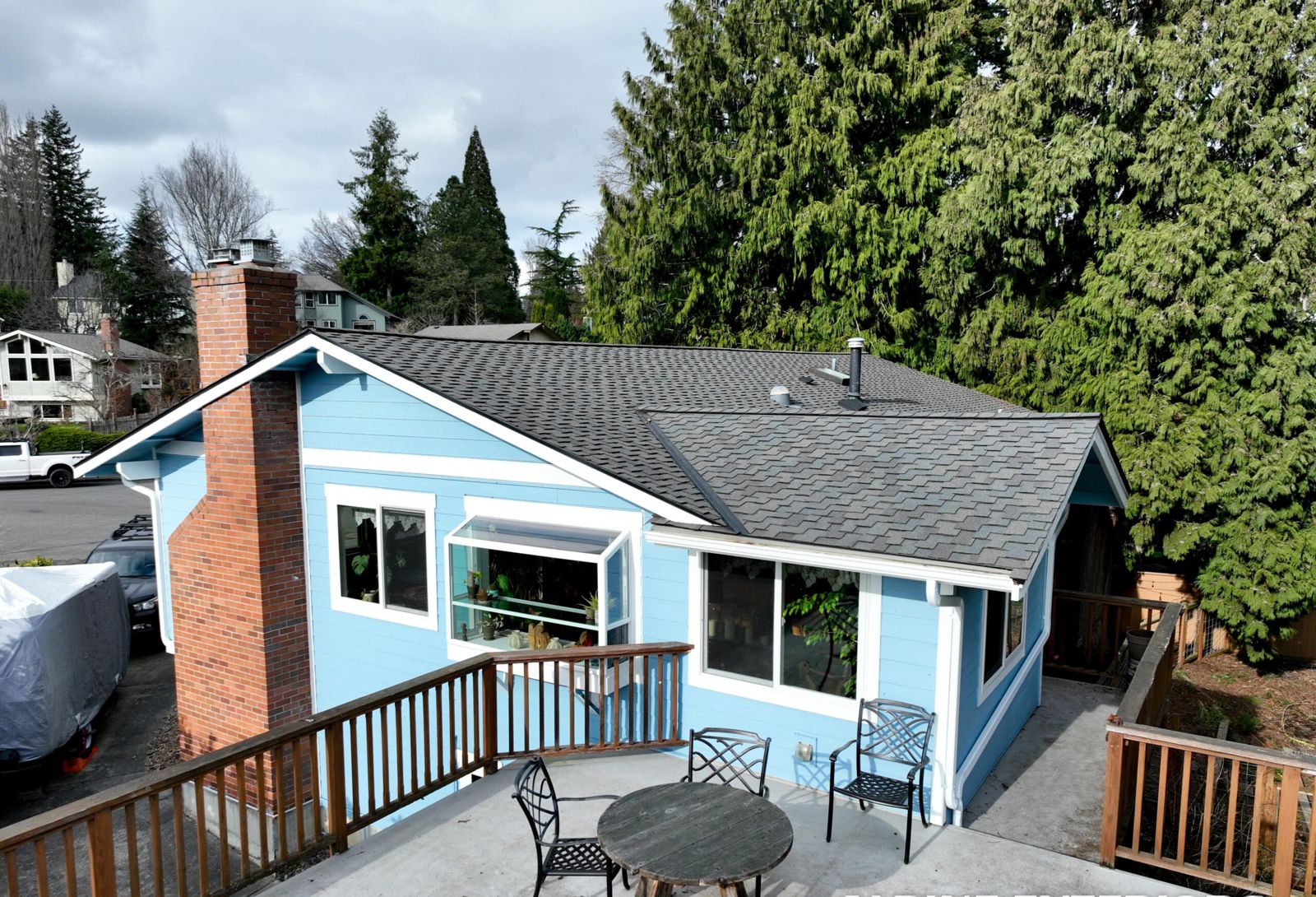
Whatcom County asks a lot of exterior siding. Between Bellingham Bay's wind-driven rain, the near-constant drizzle that settles into Lynden and Ferndale from fall through spring, and the moss and algae that colonize anything shaded or damp, siding here has to shed water correctly from day one. When it's installed wrong, the problems usually aren't cosmetic for long — they turn into wood rot, sheathing damage, and repairs that cost far more than doing the job right the first time. Below are the warning signs worth knowing, whether you're in Bellingham, Blaine, Birch Bay, Sudden Valley, or out on the islands.
Lap siding and panel products are engineered with specific overlap and gap tolerances so panels can expand, contract, and still shed water downward. When you can see daylight through a seam, or one course overlaps unevenly next to the one below it, it usually means panels were cut short, installed out of level, or hung without checking reveal consistency as the crew worked around windows and corners. In a region that gets sideways rain off the Strait during winter storms, a gap that lets wind-driven water behind the cladding doesn't dry out on its own — it sits against the sheathing.
A fastener head standing proud of the surface, sometimes with a rust stain trailing below it, is a sign the siding was face-nailed too tight, nailed into a stud that later swelled with moisture, or fastened at the wrong height on the nailing hem. Fiber cement and vinyl products both have manufacturer specs for nail placement and drive depth; over-driving or under-driving fasteners is one of the more common installation shortcuts we see on older Whatcom County homes, especially where a crew was working fast on a multi-house subdivision job.
Siding that ripples across a wall, especially visible in low afternoon light, almost always points to fasteners driven too tight against the material, panels installed without the manufacturer's required expansion gap, or siding hung directly to sheathing without accounting for seasonal movement. Our freeze-thaw swings in the foothills around Sudden Valley and the Mt. Baker highway corridor make this worse — siding that has no room to move cracks or bows over a few winters instead of settling quietly.
A bead of caulk at a butt joint, inside corner, or seam is often a red flag rather than good workmanship. Manufacturers generally design lap and panel siding to shed water through gravity and overlap, not sealant. When installers caulk a joint that should have been flashed or lapped correctly, it traps moisture behind the siding instead of keeping it out — caulk fails and cracks well before the siding does, and by the time it does, water has often already been finding its way in behind the joint for a season or two.
Some algae and moss growth on a north-facing wall in this climate is normal and mostly cosmetic. What's not normal is streaking or dark staining that's concentrated at specific seams, under window trim, or along one particular course of siding while the rest of the wall stays clean. That pattern usually means water is being channeled to that spot by a flashing or lapping error and sitting there longer than it should, giving mold and algae exactly the damp surface they need.
Press on trim boards, window casings, and butt joints where two siding pieces meet. If the wood gives, feels spongy, or crumbles at the edge, moisture has already gotten behind the surface and started breaking down the wood fiber. In our climate, once rot starts in a trim board or at an unsealed butt joint, it rarely stays contained — it tracks along the framing member and can reach the sheathing before it's visible from the outside.
Siding should stop with a visible gap above the foundation, deck, or finished grade — usually an inch or more, depending on the product. When it's installed flush to concrete or buried against soil or mulch, it wicks moisture upward constantly, and in wetter yards around Ferndale and the lowland areas near the county's rivers, that gap closing over time from settling soil or a re-graded flower bed is a common, quiet cause of bottom-course rot.
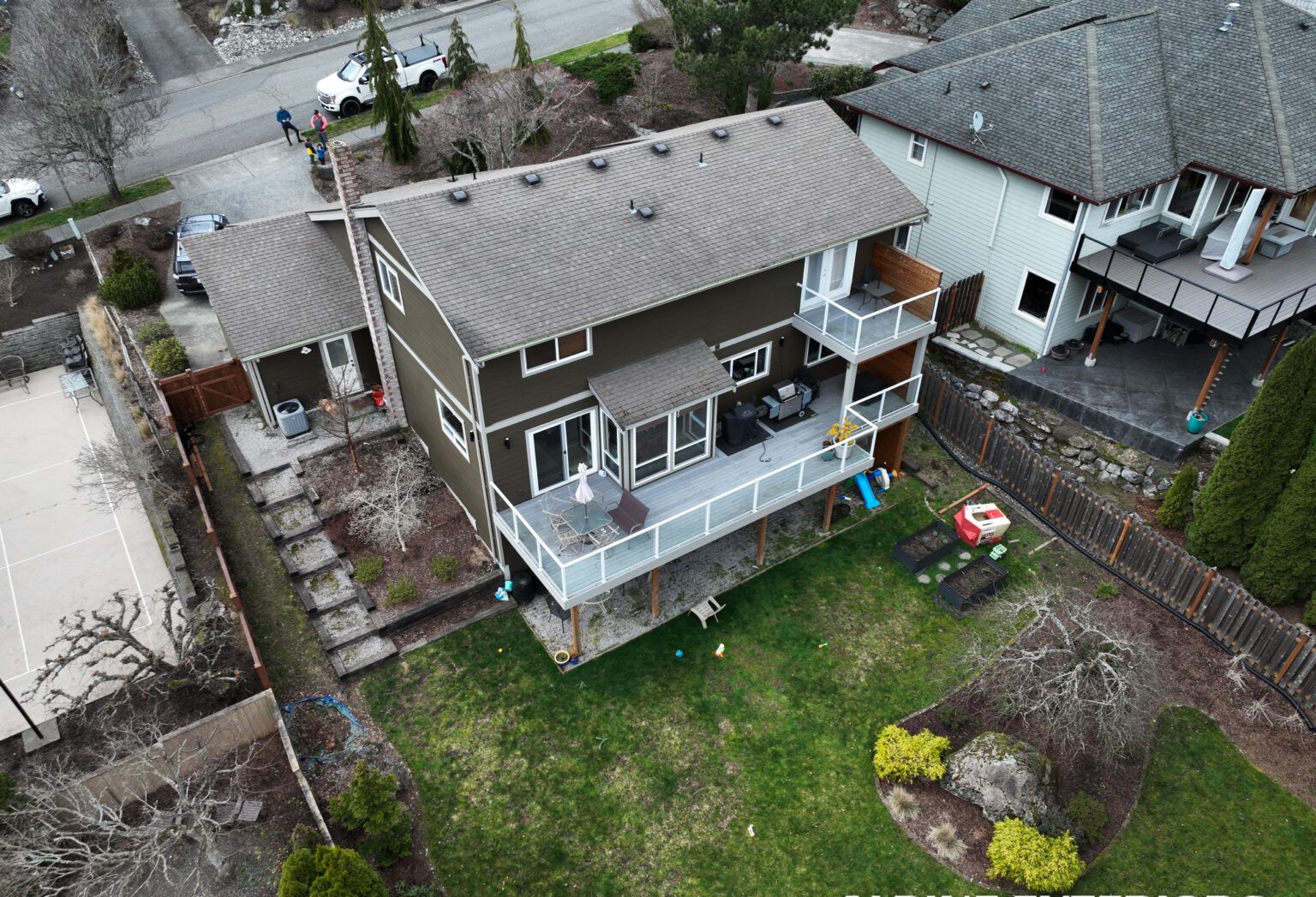
Not every sign on this list means an emergency. Soft trim, active staining that's spreading, or any spot where you can press a screwdriver into wood and feel it give should get looked at soon — those are signs moisture is already inside the wall assembly, and Whatcom County's rain season doesn't give damaged wood much chance to dry out between storms. Nail pops, minor waviness, or a stray bead of caulk are usually cosmetic-to-moderate issues that can be scheduled rather than rushed, though they're worth tracking so they don't quietly get worse. A good rule of thumb: if you can see water, feel soft wood, or smell mustiness near an exterior wall from the inside, treat it as urgent.
Start with a visual walk of the exterior on a dry day — look at seams, corners, and anywhere trim meets siding. If you find one or two of these signs, it doesn't always mean the whole installation is bad; sometimes it's isolated to a section where a crew rushed around a window or dormer. A qualified contractor can pull a section of siding in the affected area to check the condition of the weather-resistant barrier and sheathing underneath, which tells you a lot more than the surface does. Homes built or re-sided under the current Washington State Energy Code also need continuous insulation and air-sealing details done correctly at the siding layer — an inspection is a reasonable time to confirm those details were actually followed, not just assumed. Repairs range from resetting a few courses and re-flashing a problem area, up to a full re-side if the underlying barrier has failed broadly; get a written scope before agreeing to either.
Yes — moisture that gets behind panels through a bad seam or missing flashing often reaches the sheathing and framing before any staining or softness shows up on the exterior surface, so a wall can look fine while the assembly underneath is already wet.
Some green or black growth on shaded, north-facing walls is common here given how much rain and low sun angle we get, and it's usually a cleaning issue rather than an installation problem — the concern is growth that's isolated to one seam or course, which points to trapped moisture rather than normal weathering.
Not necessarily — if the problem is isolated and the sheathing underneath is still sound, a contractor can often remove and correctly reinstall just the affected section, but if moisture has been getting in for a while, the repair area may need to expand once the wall is opened up.
It depends heavily on scope — a localized repair with sound sheathing underneath might run a few hundred to a couple thousand dollars, while a re-side triggered by widespread moisture damage can run into the tens of thousands; getting a written inspection first is the only way to know which situation you're in.
If you're seeing one or more of these signs on a home in Bellingham, Ferndale, Lynden, Blaine, Birch Bay, Sudden Valley, or the islands, it's worth having someone check it before another wet season passes. Alpine Exteriors is a licensed Washington contractor (ALPINI751OW) that inspects siding installations across Whatcom County and gives straight answers about what's cosmetic, what's urgent, and what it will actually take to fix. Reach out to Alpine Exteriors for a walk-around inspection and a written assessment of what your siding needs.