
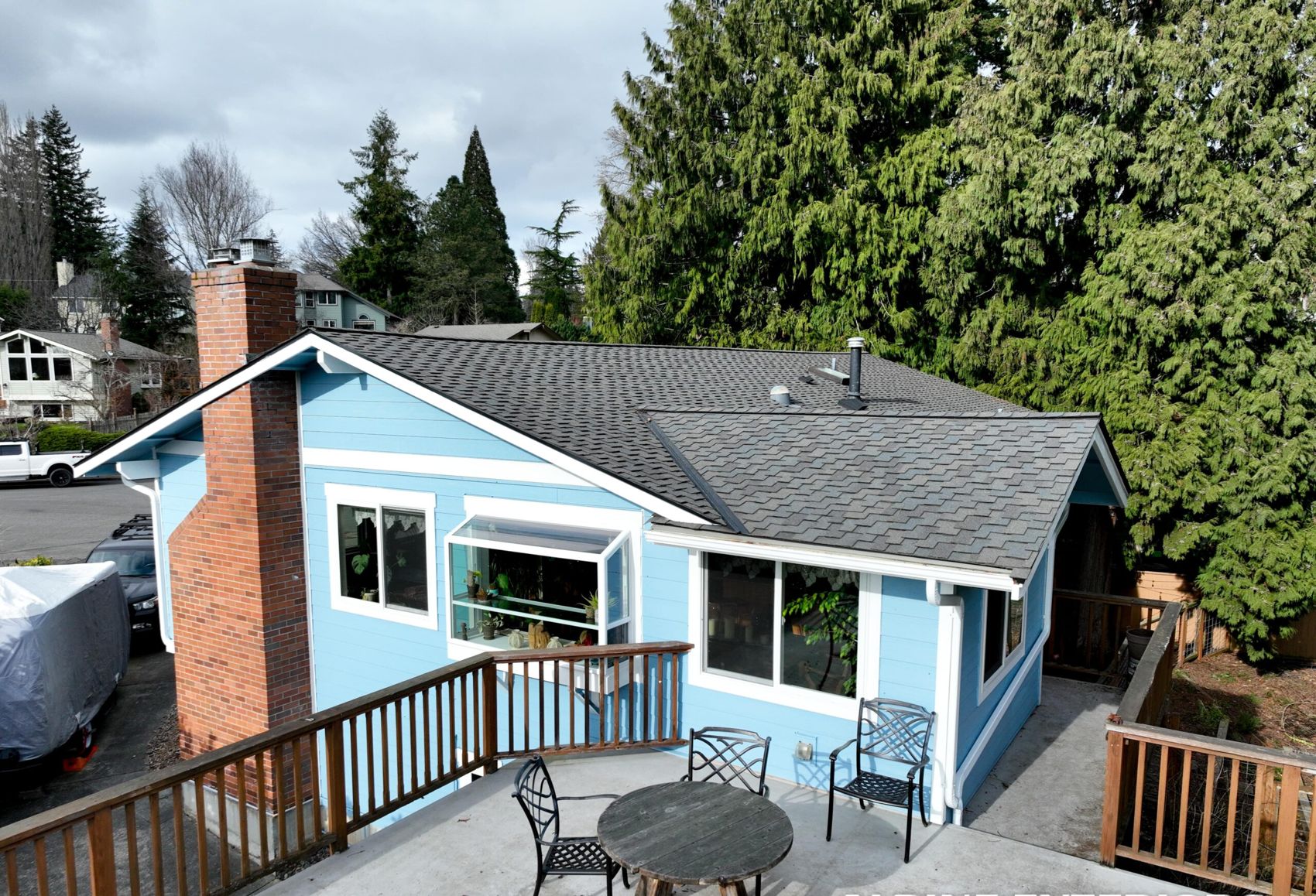
Both fiber cement and metal siding are solid choices for Whatcom County, but they solve different problems. Fiber cement is the better fit for homeowners who want a traditional lap or shingle look, easy color changes down the road, and a product with a long, proven track record against our wet climate. Metal siding earns its keep on homes exposed to the heaviest wind-driven rain — think waterfront lots around Birch Bay, Blaine, and the shoreline stretches near Bellingham Bay — where a fully sealed, non-porous surface resists moisture intrusion better than any painted product. If you're not on direct water exposure and want the more familiar Craftsman or farmhouse aesthetic, fiber cement usually wins. If you're fighting salt spray, relentless wind, and want the lowest long-term maintenance regardless of upfront cost, metal deserves a serious look. Either way, the installation detail that matters most here isn't the siding material at all — it's the rainscreen gap, flashing, and house wrap behind it, since Whatcom County's rain isn't occasional, it's a constant.
Fiber cement is a blend of cement, sand, and cellulose fibers pressed into planks, panels, or shingle-profile pieces. It's become the default replacement for wood and vinyl siding across Bellingham, Lynden, and Ferndale over the past two decades, and for good reason: it doesn't rot, it doesn't feed carpenter ants the way old cedar lap siding did, and it holds paint far longer than wood. In a county where wood rot is one of the top reasons we get called out to older homes — especially at butt joints, window trim, and anywhere siding sits too close to grade or a downspout — that rot resistance is the whole selling point.
Fiber cement isn't maintenance-free, though, and it's worth being honest about that. The factory finish or field-applied paint still needs recaulking at joints and repainting on a cycle, typically somewhere in the 10-to-15-year range depending on sun exposure and how well the original installation handled water management. It's also heavy and brittle compared to vinyl or metal, so it has to be installed with a rainscreen gap and correctly lapped flashing, or moisture gets trapped behind it and you end up with the same rot problem you were trying to avoid, just hidden. On the plus side, fiber cement resists moss and algae staining better than bare wood, though on the shaded north sides of homes tucked into the trees around Sudden Valley or Lake Whatcom, you'll still see the same greenish film that grows on roofs and decks in this climate — it just doesn't compromise the material underneath the way it would with wood.
Metal siding — usually steel or aluminum, in standing-seam, corrugated, or board-and-batten profiles — has moved from barns and commercial buildings into residential use across the Pacific Northwest, and it shows up more often now on modern-style homes in and around Bellingham. Its biggest advantage in this climate is that it's essentially a sealed shell: there's no organic material for moisture to soften, no seams that swell and shrink with humidity the way wood-based products can, and factory finishes are baked-on rather than field-applied, which means fewer failure points for water to find.
That said, metal isn't a set-it-and-forget-it product on the coast either. The salt air off Bellingham Bay and the Strait of Georgia is genuinely corrosive to lower-grade steel, and homes in Blaine, Birch Bay, or anywhere with a direct water view need a marine-rated coating system or aluminum instead of standard galvanized steel, or you'll see rust bleed at cut edges and fasteners within a handful of years. Metal also expands and contracts more than fiber cement with our seasonal temperature swings, so panels need to be installed with clips or slotted fasteners that allow that movement — a rigid installation is the single most common cause of buckling and oil-canning (a rippled, wavy look in flat panel sections) that we get called to fix. Dents from ladders or falling branches are a minor but real concern, and standing-seam profiles in particular read as a more contemporary look, so it's not the right fit if you're trying to match a traditional lap-sided streetscape in older Bellingham or Ferndale neighborhoods.
| Fiber Cement | Metal Siding | |
|---|---|---|
| Installed cost | Roughly $9-$14 per square foot installed, depending on profile and trim detail | Roughly $10-$18 per square foot installed, with standing seam at the higher end |
| Expected lifespan | 30-50 years with proper maintenance and repainting cycles | 40-60+ years for quality steel or aluminum with the correct coating for our air |
| Maintenance | Recaulk joints and repaint roughly every 10-15 years; inspect for edge moisture damage | Occasional rinse to clear salt film and moss buildup; watch fasteners and cut edges for corrosion |
| Appearance | Wide range of traditional lap, shingle, and panel looks; easy to repaint a different color later | Clean, contemporary lines; standing seam and board-and-batten profiles; color changes require a full panel swap |
For most inland and near-inland properties — Lynden, Ferndale, and the bulk of Bellingham away from direct waterfront — fiber cement is usually the more practical call. It matches the traditional siding profiles already common in these neighborhoods, it's a known quantity for local crews and inspectors, and its rot resistance solves the specific problem that Whatcom County's near-constant rain creates for older wood-sided homes. Repainting on a cycle is a real cost to plan for, but it's predictable, and it gives you the option to change the home's color scheme down the road without replacing the siding itself.
On direct waterfront exposure — Birch Bay, Blaine, and homes right along Bellingham Bay or facing the islands — metal siding's sealed, non-organic surface is worth the higher upfront cost, provided it's specified correctly. That means aluminum or a marine-grade coated steel, not a standard galvanized panel meant for inland use, and an installation that accounts for thermal movement. In the foothills around Sudden Valley and Lake Whatcom, where elevation brings more freeze-thaw cycling than you get at sea level in town, both products perform well, but fiber cement's flexibility with trim and flashing details tends to make it slightly easier to integrate with the more varied rooflines and dormers common on foothill homes.
Either material also has to satisfy the Washington State Energy Code's requirements for the exterior wall assembly, which typically means continuous insulation or an equivalent performance path depending on your framing approach — the code cares about the whole wall assembly, not just what's on the surface, so the siding choice needs to be coordinated with your insulation and air-sealing plan rather than picked in isolation. We walk through that assembly with every estimate, because it affects furring strip thickness, window and door flashing details, and ultimately how well either product performs over the following decades. Alpine Exteriors has installed both materials across Whatcom County long enough to have a clear opinion on which one fits a given lot, its sun exposure, and its distance from salt water — and we'll say so plainly rather than upsell whichever one has a better margin that month.
Standard galvanized steel can develop rust bleed at cut edges and fastener heads within a few years when it's exposed to salt-laden air off Bellingham Bay or the Strait, especially on homes in Blaine or Birch Bay with a direct water view. Aluminum or a marine-rated coated steel avoids that problem and is what we spec for any waterfront or near-waterfront installation.
Fiber cement resists moss better than untreated wood because there's no organic material for it to root into, but the same greenish algae film that shows up on north-facing roofs and shaded decks around Sudden Valley or under tree cover can still stain the surface. It's a cosmetic issue solved with an occasional soft wash, not a structural one.
Metal siding's sealed panel joints generally shed wind-driven rain off Bellingham Bay and the Strait more reliably than any lapped product, since there are fewer horizontal seams for water to be forced into under pressure. Fiber cement can perform just as well on exposed lots, but it depends much more heavily on correct flashing and a properly built rainscreen behind it.
Neither material is inherently more or less code-compliant on its own — the Washington State Energy Code governs the performance of the whole exterior wall assembly, including insulation and air sealing, not just the cladding. What changes is how each material integrates with continuous insulation and furring details, which is something we plan into the estimate rather than treat as an afterthought.
The right siding choice depends on your home's sun exposure, its distance from salt water, and how its rooflines and trim are built — not on a generic recommendation. Alpine Exteriors (WA contractor license ALPINI751OW) has crews working fiber cement and metal siding projects across Bellingham, Ferndale, Lynden, Blaine, Birch Bay, Sudden Valley, and the surrounding islands, and we'll walk your property with you before recommending either one. Reach out to schedule a no-pressure estimate and get a clear, honest read on which material fits your home.