
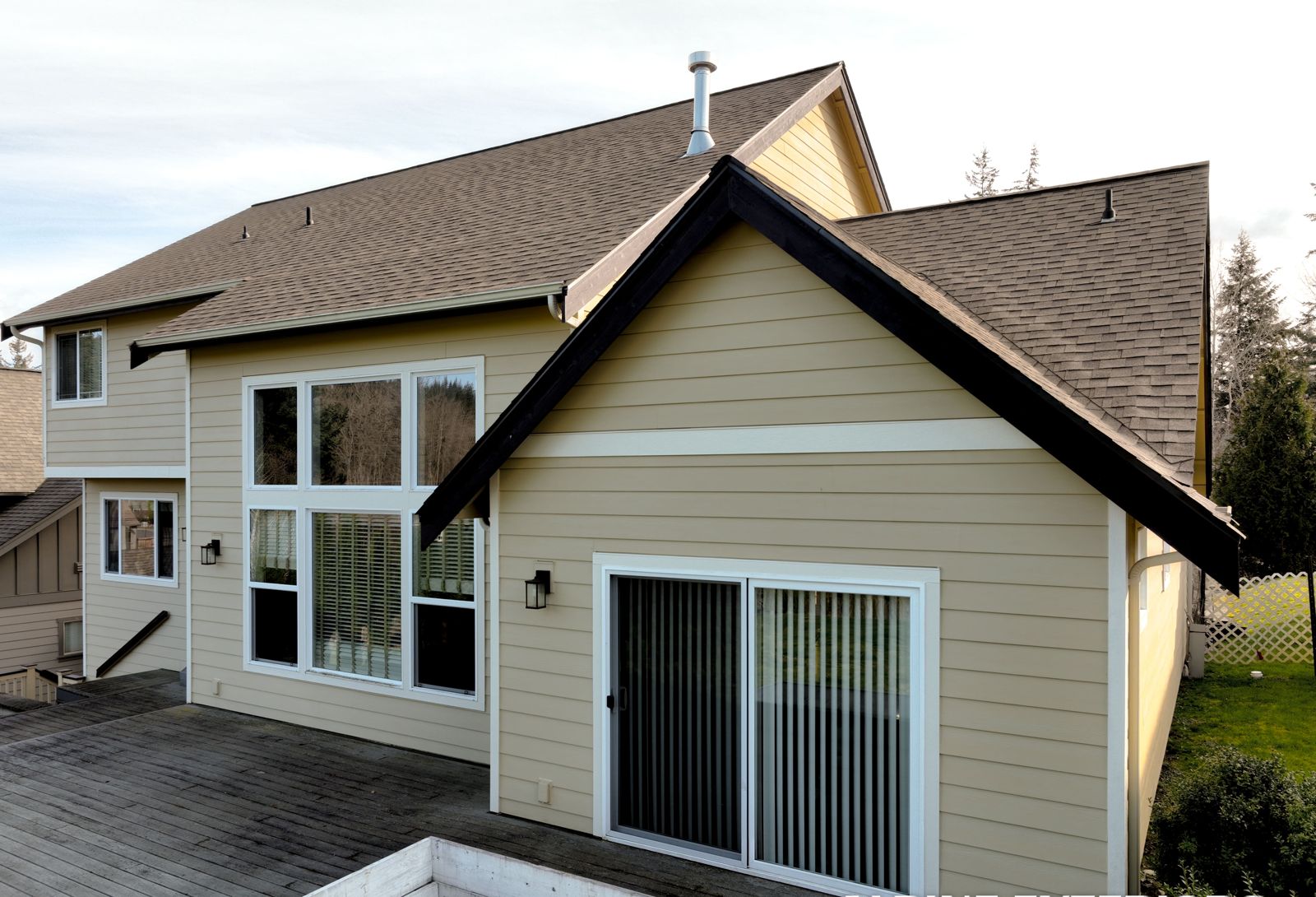
If you're re-siding a home anywhere from downtown Bellingham to Lynden, Blaine, Birch Bay, Sudden Valley, or one of the islands, you'll eventually land on the same fork in the road: James Hardie fiber cement siding pre-finished at the factory with the ColorPlus system, or the same Hardie board installed primed and then painted on site by your contractor or a painting crew. Both are good products. The difference isn't quality of the board itself — it's how the color gets on it, and that changes what the siding does for the next 15 to 30 years in our particular climate.
ColorPlus makes sense for most Whatcom County homeowners who want to install siding once and not think about repainting it for a long time, especially on homes exposed to driving rain off Bellingham Bay or the Strait of Georgia, or on taller walls and gable ends that are expensive to access with a ladder or lift. Site-painted Hardie makes more sense when you want a custom or unusual color that isn't in the ColorPlus palette, when you're blending new siding into an existing paint scheme on a partial re-side or addition, or when your budget needs the lower upfront material cost and you're comfortable planning for a repaint cycle down the road. Neither option is wrong; the right one depends on your color needs, your budget timing, and how much of the house is exposed to wind-driven rain.
ColorPlus is Hardie's factory finishing process. The color is baked onto the fiber cement plank in a controlled environment before it ever reaches the job site, using a multi-coat process that's more consistent than field painting because it isn't at the mercy of weather, humidity, or dry time between coats. It comes with a separate finish warranty from Hardie that covers the coating itself, on top of the standard product warranty on the board. Touch-up is done with a matched ColorPlus touch-up kit rather than a full repaint, and joints and cut ends get factory-matched caulk and touch-up product to keep the finish uniform.
The tradeoff is choice. You're picking from Hardie's published ColorPlus palette, which is broad but finite. If a client wants a very specific historic color to match a Fairhaven Victorian, or wants to match new siding to an existing house that's staying a color Hardie doesn't offer, ColorPlus won't get you there without a repaint anyway, which defeats some of its purpose. It also generally costs more per square foot than primed board, since you're paying for the factory finish process.
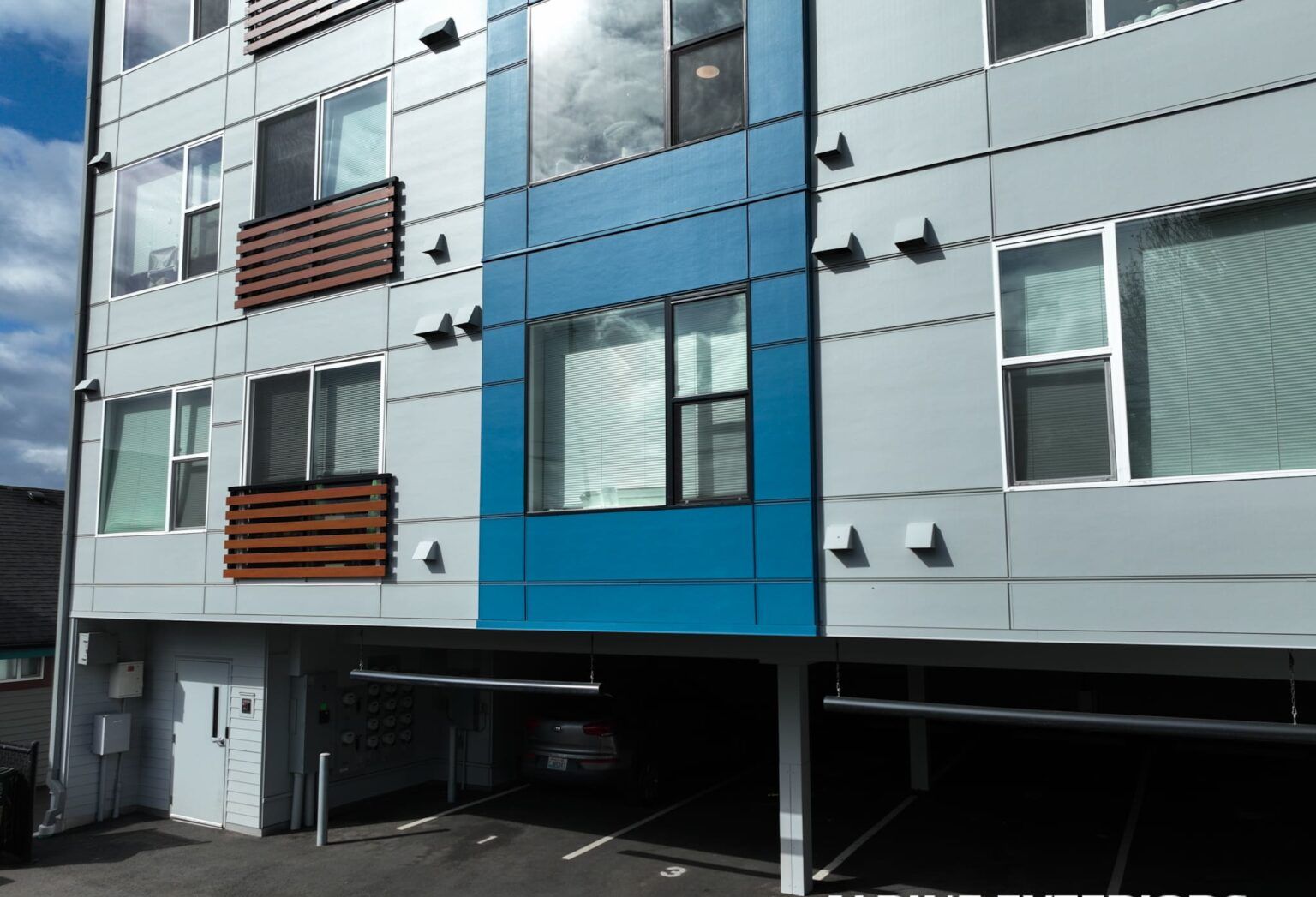
Site-painted Hardie starts as Hardie's primed fiber cement product, installed the same way as ColorPlus, then field-painted with a quality 100% acrylic exterior paint after installation. This is where color flexibility lives — any color in any painter's fan deck is available, which matters a lot for additions, partial re-sides, and homes where the owner wants a specific shade that isn't a factory option. Upfront material cost is typically lower than ColorPlus, and if you already have a painter relationship or plan to repaint the whole house on a cycle anyway, folding the new siding into that cycle can be efficient.
The honest drawback is maintenance timing and quality dependence. A field-applied paint job is only as good as the prep, the primer, the coats, and the weather window it was applied in. In a region where rain shows up most months of the year, getting a full dry cure window can be tight, and a paint job installed by a crew rushing to beat weather won't perform like one applied under good conditions. Site-painted siding also generally needs a repaint sooner than ColorPlus needs a touch-up, and repainting a full house exterior later is real money and real scaffolding or lift time, not a small job.
| ColorPlus | Site-Painted Hardie | |
|---|---|---|
| Upfront cost | Higher material cost per square foot due to factory finishing | Lower material cost; add labor and material for the paint job |
| Lifespan of finish | Typically holds color well for well over a decade before touch-up is needed, backed by a separate Hardie finish warranty | Depends heavily on paint quality and application; often needs attention sooner, especially on rain- and sun-exposed elevations |
| Maintenance | Occasional caulk checks and spot touch-up with matched product; no full repaint needed for a long time | Standard exterior paint maintenance cycle — wash, inspect, and eventually a full repaint |
| Appearance/color options | Consistent, factory-uniform finish; limited to Hardie's ColorPlus palette | Any paint color available; finish uniformity depends on the painting crew's skill and conditions during application |
Whatcom County's climate is the deciding factor more than personal taste, in our experience. Rain here isn't occasional — it's a near-constant, low-grade presence for much of the year, and homes closer to Bellingham Bay, Birch Bay, Blaine, and the ferry-served islands catch wind-driven rain directly off the water on west- and south-facing walls. That kind of sustained moisture exposure is exactly where a factory-cured finish tends to outperform a field-applied one, because the coating went on and cured under controlled conditions rather than during a break in the weather. On exposed elevations, we lean toward recommending ColorPlus for that reason alone.
Moss and algae growth is a fact of life on north-facing walls and anything shaded by fir and cedar canopy, which describes a lot of Whatcom County lots from Sudden Valley to the wooded lots around Lynden and Ferndale. Both ColorPlus and a well-painted finish can be washed to manage moss and algae, but a factory finish generally tolerates periodic gentle washing better over the years than a field coat that's already thinner or aging.
Wood rot itself isn't a fiber cement problem — Hardie board doesn't rot — but the trim, fascia, and any wood transition pieces around windows and corners are often still wood or wood composite, and poor installation or failed caulk joints around those transitions is where moisture gets behind siding and rot starts in the sheathing. This is really an installation-quality issue more than a ColorPlus-versus-painted issue, but it's worth saying plainly: either finish fails to protect the wall if the flashing, house wrap, and caulking underneath aren't done right first.
In the foothill areas around Sudden Valley and the higher ground toward the Mt. Baker foothills, freeze-thaw cycling through the colder months is harder on caulk joints and paint film than the milder marine conditions right on the coast. Paint and caulk that go brittle and crack from repeated freezing and thawing show wear faster, which again nudges the math toward ColorPlus in those locations, though a quality paint job with proper caulk maintenance can still hold up reasonably well.
The Washington State Energy Code doesn't dictate which Hardie finish you choose, but it does shape how the wall assembly goes together behind either one — continuous water-resistive barriers, proper flashing, and in many cases a rainscreen gap behind the siding to let moisture drain and the wall dry. Alpine Exteriors installs both ColorPlus and site-painted Hardie to the same underlying wall assembly standards, because the finish on the face of the board matters a lot less than what's happening behind it. When we walk a job in Bellingham, Ferndale, Lynden, Blaine, or Birch Bay, we're looking at sun and rain exposure, wall height, and what color flexibility the homeowner actually needs before recommending one option over the other.
Eventually, yes — no exterior finish lasts forever, and ColorPlus is no exception, but most homeowners here get many years of touch-up-only maintenance before a full repaint becomes necessary, which is longer than the typical cycle for a field-painted finish under the same rain exposure.
Yes, a good painter can match a ColorPlus color closely with a field-applied paint on a new section, though getting an exact sheen and tone match across factory-cured and field-cured finishes side by side can be tricky, and slight variation is more visible in direct sun than in shade.
Not really — both finishes need occasional gentle washing on shaded, north-facing walls or anywhere tree canopy keeps siding damp, and neither ColorPlus nor a quality paint job is immune to moss and algae; regular cleaning matters more than which finish you chose.
The energy code governs the wall assembly behind the siding, like water-resistive barriers and insulation continuity, rather than the surface finish, so it applies equally to both options and doesn't favor one over the other; what it does mean is that either finish should go over a properly installed assembly to actually perform as expected.
Every wall on a house faces the weather a little differently, and the right call between ColorPlus and site-painted Hardie usually comes down to walking your specific elevations, not a blanket rule. Alpine Exteriors, WA contractor license ALPINI751OW, works with homeowners across Whatcom County — Bellingham, Ferndale, Lynden, Blaine, Birch Bay, Sudden Valley, and the islands — to look at sun and rain exposure, existing color needs, and budget before recommending a finish. Reach out to Alpine Exteriors for a walkthrough and a straightforward comparison for your specific home.