
Yes. Every siding job in Barkley Village falls under the same Washington State Building Code wind provisions that apply everywhere in Whatcom County, and the siding product itself has to carry manufacturer testing that backs up its wind rating. In practice, that means the fastening pattern, the product's tested wind pressure rating, and the site's exposure category all have to line up before a permit gets signed off — not just the color and profile the homeowner picked.
Barkley Village sits inside Bellingham city limits, so siding permits go through the City of Bellingham's building division, which enforces the Washington State Building Code — the state's adoption of the International Residential Code with Washington-specific amendments. That code doesn't spell out a single number for "how much wind a wall has to take" in a way a homeowner can quote off a chart; instead it points to the wind speed values on the code's design maps for this part of Whatcom County, and it requires that the actual siding product be tested to meet or exceed the pressure that corresponds to the site's exposure category.
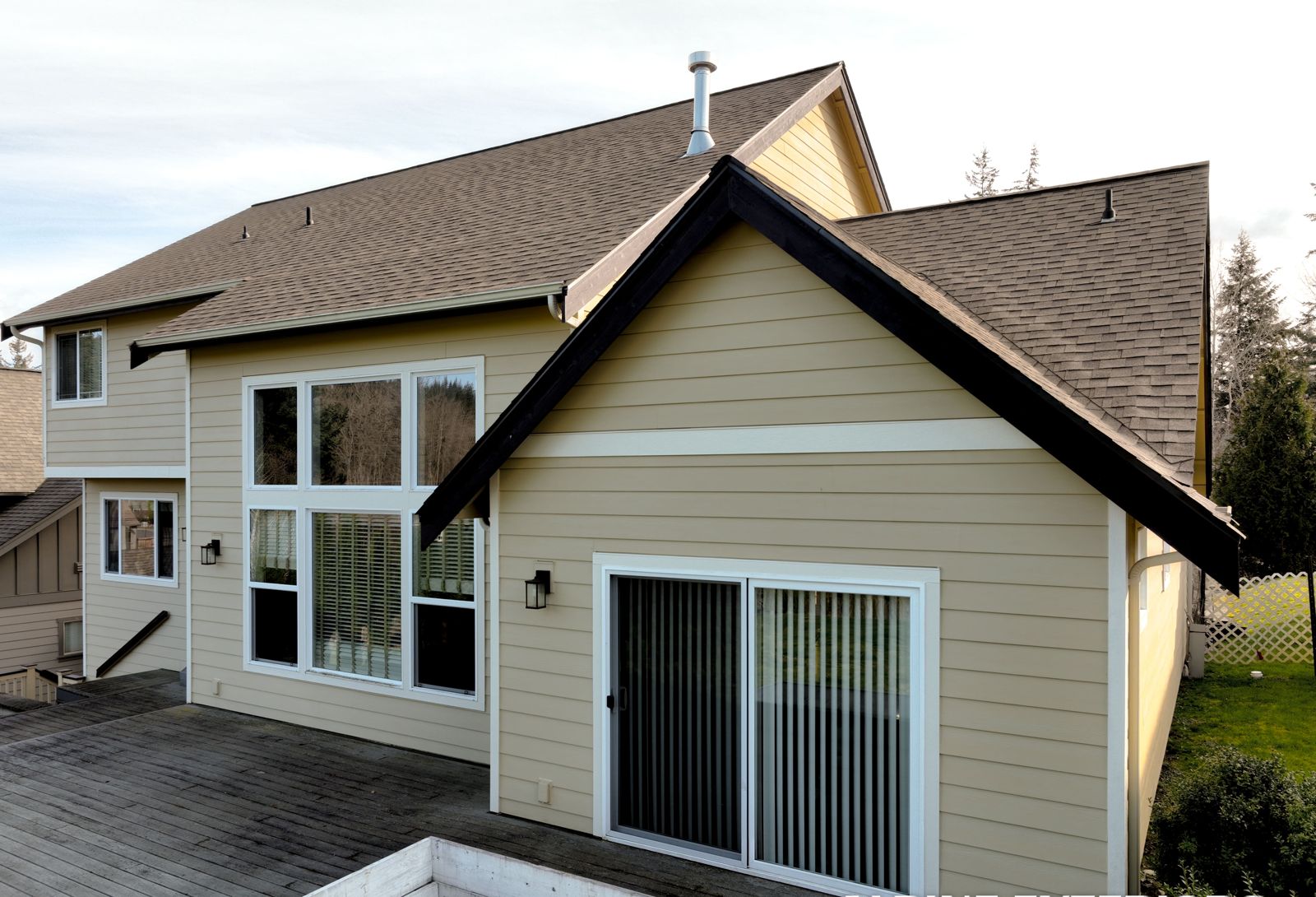
For vinyl siding, that testing is done under ASTM D3161 (wind resistance) and ASTM D7158 (design wind pressure), and every legitimate vinyl product sold in Washington comes with a published wind rating and a manufacturer installation manual that specifies nail placement, nail spacing, and how far to leave the nail head off the flange for thermal movement. Fiber cement and engineered wood siding go through a different approval path — most manufacturers hold an ICC-ES evaluation report that documents fastening schedules, fastener embedment, and wind uplift resistance for their product line. Inspectors lean on these evaluation reports and installation manuals directly; a siding product installed against its own manufacturer's instructions can fail inspection even if the material itself is code-listed, because the code treats "installed per manufacturer's instructions" as part of the approval.
There's a second layer that gets missed on a lot of jobs: the 2021 Washington State Energy Code. Bellingham's climate zone requires wall assemblies to meet specific insulation and air-sealing targets, and the prescriptive path many contractors use calls for continuous exterior insulation with a drained and vented rainscreen gap behind the siding. That furring-strip gap changes how deep the fasteners need to bite into the sheathing and framing to still hit the manufacturer's required penetration — which is a wind-load issue as much as an energy-code issue. A siding crew that isn't thinking about both codes at once can end up with fasteners that satisfy the energy code's insulation depth but fall short of the embedment the wind rating assumes.
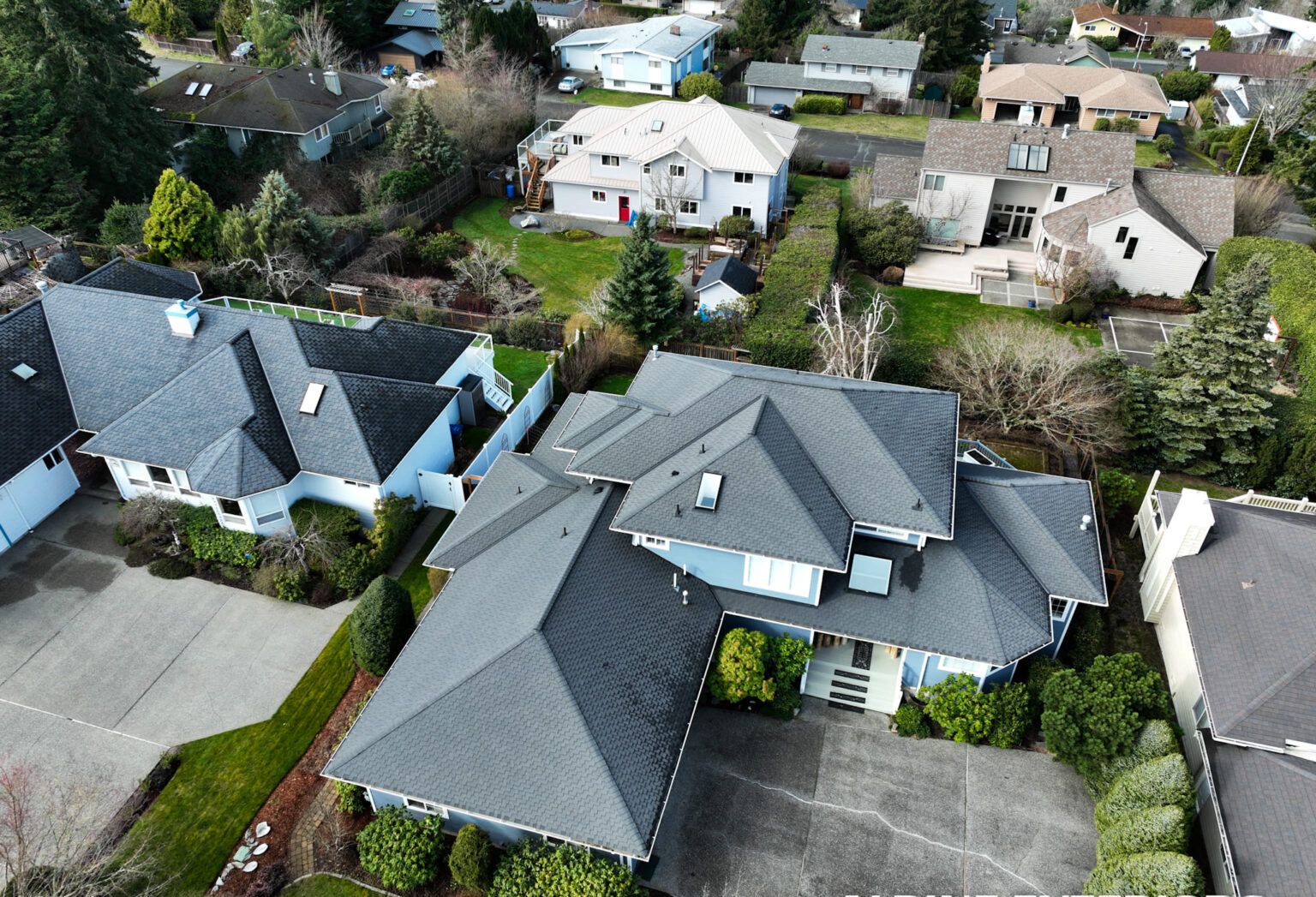
Barkley Village itself is a fairly sheltered site: it's inland from Bellingham Bay, tucked near I-5 and Whatcom Creek, and surrounded by mature landscaping, other buildings, and mixed-use development. That puts most of the neighborhood in the code's lower-exposure category rather than the more severe exposure that applies right on open water. It's still governed by the same countywide wind provisions, but a wall in Barkley Village generally isn't taking the same sustained gusts as a wall facing open water.
That's a real contrast with other parts of Whatcom County Alpine Exteriors works in. Waterfront and near-waterfront areas — Birch Bay, the Blaine bluffs, and the islands reached off Lummi and the San Juans — see direct wind-driven rain off Bellingham Bay and the Strait of Georgia, which pushes moisture into siding laps and trim joints that a sheltered inland site rarely has to deal with. Sudden Valley, up against Lake Whatcom in the foothills, adds a different variable: enough elevation gain that freeze-thaw cycling in late fall and early spring can work at caulk joints and fastener holes over a few seasons if they weren't detailed tight to begin with.
What's consistent across all of it, including Barkley Village, is Western Washington's persistent rain and the moss and algae growth that comes with shaded, north-facing walls that stay damp for days at a time. Wood rot at bottom courses and around penetrations is the most common failure Alpine Exteriors sees on older homes here, and it's almost always a water-management problem — flashing, kick-out details, or a missing weather-resistive barrier lap — rather than a wind problem. None of this is hurricane country; there's no storm-surge or wind-borne-debris requirement in play here the way there would be on the Gulf Coast, and homeowners shouldn't pay for products or details engineered for that kind of exposure. The relevant risks in Whatcom County are sustained wind-driven rain, moisture cycling, and moss — not catastrophic wind events.
A few things matter more than the rest when you're planning or reviewing a siding job here:
None of this is exotic. It's mostly a matter of insisting the fastening schedule, the WRB and rainscreen detailing, and the product's wind rating actually get checked against the site instead of assumed. Alpine Exteriors builds every siding estimate in Barkley Village around those specifics rather than a generic package, because a wall in a sheltered inland neighborhood and a wall on Birch Bay's shoreline genuinely call for different attention even though they're a few miles apart.
No. Barkley Village's inland, sheltered setting generally places it in a lower wind-exposure category than waterfront neighborhoods like Birch Bay or Blaine, so a standard code-compliant siding product with a documented wind rating is typically appropriate — the key is confirming the installer is actually following the manufacturer's fastening instructions rather than assuming a premium product is automatically needed.
Yes, when the job is permitted. Inspectors reviewing a re-side typically check nail placement, spacing, and whether nails were left properly loose per the manufacturer's manual, along with flashing at windows, doors, and other penetrations — this is one of the most common things flagged on re-inspection when a crew rushes the fastening.
Because in Whatcom County, sustained wind-driven rain and prolonged dampness cause far more siding damage over time than any single wind event — wood rot at bottom courses, moss and algae on shaded walls, and moisture intrusion at poorly flashed joints are the failures Alpine Exteriors sees repeatedly, while true wind-blowoff failures are almost always traceable to an installation error rather than the wind itself.
Yes. The 2021 Washington State Energy Code's prescriptive requirements for continuous insulation often call for a furred-out rainscreen gap behind the siding, which changes fastener length and embedment. A contractor who isn't accounting for both the energy code and the siding manufacturer's wind-rated fastening schedule at the same time can end up with fasteners that satisfy one requirement but fall short on the other.
If you're planning a siding replacement or repair in Barkley Village, Alpine Exteriors can walk your specific elevations, check exposure and existing water damage, and put together an estimate built around the Washington State Building Code and Energy Code requirements that actually apply to your home — not a generic package. Alpine Exteriors is licensed in Washington under contractor license ALPINI751OW and works across Whatcom County, from inland Bellingham neighborhoods like Barkley Village out to Birch Bay, Blaine, Lynden, Sudden Valley, and the islands. Reach out for a walkthrough and a written estimate before your next siding project starts.