
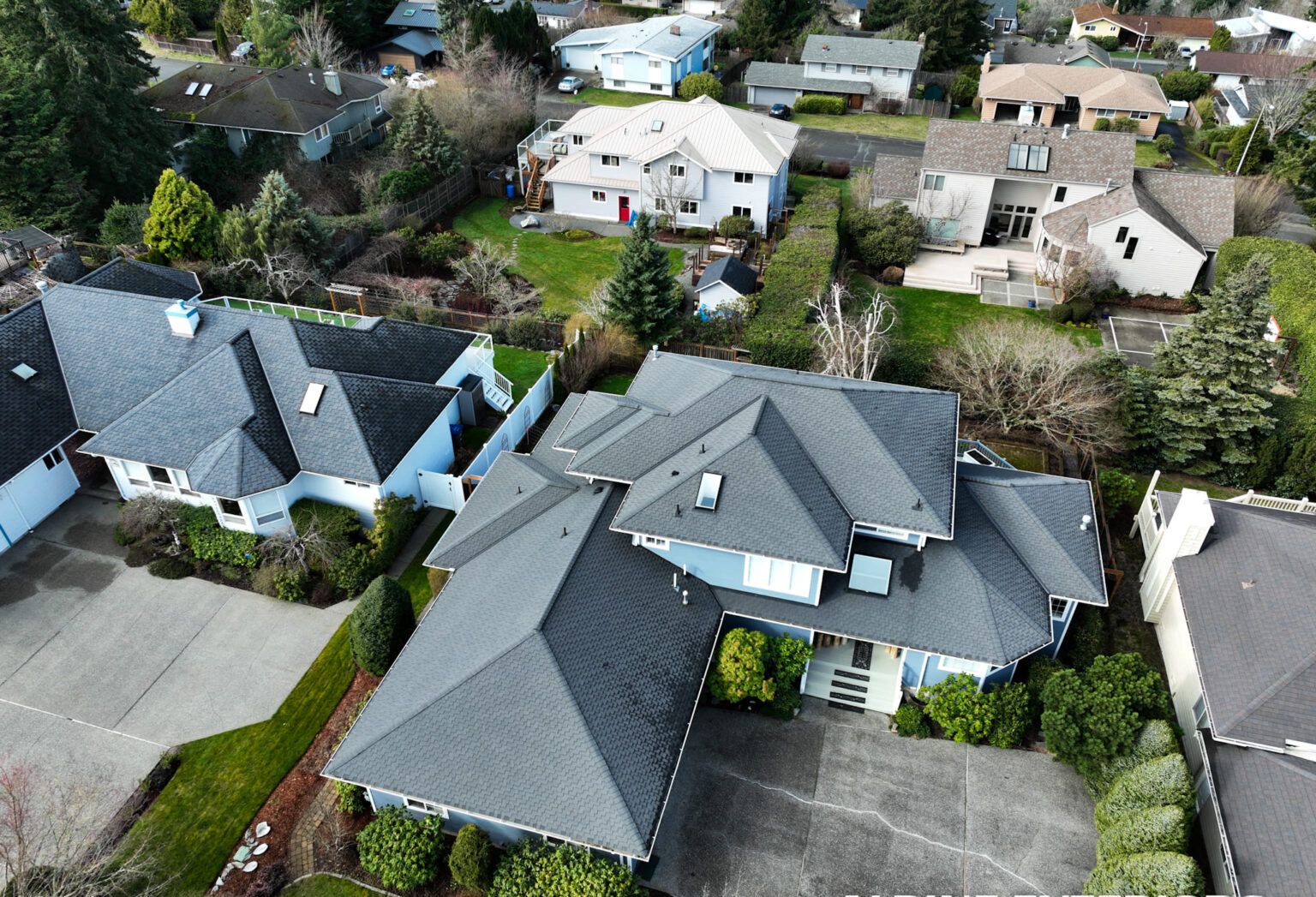
If you own a home near Downtown Bellingham — the Victorian- and craftsman-era streets around Eldridge Avenue, the South Hill bluff, or the alley-loaded blocks closer to the Fairhaven side — you already know your siding works harder than siding in most parts of the country. Bellingham Bay throws wind-driven rain at west- and south-facing walls for months at a time, moss and algae find a foothold on anything that stays damp, and a lot of the housing stock downtown is old enough that nobody currently living there installed the original siding. Pricing a replacement job here isn't just about square footage; it's about how much moisture damage is hiding behind the old material and how tricky the lot is to work on. This page walks through realistic cost ranges, what actually drives the number up or down, and how to read a quote so you're comparing apples to apples.
There is no single number that applies to every house, and any contractor who quotes a firm price before seeing your walls, your sheathing, and your access is guessing. What we can offer is a realistic range by material, based on the kind of homes and conditions common in this part of Whatcom County — older single-family houses, some with additions, most with at least a few decades of coastal weather behind them.
| Cost Factor | Typical Low End | Typical High End |
|---|---|---|
| Vinyl siding, installed per square foot | Lower cost, standard profiles | Higher for insulated or thicker-gauge panels |
| Fiber cement siding, installed per square foot | Mid-range for standard lap profiles | Higher for shake or board-and-batten profiles |
| Cedar or wood siding, installed per square foot | Mid-to-high depending on grade | Highest, especially for clear-grade or resawn cedar |
| Tear-off and disposal of existing siding | Modest add if siding comes off in whole sheets | Significant add for old lap siding removed piece by piece |
| Sheathing and rot repair | Minimal if walls are dry underneath | Substantial if framing or sheathing needs rebuilding |
| House wrap / weather-resistive barrier upgrade | Standard synthetic wrap | Higher for a full rainscreen or drainage-plane assembly |
| Trim, corners, and window/door detailing | Simple boxed trim | Custom or historic-profile trim work |
| Site access and staging | Detached driveway, easy staging | Downtown lot with alley-only access, tight setbacks, or no on-street parking for a dumpster |
As a rough starting point, a full siding replacement on a modest single-story downtown Bellingham home in good structural condition tends to land in the low-to-mid five figures. A larger two-story home, a switch to fiber cement or cedar, or any meaningful rot repair can push that well into the mid five figures and beyond. Treat these as planning ranges, not quotes — the only way to get an accurate number is to have someone open up a section of wall and look.
A handful of conditions specific to this part of Whatcom County tend to move a quote more than homeowners expect:
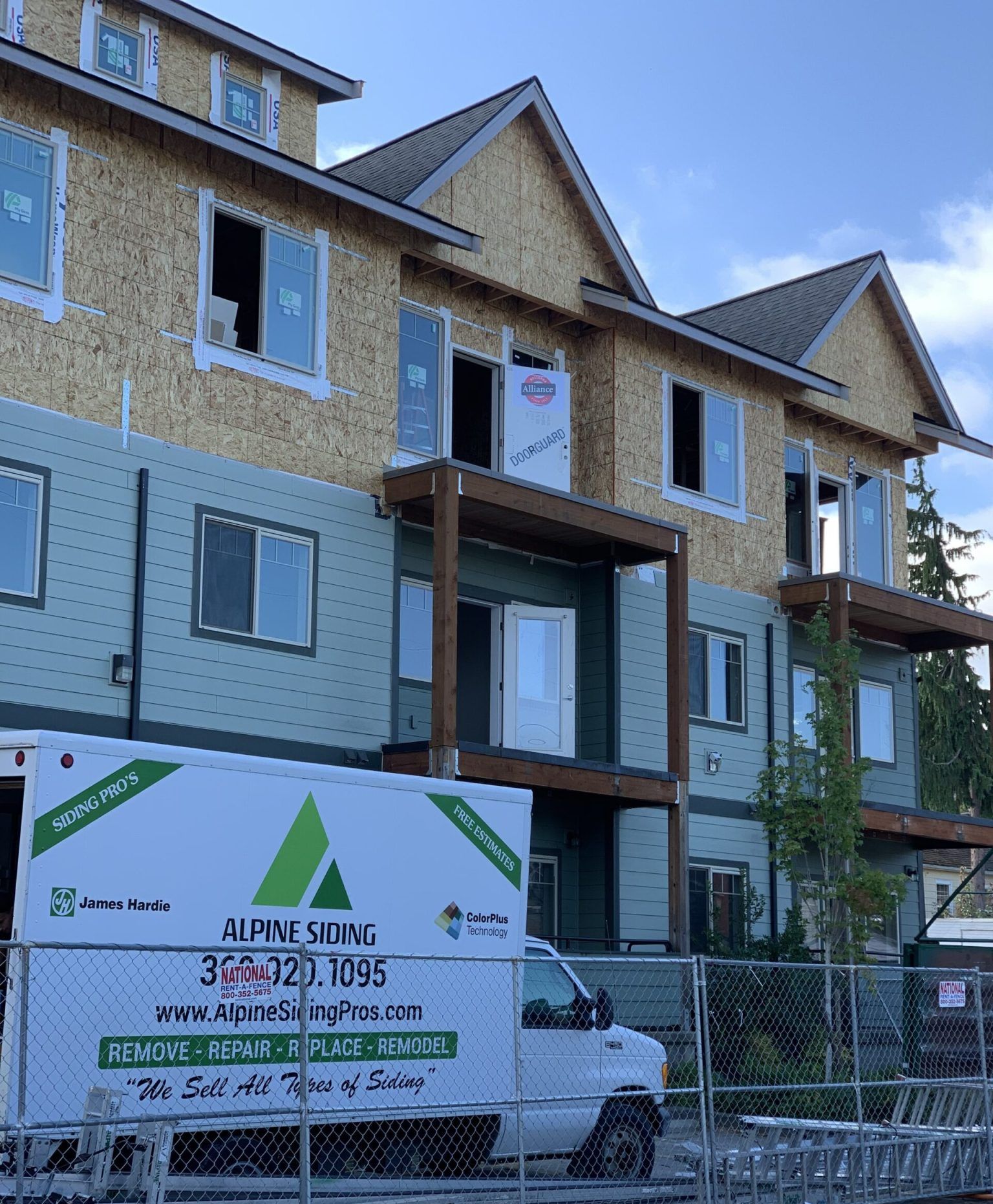
A usable, comparable quote is a lot more than a bottom-line number. At minimum it should spell out:
Alpine Exteriors writes quotes this way on purpose: a homeowner comparing bids should be able to see exactly what's included, not just a total. If a competing bid is significantly lower, it's worth asking what got left out — usually it's tear-off, rot repair, or code-related upgrades that show up later as change orders.
Because siding work hides so much of its real cost behind the old material, the lowest number on paper isn't always the best deal. A few things worth checking before deciding:
Most siding replacement projects are paid for out of pocket or through contractor-arranged financing, and it's worth asking any contractor you're considering, including Alpine Exteriors, what financing options they offer or partner with. Terms, rates, and approval requirements vary by lender, so treat any financing offer as something to review on its own merits rather than assuming it matches a competitor's terms.
Insurance coverage for siding replacement in this region typically comes into play only when the damage is tied to a specific covered event — a wind storm that tears siding off a wall, for example, or water intrusion from a sudden, identifiable failure rather than gradual weathering. Ordinary wear, moss growth, and rot from age or long-term maintenance gaps are generally treated as a maintenance issue, not an insurance claim. If you suspect storm damage contributed to your siding's condition, it's worth documenting the damage with photos and contacting your insurer before work begins, since most policies want documentation of the triggering event. A contractor can help describe the physical damage but isn't a substitute for talking directly with your insurance adjuster about what your specific policy covers.
Timelines depend heavily on home size, how much rot repair turns up once the old siding is off, and how cooperative the weather is during the project. A straightforward re-side on a smaller home in good structural shape can move faster than a larger home with extensive repair needs or a job that has to work around persistent rain. Any contractor should be able to give you a realistic window based on your specific home and the season, rather than a generic estimate.
Whether a permit is required depends on the scope of work — a straightforward like-for-like re-side is treated differently than a project that involves structural repair, changes to the wall assembly, or upgrades that fall under the Washington State Energy Code. It's worth confirming permit requirements with the City of Bellingham or Whatcom County before work starts, and a reputable contractor will help you sort out what applies to your specific project rather than skip the question.
Both hold up reasonably well in Whatcom County when installed correctly, and the right choice depends on your budget, the style of your home, and how much maintenance you want to take on. Fiber cement tends to resist moisture and impact well and holds paint longer, but costs more and is heavier to install. Vinyl costs less and needs little maintenance, but can be less forgiving of poor installation around flashing and joints, which matters given how much wind-driven rain this area sees. Cedar offers a traditional look that suits a lot of the older homes downtown but requires more upkeep to resist moisture and moss over time.
This is common enough on older downtown homes that it should be planned for rather than treated as a surprise. A good contractor will show you the damage, explain the repair options, and get your approval on pricing before proceeding — ideally with an allowance or a clear change-order process already spelled out in the original quote. Walking away from rot repair to save money on the front end usually costs more later, since new siding installed over damaged sheathing won't last.
Cost ranges are useful for planning, but the only way to know what your specific project will run is to have someone look at your walls, your sheathing, and your access. Alpine Exteriors serves Downtown Bellingham and the rest of Whatcom County — Ferndale, Lynden, Blaine, Birch Bay, Sudden Valley, and the islands — and can walk your property, point out what's driving your particular cost, and put together a detailed, itemized quote you can actually compare against other bids. Reach out to schedule a walkthrough and get a straight answer on what your siding replacement will realistically cost.