
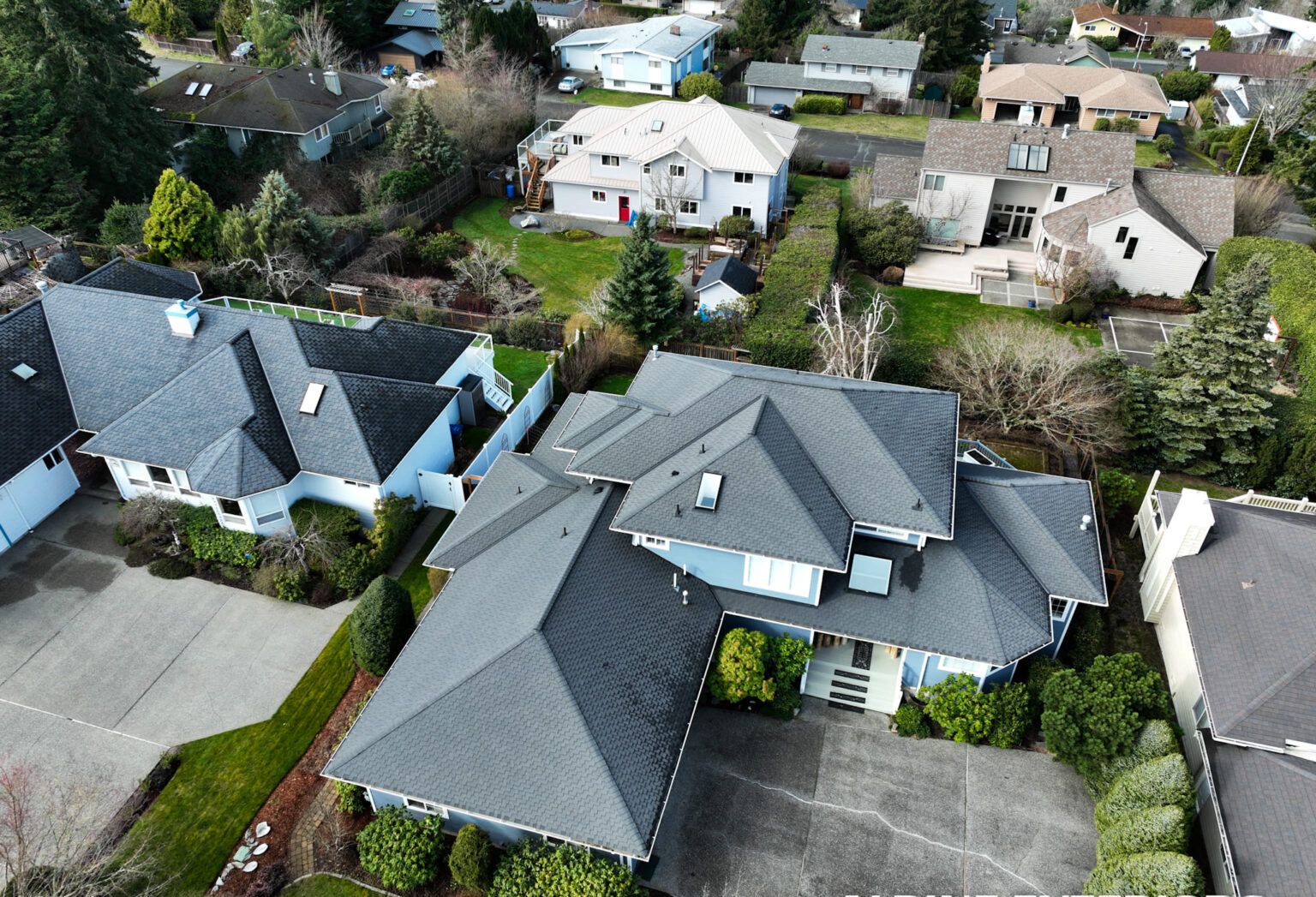
In most cases, if your home is on a lot that opens up the wall assembly, changes the wall's insulation, or is part of a larger remodel, you need a permit before the old siding comes off. Straight, panel-for-panel replacement on a house that isn't otherwise being touched is sometimes exempt, but the exemption is narrower than most homeowners assume, and getting it wrong can mean tearing work back off the wall.
Birchwood sits inside Bellingham city limits, so for the large majority of Birchwood addresses, the permitting authority is the City of Bellingham's Permit Center, not Whatcom County directly. If your parcel happens to fall in one of the unincorporated pockets that border the neighborhood, Whatcom County Planning & Development Services is the office of record instead. The two jurisdictions use different fee schedules and, in places, different local amendments layered on top of the same base codes, so the first real step on any siding job isn't picking a color — it's confirming which counter your paperwork goes to. A quick parcel lookup on the county assessor's site or a call to the Permit Center settles it in a few minutes.
Washington doesn't have a blanket statewide rule that every re-side needs a permit. What actually decides it is scope. A permit is very likely required when any of the following is true: sheathing is being removed, repaired, or replaced; the weather-resistive barrier (house wrap) is coming off and going back on; window or door flashing is being redone as part of the job; exterior wall insulation is being added or changed; or the siding work is bundled with another permitted scope like a deck, addition, or re-roof happening at the same time. A permit is more likely to be waived when the crew is doing a true like-for-like swap — same siding type, same fastening pattern, no sheathing exposed — on a wall that isn't otherwise under a permit. In practice, most full siding jobs in Birchwood end up needing one, because pulling old lap siding or cedar shingles off a house that's had thirty or forty years of Whatcom County weather almost always uncovers sheathing that needs attention.
Once a permit is pulled, the Washington State Energy Code comes into play in a way a lot of homeowners don't expect. If the wall is opened up to bare sheathing as part of the re-side, the energy code's re-insulation and continuous insulation requirements for the applicable climate zone can apply to that wall assembly, not just to new construction. That can mean adding a layer of rigid continuous insulation under the new siding, which changes the depth of window and door trim, the thickness of the water-resistive barrier detailing, and sometimes the total project cost. It's a legitimate, code-driven requirement, not an upsell, and it's worth asking about before a bid is finalized rather than after the wall is already open.
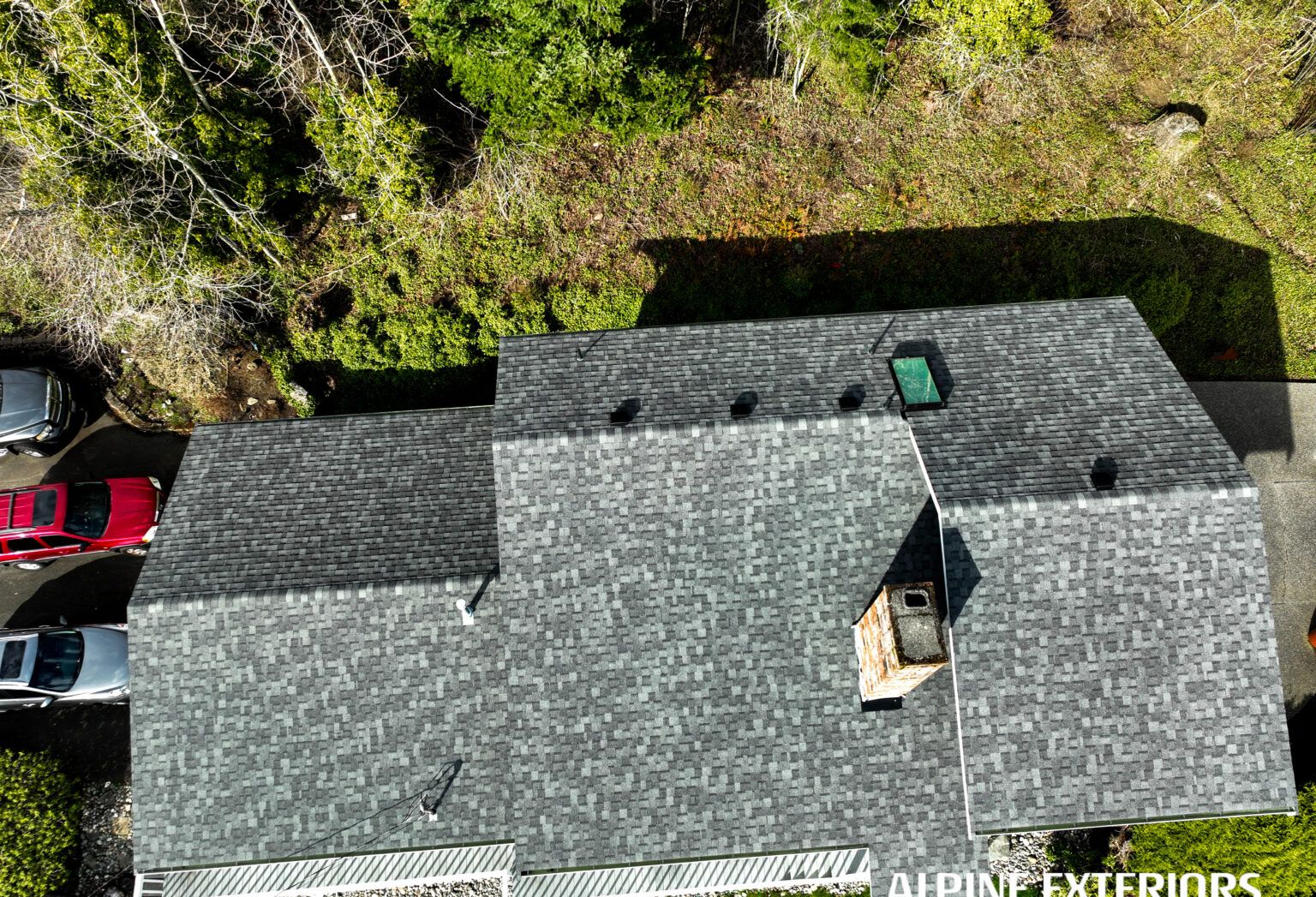
Whatcom County's exterior conditions are a big part of why sheathing so often turns out to need work once the old siding comes off. Rain here isn't occasional — it's a near-constant low-grade presence for much of the year, and homes close to Bellingham Bay and the Strait of Georgia take wind-driven rain that pushes moisture sideways into laps, corners, and butt joints that would stay dry in a calmer climate. Over time that drives moss and algae growth on north-facing and shaded walls, and where water has been getting behind siding rather than running off it, it drives wood rot in the sheathing and framing underneath — often invisible until the old siding is pulled and the damage is staring back at the inspector and the crew. Up toward the foothills east of Birchwood, freeze-thaw cycling adds another layer: water that gets into a crack or a poorly sealed joint expands when it freezes, widening the gap and accelerating the next round of water intrusion. None of this is unique to any one house — it's the baseline condition every re-side project in this part of the county has to plan around, which is exactly why the sheathing and flashing inspection during a permitted job matters more here than it would in a drier climate.
This is also why the exemption for simple like-for-like siding swaps is riskier to lean on here than it sounds. A homeowner who assumes no permit is needed because "we're just putting the same siding back on" can end up uncovering rotted sheathing mid-project with no inspector in the loop to confirm the repair was done correctly before it's covered back up. That's a bad position to be in on a house that's going to face another thirty winters of the same rain and wind.
Before signing a contract for a full or partial re-side in Birchwood, confirm which jurisdiction covers the property, then get a written scope from the contractor that states plainly whether sheathing, house wrap, and flashing are being replaced or just the visible siding. That single question determines whether a permit is required and whether the Washington State Energy Code's insulation provisions are in play. Ask the contractor to pull the permit in their name if they're licensed and bonded to do so — that keeps the inspection schedule and code compliance on them rather than on the homeowner. Expect at least two inspection touchpoints on a permitted job: a sheathing/weather-resistive-barrier inspection before anything gets covered up, and a final inspection once the siding, flashing, and trim are complete. On larger jobs the inspector may also want to see flashing details around windows and doors before they're closed in, since that's the point where wind-driven rain most commonly finds its way behind the cladding on homes near the bay.
It's also fair to budget some contingency for what gets found once the old siding is off. On an older Birchwood or greater-Whatcom home, sheathing repair, rot cutout-and-splice, and re-flashing are common enough discoveries that a contractor who quotes a project with zero allowance for it is either underbidding or hasn't looked closely at comparable homes in the area. Alpine Exteriors builds that expectation into the estimate up front rather than treating it as a surprise change order later, and walks Birchwood homeowners through exactly which parts of the job are permit-driven before work starts.
It depends on what's happening behind that wall. If the crew is only swapping visible siding panels with no sheathing, house wrap, or flashing work, a single-wall job is sometimes treated as exempt. If sheathing is exposed, damaged, or being repaired, or if insulation is being changed, that one wall still triggers the same permit requirements a full re-side would. The safest approach is to ask the permitting office directly before work starts rather than assume.
Most Birchwood properties are inside Bellingham city limits and go through the City of Bellingham Permit Center. A smaller number of parcels near the neighborhood's edges are unincorporated and fall under Whatcom County Planning & Development Services instead. A parcel lookup or a quick call before bidding avoids submitting paperwork to the wrong office.
The Washington State Energy Code isn't just for new construction. When a re-side opens the wall down to bare sheathing, code requirements for wall insulation — including continuous insulation in some cases — can apply to that assembly as part of the permitted work. That can affect trim depth and window flashing detail, so it's worth discussing with the contractor before the bid is locked in, not after the wall is open.
An unpermitted job that should have had one can create real problems later: the city or county can require the wall to be opened back up for inspection, a home sale can be delayed or renegotiated over unpermitted work discovered in a disclosure or inspection, and any rot or moisture damage that went in uninspected has no record of having been properly corrected. Pulling the permit up front is far less costly than resolving it after the siding is already closed in.
If you're planning a siding project in Birchwood or anywhere else in Whatcom County, Alpine Exteriors can walk the property, tell you plainly whether the scope will require a permit, and handle the paperwork and inspection scheduling as part of the job. Alpine Exteriors holds Washington contractor license ALPINI751OW and works throughout Bellingham, Ferndale, Lynden, Blaine, Birch Bay, Sudden Valley, and the islands. Reach out for a walk-through and a straightforward estimate before you commit to a scope of work.